 Zoneding Mining

Site Search
Search products, equipment and solution articles
整站搜索产品中心新闻中心
点击开始搜索
热门搜索
UltraForm-MXFlexiPoly-RNanoForm Z300EcoFab P200
Search products, equipment and solution articles
Rotary coolers are designed to cool down products coming from dryers or calciners up to an acceptable temperature for successive handling.
A Rotary Cooler is an industrial machine specifically designed to cool the material seems like a necessary final step.
A high-efficiency rotary cooler does much more than just lower temperature. It’s crucial for recovering valuable heat (saving fuel!), stabilizing product quality, minimizing dust emissions, and enabling safe downstream handling and storage.
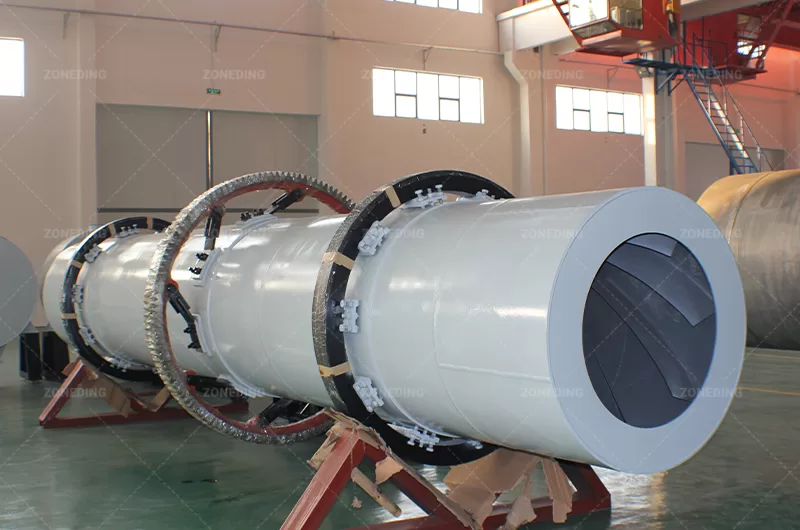
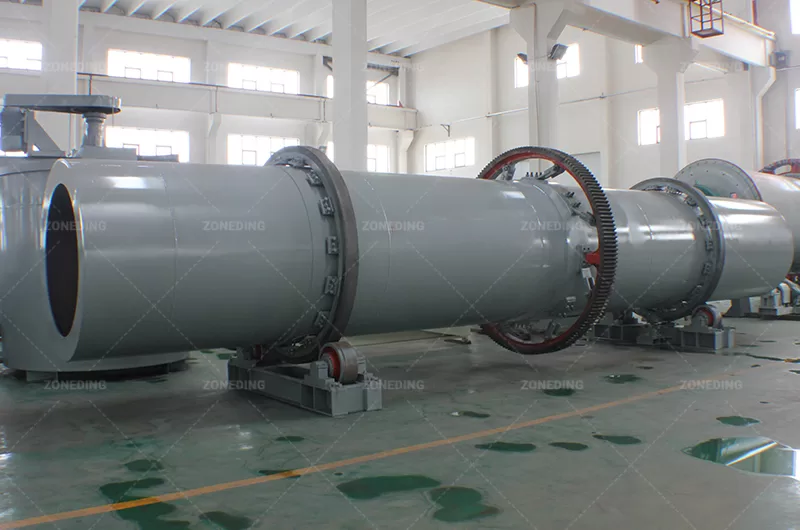
When your material leaves a Stone Crusher Machine and goes through a kiln, it is extremely hot. If you do not have a Rotary Drum Cooler, all that thermal energy simply disappears into the sky. This is a huge waste for any modern factory. In the past, companies did not care much about heat loss, but today the cost of fuel is very high. You need a way to grab that heat and put it back into your system. A cooling machine is not just for making things cold. It is for managing the energy of your entire factory floor.
At ZONEDING, we see many clients who realize they can save 15% or more on coal or gas by using a Clinker Cooler. The hot air created inside the cooler can be piped back into your furnace. This means your burner does not have to work as hard to heat the air. Because we have over 30 years of experience, we know how to design the ductwork to move this hot air efficiently. If you are still using natural cooling pits, you are losing money every single hour. Changing to an automated cooler will give you a much faster return on your investment.
Thermal efficiency is the secret to a high-profit industrial plant. A Rotary Cooler helps this by acting as a heat exchanger. As the hot material moves through the spinning drum, it meets a flow of cool air. The air takes the heat from the rocks or clinker. Now, you have very hot air that is already at 200 or 300 degrees Celsius. If you send this “secondary air” into your kiln, your burner hits the target temperature much faster. This is the core of Waste heat recovery in rotary coolers. It creates a loop that keeps the heat where it belongs: inside your process.
ZONEDING engineers specialize in calculating the perfect airflow for your specific material. We make sure the air flows in the opposite direction of the material to get the best heat transfer. This is why our Rotary cooler for cement production line is so popular in global markets. We also ensure the seals on the cooler are tight. If cold air leaks into the system, the heat recovery fails. Our high-precision manufacturing means our seals stay tight for years. This focus on heat management makes your factory much greener and much cheaper to run compared to your competitors.
It directly mirrors the robust construction of rotary kilns and dryers, designed for continuous, demanding industrial environments.
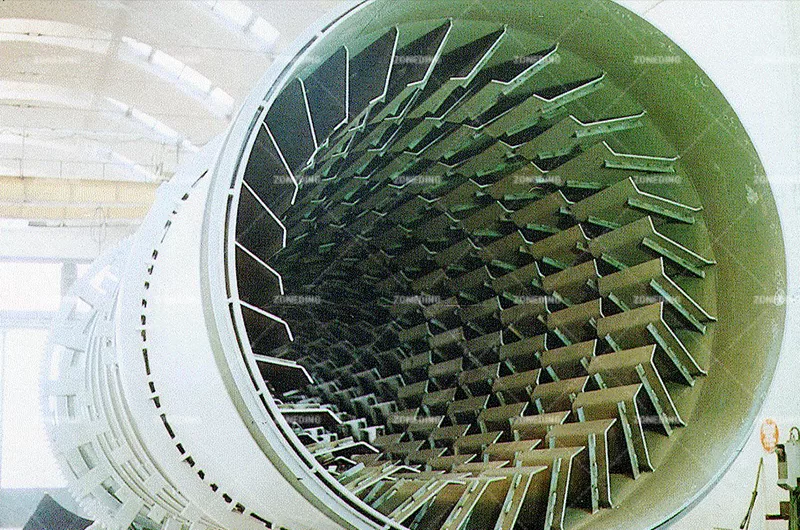
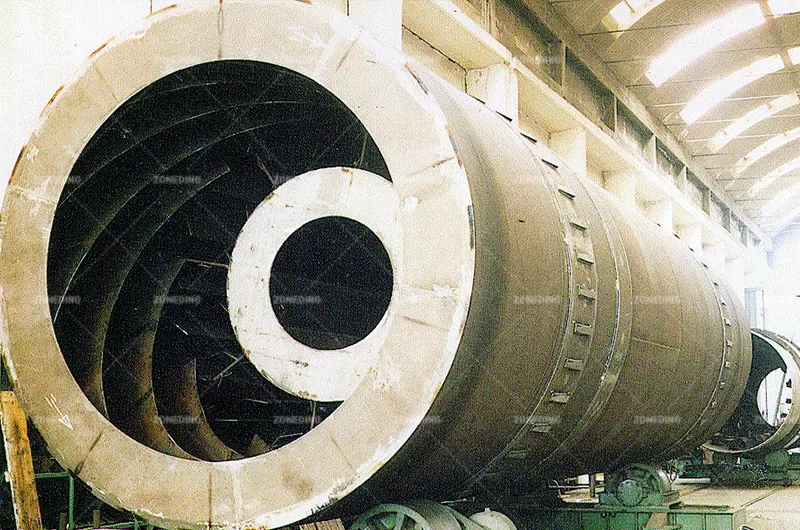
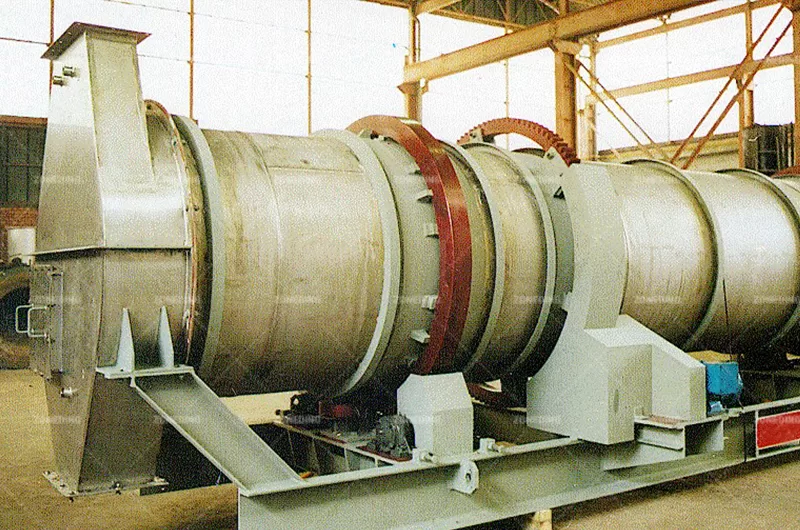
Hot material enters the elevated end and tumbles through the rotating drum. Simultaneously, cool ambient air flows through the drum (usually counter-current to material flow), making direct contact with the hot material, absorbing its heat before exiting.
ZONEDING can propose four different kinds of rotary coolers in function of inlet temperature of product, desired outlet temperature and of type of product as well as:
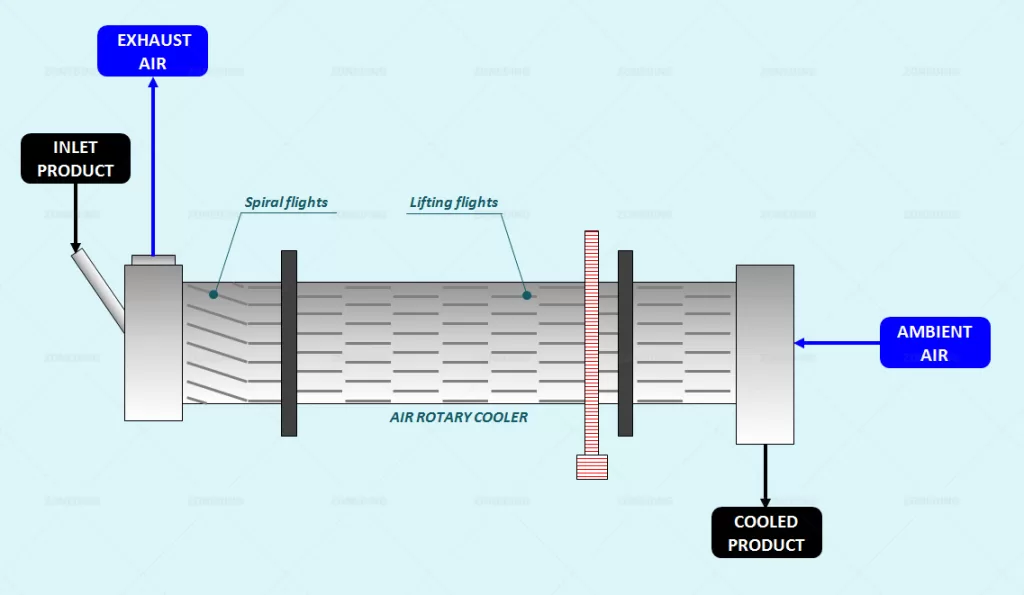
Air Rotary Coolers
Construction of Air Rotary Coolers is similar to Direct Rotary Dryers.
The product is fed inside a cylinder internally provided with spiral and lifting flights in order to achieve the contact between fresh air and the hot product to be cooled.
The heat of product is dissipated by convection by a stream of fresh air which flows in counter current configuration.
Air Rotary Coolers are mostly applied to cool down product at exit of Direct Rotary Dryers (temperature approx 100 °C).
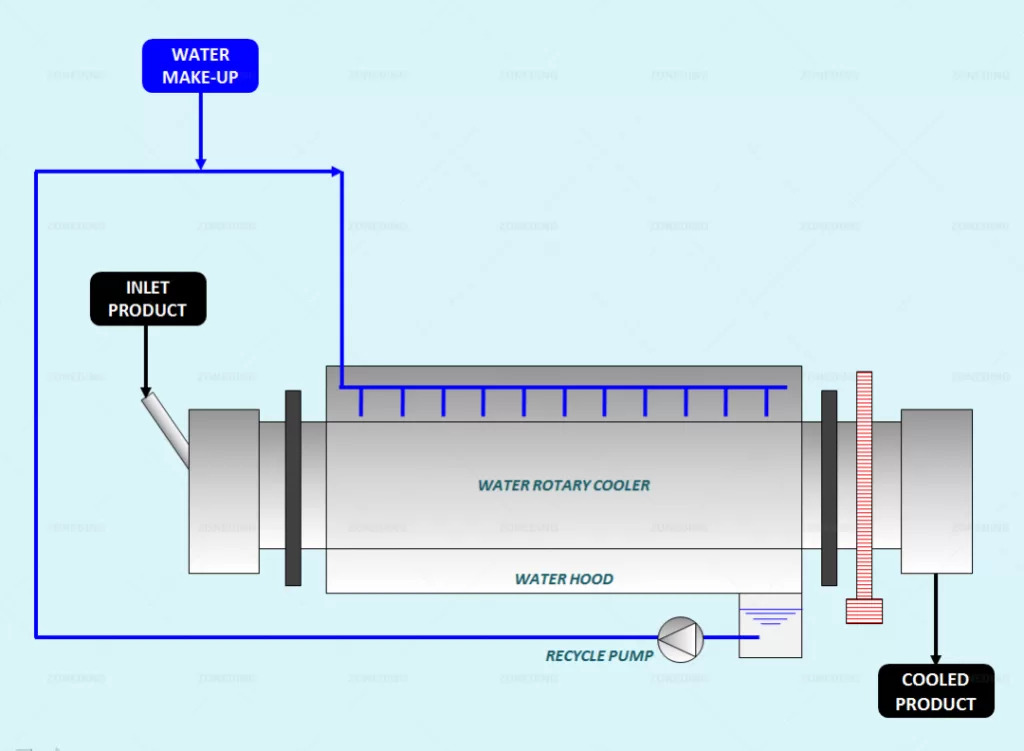
Water Rotary Coolers
In Water Rotary Coolers heat transfer occurs by radiation since water is sprayed against the wall of a rotating cylinder.
Sprayed water that did not evaporate is collected in the bottom of a hood and then recycled to the spraying device.
Cylinder can also consist of a various number of tubes connected each other in order to increase the cooling efficiency.
Water Rotary Coolers find application to cool down products at higher temperatures than the ones operated with Air Rotary Coolers (up to 900 °C and more) and for dusty products and products that cannot go in contact with air.
| Feature | Direct Rotary Cooler | Indirect Rotary Cooler |
|---|---|---|
| Cooling Medium | Air (directly contacts material) | Water or Air (separated from material) |
| Mechanism | Convection between air & material | Conduction through shell/tubes |
| Heat Efficiency | Higher | Lower |
| Pros | Simpler design, Lower cost, Higher efficiency | Protects material from air/contamination, Handles very fine dusts, Allows inert atmosphere |
| Cons | Potential dust carry-over, Material must tolerate air contact | More complex structure, Higher cost, Lower efficiency, Potential for leaks (water tubes) |
| Typical Use | Cement clinker, Lime, Ores, Aggregates | Sensitive chemicals, Fine powders, Materials needing inert atmosphere, Food grade products |
Rotary coolers are workhorses in industries like cement (cooling clinker), lime (cooling calcined lime), mining/metallurgy (cooling sintered ores, pellets), chemicals (cooling various calcined products, fertilizers), and sometimes aggregates (cooling dried sand/gravel).
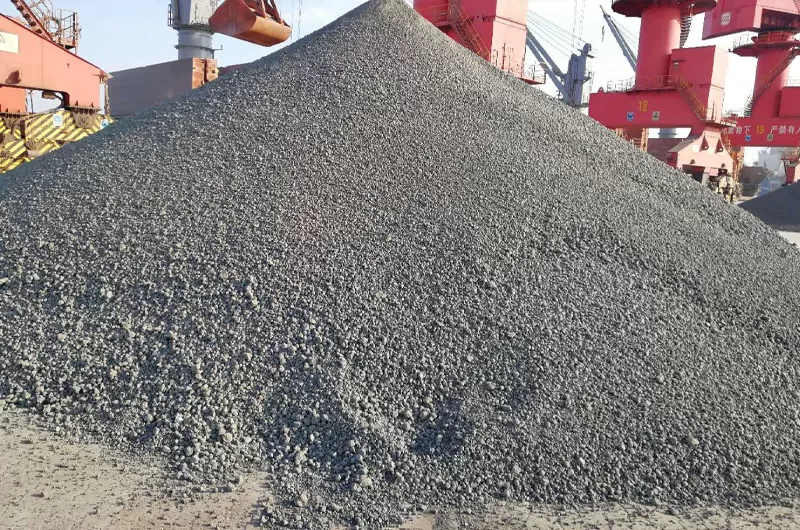
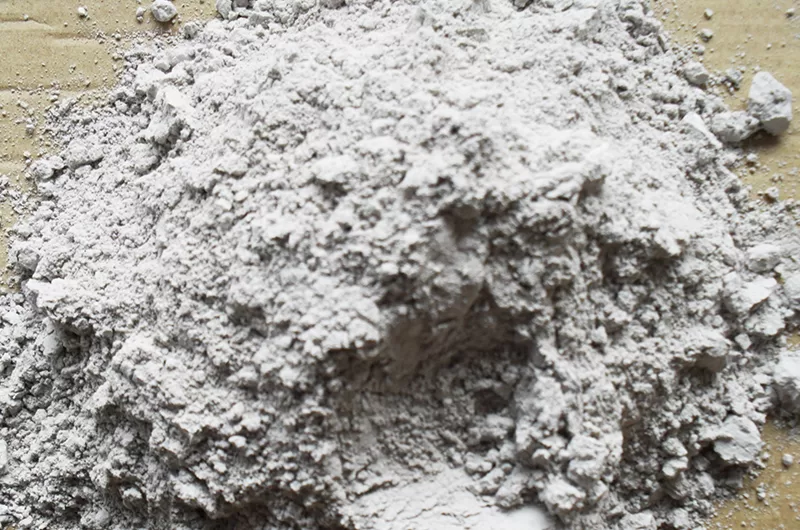
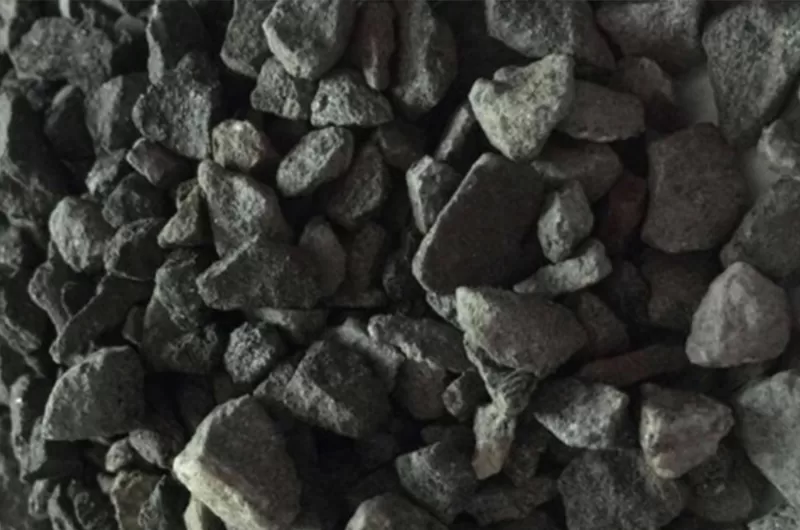
They are essential wherever bulk solids need their temperature drastically reduced after a high-temperature thermal process.
Essentially, any industry performing high-temperature calcination, sintering, roasting, or drying of bulk solids is a potential user of rotary coolers.
Key selection factors include detailed material properties (flow, temperature, stickiness), required throughput, target temperature drop, cooling type (direct/indirect), internal design (lifters), construction materials for heat/abrasion resistance, and robust drive/support systems. Considering the entire system, including airflow and heat recovery, is crucial.

ZONEDINGMACHINE has proven experience on cooling your specific material, strong engineering capabilities for customization, high manufacturing quality standards, comprehensive installation and commissioning support, and responsive after-sales service including readily available spare parts.
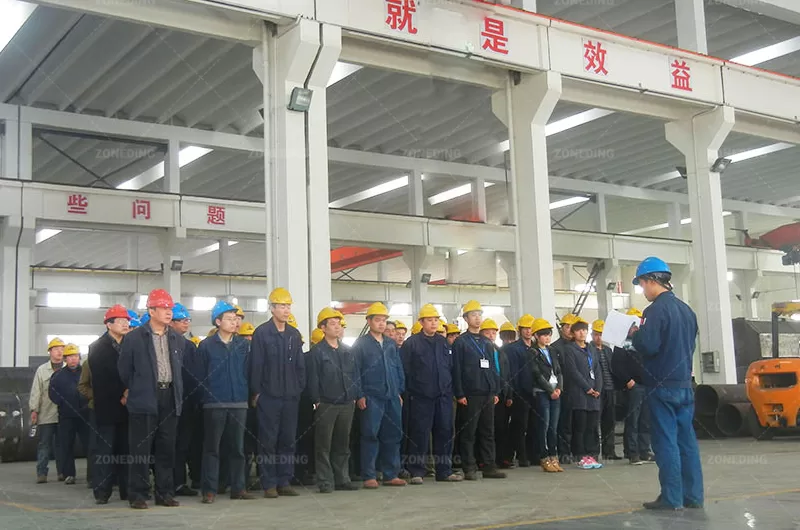
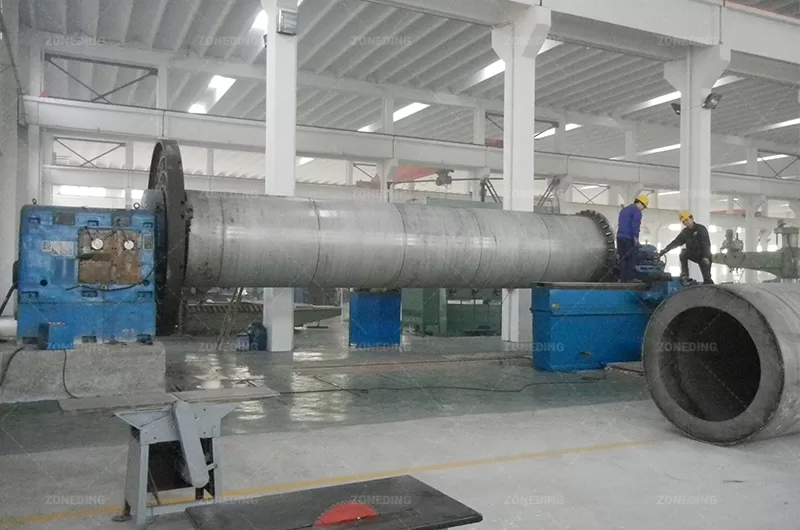
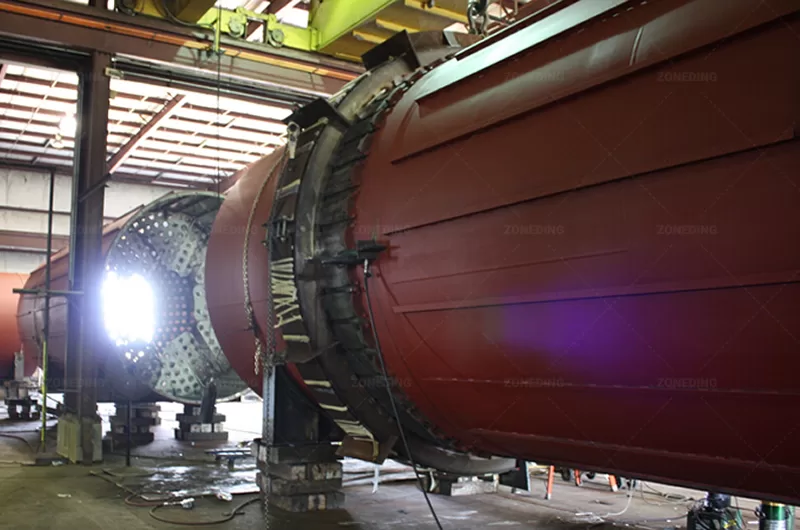
ZONEDINGMACHINE with demonstrated expertise in handling challenging materials like cassava residue and a strong commitment to after-sales support provides peace of mind and ensures better long-term operational success.
A Rotary Cooler is not just for heavy rocks and cement. It is a vital Fertilizer Cooling Machine as well. When you make fertilizer granules, they are often warm and a bit damp. If you put them directly into a bag, they will stick together and become a hard block. This is a disaster for your customers. You need to cool them down to room temperature so they stay as individual pieces. The same is true for many chemical powders and salts. They need a gentle but steady cooling process to maintain their quality for the market.
At ZONEDING, we offer a specialized Cooling system for fertilizer granules. We use stainless steel for the parts that touch the material to avoid rust from the chemicals. We also adjust the spinning speed so the fragile granules do not break. If you use a manual brick machine or other industrial tools, you know that keeping material consistency is key. A cooler ensures that every batch of your product has the same temperature and moisture. This reliability is what makes B2B clients trust your brand over a cheaper, lower-quality supplier.
The inside of a Rotary Drum Cooler is not smooth. It is filled with metal plates called “lifting flights” or “lifters.” As the drum spins, these plates pick up the material and carry it to the top. Then, the material falls through the air like a curtain. This is the most important part of the machine. If the material just slides along the bottom, only the top layer gets cool. But when it falls through the air, every single particle is touched by the cooling breeze. This creates “uniform cooling,” which is what you need for a high-quality product.
ZONEDING uses a special “honeycomb” or “spiral” design for these internal plates. We calculate the shape based on the size and weight of your material. If your particles are very small, we use more plates to create a thicker “material curtain.” If your material is heavy, we use reinforced plates that will not bend under the weight. This smart design is why our Rotary cooler for mineral processing works better than standard machines. We ensure that there are no “hot spots” in your pile of finished product. Uniformity means your product is ready for packaging or shipping immediately after it leaves the drum.
Caking is when your hot material sticks together into big, useless lumps. This usually happens because of “residual heat” and moisture. If you stack hot material in a big pile, the center stays hot for a long time. This heat can cause chemical reactions or melting that glues the pieces together. A Rotary Cooler stops this because it lowers the temperature of the core of every particle before it reaches the pile. It is the best way to prevent “caking” and “clumping” in your warehouse.
ZONEDING cooling drums are designed to handle the critical temperature drop where caking is most likely to happen. For example, in our automatic brick machine lines, we sometimes use coolers for the raw powders. By keeping the powder cool and dry, the final bricks come out with much sharper edges. High-speed cooling prevents the “sweating” that happens when hot material is moved into a cold silo. If you want a product that flows like water, you must invest in a high-quality cooling step. It reduces your waste and keeps your packaging machines running without clogs.
The price of a Rotary Cooler depends mostly on its size and the material it is made of. A small Industrial Rotary Cooler for a local chemical shop might cost between $12,000 and $18,000. These are usually 1 meter in diameter. For a big cement line, a high-capacity cooler can cost $50,000 to over $100,000. You must also consider if you need stainless steel or carbon steel. Stainless steel is more expensive but is a requirement for many fertilizers and food-grade chemicals.
At ZONEDING, we provide a Single drum rotary cooler price that is very competitive because we are the manufacturer. We don’t add 20% for a middleman. We also build our machines to be “modular.” This means you can start with a basic model and add a waste heat recovery system later when you have more budget. When you ask for a quote, we give you a clear breakdown of the motor, the gearbox, and the shell thickness. This honesty helps our B2B partners plan their factory growth for 2025 and 2026 accurately.
Choosing the right cooler starts with your output capacity. You need a drum that can handle all the material coming out of your Jaw Crusher or kiln. If the cooler is too small, the material will still be hot when it leaves. If it is too big, you are wasting electricity. You also need to look at the “moisture” of your material. If it is wet, you might need a machine that acts as both a dryer and a cooler.
ZONEDING engineers will ask you for your material’s “inlet temperature” and your desired “outlet temperature.” We then use a formula to find the exact drum length you need. We also check your local climate. If you live in a very hot country, you might need a longer drum or a water-spray system. We offer custom designs for every customer. We don’t just sell you a machine off the shelf. We make sure the incline angle and the spinning speed match your specific rocks or granules. This personalized service is why our global B2B family is so large.
Thermal shock is when a metal part goes from very hot to very cold in a few seconds. This can cause the steel to crack or bend. A Rotary Drum Cooler faces this every day. The end where the material enters is very hot, while the other end is cool. If the steel shell is thin or cheap, it will warp over time. This warping will cause the gears to jump and the machine to vibrate. Vibration is the “slow killer” of industrial machinery.
To prevent this, ZONEDING uses “Q235B” or “Q345” heavy-duty steel for our shells. We also use a variable thickness design. The hot end of the shell is thicker to handle the heat. We also use high-quality welding that can expand and contract without breaking. Our Industrial Rotary Cooler is built to take the punishment of a 24/7 factory environment. We also add a rust-resistant coating to the outside to protect the steel from the rain and humid air. Durability is our promise to you, so you don’t have to buy a new machine every five years.
The whole weight of the spinning cooler sits on a few support rollers. These rollers are the most critical moving parts. If they are made of soft metal, they will flatten out like a pancake. Then your drum will not spin smoothly. This causes the motor to draw too much power and eventually burn out. You need rollers that are as hard as the “riding ring” (the big ring around the drum) but also smooth enough to allow for movement.
ZONEDING rollers are made of forged steel that has been through a special hardening process. We also use “spherical” bearings that can adjust themselves if the foundation moves slightly. This “self-aligning” feature is a big advantage for sites with soft ground. We also include a lubrication system that keeps the rollers moving without friction. Many of our B2B clients report that our rollers last twice as long as the ones from other suppliers. Proper support means less friction, and less friction means lower electricity bills for your business.
Cooling involving high-speed air often creates a lot of dust. This is especially true if you are cooling fine powders or dry fertilizers. Dust is a health risk for your workers and a waste of your product. In 2026, environmental rules are very strict about dust. You need a system that captures the dust before it leaves the cooler. This is usually done with a “cyclone” or a “bag filter” system at the end of the air exhaust.
At ZONEDING, we design our coolers to have low-velocity air zones. This allows the heavy dust to fall back into the material pile instead of flying away. For the fine dust, we provide high-efficiency cyclone collectors. This dust can then be sent back to your Impact Crusher or your mixer to be reused. We focus on “Zero Waste” designs. By capturing the dust, you keep your factory clean and you get more final product to sell. It is a win for the environment and a win for your bank account.
There are two main ways a Rotary Cooler works. Air-cooling is the most common. It uses a big fan to blow air through the drum. It is simple, cheap to run, and great for heat recovery. However, some materials are too hot for air-cooling alone. In these cases, we use a water-cooling model. This is an “indirect” cooler. The material stays inside a inner drum, and cold water flows around the outside. The material never touches the water, so it stays dry.
ZONEDING provides both types. Air-cooling is best for cement clinker and minerals where you want to reuse the hot air. Water-cooling is best for chemicals that might catch fire if they touch air, or for materials that need to be cooled to very low temperatures very quickly. We can also build a “hybrid” model that uses a water spray on the outside of an air-cooled drum. Our engineers will look at your material safety data sheet to tell you which choice is the safest. Safety is always our first priority when designing your plant layout.
A Rotary Cooler is a simple machine, but it still needs a routine. Because it spins all day, you must check the “riding rings” for wear. You should also check the “thrust rollers” that stop the drum from sliding too far down the hill. We suggest a daily walk-around to listen for strange noises. A squeak usually means a bearing needs grease. If you hear a “clunk,” it might mean an internal lifting plate has come loose. Fixing a loose plate today takes 10 minutes. Waiting until it breaks the whole drum takes 10 days.
ZONEDING provides a clear maintenance calendar for our B2B customers. Every 500 hours, you should check the gearbox oil. Every year, you should check the alignment of the drum with a laser. We provide the tools and the training for your team to do this. We also keep a full stock of spare rollers and gears in our warehouse. If you follow our schedule, your cooler will run for decades. Most of our kilns and coolers built in the 1990s are still working today because of good maintenance.
| Spec./m (Dia.×Length) | Shell Cubage (m³) | Capacity (t/h) | Installation Obliquity(%) | Highest Inlet Air Temperature(℃) | Main Motor (kw) | Weight (t) |
| Φ1.2×8.0 | 9.0 | 1.9~2.4 | 3~5 | 700~800 | 7.5 | 9 |
| Φ1.2×10 | 11.3 | 2.4~3.0 | 3~5 | 700~800 | 7.5 | 11 |
| Φ1.5×12 | 21.2 | 4.5~5.7 | 3~5 | 700~800 | 15 | 18.5 |
| Φ1.5×14 | 24.7 | 5.3~6.6 | 3~5 | 700~800 | 15 | 19.7 |
| Φ1.5×15 | 26.5 | 5.7~7.1 | 3~5 | 700~800 | 15 | 20.5 |
| Φ1.8×12 | 30.5 | 6.5~8.1 | 3~5 | 700~800 | 18.5 | 21.5 |
| Φ1.8×14 | 35.6 | 7.6~9.5 | 3~5 | 700~800 | 18.5 | 23 |
| Φ2.2×12 | 45.6 | 9.7~12.2 | 3~5 | 700~800 | 22 | 33.5 |
| Φ2.2×14 | 53.2 | 11.4~14.2 | 3~5 | 700~800 | 22 | 36 |
| Φ2.2×16 | 60.8 | 13.0~16.2 | 3~5 | 700~800 | 22 | 38 |
| Φ2.4×14 | 63.3 | 13.5~16.9 | 3~5 | 700~800 | 37 | 45 |
| Φ2.4×18 | 81.4 | 17.4~21.7 | 3~5 | 700~800 | 37 | 49 |
| Φ2.4×20 | 90.4 | 19.3~24.1 | 3~5 | 700~800 | 45 | 54 |
| Φ2.4×22 | 99.5 | 21.2~26.5 | 3~5 | 700~800 | 45 | 58 |
| Φ2.6×24 | 127.4 | 27.2~34.0 | 3~5 | 700~800 | 55 | 73 |
| Φ3.0×20 | 141.3 | 30.1~37.7 | 3~5 | 700~800 | 75 | 85 |
| Φ3.0×25 | 176.6 | 37.7~47.1 | 3~5 | 700~800 | 75 | 95 |
| Φ3.2×25 | 201 | 42.9~53.6 | 3~5 | 700~800 | 90 | 110 |
| Φ3.6×28 | 285 | 60.8~76.0 | 3~5 | 700~800 | 160 | 135 |
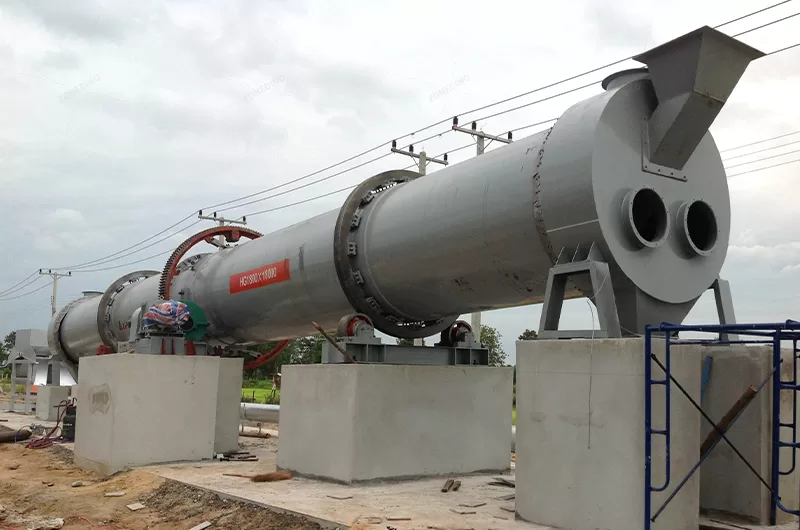
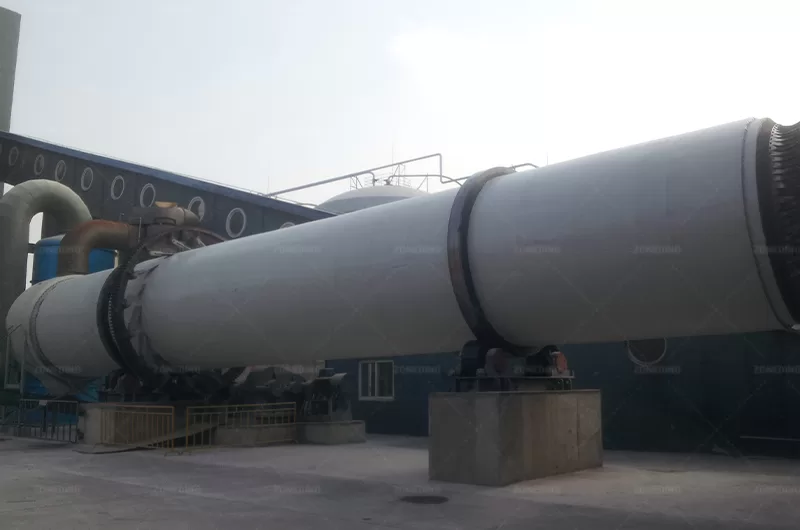
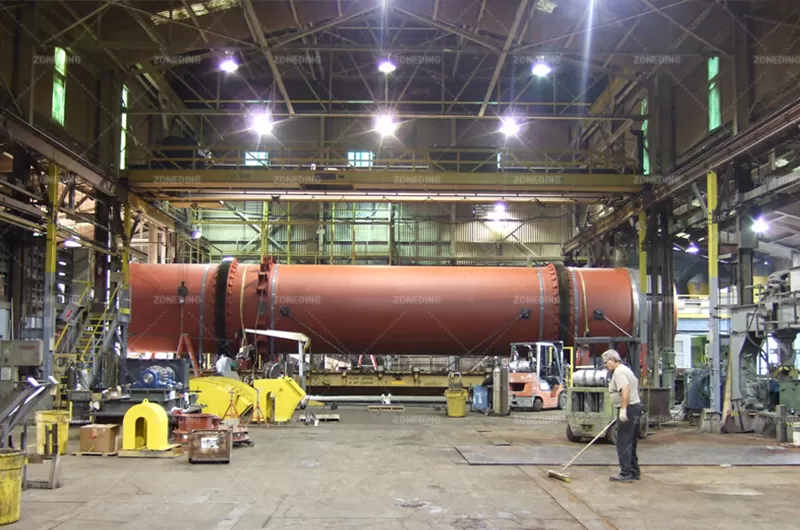
A rotary cooler is a cylindrical rotating vessel used to cool bulk materials by direct or indirect heat exchange with air or water. Used for various cooling applications.
Rotary coolers offer continuous cooling, uniform temperature distribution, and can handle large volumes of materials. Efficient cooling solution for high throughput.
Rotary coolers are used for cooling materials like cement clinker, mineral ores, fertilizers, and chemical products. Versatile cooling technology.
Rotary coolers use air or water circulating inside or outside the rotating drum to remove heat from the material as it tumbles through. Provides even material cooling.
