 Zoneding Mining

Site Search
Search products, equipment and solution articles
整站搜索产品中心新闻中心
点击开始搜索
热门搜索
UltraForm-MXFlexiPoly-RNanoForm Z300EcoFab P200
Search products, equipment and solution articles
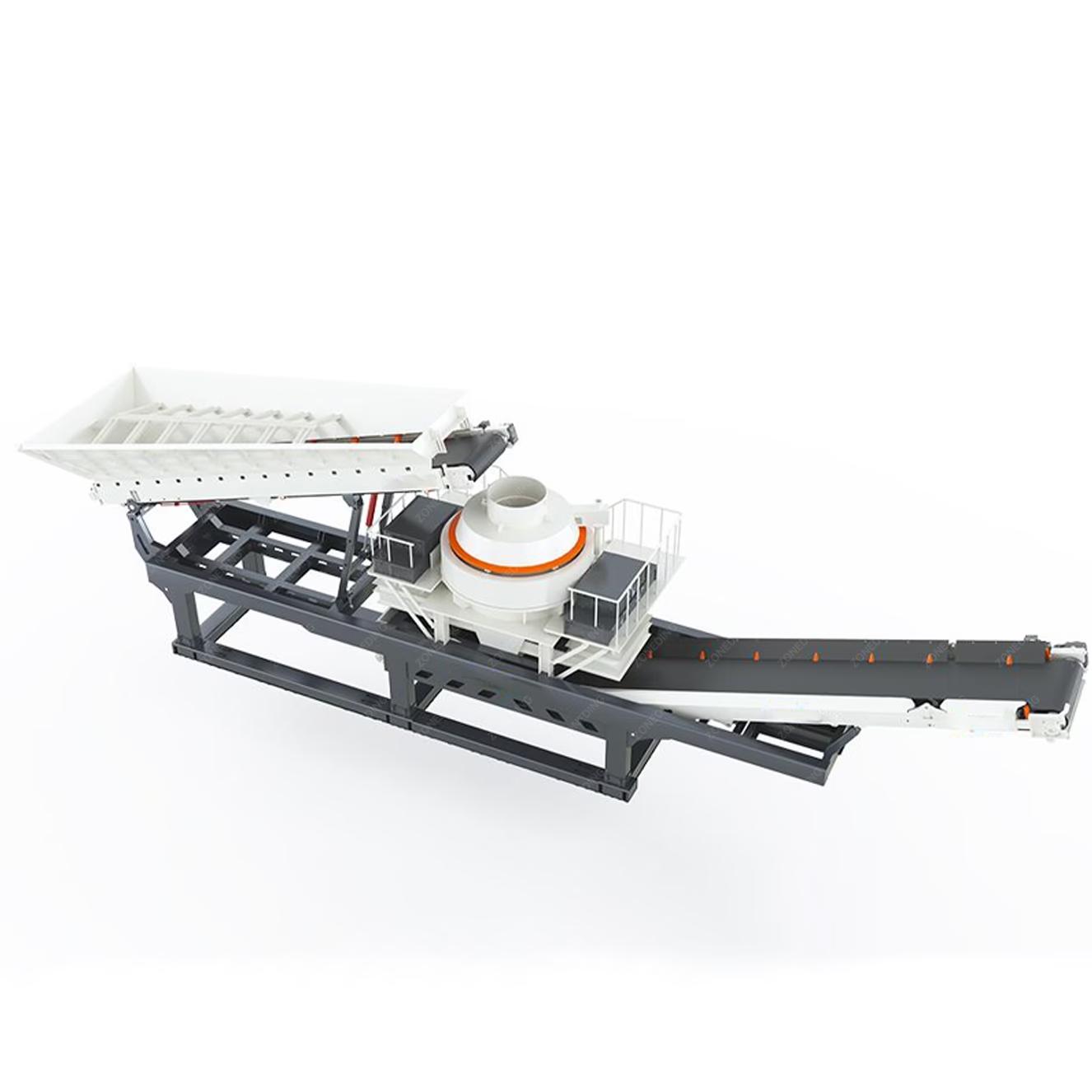
The Modular Sand-making Station is the premier solution for producing high-quality, cubical manufactured sand with specific fineness moduli. Bridging the gap between mobile and fixed plants, its skid-mounted design ensures rapid, cost-effective installation. Key operational strategies, including wear management and quality control, are outlined below to maximize efficiency.
A Modular Sand-making Station is a pre-engineered crushing unit mounted on a steel skid frame. It serves as the tertiary stage in a crushing circuit. The core component is a Sand Making Machine (Vertical Shaft Impactor). Unlike a static plant, which requires extensive concrete foundations and weeks of installation, the Modular Sand-making Station arrives in pre-assembled sections. You bolt these sections together on a flat surface. Unlike a mobile tracked plant, it runs on mains electricity and does not require a diesel engine or hydraulic drive system. This reduces the initial purchase cost and long-term energy costs significantly.
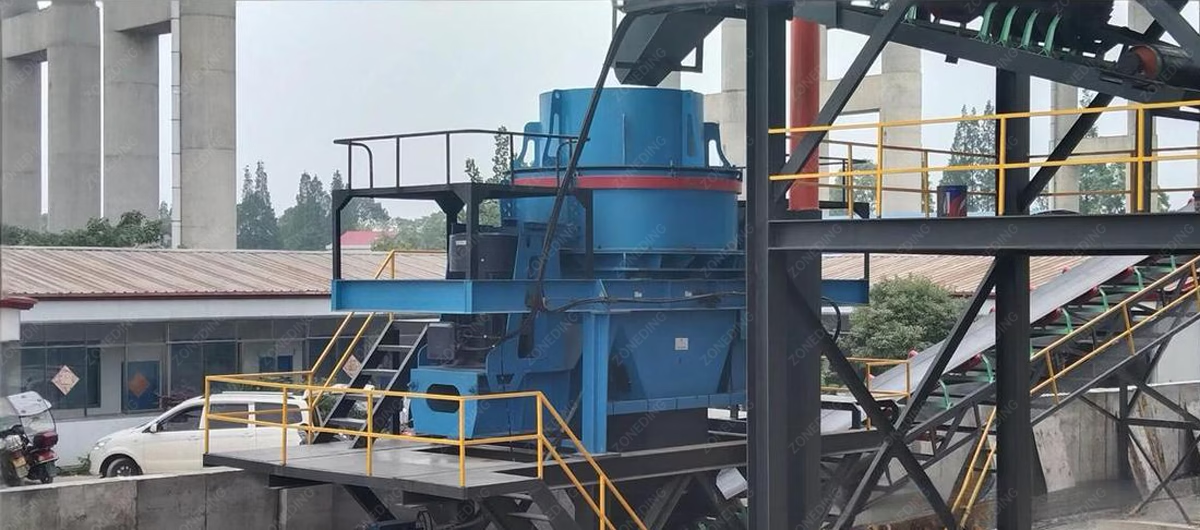
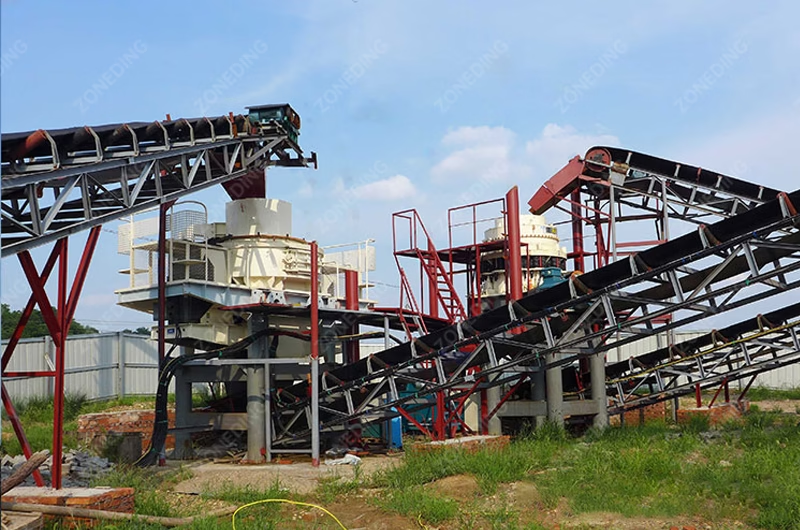
The design prioritizes functionality and speed. The steel structure supports the dynamic load of the crusher. It includes integrated walkways, handrails, and a control room. This layout allows operators to access the machine safely for maintenance. The modular design also means you can relocate the entire station to a new site when the local raw material is exhausted. This flexibility is valuable for medium-term projects that last one to three years.
The Modular Impact Sand-making Station offers specific technical advantages that directly improve your bottom line. These advantages focus on efficiency and structural stability.
This is the most critical feature for high production. A standard VSI feeds all stone into the center of the spinning rotor. This requires high motor power to accelerate every rock. The modular station utilizes a “Cascade Feed” system.
VSI crushers spin at 1500-2000 RPM. This creates high-frequency vibration. In a poorly designed steel structure, this causes resonance. Resonance breaks welds and destroys bearings.
The station uses a rock-lined chamber. Stones form a protective layer on the chamber walls. The accelerated rocks hit this stone layer, not the metal wall.
You often face a choice: buy a fully mobile tracked plant or build a fixed plant. The modular station sits in the middle and offers the best Return on Investment (ROI) for many projects.
A Tracked Impact Crusher is excellent for moving daily. However, it is expensive.
A fixed plant offers the lowest operating cost but has high risks.
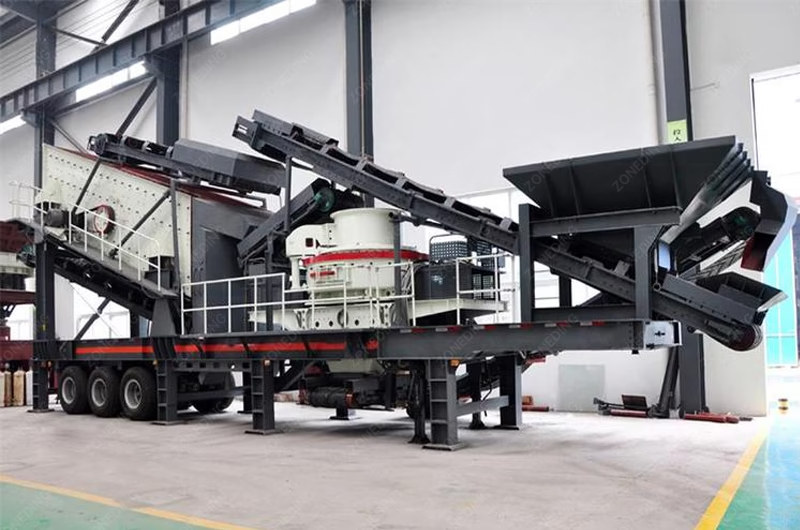
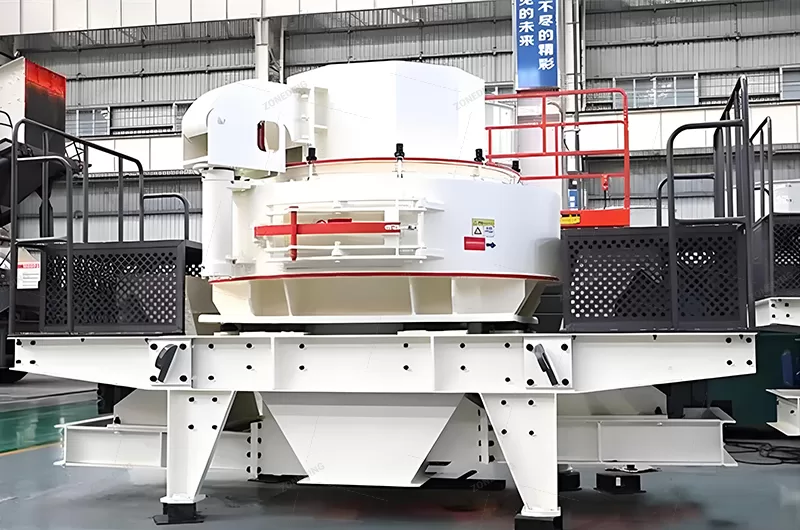
| Feature | Tracked Mobile | Fixed Concrete Plant | Modular Station |
|---|---|---|---|
| Initial Cost | High | Medium | Low to Medium |
| Setup Time | 1 Day | 1-2 Months | 3-7 Days |
| Operating Cost | High (Diesel) | Low (Electric) | Low (Electric) |
| Relocation | Easy | Impossible | Possible |
The Modular Sand-making Station is not a primary crusher. It is a specialist tool. You must match the material to the machine capabilities.
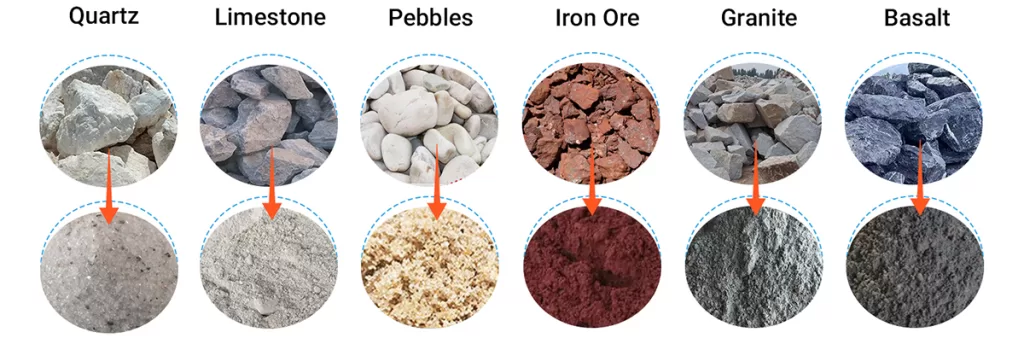
This machine excels with hard and abrasive rocks.
Do not feed large rocks into this module.
This is a critical limitation.
A VSI module does not work alone. To make high-grade sand, you need a system. We call this the “Sand Making-Control-Dust Removal” loop.
Before the material enters the VSI module, pass it through a screen.
The 5-40mm stone enters the Modular VSI.
The material exits the VSI and goes to a Vibrating Screen.
Dry crushing creates dust. You have two options to manage this.
ZONEDING is a professional manufacturer of mining machinery in China. We specialize in robust, efficient crushing solutions like the Jaw Crusher and VSI modules. We focus on engineering equipment that is easy to install and profitable to run. We support clients worldwide with parts and technical advice.
You should keep the feed moisture below 4%. High moisture causes fine material to build up inside the crushing chamber and on the rotor. This buildup hardens and causes severe imbalance and vibration. If your material is wet, use a dewatering screen before the VSI.
The VSI uses high-velocity impact rather than compression. When stones hit other stones or impact plates at high speed, they break along natural cleavage planes. This eliminates sharp edges and flaky particles, resulting in a cubical shape that is ideal for concrete strength.
Yes, you can. However, you must use the “Rock-on-Rock” configuration. River pebbles are very hard and abrasive. Using metal anvils will result in extremely high wear costs. The stone-lined chamber protects the machine body from abrasion.
Installation typically takes 3 to 7 days, assuming the ground is prepared. This is much faster than a static plant, which can take months. You only need to bolt the skid sections together and connect the electrical power.
Service life varies by material abrasiveness. For hard granite, tips may last 40 to 80 hours. For limestone, they may last over 200 hours. You must inspect tips daily and replace them as a set to maintain rotor balance.