 Zoneding Mining

Site Search
Search products, equipment and solution articles
整站搜索产品中心新闻中心
点击开始搜索
热门搜索
UltraForm-MXFlexiPoly-RNanoForm Z300EcoFab P200
Search products, equipment and solution articles
Sand making machine is widely used in highway, mining, gravel field, cement, coal, refractory materials, glass, cement concrete aggregate production and other industries.
A sand making machine, also known as a vertical shaft impact crusher, is a type of equipment used to crush or shape rocks into sand particles. Its main purpose is to produce well-shaped sand products that can be used as a substitute for natural sand.
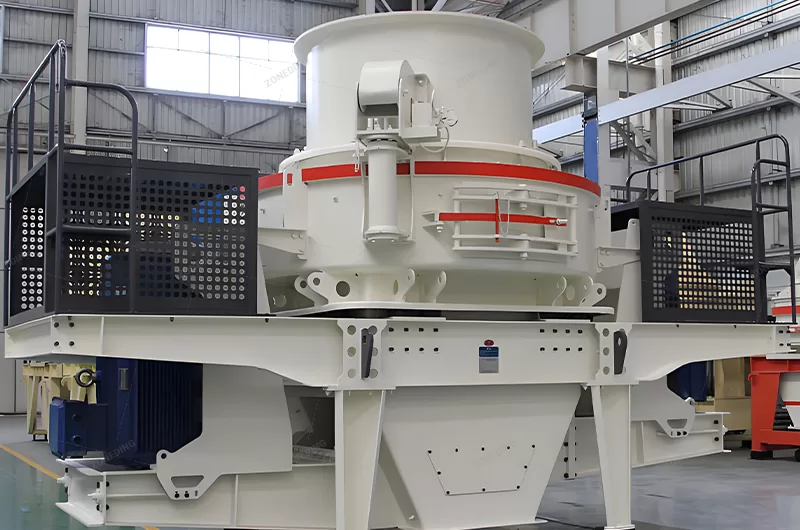
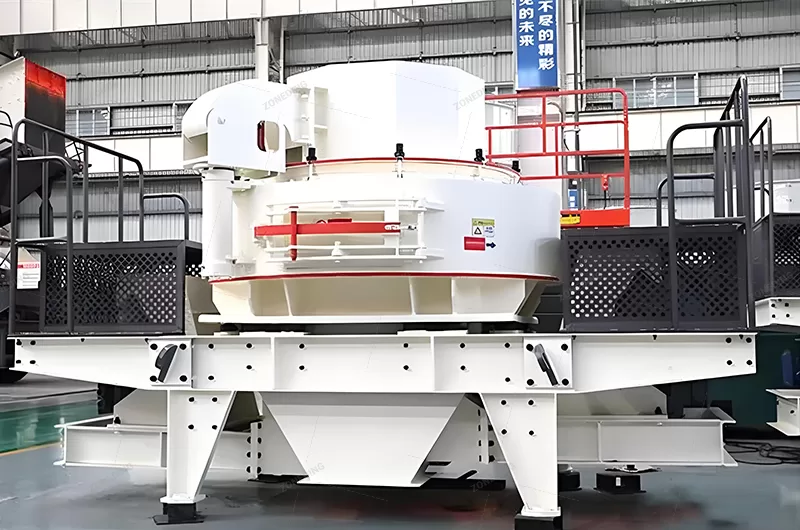
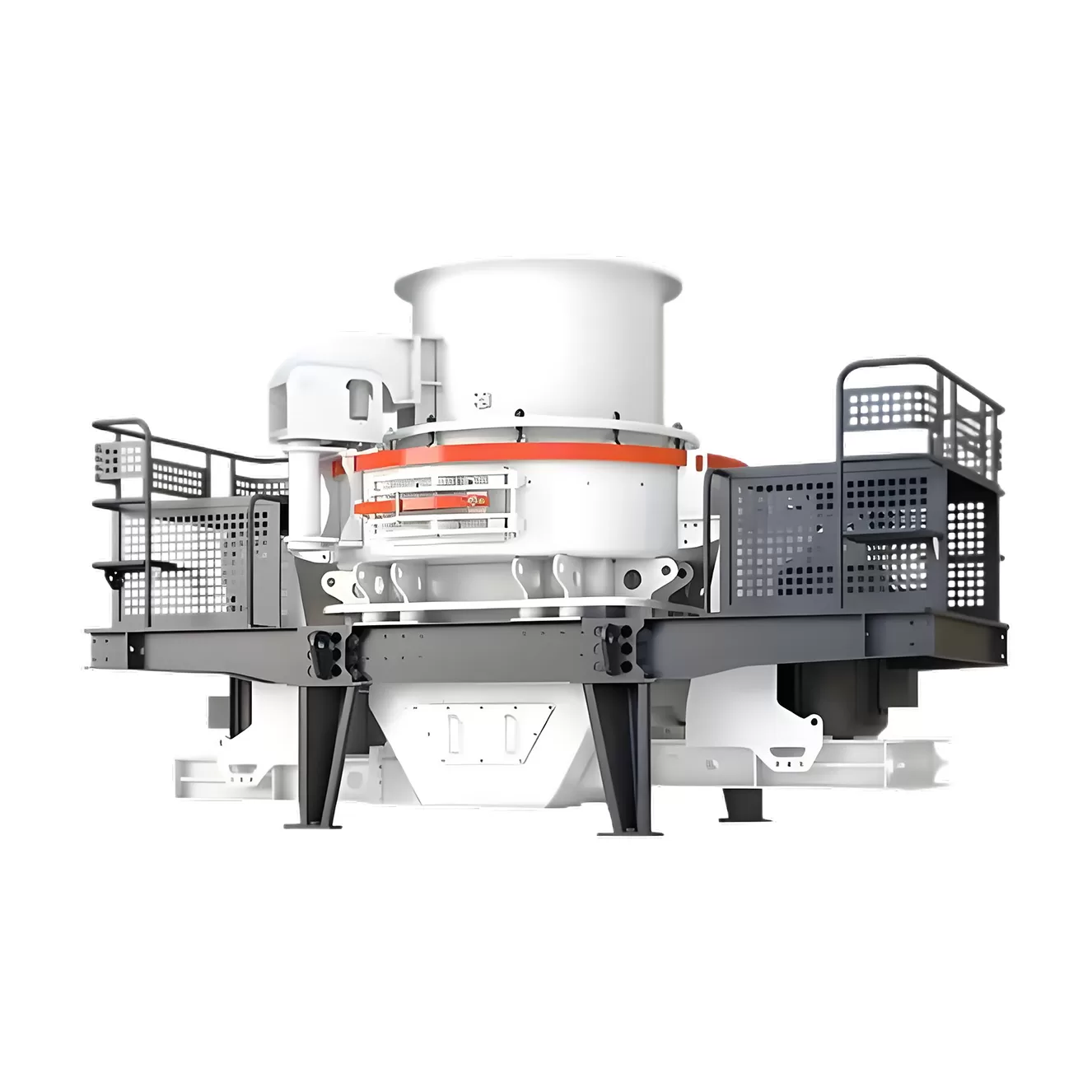
A Sand Making Machine is a piece of equipment designed specifically to create sand. The most advanced and common type is the VSI Crusher. VSI stands for Vertical Shaft Impactor. Unlike other crushers that squeeze rock, a VSI crusher uses speed to shatter it.
This machine has a vertical shaft that spins a rotor at very high speeds. When you feed small rocks into the center of the rotor, centrifugal force throws them outwards. The rocks exit the rotor at speeds of 50-80 meters per second. They smash against an outer ring and shatter into smaller pieces with an excellent, cubical shape. This high-impact method is the key to producing high-quality sand.
You need this machine for three main reasons: environment, quality, and cost. Governments around the world are banning or restricting the mining of river sand. This is done to protect river ecosystems. A VSI sand maker allows you to produce sand sustainably from quarries.
Second, the quality of river sand is inconsistent. It often contains silt, clay, and organic matter that weakens concrete. With a rock sand machine, you have complete control over the final product. You can create sand with the perfect size, shape, and cleanliness. This results in stronger, more durable concrete.
Finally, relying on river sand means you are dependent on distant suppliers and high transportation costs. By producing your own sand on-site with a ZONEDING VSI, you take control of your supply chain. You reduce transport costs and ensure you always have the exact sand you need, right when you need it.
While “Sand Making Machine” often refers to a VSI, there are variations based on the crushing mechanism. The two main types of VSI crushers are defined by what the high-speed rock hits.
The choice between these two depends entirely on your feed material’s abrasiveness and your desired output.
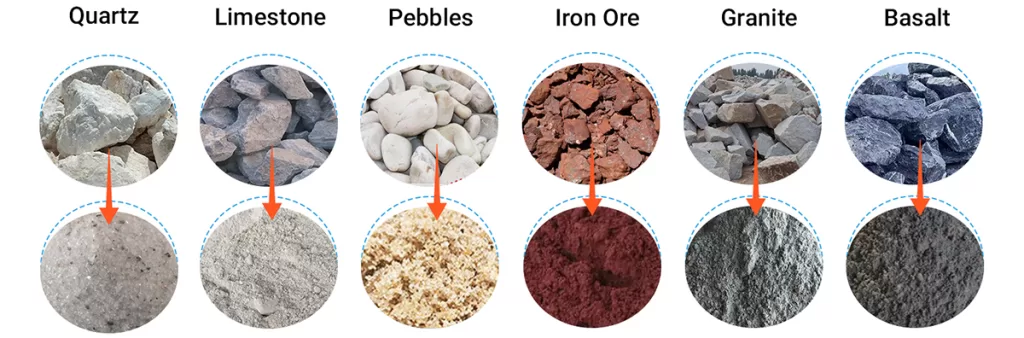
Rock, aggregate, river pebble, granite, limestone, basalt, glass, quartz, cobble, dolomite, calcite, diabase, andesite, sandstone, asphalt concrete, construction wastes, road materials, ore tailings, etc.
In order to ensure the overall performance of the equipment, the structure of key parts on Sand making machine is optimized, such as the impeller, the bearing cylinder, and the main body to ensure the high yield, high efficiency and low cost of the crushing equipment in crushing operation.
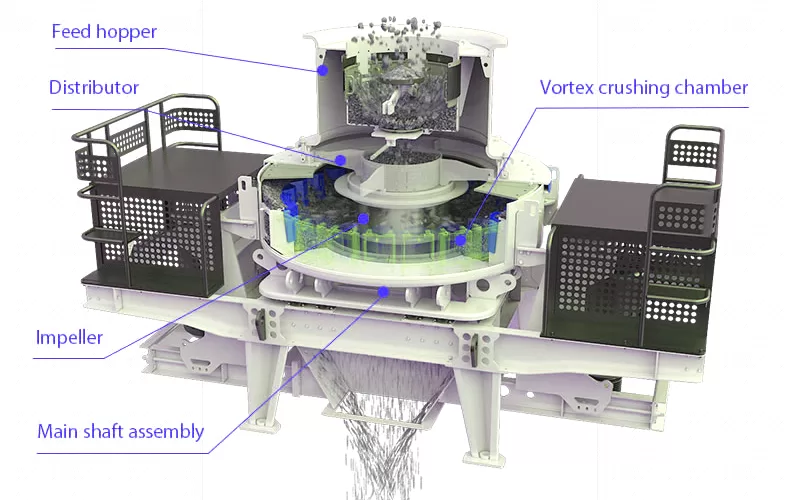
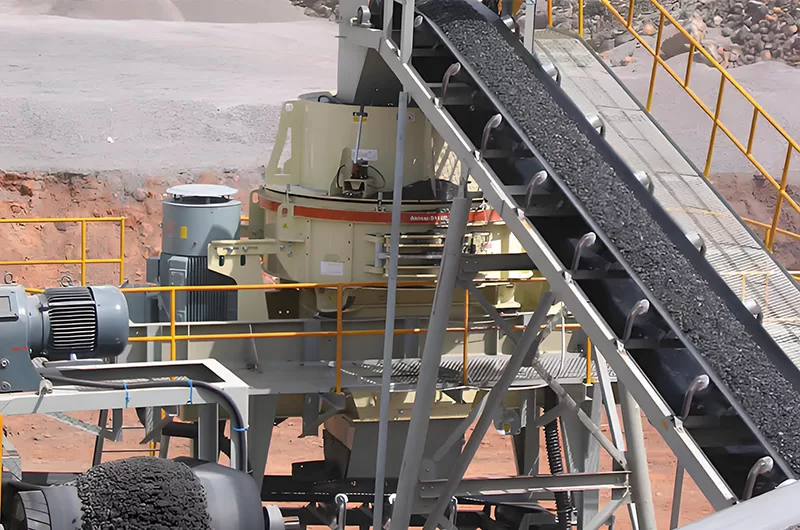
Sand Making Machine is mainly composed of feeding device, distributor, and whirling motion crushing cement clinker, quartz stone, iron ore and concrete aggregate, and especially suitable for making building sand and road paving sand and stone.
chamber, impeller, principal axis assembly, pedestal driving device and motor.
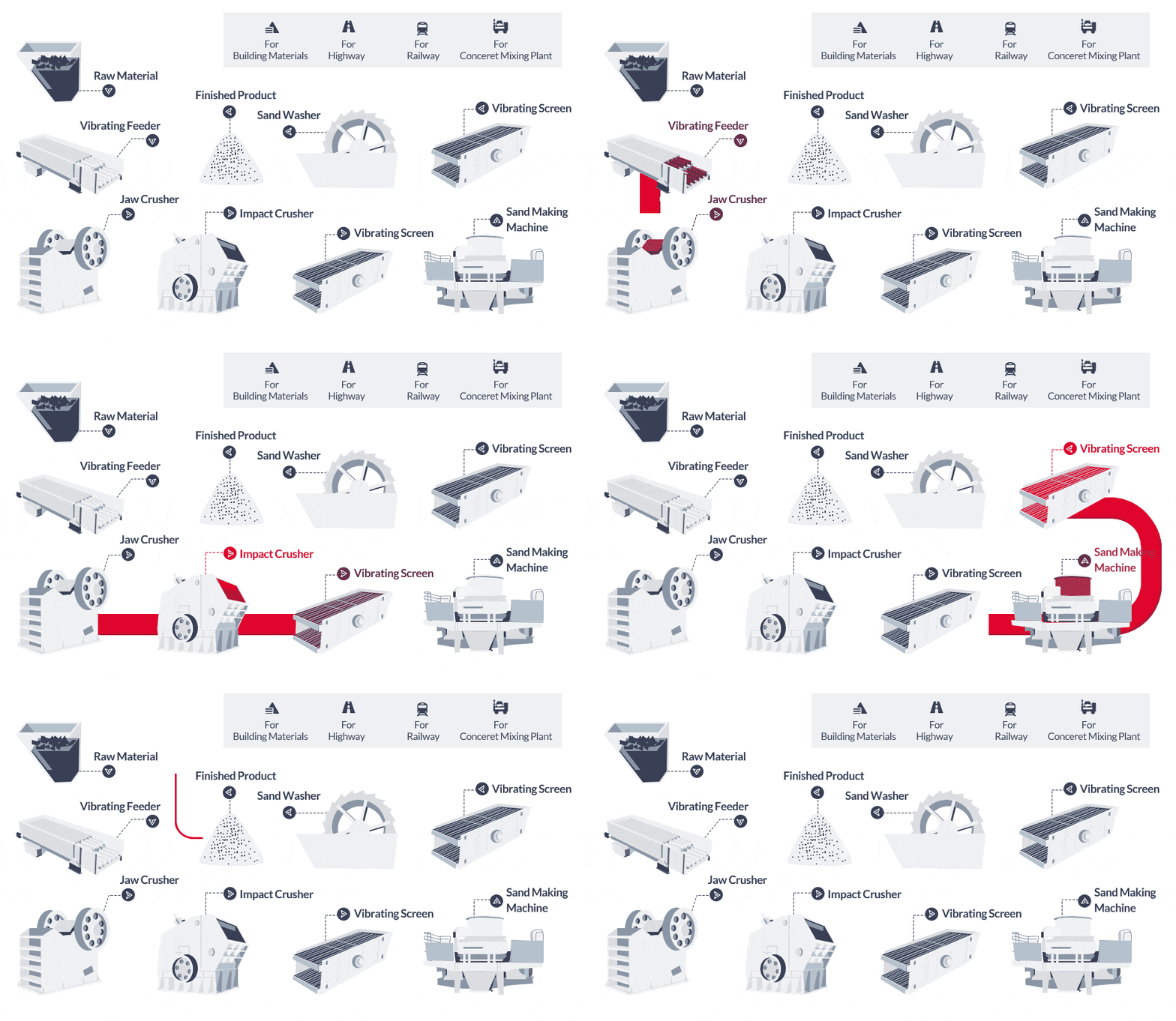
The sand making product line follows a systematic process. Here’s a clear and structured breakdown of the steps involved:
Stone Crushing: Large stone pieces stored in the silo are fed into the jaw crusher by a vibrating feeder for coarse crushing. The crushed materials are then conveyed by a belt conveyor to a cone crusher or impact crusher for further crushing.
Screening: The belt conveyor transports the crushed materials to a vibrating screen for screening. The vibrating screen separates the finished sands (materials above the sieve) from the oversized particles (materials under the sieve).
Sand Washing: The finished sands are carried by a belt conveyor to a sand washing machine for washing and removing impurities. After washing, the cleaned sands are sent to the finished product stack with the help of a belt conveyor.
Fine Crushing: The oversized particles (materials under the sieve) are conveyed by the belt conveyor to a vertical mobile impact crusher (artificial sand making machine for sale) for fine crushing. The finely crushed stones are then sent back to the vibrating screen for another round of screening.
This process forms a closed loop where the materials go through repeated crushing and screening stages until they meet the desired size and quality requirements. The rock crusher equipment continues until the desired amount of sand is produced. By following this structured sand processing line, sand manufacturing machines efficiently crush, screen, wash, and refine raw materials to produce high-quality sand products. Let’s take a look at a real case.
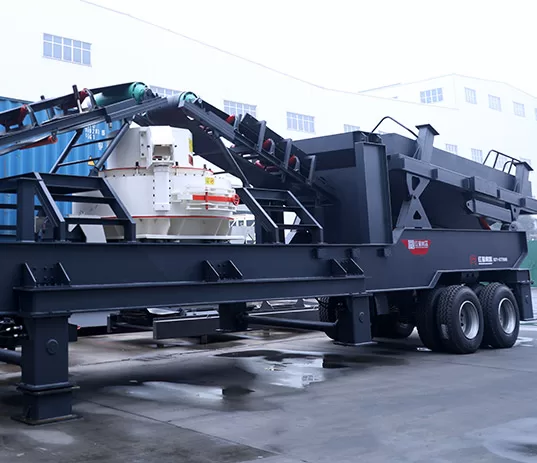
Our most popular sand making machines currently are the VSI, PCL, and mobile models. PCL sand makers are the most advanced and suitable for sand making manufacturers with high requirements on finished products and sufficient budget. VSI sand makers are cost-effective. Mobile sand makers can meet the portable and mobile sand making needs.
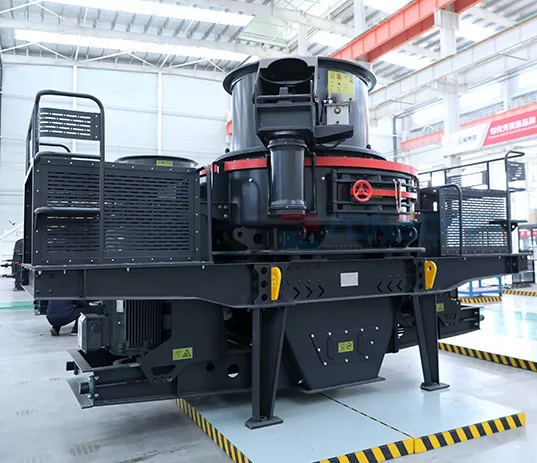
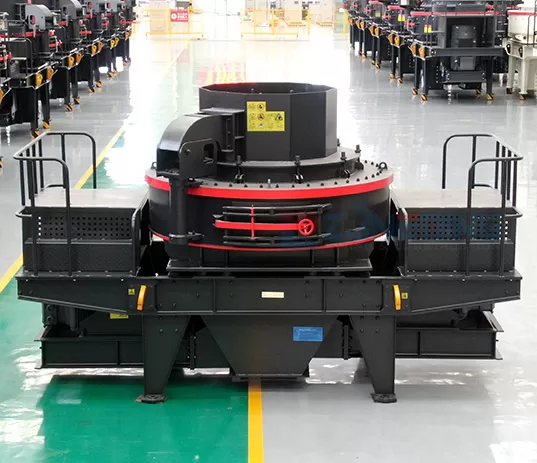
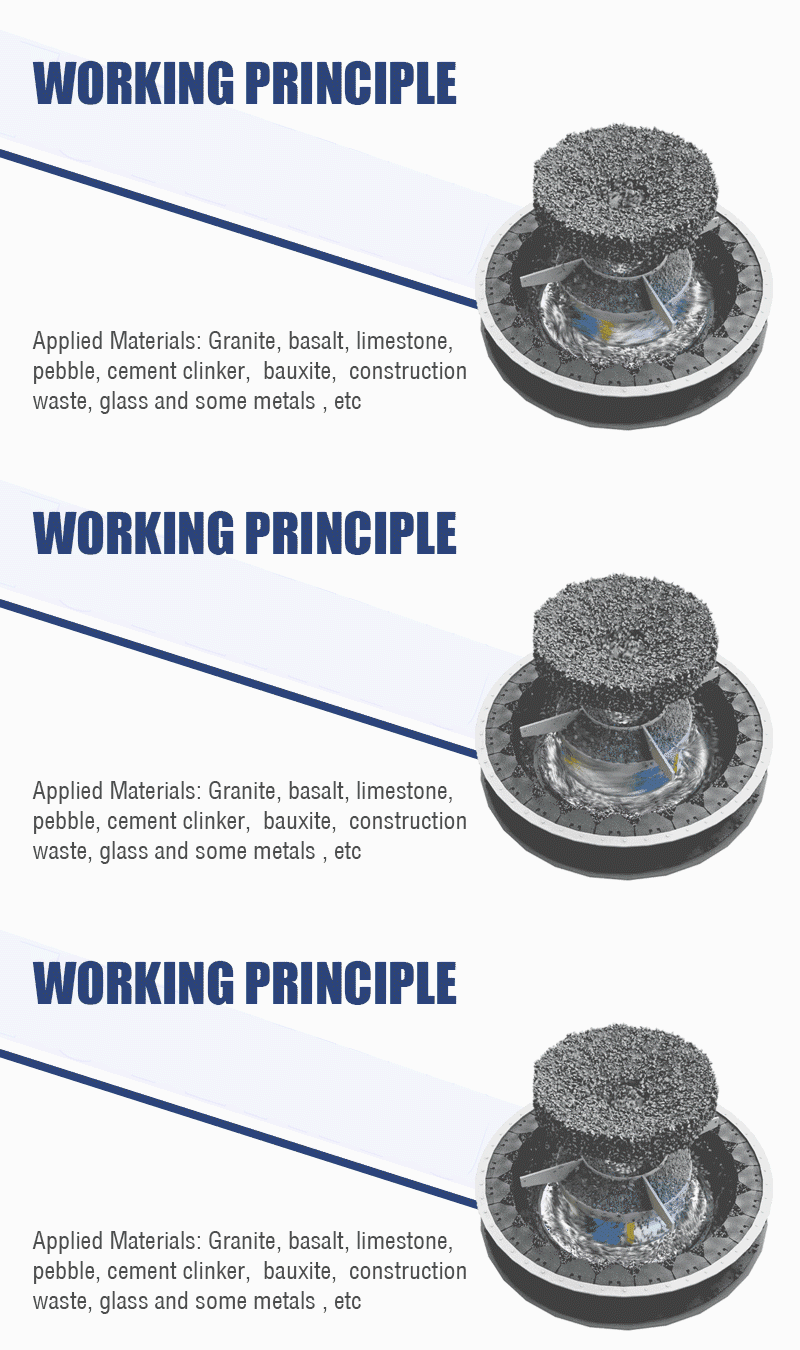
The sand making machine uses the working principle of high-speed impact and crushing:
1. First the material flows into the vortex crushing cavity from the feed hopper. The high-speed rotating impeller crushes the material scattered around the impeller in the form of an umbrella.
2. After the materials collide with each other, the material layer between the impeller and the casing will form a vortex flow for multiple collisions, friction, and crushing.
3. Then the material is discharged from the lower discharge hopper to complete the crushing process. The particle size of the finished product is controlled by the screening machine.
The primary use is to produce high-quality Manufactured Sand for the construction industry. This sand is a key ingredient in concrete, mortar, and asphalt. Because of its superior cubical sand shape, it makes concrete stronger and more workable.
Beyond construction, the VSI crusher is a versatile tool used in many other industries:
The VSI is a high-performance machine, and its parts are designed to handle extreme speeds and impacts. Understanding the key components helps with maintenance.
The VSI crusher working principle is based on a simple concept: kinetic energy. It converts the motor’s electrical energy into the kinetic energy of fast-moving rock.
First, small crushed stones (usually less than 50mm) are fed into the top of the machine. The material falls by gravity into the center of the rapidly spinning rotor. The rotor acts like a slingshot. Centrifugal force pushes the material to the edge of the rotor and ejects it at an extremely high velocity.
This high-speed stream of rock then smashes into the stationary outer crushing chamber. The violent impact causes the rock to shatter along its natural crystalline structure. This is why it produces a superior cubical shape, unlike crushers that squeeze rock and create flaky pieces. The finished sand product then falls out of the bottom of the machine.
The price of a VSI crusher can vary widely depending on its size, capacity, and features. The total sand making plant cost will be higher, as it includes other machines, but the VSI is the core investment.
Factors that influence the price include the brand of the motor, the quality of the wear parts, and the level of automation and sensors included. A ZONEDING VSI directly from the factory offers a significant price advantage by eliminating middlemen.
Making the right choice requires careful analysis of your project. Do not just buy the cheapest or the biggest machine.
First, test your feed material. You need to know its hardness, abrasiveness, and moisture content. A highly abrasive rock like granite with high silica content will dramatically increase your VSI wear parts cost. For such materials, a Rock-on-Rock VSI is essential.
Second, define your product requirements. What size and gradation of sand do you need to produce? This will determine the rotor speed and configuration of the machine. Your capacity needs (tons per hour) will dictate the model size and motor power.
Third, consider your whole plant. A VSI needs to be fed with correctly sized material, usually less than 50mm. This means you will need a primary and secondary crusher ahead of it. Talk to an expert like the engineers at ZONEDING to design a balanced and efficient production line.
A VSI is a high-speed machine that requires regular attention to perform at its best. Consistent maintenance is the key to profitability.
Proper installation is crucial for the safe and efficient operation of a high-speed VSI. It is not a machine you can just drop on the ground and turn on.
You must start with a massive, reinforced concrete foundation. The manufacturer will provide a foundation drawing showing the exact dimensions and steel reinforcement required. The foundation needs to be heavy enough to absorb vibrations and anchor the machine securely.
Once the foundation is cured, the machine is lifted into place with a crane. It must be perfectly leveled. Even a small tilt can cause uneven wear and stress on the bearings. The electrical connections must be done by a qualified electrician. Ensure the motor is correctly wired so the rotor spins in the direction indicated by the arrow on the machine.
A ZONEDING VSI Crusher is designed from the ground up for profitability. We focus on three key areas: efficiency, wear life, and product quality.
Our advanced rotor design maximizes the acceleration of the material, which means you get more crushing done with less energy. This lowers your electricity bill for every ton of sand you produce. We use a unique deep-cavity rotor that improves material flow and increases capacity.
We have invested heavily in wear part technology. Our rotor tips and anvil components are made from proprietary composite alloys and tungsten carbides that last significantly longer than standard parts. This directly reduces your biggest operational cost: the VSI wear parts cost. Longer life means less downtime for maintenance and more time producing sand.
The debate over manufactured sand vs river sand is over. Modern, high-quality M-Sand made in a VSI is superior to natural sand in almost every way for construction.
River sand has a rounded particle shape, which acts like ball bearings in a concrete mix. This leads to a weaker bond with the cement. M-sand has a cubical, angular shape that interlocks perfectly, creating a much stronger and more durable concrete.
Furthermore, river sand often contains impurities like clay, silt, and organic materials that compromise concrete quality. M-Sand production is a controlled process. The rock is crushed, and if needed, it can be washed to remove all dust and impurities. You get a consistent, clean, and perfectly graded product in every batch.
The “more efficient” method depends on how you define efficiency. Is it energy efficiency or cost efficiency?
For a new project, it is often wise to buy a VSI that can be converted between both modes, giving you flexibility as your quarry conditions change.
| Model | Sand Shaping | Sand Making | Sand Shaping | Sand Making | Motor Power(kw) |
| Max.Feeding Size (mm) | Throughput(t/h) | ||||
| PCL 0815 | <30 | <35 | 70-140 | 130-230 | 2×75 |
| PCL 0818 | <30 | <35 | 80-190 | 165-283 | 2×90 |
| PCL 0922 | <35 | <40 | 105-145 | 220-330 | 2×110 |
| PCL 0926 | <35 | <40 | 120-190 | 240-380 | 2×132 |
| PCL 1032 | <40 | <45 | 181-278 | 246-356 | 2×160 |
| PCL 1040 | <40 | <45 | 262-284 | 350-440 | 2×200 |
| PCL 1250 | <45 | <50 | 345-371 | 414-540 | 2×250 |
| PCL 1263 | <50 | <55 | 453-498 | 521-585 | 2×315 |
Adjust rotor speed (higher = finer, more cubical), cascade feed ratio, and feed size. Proper feed prep is key.
Distributor plate, feed eye ring, wear plates/liners. Use high-quality alloys, ensure balanced rotor, regular inspection.
VSI for superior cubicity, finer product, and tertiary/shaping stage. Cone often for coarser sand or secondary crushing.
Reduces efficiency, can cause rotor/chamber blockages, increases power draw, accelerates wear. Pre-screening/washing vital.
Rock-on-rock: better cubicity, less metallic wear, more fines. Rock-on-anvil: higher output, more controlled fines, higher wear part cost.