 Zoneding Mining

Site Search
Search products, equipment and solution articles
整站搜索产品中心新闻中心
点击开始搜索
热门搜索
UltraForm-MXFlexiPoly-RNanoForm Z300EcoFab P200
Search products, equipment and solution articles
This skid-mounted Modular Jaw Crusher Station examines design, installation, and costs. For 2-5 year projects, it offers lower costs per ton than tracked plants and faster setup than fixed ones. Technical details on foundations, vibration management, and process integration are included to ensure efficiency.
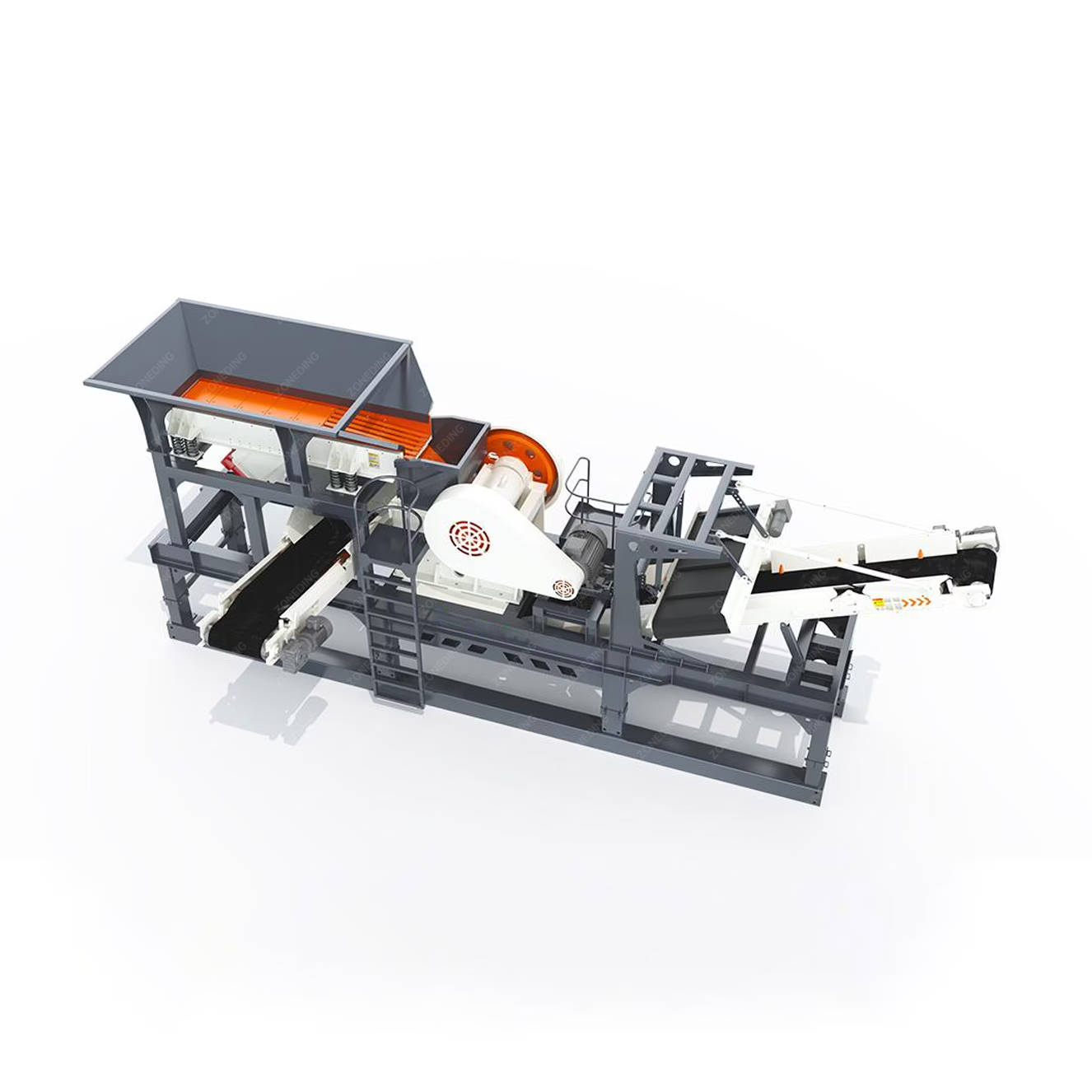
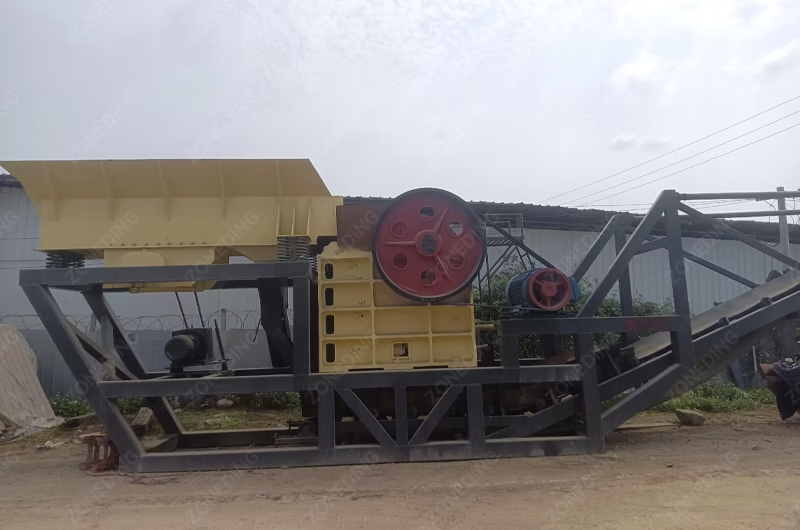
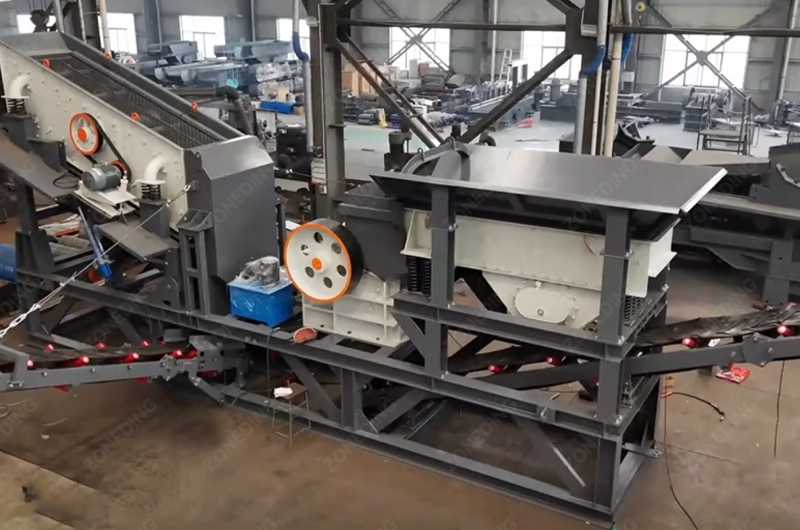
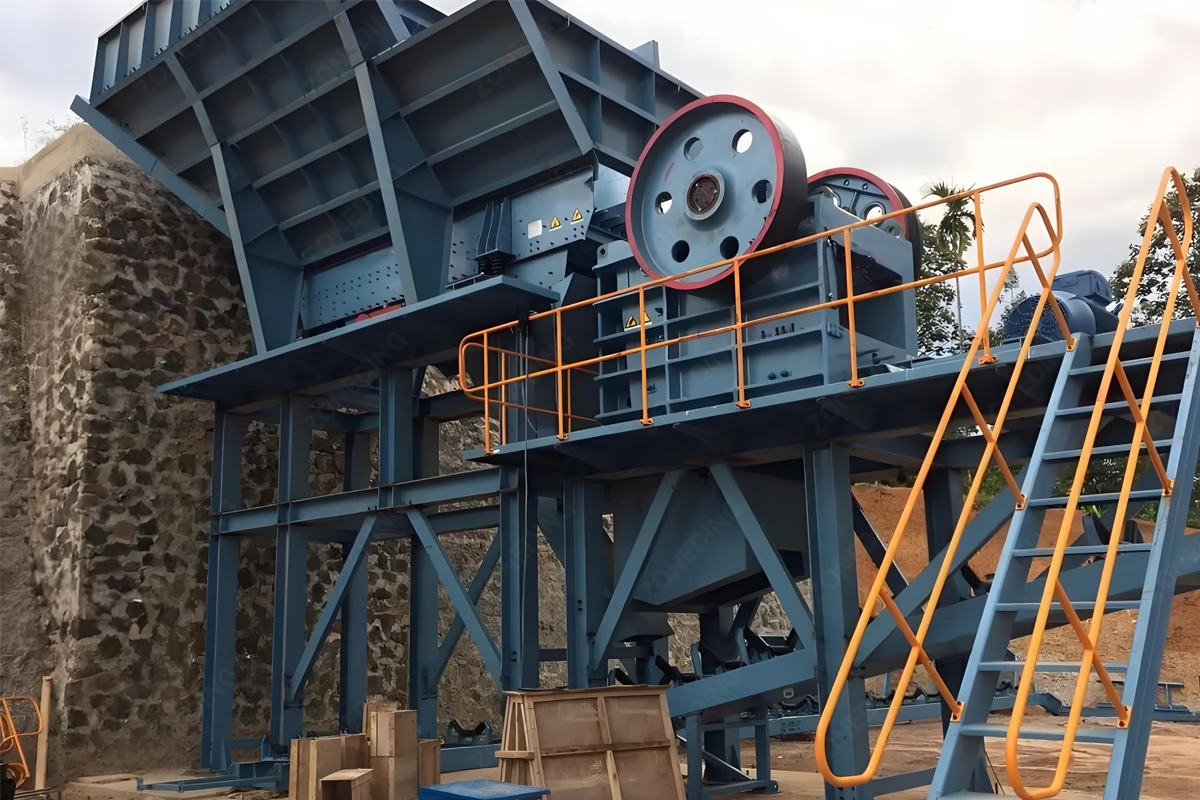
A Modular Jaw Crusher Station is a pre-engineered crushing unit mounted on a steel structure base. The industry refers to this design as “skid-mounted.” This unit functions as a primary crushing stage. It integrates several key components into a single transportable module.
The primary components include the Jaw Crusher, a Vibrating Feeder, the electric motor, drive guards, a discharge chute, and a steel support frame. The manufacturer assembles these components at the factory. Technicians align the motor and crusher pulleys and install the electrical cabling before shipment.
The design purpose is to reduce on-site assembly time. The module fits into standard shipping containers or typically travels on flatbed trucks. Upon arrival at the mine site, operators bolt the steel structure to a prepared concrete strip foundation. This differs from stationary plants, which require the construction of separate support structures on-site. The modular design centralizes the engineering responsibility with the manufacturer rather than the site contractor.
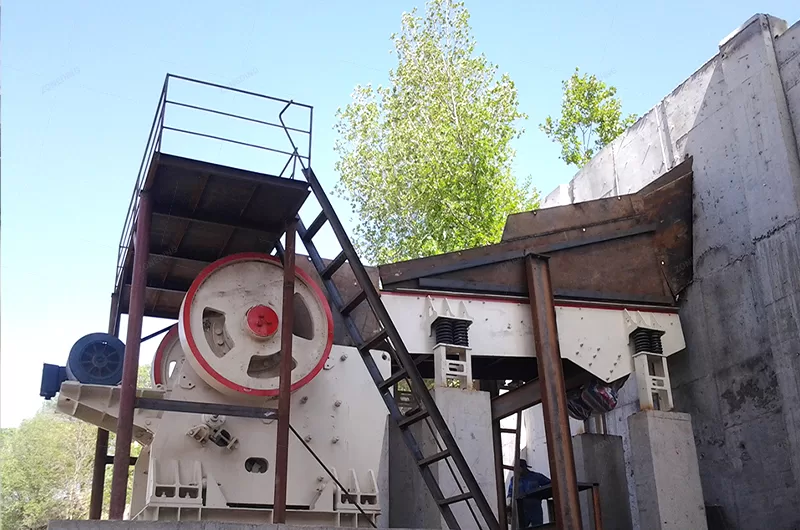
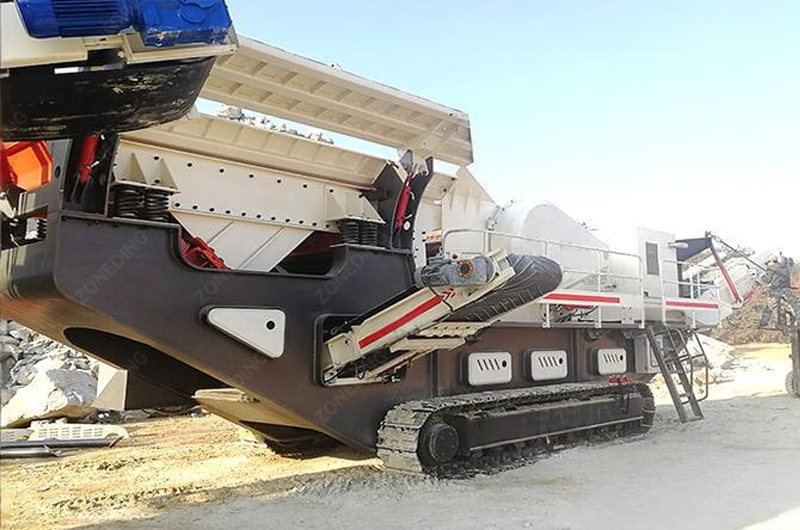
This section compares the three main types of crushing plant configurations: Fixed, Modular (Skid-mounted), and Tracked Mobile. The choice depends on project duration, budget, and site conditions. The following table presents the technical and economic differences.
| Feature | Fixed Plant | Modular Station | Tracked Mobile Plant |
|---|---|---|---|
| Mobility | None (Permanent installation) | Semi-Mobile (Relocatable via truck) | High (Self-propelled tracks) |
| Foundation Requirement | Full concrete foundation | Strip footing or compacted gravel | Compacted flat ground |
| Installation Time | 3 to 6 months | 1 to 2 weeks | 1 to 2 days |
| Power Source | Grid electricity | Grid electricity | Diesel engine / Hydraulic |
| Initial Cost | Low | Medium | High |
| Operational Cost | Low (Electricity is cheaper) | Low (Electricity is cheaper) | High (Diesel consumption) |
| Resale Value | Low (Foundation is sunk cost) | High (Steel structure is an asset) | Low (Engine wear reduces value) |
Technical Analysis:
The Tracked Jaw Crusher uses a diesel engine and hydraulic systems to move. This results in higher fuel and maintenance costs per ton of crushed material. The engine also depreciates in value based on operating hours.
In contrast, the Modular Jaw Crusher Station uses electric motors powered by the grid or a central generator. Electric motors require less maintenance than diesel engines. The modular station avoids the extensive concrete work of a fixed plant. Therefore, for projects lasting longer than one year, the modular station offers a lower total cost of ownership than tracked units and greater flexibility than fixed units.
Specific engineering and economic benefits of selecting a modular station are detailed below. These advantages relate to civil engineering, mechanical stability, and asset management.
A standard fixed plant requires a massive reinforced concrete foundation to absorb the dynamic forces of the crusher. The modular station utilizes a heavy-duty Steel Structure Base to distribute these loads.
The manufacturer pre-assembles the crusher and drive system. This eliminates the need for complex on-site alignment of the V-belts and motor base.
The modular station functions as a movable asset.
The design includes engineering to manage vibration.
Modular designs prioritize compactness for transport. This can limit maintenance space.
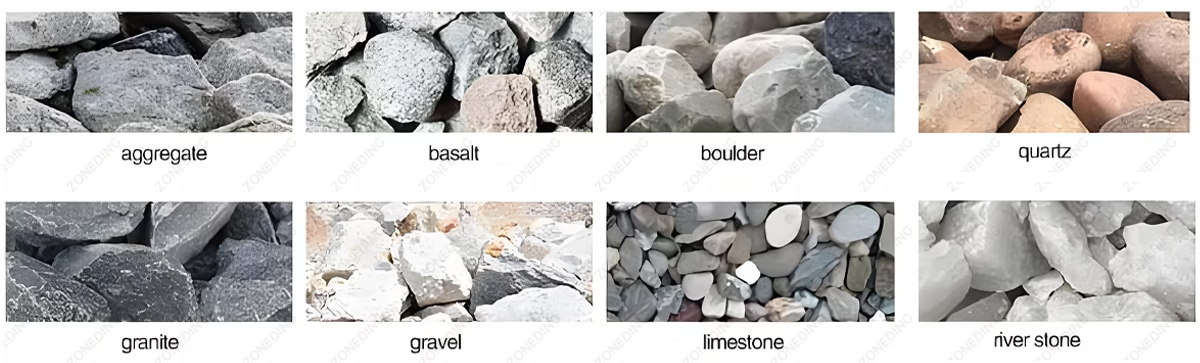
The Modular Jaw Crusher Station employs compressive crushing technology. It is suitable for materials with high compressive strength and high abrasiveness indices. The crushing chamber uses manganese steel wear liners to break rock against rock or rock against steel.
The selection of a modular station depends on the operational parameters of the project. Four primary scenarios are identified where this equipment is the standard engineering choice.
Mines with an expected life of 2 to 5 years benefit most. The capital expenditure is lower than a tracked fleet, and the setup time is faster than a permanent plant. The lower operating cost of grid power maximizes profitability over this specific timeframe.
In locations with poor road access or islands, transporting concrete is expensive and logistically difficult. The modular station significantly reduces the concrete requirement. The steel structure travels in manageable sections, simplifying logistics in mountainous or remote areas.
Some jurisdictions distinguish between permanent structures and temporary equipment. Modular stations often qualify as semi-mobile or temporary equipment. This classification can simplify the permitting process and allow operations to commence sooner.
Construction companies producing aggregate for highways or dams often relocate every 1 to 2 years. The modular station allows for disassembly and reassembly at new sites along the infrastructure route. This portability supports the project timeline without the high fuel costs of tracked crushers.
The Modular Jaw Crusher Station functions as the first component in a modular processing plant. Manufacturers design these modules with standardized connection points and conveyor heights to ensure seamless integration.
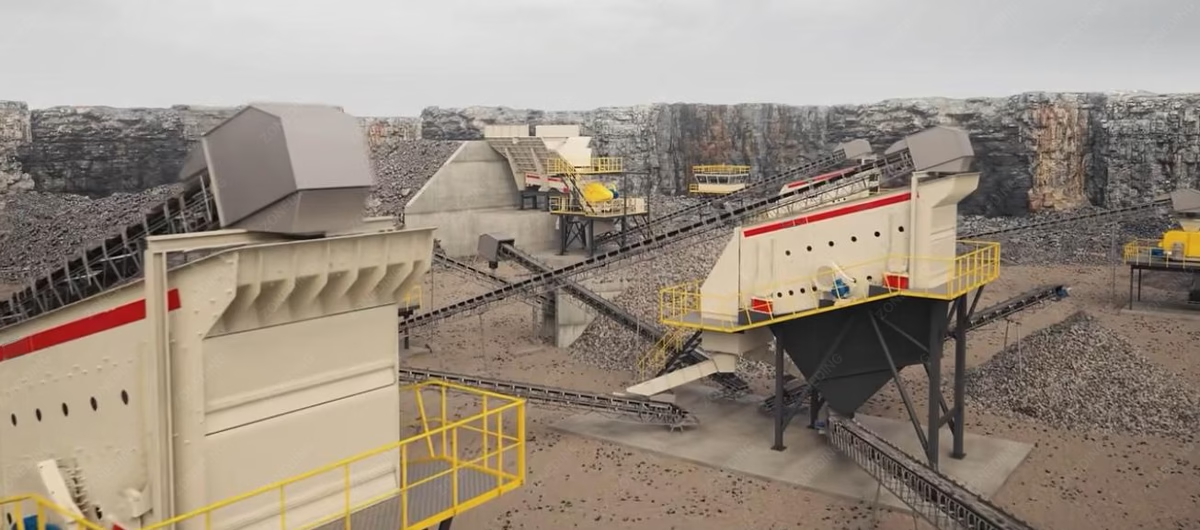
The process begins with the jaw module. The Vibrating Feeder regulates the flow of Run-of-Mine (ROM) material into the jaw crusher.
A belt conveyor transports the material to the Cone Crusher module. This skid includes the cone crusher, a lubrication system, and a surge hopper.
The material proceeds to the Vibrating Screen module. This unit separates the crushed stone into specified commercial sizes (e.g., 20mm, 10mm, 5mm).
To produce manufactured sand, the layout includes a VSI Sand Making Machine module. This unit processes the smaller fractions from the screen to create fine aggregates.
The modular system allows for flexible configuration. Engineers can add or remove modules based on changing market demands or material characteristics. The electrical control system typically connects all modules to a central panel, enabling coordinated start-up and emergency stop functions across the entire line.
The Modular Jaw Crusher Station offers a balance between stability and mobility. It reduces civil engineering costs by utilizing a steel structure base and lowers operating costs through electric drive systems. It is the optimal technical solution for mining projects with a duration of 2 to 5 years. Correct installation on strip footings and proper vibration isolation are essential for structural integrity.
Mining operators are advised to evaluate the project lifespan and power availability before purchasing. If grid power is available and the project exceeds 12 months, selecting a modular station is prudent. Ensure the specification includes a Soft Starter and that the foundation design accounts for local soil compaction rates.
ZONEDING manufactures mineral processing equipment, including modular, fixed, and mobile crushing solutions. The company operates an 8,000 square meter factory equipped with CNC machinery and employs 15 specialized engineers. ZONEDING exports products to over 120 countries, providing customized designs and full-process support for mining and aggregate industries.
Contact ZONEDING for technical specifications and foundation drawings for modular jaw crusher stations. The engineering team provides detailed layout designs to match specific site topography.
A trained mechanical team completes installation in 7 to 10 days, assuming the concrete strip footings have cured. This timeframe is significantly shorter than the 3-4 months required for stationary plants.
Yes, manufacturers design the steel structure to be bolted. This allows disassembly into components that fit within standard Open Top or Flat Rack containers, reducing international freight costs compared to break-bulk shipping.
The jaw crusher processes moist material effectively. However, the vibrating feeder must have sufficient grizzly bar spacing to remove sticky fines before the crushing chamber. For high moisture content, installing a dedicated wobble feeder instead of a standard vibrating feeder is an option.
Modular stations use electric motors. In off-grid locations, a diesel generator set is required. The generator capacity should generally be 2.5 to 3 times the total power of the station to account for the high starting current of the jaw crusher, unless Soft Starters or Variable Frequency Drives (VFDs) are used.
The service life of wear parts depends on the silica content. For hard granite, high manganese steel jaw plates typically last between 300 and 500 operating hours. Using modified high-manganese steel alloys can extend this lifespan.