 Zoneding Mining

Site Search
Search products, equipment and solution articles
整站搜索产品中心新闻中心
点击开始搜索
热门搜索
UltraForm-MXFlexiPoly-RNanoForm Z300EcoFab P200
Search products, equipment and solution articles
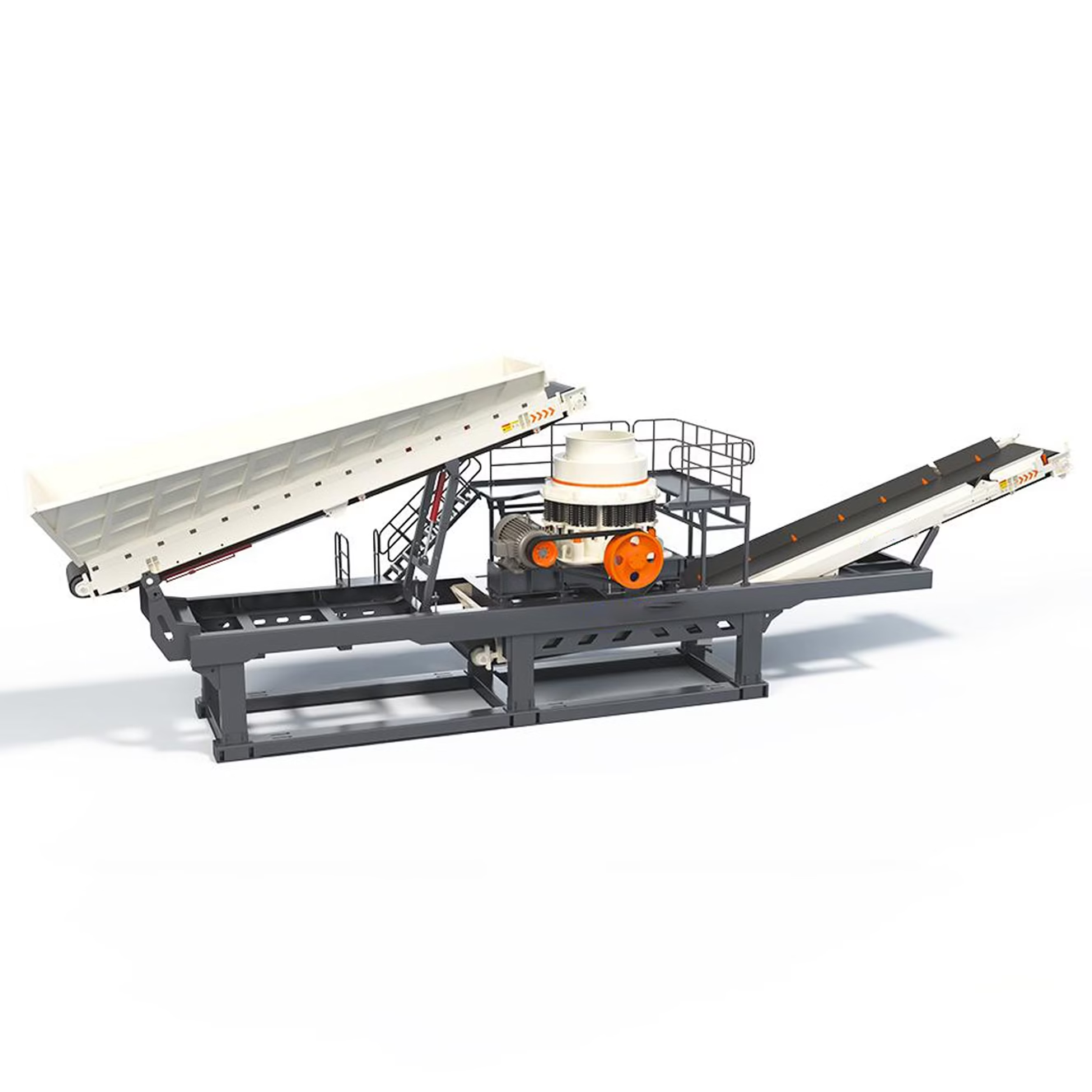
Defined as a skid-mounted secondary unit, this station bridges the gap between fixed and mobile plants. Since secondary crushing dictates product shape and capacity, this guide analyzes its structural design, closed-circuit integration, and suitability for hard rock applications.
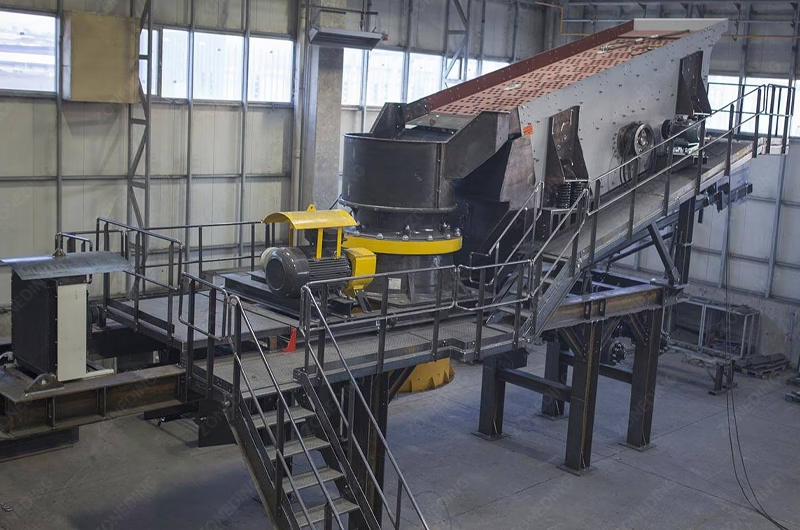
A Modular Cone Crusher Station (often termed a Skid-mounted Cone Crusher) constitutes a pre-engineered crushing assembly designed for rapid installation and relocation. Unlike traditional fixed plants that rely on extensive reinforced concrete foundations, this equipment integrates the cone crusher, electric motor, drive assembly, and automation controls onto a unified steel chassis.
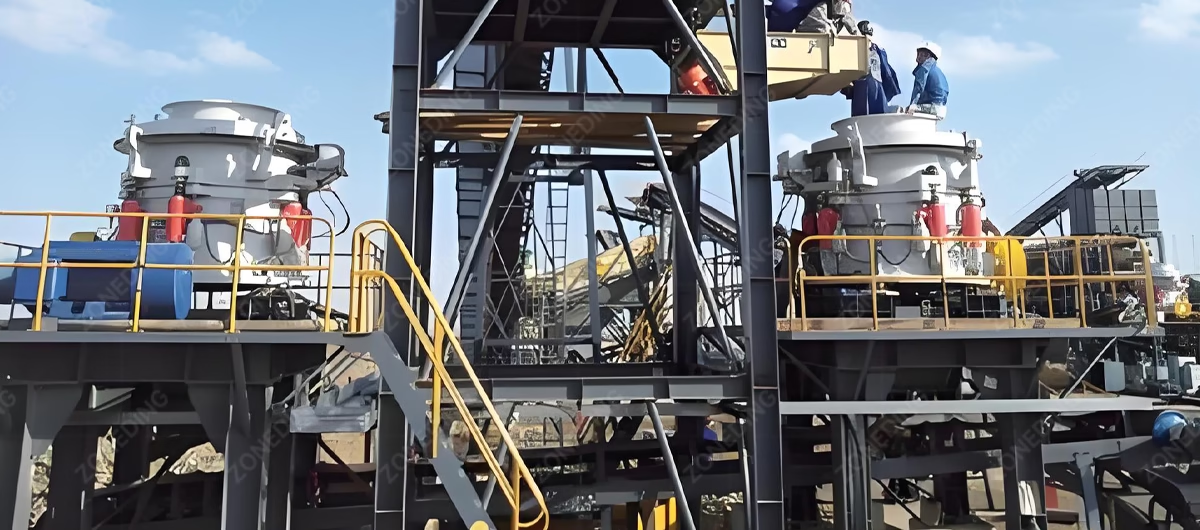
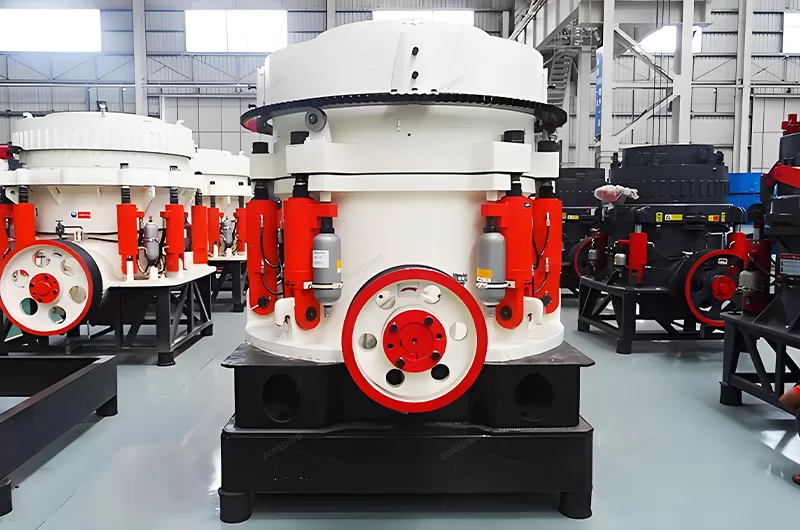
The core component is typically a Cone Crusher, selected for its ability to perform secondary or tertiary crushing. The engineering philosophy prioritizes the transfer of assembly work from the installation site to the manufacturing facility. By completing wiring, piping, and structural assembly in a controlled factory environment, the on-site commissioning period decreases significantly.
Despite the “modular” designation, these stations utilize heavy-duty steel structures capable of withstanding the dynamic forces generated during the crushing of hard rock. They operate on the Lamination Crushing Principle, where material reduction occurs through inter-particle compression (rock-on-rock) within the crushing chamber, rather than solely through impact against metal liners. This mechanism proves essential for producing cubical aggregates required for high-grade infrastructure projects.
The selection of a modular station over fixed or tracked alternatives typically stems from an analysis of capital expenditure (CAPEX), operational expenditure (OPEX), and project duration.
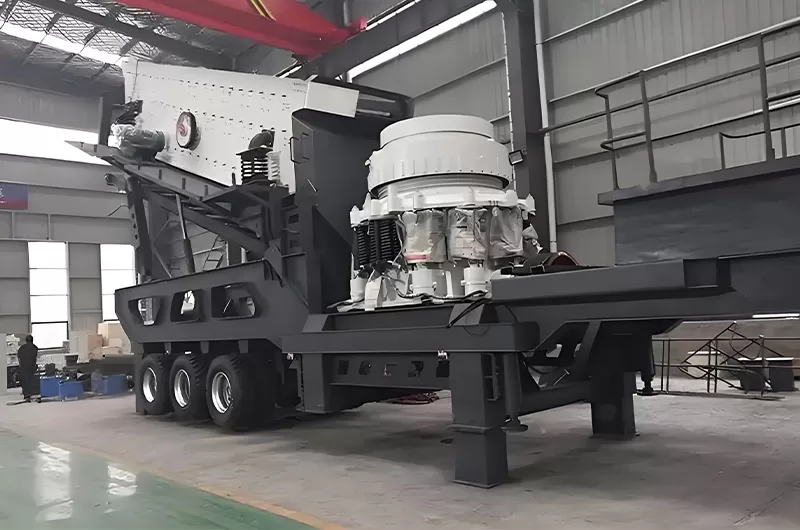
| Feature | Fixed Cone Plant | Modular Cone Station | Tracked Mobile Cone |
|---|---|---|---|
| Foundation Requirement | Reinforced Concrete Pit | Compacted Gravel + Steel Skid | Compacted Ground |
| Installation Timeline | 60-90 Days | 7-14 Days | 1-2 Days |
| Energy Source | Grid Electricity | Grid Electricity | Diesel Engine / Hybrid |
| Maintenance Accessibility | High (Walkways) | Moderate (Platforms) | Low (Compact Design) |
| Relocation Potential | None (Demolition required) | High (Bolt-together) | Very High (Self-propelled) |
The successful deployment of a Secondary Crushing Equipment module depends on specific engineering details. Standardized designs often require modification to suit specific operational realities. The following technical factors influence long-term reliability and throughput.
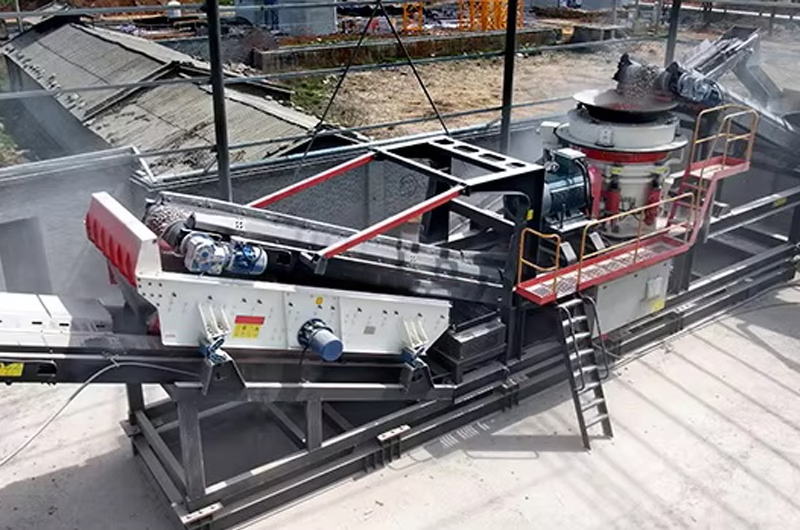
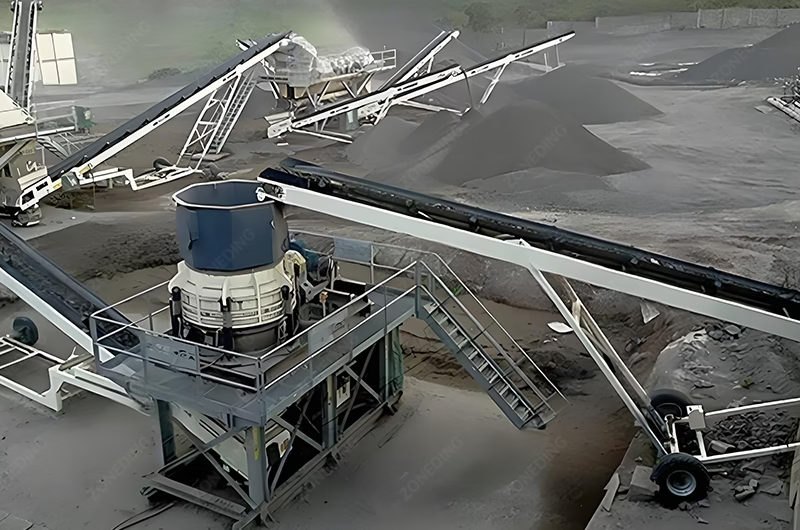
A common design limitation in compact modular stations involves the size of the feed hopper (surge bin).
The compact footprint of modular stations often restricts the length of the feed conveyor, creating risks regarding tramp iron.
The choice between cylinder types impacts structural stability within a modular frame.
Cone crushers generate significant gyratory forces. Unlike the linear vibration of screens, this gyratory motion creates shear stress on welded joints.
Space constraints often force the placement of hydraulic lubrication units in suboptimal locations, such as directly beneath the crusher.
Secondary crushing typically operates in a Closed-circuit System alongside a screening plant.
Routine maintenance requires the removal of the crusher’s upper assembly (mantle/top shell).
The modular cone crusher station specifically targets Hard Rock Crushing Solutions. It suits materials exhibiting high compressive strength (>150 MPa) and high abrasiveness indices.
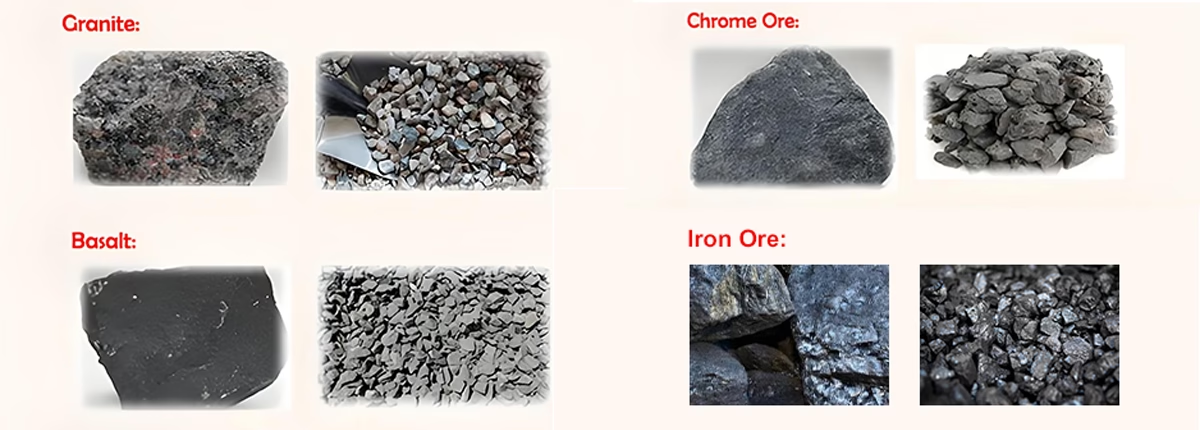
| Material Type | Suitability | Technical Rationale |
|---|---|---|
| Granite / Basalt | High | The high silica content necessitates the abrasion resistance of manganese steel liners found in cone crushers. |
| River Pebble | High | These hard, round materials require the specific nip angle and crushing force of a cone to fracture effectively. |
| Iron Ore | High | High-density ores require the structural rigidity and crushing power of a cone crusher. |
| Limestone | Moderate | While effective, a Mobile Impact Crusher often provides a more cost-effective solution for softer, less abrasive limestone due to lower capital costs. |
The modular cone crusher operates as the central node in a multi-stage system. Proper integration ensures balanced flow and product quality.
Material flows from the primary Jaw Crusher via a conveyor to the modular cone station’s surge bin. The automation system monitors the bin level to regulate the feeder speed of the jaw crusher or the intermediate conveyor, ensuring the cone crusher remains choke-fed.
Discharge from the modular cone crusher travels to the Vibrating Screen module.
For applications requiring high-quality manufactured sand, a VSI Sand Making Machine module can be added after the screening stage to process the smaller fractions further, improving particle shape and increasing fines content.
ZONEDING manufactures a comprehensive range of mineral processing equipment, focusing on durable and efficient crushing solutions for the global mining and aggregate industries. The company utilizes advanced manufacturing facilities to produce modular, fixed, and mobile crushing plants. With a commitment to engineering precision, ZONEDING provides equipment designed to optimize throughput and operational reliability for clients worldwide.
While a deep reinforced pit is not required, a stable base is essential. Concrete strip footings or a compacted gravel pad with sufficient load-bearing capacity prevent differential settlement. Uneven settling can cause the steel frame to twist, leading to drive misalignment.
Yes, but sizing is critical. Cone crushers possess high starting torque. Without a Soft Starter or Variable Frequency Drive (VFD), the generator capacity typically needs to be 2.5 to 3 times the electric motor’s kilowatt rating to handle the inrush current.
Liner life correlates with rock abrasiveness (Silica content) and throughput. Maintenance teams should measure the mantle and concave thickness regularly. Replacement is generally required when wear reaches approximately 70-80% of the liner thickness, or when production capacity drops significantly due to altered cavity geometry.
Excessive vibration often results from uneven feed distribution (segregation) in the hopper, where fine material enters one side of the cavity and coarse material the other. This creates an unbalanced crushing force. Other causes include loose hold-down bolts or failure of the vibration isolation dampeners.
Generally, Mobile Impact Crushers are preferred for construction waste due to the presence of rebar and wood. However, if the waste consists primarily of clean concrete or brick and effective iron removal is in place, a cone crusher can be used, though blockage risks are higher compared to impactors.