 Zoneding Mining

Site Search
Search products, equipment and solution articles
整站搜索产品中心新闻中心
点击开始搜索
热门搜索
UltraForm-MXFlexiPoly-RNanoForm Z300EcoFab P200
Search products, equipment and solution articles
Distiller is rich in nutrients such as protein, fiber, and trace elements, so it is often used as a high-quality animal feed ingredient.
The spent grain dryer can quickly pre-dehydrate wet brewer’s grains with a moisture content of around 85% to 60%, and then dry them to around 12%. The spent grain dryer can be connected to grinding machine and packaging machine for further processing.
A spent grain dryer is specialized industrial equipment designed to handle the high moisture content, sticky nature, and potential for nutrient degradation of residues like BSG and DWG, using heat to produce a stable, dry product.
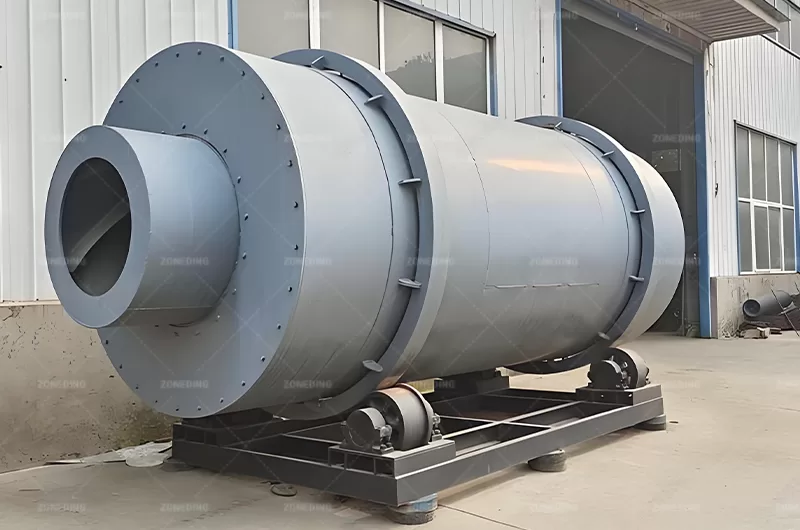
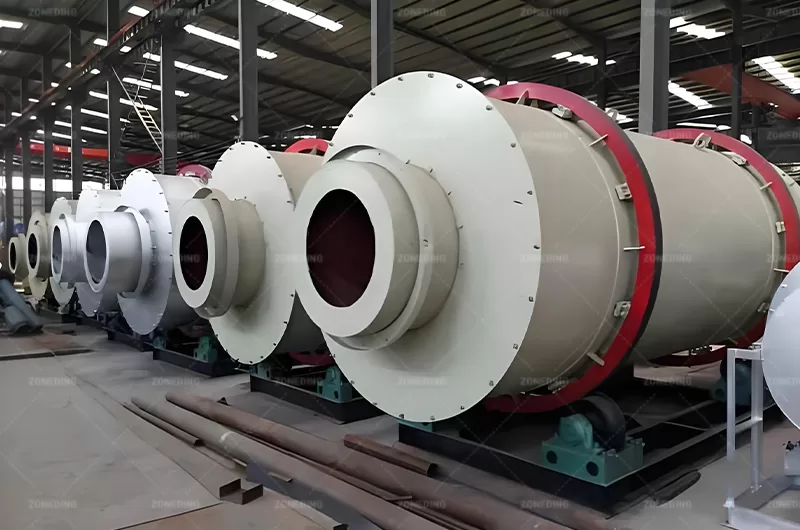
ZONEDING designs these dryers, often robust rotary or specialized types, focusing on efficient moisture removal while protecting the final product’s value.
Wet grain is a big headache because it is 80% water. This means it is very heavy and hard to move. But the biggest problem is that it rots very fast. In warm weather, wet grain starts to smell in less than 24 hours. This makes it hard to store and hard to sell to farmers. If you don’t move it quickly, it becomes a health risk for your site. Most breweries have to pay disposal fees to get rid of it. You are basically paying to throw away a material that has a lot of protein.
ZONEDING understands this “time pressure.” We design the Brewers Spent Grain Dryer to handle the grain as soon as it comes out of the mash tun. By removing the water, you stop the rotting process. Dry grain can sit in a bag for months without smelling. This gives you time to find the best buyer. It also keeps your factory floor much cleaner. You won’t have the “juice” from wet grain leaking everywhere. This is a huge upgrade for any modern brewery that cares about hygiene and efficiency.
Yes, you can, and this is where the money is. Spent grain is full of protein and fiber. Cow and pig farmers love it because it helps animals grow. But they only like it if it is dry. Dry grain is easy for them to mix into their own feed recipes. When you use a Spent Grain Dryer, you turn a “waste cost” into “product sales.” The market for dry animal feed is growing very fast in 2025. You are no longer a waste producer; you are a feed manufacturer.
At ZONEDING, we have seen clients double their margin by selling dry grain. It is called Spent Grain Processing. We can help you set up a whole line. First, you dry the grain. Then, you can use a small mill like a Stone Crusher Machine if you have hard chunks, or just bag the dry flakes. Some of our customers even use the dried grain as an ingredient for high-fiber bread or dog treats. The value of dry grain is about five times higher than wet grain. It is a smart way to diversify your brewery’s income.
Drying 80% moisture grain is very expensive because it takes a lot of fuel. The secret to a low-cost operation is “pre-drying.” This is where you use a mechanical press to squeeze out the water first. This is called Spent grain screw press dewatering. A screw press can lower the moisture from 80% down to 60%. It is much cheaper to squeeze water out with a motor than to evaporate it with a fire. If you skip this step, your fuel bill will be twice as high.
ZONEDING always suggests a screw press as the first step in your Rotary Dryer for Brewery Waste line. We build these presses to be very strong. They work perfectly with our dryers. By removing that first 20% of water, you make the drying job much easier. The dryer can then be smaller and use less gas or coal. We provide the whole “Squeeze and Dry” system as a package. This ensures that the two machines work at the same speed. It is the most efficient way to run a Brewery waste to animal feed equipment plant.
Spent grain dryers are primarily used by breweries and distilleries (whiskey, ethanol) to dry their wet grain residues (Brewer’s Spent Grain, Distiller’s Wet Grains) mainly for producing valuable animal feed like DDGS.
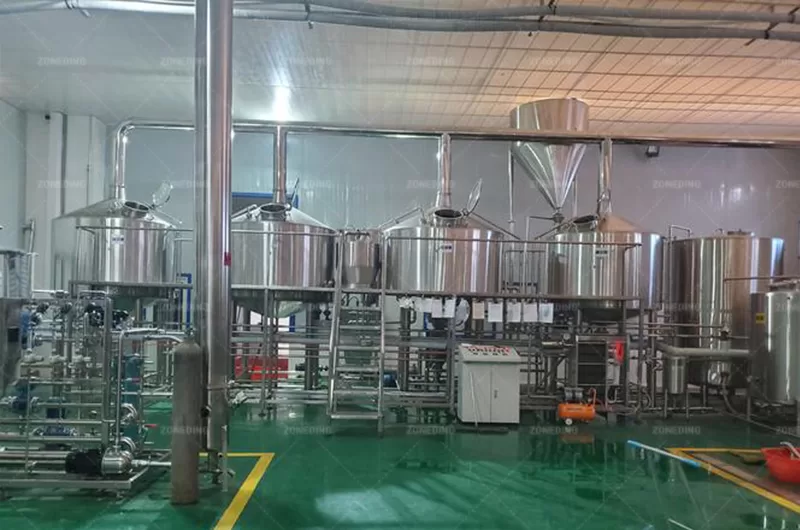
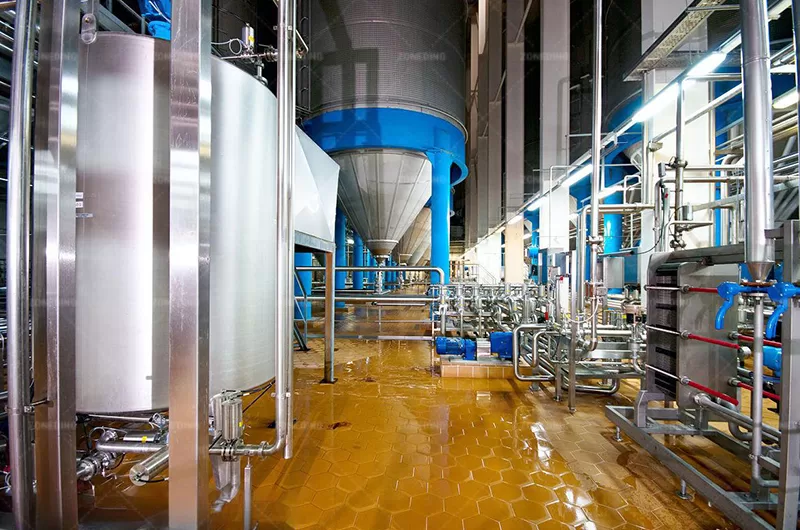
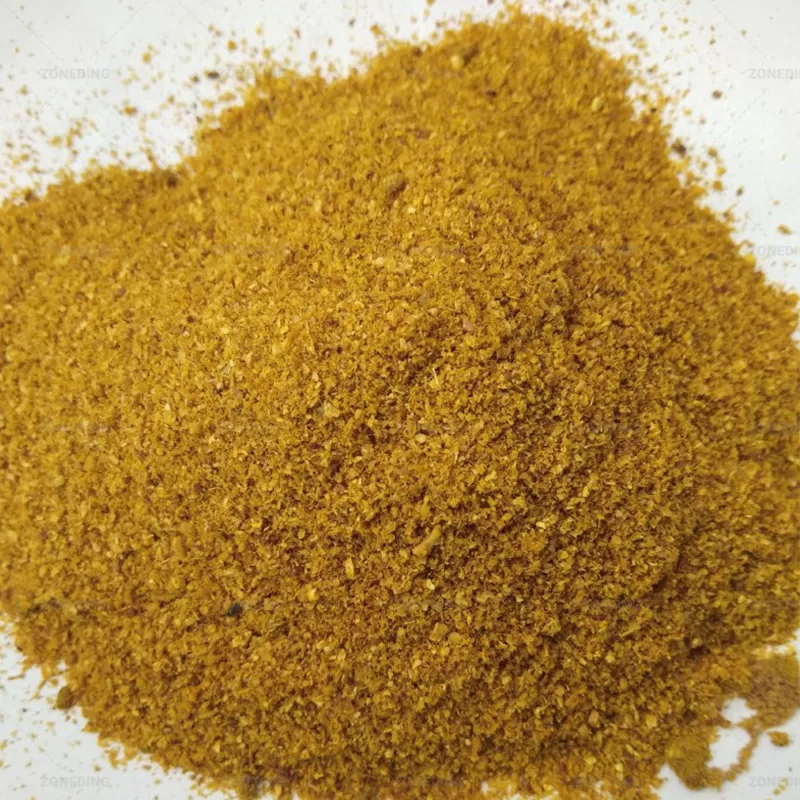
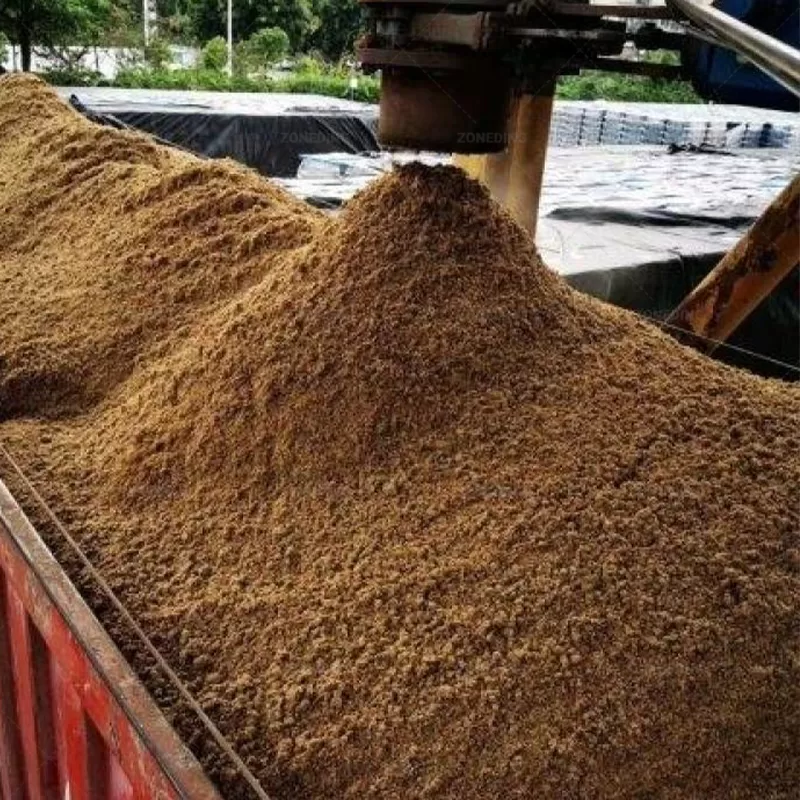
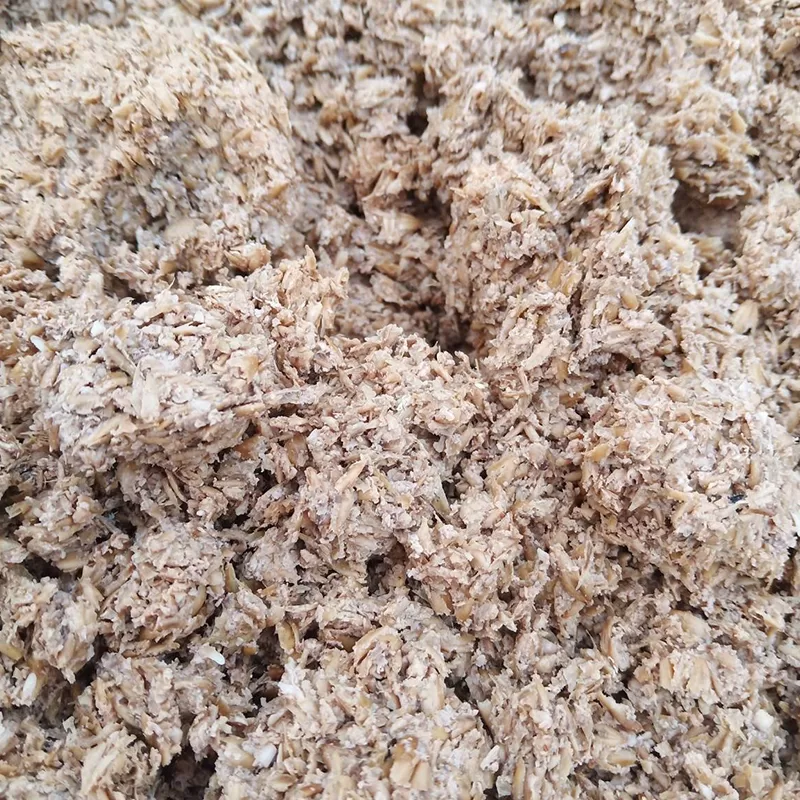
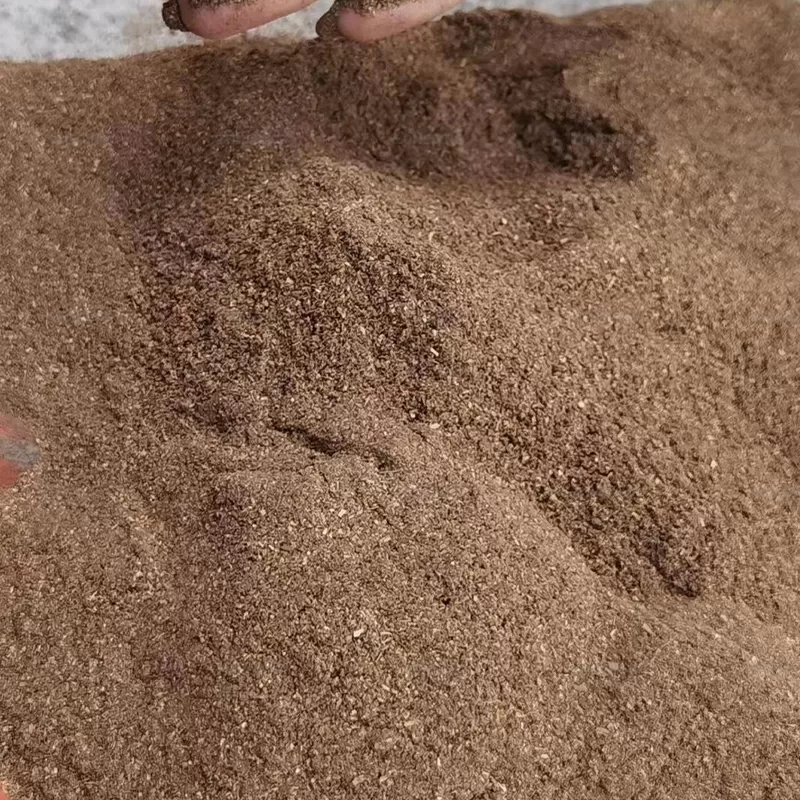
ZONEDING works with clients in these industries to provide drying solutions tailored to their specific byproduct and target application, primarily focusing on robust systems for feed production.
Rotary dryers (specifically steam tube or direct-fired with modifications) and tube bundle dryers are generally the most effective and reliable technologies for handling high-moisture, sticky spent grains due to their robust design and heat transfer methods.
The unique properties of spent grains favor certain dryer designs that can handle potential stickiness and high water loads.
| Dryer Type | Handling Stickiness | Heat Transfer Efficiency | Robustness | Common Use for Spent Grains |
|---|---|---|---|---|
| Steam Tube Rotary | Good | Good (Indirect Heat) | High | Very Common |
| Direct-Fired Rotary | Fair to Good | High | High | Common (Needs Careful Control) |
| Tube Bundle Dryer | Good | Very Good (Indirect Heat) | High | Very Common |
| Belt Dryer | Fair (Risk of Sticking) | Moderate | Moderate | Less Common (Food Grade maybe) |
| Fluid Bed / Flash Dryer | Poor (Difficult Feed) | High | Lower | Rare (Food Grade maybe) |
If you want to keep your grain without it growing mold, you must get the moisture below 12%. This is the “magic number.” At 12%, the grain is “shelf-stable.” This means it can sit in a warehouse for a long time. If you leave it at 20% moisture, it will still rot inside the bag. A ZONEDING Spent Grain Dryer is designed to hit this 12% target every time. We use sensors to check the moisture as the grain leaves the drum.
Hitting this target requires a balance of heat and time. If you dry it too much (below 5%), you are wasting fuel and the grain might become dusty. If it is too wet, it fails in storage. We help you set the controls correctly. We also teach you how to check the moisture using a simple hand-held tool. This ensures you never send a “bad batch” to your customers. Reliable quality is what keeps farmers coming back to buy your grain every month.
A spent grain dryer, like a steam tube rotary or tube bundle type, works by continuously moving the wet grains through contact with heated surfaces (tubes) or controlled hot air, causing water to evaporate and be carried away by an air stream.
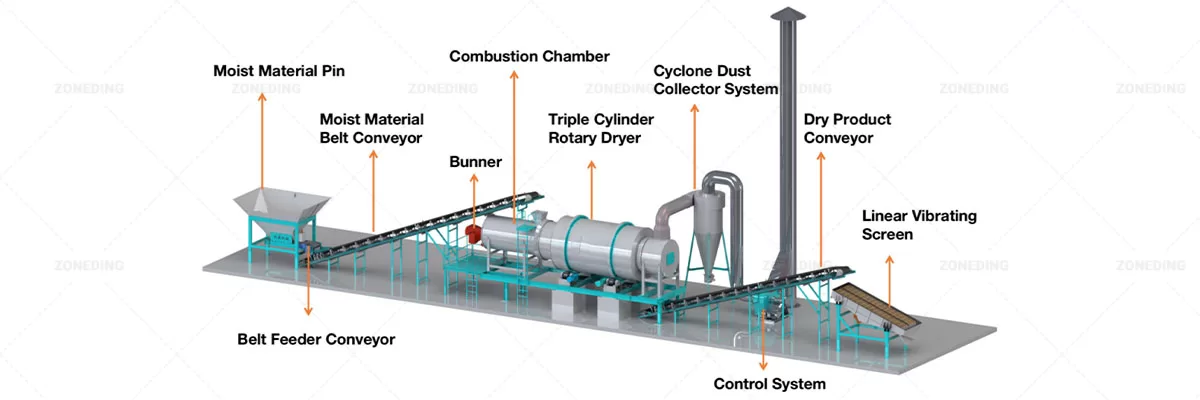
The process varies slightly depending on the dryer type, but the core principles are similar.
ZONEDING designs these systems to optimize heat transfer, residence time, and airflow for efficient and uniform drying, preserving the quality of the final product.
The most common heat sources for spent grain dryers are steam (often available on-site in breweries/distilleries) and natural gas. Direct biomass firing or electricity are less common due to cost or control challenges.
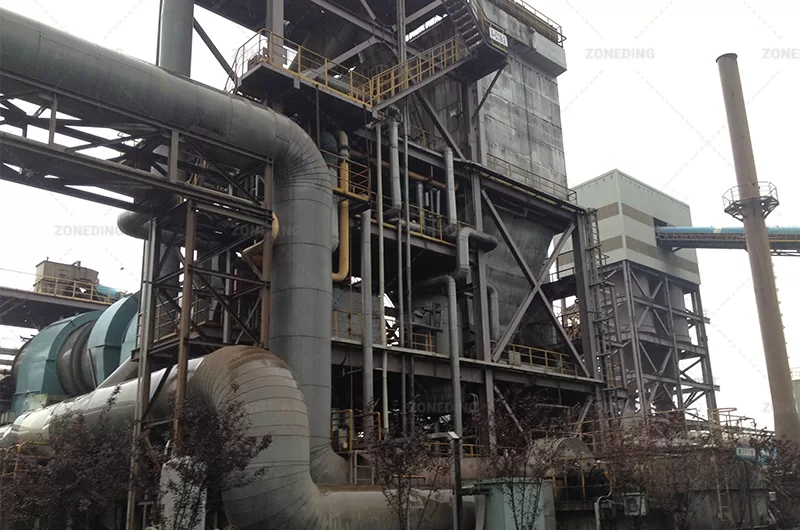
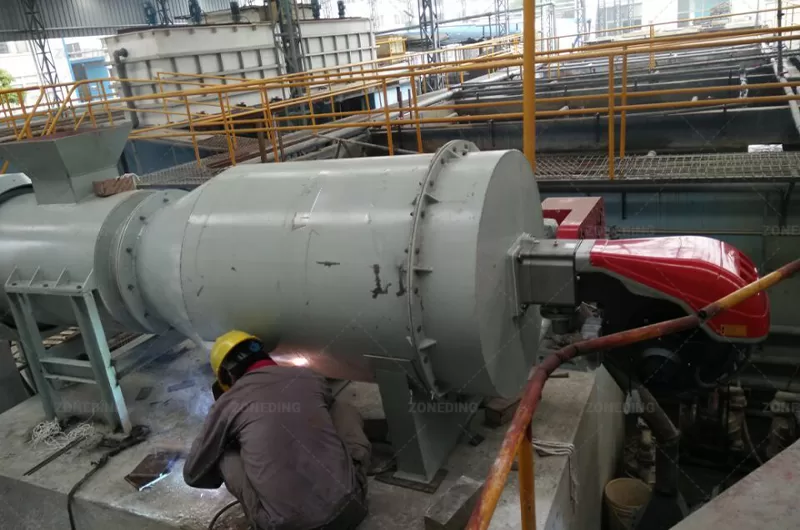
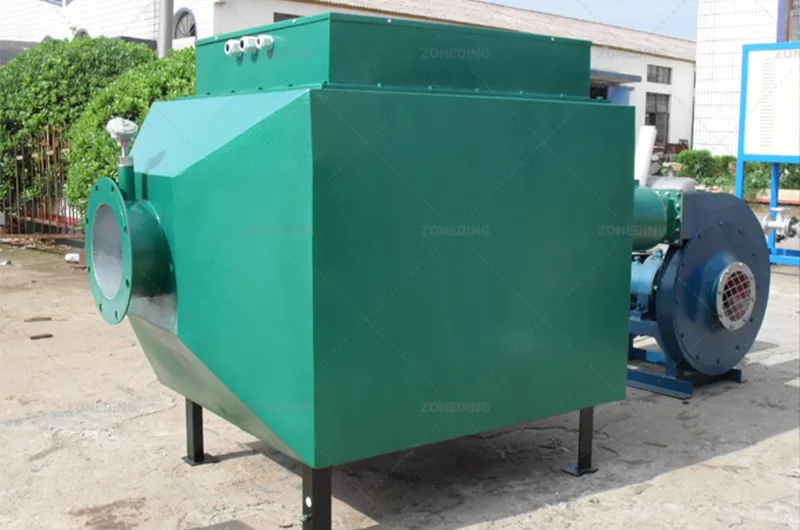
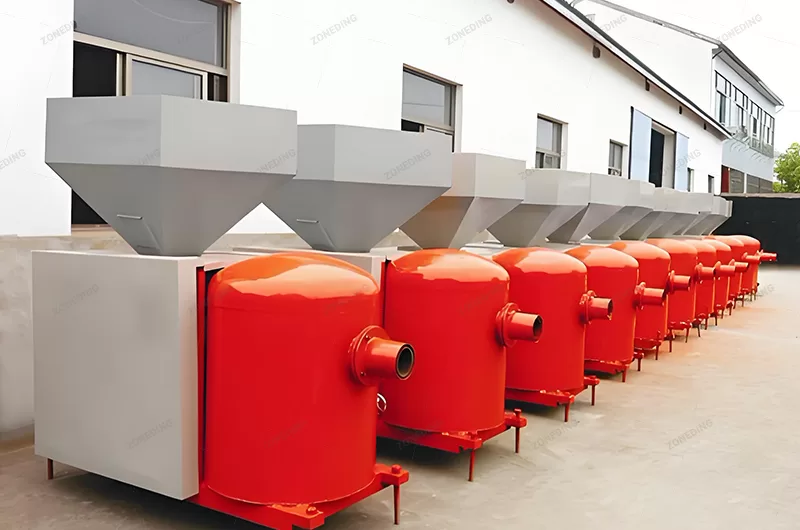
ZONEDING helps evaluate the most cost-effective and technically suitable heat source based on the client’s site conditions, energy availability, and dryer type selected.
Choose ZONEDING for our proven strength in designing and manufacturing heavy-duty, customized rotary equipment, our focus on energy efficiency through integration (like dewatering), robust construction, and comprehensive global support, ensuring reliable long-term operation.
While we may be known for mining equipment, ZONEDING’s fundamental engineering strength in heavy-duty, customized processing solutions makes us a reliable partner for your spent grain drying needs.
This is a very important question. If the air in the dryer is too hot, you will “burn” the protein. This makes the grain brown or black and removes its nutritional value. Animals won’t like the taste and it won’t help them grow. This is why a High protein grain drying process must be carefully controlled. You want the material to be hot enough to evaporate water but not hot enough to cook the protein.
ZONEDING uses a “low-temperature, high-volume” air design. We move a lot of warm air through the drum instead of a small amount of very hot air. This “gentle” drying keeps the grain light in color and high in protein. We also use a “co-current” flow. This means the hottest air hits the wettest grain first. As the air moves through the drum, it cools down. This protects the grain as it becomes dry and more sensitive to heat. It is a specialized science that we have perfected over three decades.
Disposal costs are a “hidden tax” on your brewery. Many cities charge a lot of money to take “organic waste” to the landfill. There are also rules about leaking trucks and bad smells. If you have your own BSG Drying Machine, these costs go to zero. You are no longer sending trucks to the dump. You are sending trucks to the market. Even if you give the dry grain away for free, you are still saving the thousands of dollars you used to pay for disposal.
In some places, you can even get “green credits” for recycling your waste. ZONEDING helps you calculate these savings. Many of our B2B clients find that the reduction in disposal fees pays for the machine in just two years. When you add the sales of the feed, the ROI is even faster. It also makes your brewery “future-proof.” As landfill taxes go up in 2025 and 2026, your factory will be safe. You have total control over your own waste stream.
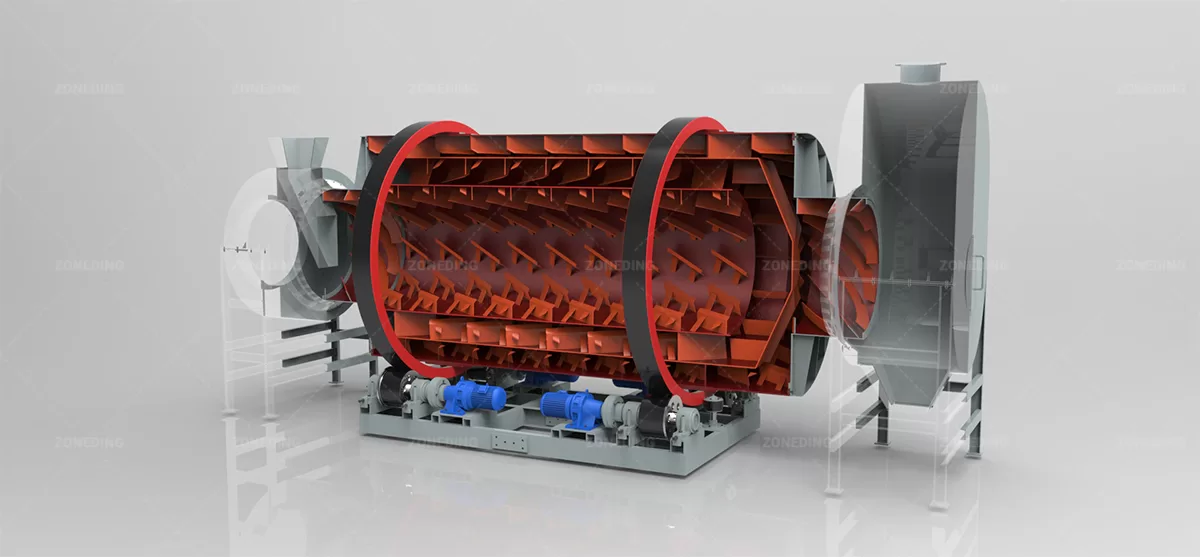
The inside of a Rotary Dryer for Brewery Waste is not just a smooth tube. It is full of “lifting plates” or “flights.” These plates are the key to efficiency. As the drum spins, the plates pick up the wet grain and carry it to the top. Then, the grain falls through the hot air like a curtain. This is called a “material curtain.” It ensures that every single grain particle is surrounded by hot air.
We at ZONEDING have spent years designing the best shape for these plates. If they are the wrong shape, the grain will clump together. If they are too small, they won’t lift enough material. We use a “jagged” plate design that breaks up the clumps as it lifts. This increases the “contact area” between the air and the grain. More contact means faster drying. Faster drying means you can use a smaller machine to do a big job. This saves you floor space and energy costs.
Wet spent grain is very sticky. If you put it in a hot drum, it can stick to the walls and become a hard cake. This is called “caking.” Once it cakes, the machine loses efficiency and might even catch fire. To solve this, a good Spent Grain Dryer must have “anti-caking” features. This usually includes a set of chains or “knockers” inside the drum. These tools vibrate the walls and keep the grain moving.
ZONEDING machines use a combination of special plate angles and high-speed air to prevent sticking. We also have a “self-cleaning” zone at the beginning of the drum. This is where the grain is wettest and stickiest. Our design ensures that the grain stays in the air and not on the walls. If you have used a cheap dryer before, you know how hard it is to clean it out. Our machine is built so you never have to crawl inside to scrape off stuck grain. It keeps your production running smoothly 24/7.
In 2025, environmental rules are getting much tougher. You cannot just let wet grain water leak into the sewer. You also have to be careful about the “smell” from your dryer. If your neighbors complain about the odor, the city might close your plant. This is why you need a professional system with a “dust collector” and an “odor control” unit. A professional BSG Drying Machine keeps the air clean and the smell low.
ZONEDING provides high-efficiency cyclones and bag filters with our dryers. These capture the tiny dusty particles that carry the smell. We can also add a “scrubber” that uses water to wash the exhaust air. This makes the air coming out of your factory clean and odorless. By meeting these standards, you avoid fines and keep a good relationship with your community. Our engineers are experts in local pollution rules in over 120 countries. We make sure your machine is 100% legal for your specific location.
Most dryers are just one long tube. We call this “single-pass.” But ZONEDING offers a “multi-pass” or “triple-pass” design. In this machine, the grain moves back and forth inside the drum three times. It is like three dryers inside one shell. This makes the machine much shorter but gives the grain a long “drying path.” It is the most productive way to dry light materials like spent grain.
The multi-pass design is great because it saves space. If you have a small brewery, you don’t have room for a 20-meter dryer. Our triple-pass Industrial grain dryer for distilleries can be only 6 meters long but do the same work. It also keeps the heat inside the machine better. This means it uses less fuel per ton of grain. We use this technology for our Impact Crusher projects too, where space is tight. It is a modern solution for 2025 where factory space is very expensive.
The price of a Spent Grain Dryer depends on how many tons you produce per hour. A small machine for a craft brewery might start around $15,000 to $25,000. Large, industrial systems for big distilleries can cost $80,000 to $150,000. These large systems include the screw press, the heat furnace, the drum, and the dust filters. You must also consider the cost of the fuel system (gas, coal, or biomass).
ZONEDING provides a clear Spent grain rotary drum dryer price without any hidden fees. We are a factory, so we can save you 20% compared to a middleman. We also help you choose the right fuel. If you have wood waste, we can build a wood-fired furnace. This makes your drying cost almost zero. We give you a full list of every motor, bearing, and steel plate. This transparency is why B2B owners trust us. We want you to know exactly where your investment is going.
The structure is simple but very strong. It has five main parts. First is the heat source (a furnace). Second is the “feeding end” where the wet grain enters. Third is the main drum, which is the biggest part. Fourth is the “discharging end” where the dry grain falls out. Fifth is the fan and dust filter system. The drum is made of thick steel and sits on “riding rings” and rollers, just like our automatic brick machine parts.
ZONEDING uses a special gear drive to spin the drum. This is more reliable than a belt drive because it doesn’t slip when the drum is heavy. We also use high-quality insulation on the outside of the drum. This keeps the heat inside the drier and prevents you from burning your hand if you touch it. Every part is bolted together, so it is easy to ship and easy to install. We use CNC machines to cut the steel, so every part fits perfectly together.
Before you buy, you must check three things. First, check your “input moisture.” If your grain is very wet, you must buy a screw press. Second, check your fuel source. Do you have natural gas, or will you use coal? This changes the furnace design. Third, check your space. Do you have room for a long machine, or do you need a triple-pass model? You should also ask about the “wear parts.” How long do the internal plates last?
ZONEDING engineers will help you with this “checklist.” We don’t just sell you a machine. We provide a solution. We even ask about your future plans. If you plan to double your beer production next year, we will suggest a larger dryer now. This is much cheaper than buying a second dryer later. We also provide a manual brick machine type of simplicity. We make the controls easy to use so your current staff can run it without a degree in engineering.
Maintenance is very simple but you must do it. Every day, you should check the lubrication of the main rollers. Every week, check the dryer for “caking” inside. If you see grain sticking, you need to clean it before it builds up. You should also check the “seals” at the end of the drum. If the seals are broken, cold air will leak in and your fuel bill will go up. It is like leaving the door open with the air conditioner on.
ZONEDING provides a maintenance video for every client. We show you how to grease the bearings and how to adjust the rollers. Our Spent Grain Processing systems are built to be “low-maintenance.” We use heavy-duty parts that don’t break easily. But a little care every day will make the machine last for 20 years. If you follow our schedule, you will avoid “unplanned downtime.” Downtime is very expensive because the wet grain will start to rot while the machine is broken.
| Model | Volume of the drum(m3) | Drum speed(r/min) | Motor power(kw) | Maximum inlet temperature(℃) | Weight(t) | Capacity(t/h) Yellow sand | Capacity(t/h) Slag |
| Φ1.5×3 | 5.3 | 8-10 | 3×2 | 700-750 | 6.0 | 4.5-7.5 | 2.6-4.0 |
| Φ2.0×4 | 12.6 | 8-10 | 5.5×2 | 700-750 | 7.4 | 10.6-17.8 | 6.2-9.5 |
| Φ2.5×5 | 24.5 | 8-10 | 7.5×2 | 700-750 | 15.3 | 20.6-34.7 | 12-18.4 |
| Φ2.8×6 | 36.9 | 8-10 | 7.5×4 | 700-750 | 32 | 31.1-52.2 | 18.1-27.7 |
| Φ3.2×8 | 64.3 | 8-10 | 15×4 | 700-750 | 43 | 54.1-91 | 31.6-48.3 |
| Φ3.6×10 | 81.4 | 8-10 | 22×4 | 700-750 | 48 | 68.5-115 | 40-61.2 |
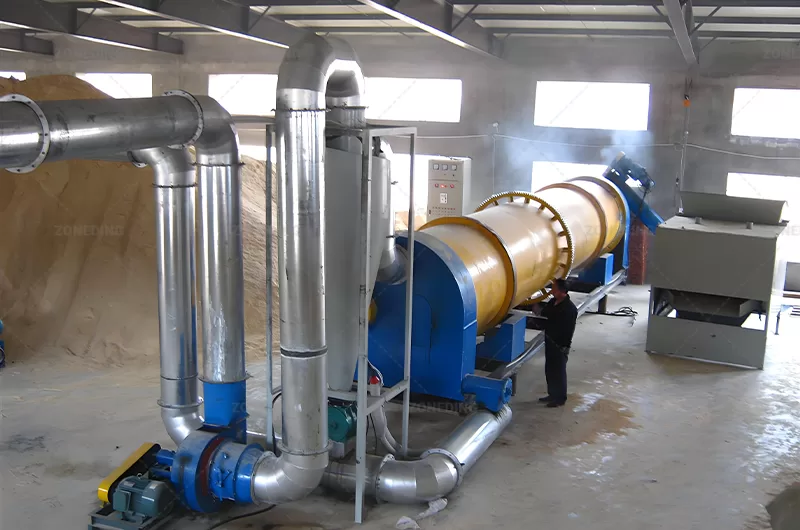


A spent grain dryer is a machine that removes moisture from spent grain, a byproduct of brewing or distilling. This allows for easier storage and sale as animal feed. Improves grain management.
Drying spent grain reduces spoilage, lowers transportation costs, and creates a valuable, shelf-stable animal feed product. Increases profitability and sustainability.
Common spent grain dryer types include rotary drum dryers, belt dryers, and fluid bed dryers, each offering varying levels of efficiency and suitability. Versatile drying solutions.
Spent grain dryers use heated air to evaporate moisture from the grain as it moves through the dryer, reducing the water content to a desired level. Efficient moisture removal.
