 Zoneding Mining

Site Search
Search products, equipment and solution articles
整站搜索产品中心新闻中心
点击开始搜索
热门搜索
UltraForm-MXFlexiPoly-RNanoForm Z300EcoFab P200
Search products, equipment and solution articles
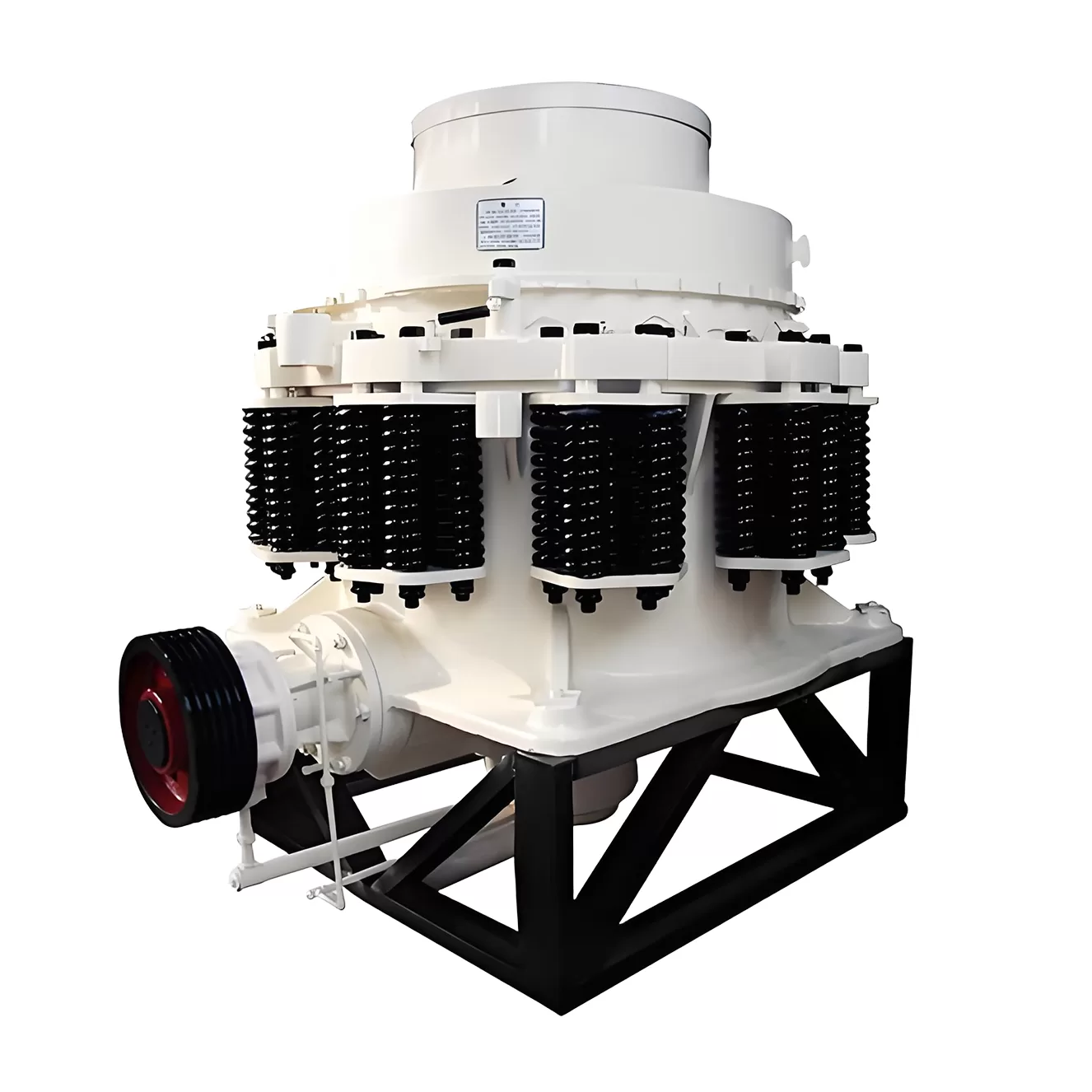
A medium and fine crushing equipment. The spring cone crusher is the insurance device that can also influence crushing force.
Spring cone crusher is a medium and fine crushing equipment, the spring is not only a safety device but also affects the crushing force. The crushing chamber type is determined by the ore use: the standard type is suitable for medium crushing, the medium type is suitable for fine crushing, and the short head type is suitable for ultrafine crushing. Spring cone crusher is suitable for crushing hard and medium hard ores and rocks, such as iron ore, copper ore, limestone, quartz, granite, basalt, diabase, etc., widely used in metallurgy, construction, road construction, chemistry and phosphate and other industries.
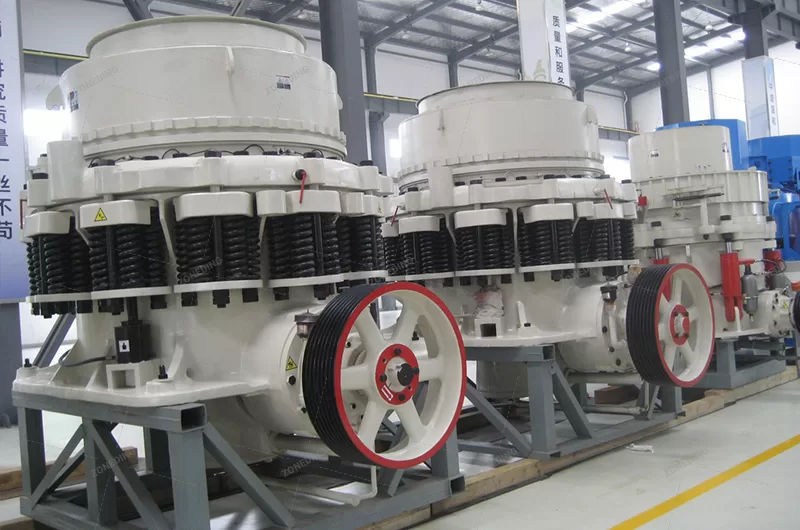
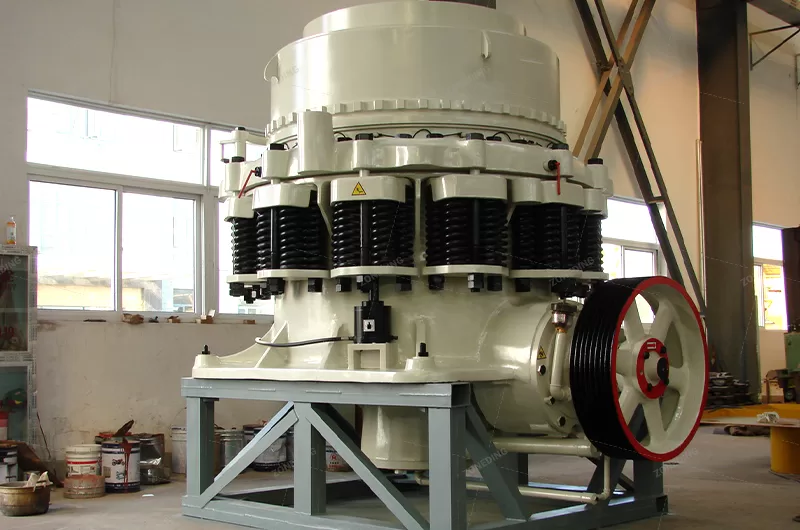
A Spring Cone Crusher is a type of compression crusher used widely in the mining and aggregate industries. Its main job is to take rock that has already been broken down by a primary crusher and make it much smaller. It is the classic Secondary Crusher. You can think of it as a heavy-duty mortar and pestle.
The machine works through a simple eccentric motion. A main shaft, holding a cone-shaped steel head called the mantle, gyrates (it does not rotate) inside a fixed outer bowl lined with steel, called the bowl liner. As the mantle moves closer to the bowl liner, it squeezes and crushes the rock. As it moves away, the crushed material falls further down into the chamber. This process is called lamination crushing, where rocks are crushed against each other, leading to a very efficient reduction of hard materials.
This is the feature that gives the Spring Cone Crusher its name and its reputation for toughness. Tramp iron is any uncrushable metal, like a steel tool, a bolt, or a piece of excavator tooth, that accidentally gets mixed in with the rock feed. In most crushers, this would cause catastrophic damage.
The Spring Cone has a simple and brilliant safety system. The entire upper frame of the crusher rests on a nest of heavy-duty springs. When a piece of tramp iron enters the crushing chamber, the pressure becomes immense. Instead of the machine breaking, the springs compress. This allows the entire bowl assembly to lift vertically, opening the gap wide enough for the uncrushable object to pass through harmlessly. Once the iron is gone, the springs immediately push the bowl back down into its correct operating position. This purely mechanical system is incredibly reliable and saves you from thousands of dollars in potential repairs.
This is a key decision when buying a new cone crusher. The debate of spring cone crusher vs hydraulic comes down to simplicity versus technology.
A Spring Cone Crusher is the simpler, more traditional option. Its protection system is purely mechanical, and its size adjustment is done manually. This makes it easier to maintain and repair, especially in remote locations without access to specialized technicians. It also has a lower initial purchase price.
A Hydraulic Cone Crusher uses hydraulic cylinders for both overload protection and size adjustment. This allows for push-button adjustment of the output size, which is much faster. It can also be integrated into a “smart” plant control system. However, it is more complex, with hydraulic pumps, sensors, and accumulators that require more specialized maintenance.
| Feature | Spring Cone Crusher | Hydraulic Cone Crusher |
|---|---|---|
| Adjustment | Manual, Slower | Hydraulic, Fast (Push-button) |
| Protection | Reliable Springs | Hydraulic Cylinder |
| Maintenance | Simpler, Mechanical | More Complex, Requires Specialists |
| Cost | Lower Initial Purchase Price | Higher Initial Purchase Price |
| Automation | Limited | Full Plant Integration Possible |
If your priority is rock-solid reliability, simple maintenance, and lower upfront cost, the Spring Cone is the perfect choice for you.
The Spring Cone Crusher earned its title as the ultimate Hard Rock Crusher because of its crushing method. It excels at breaking down extremely hard and abrasive materials like granite, basalt, river pebbles, and iron ore.
The secret is lamination crushing. The machine is designed to be “choke-fed,” meaning the crushing chamber should be kept full of material at all times. This forces the rocks to grind against each other, not just against the steel liners. This rock-on-rock crushing is extremely efficient for hard materials. It directs the crushing energy into the rock bed itself, rather than wasting it by wearing down the steel. The high pressure generated inside the chamber can easily overcome the compressive strength of the toughest rocks.
CS Spring Cone Crusher utilizes the lamination crushing principle, combining a high swing frequency, optimized cavity type, and rational stroke. This type of classic cone crusher is ideal for crushing hard materials such as granite, basalt, and river stones.CS Spring Cone Crusher utilizes the lamination crushing principle, combining a high swing frequency, optimized cavity type, and rational stroke. This type of classic cone crusher is ideal for crushing hard materials such as granite, basalt, and river stones.
Application: iron ore, granite, limestone, quartzite, sandstone, cobblestone and etc. CS Symons cone crusher is applied to cement mills, mining, building construction, road & bridge construction, railway construction and metallurgy, and some other industries. Materials like iron ore, granite, limestone, quartzite, sandstone, cobblestone, and some others are easily crushed by cone crusher.
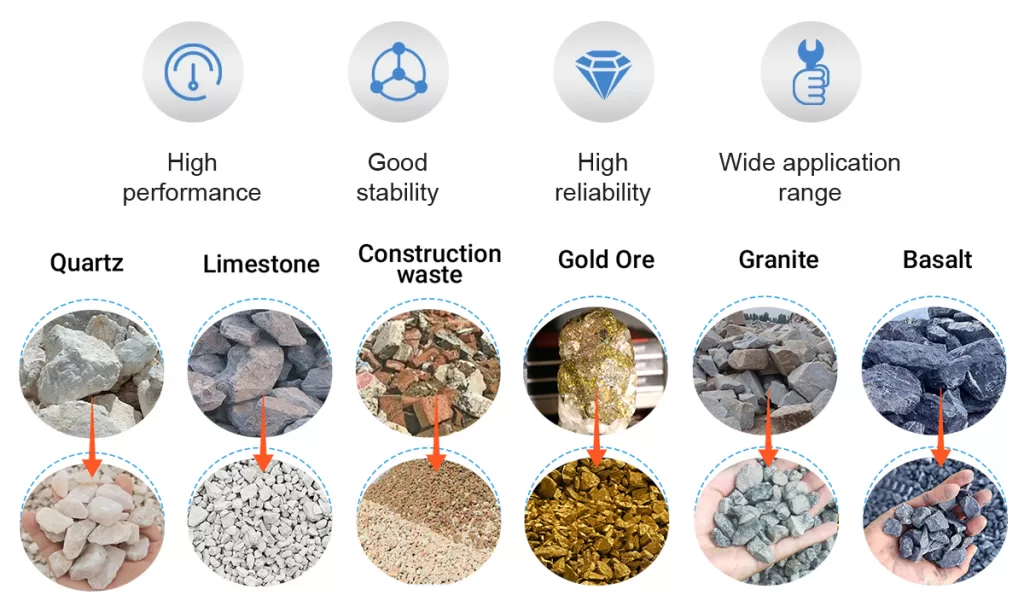
A cone crusher is one of the most widely used mining equipment. Symons cone crusher as a medium or fine crusher used in the site where not require a high granularity standard. Since the Simmons cone crusher controls the product size by reducing the size of the discharge opening, it is not suitable for use for superfine crushing and sand-making operations.
Features
1. Easy maintenance and easy operation. The lamination crushing process makes the final material have a good particle shape.
2. The hydraulic overload protection device helps to remove iron and reduce downtime. The thin oil lubrication station is equipped with a cooling system for better cooling performance.
3. The standard or short head crushing chamber can be replaced by different sleeves and bowl liners to better meet the needs of users.
4. Heavy-duty design and use of high-quality components with optimized wear parts reduce operating costs.
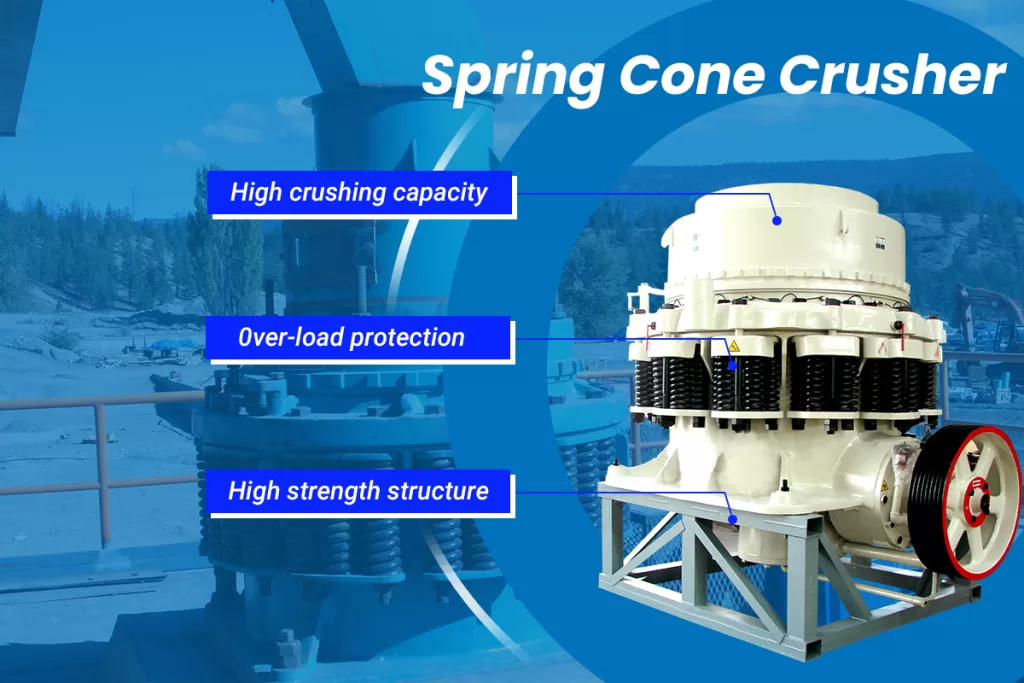
The structure of spring cone crusher is mainly composed of frame, fixed cone, moving cone assembly, spring mechanism, bowl shaft frame and transmission.
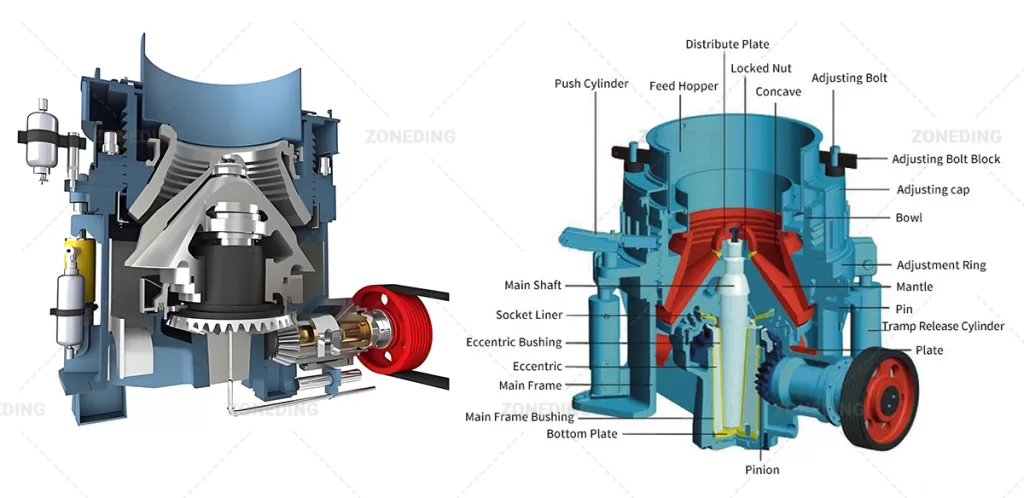
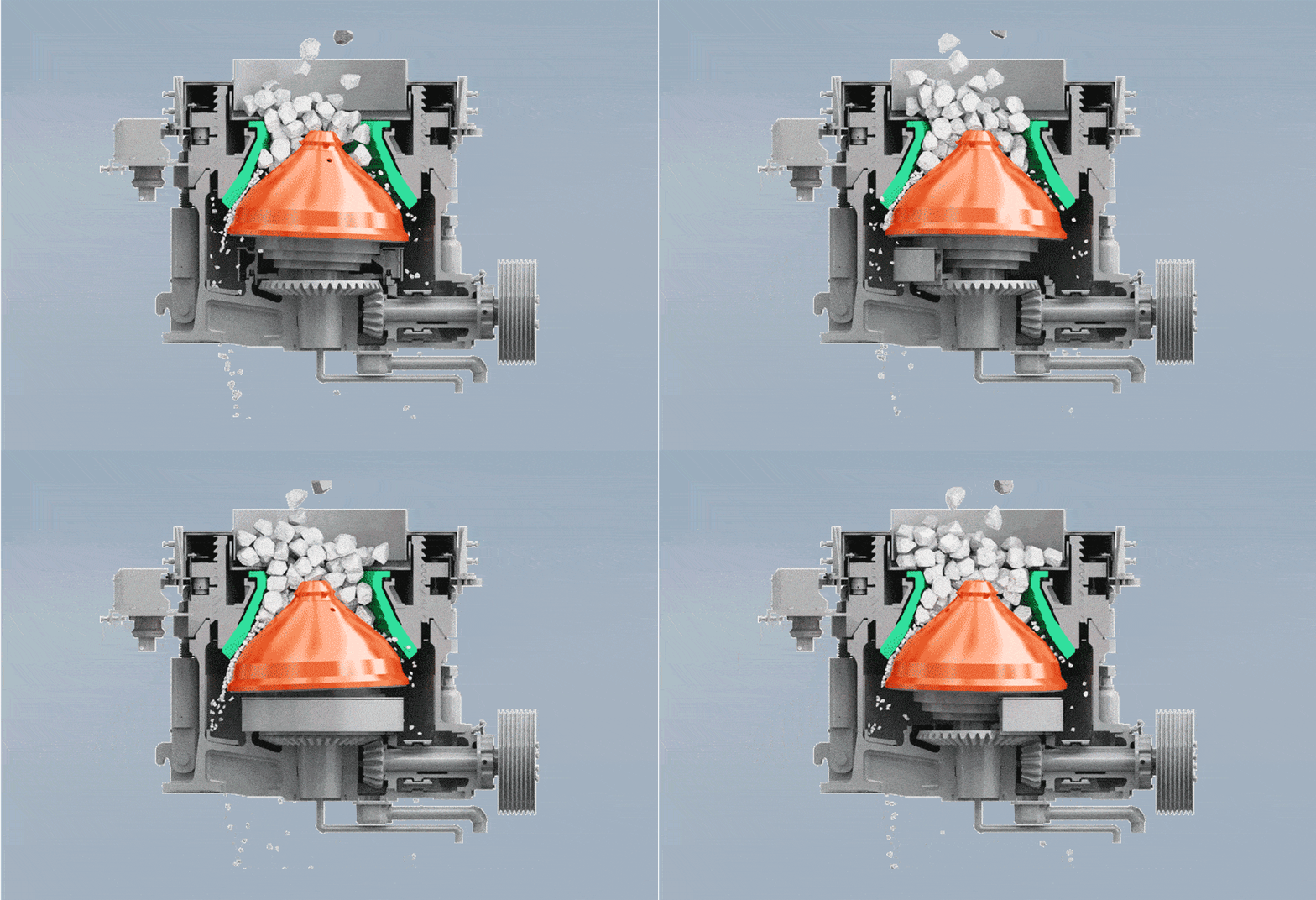
The working principle of the spring cone crusher commences when the electric motor is powered. This motor drives an intricate linkage of gears.The core action stems from the transmission gear driving the eccentric sleeve.
This rotation forces the moving cone (mantle) to execute a gyratory or eccentric pendulum-like motion , relative to the fixed cone (bowl liner). As the moving cone gyrates, the gap between it and the fixed cone constantly closes on one side while opening on the opposite. Material entering the crushing cavity is caught in this closing gap, where it undergoes intense compression, impacting, and crushing forces. As the gap widens on the other side, the crushed material falls lower into the chamber for further size reduction or discharge.
Adjusting the final product size, known as the Closed Side Setting (CSS), is a manual process on a spring cone. While it is not as fast as a hydraulic system, it is straightforward. The spring cone crusher adjustment involves changing the vertical position of the bowl assembly.
The bowl itself is threaded into a large adjustment ring, which sits on top of the main frame. To change the setting, you use a system of hydraulic rams or a simple mechanical lever to lift the clamping cylinders that lock the bowl in place. With the bowl unlocked, you can rotate the entire assembly. Rotating it down closes the gap (smaller product), and rotating it up opens the gap (larger product). Once you reach the desired setting, you re-engage the clamping system. It is a robust and secure method that ensures the setting will not change during operation.
Yes, for a new quarry, especially one on a budget, the Spring Cone Crusher is an extremely cost-effective choice. The main reason is its lower Total Cost of Ownership (TCO) in many applications.
The initial cone crusher price is significantly lower than that of a comparable hydraulic model. This frees up capital for other essential equipment like loaders and trucks. The savings continue with maintenance. The design is simple, and most mechanical issues can be solved by your on-site team without calling in expensive specialists. Spare parts are generally cheaper and more widely available. This combination of a lower purchase price and reduced maintenance costs makes it a very smart financial decision for getting a new operation up and running profitably.
The mantle and bowl liner are the primary wear parts, and they are your biggest running cost. Getting the maximum life out of them is key to your profitability.
The single most important thing you can do is to choke-feed the crusher. Always keep the crushing chamber full. This ensures lamination crushing (rock-on-rock) is happening, which protects the liners from direct impact. An empty or half-full chamber will cause rocks to hit the liners directly at high speed, wearing them out very quickly.
Second, ensure your feed is clean. Use a magnetic separator to remove all tramp iron. Also, scalp out fine material like dirt and sand before it enters the cone. This fine material does nothing but grind away at the expensive liners. Finally, use the correct liner profile for your application. A ZONEDING expert can help you choose the right profile to match your rock and ensure even wear across the entire surface.
The spring cone crusher maintenance schedule is built around simple, regular checks to prevent major problems. A consistent routine is your best insurance policy.
Daily Checks (Before Startup):
Weekly Checks:
A spring cone produces a good, consistent aggregate shape that is suitable for most general construction applications like road base and standard concrete. The lamination crushing method tends to break rock along its natural fracture lines, which results in a reasonably cubical product.
However, if your project demands a premium, highly cubical shape (for high-strength concrete or asphalt), a cone crusher is not the final tool for the job. To achieve the best possible shape, you should use the cone crusher as a secondary crusher and then feed its output into a VSI Sand Making Machine. The VSI is a specialized shaping machine that uses high-speed impact to perfect the cubical shape. Using a cone and a VSI together gives you the ultimate combination of throughput and quality.
The Symons Cone Crusher design is a workhorse found in nearly every industry that needs to crush hard rock. Its versatility and reliability make it a go-to machine for many stages of processing.
Choosing the right crushing chamber (the specific shape profile of the mantle and bowl liner) is critical for efficiency. The chamber must match your feed size and your desired product size. If they are mismatched, you will have low capacity and high wear costs.
There are generally four main types of chambers:
You should choose a chamber that will be choke-fed by the material you are giving it. An expert from ZONEDING can analyze your circuit and help you select the perfect chamber profile for your operation.
Downtime is the enemy of profit. Having a ready stock of essential spare parts is the best way to ensure a quick repair and get your plant back to making money. For a Spring Cone Crusher, you should always keep the following parts in your warehouse:
| Model | Moveable Cone Dia. (mm) | Cavity Type | Feeder Opening Size | Adjusting Range of Discharge Opening(mm) | Main Shaft Speed (r/min) | Motor Power (kw) | Capacity(t/h) | Overall Dimension L*W*H (mm) | |
| Shutting Size(mm) | Opening Size(mm) | ||||||||
| CS75B | 900 | Fine | 83 | 102 | 9-22 | 580 | 75 | 45-91 | 2821×1880×2164 |
| Coarse | 159 | 175 | 13-38 | 59-163 | |||||
| CS110B | 1200 | Fine | 127 | 131 | 9-31 | 485 | 110 | 63-188 | 2821×1974×2651 |
| Medium | 156 | 156 | 13-38 | 100-200 | |||||
| Coarse | 178 | 191 | 19-51 | 141-308 | |||||
| CS160B | 1295 | Fine | 109 | 137 | 13-31 | 485 | 160 | 109-181 | 2800×2342×2668 |
| Medium | 188 | 210 | 16-38 | 132-253 | |||||
| Coarse | 216 | 241 | 19-51 | 172-349 | |||||
| CS220B | 1650 | Fine | 188 | 209 | 16-38 | 485 | 220 | 181-327 | 3911×2870×3771 |
| Medium | 213 | 241 | 22-51 | 258-417 | |||||
| Coarse | 241 | 268 | 25-64 | 299-635 | |||||
| CS315B | 2134 | Fine | 253 | 278 | 19-38 | 435 | 315 | 381-726 | 4613×3251×4732 |
| Medium | 303 | 334 | 25-51 | 608-998 | |||||
| Coarse | 334 | 369 | 31-64 | 789-1270 | |||||
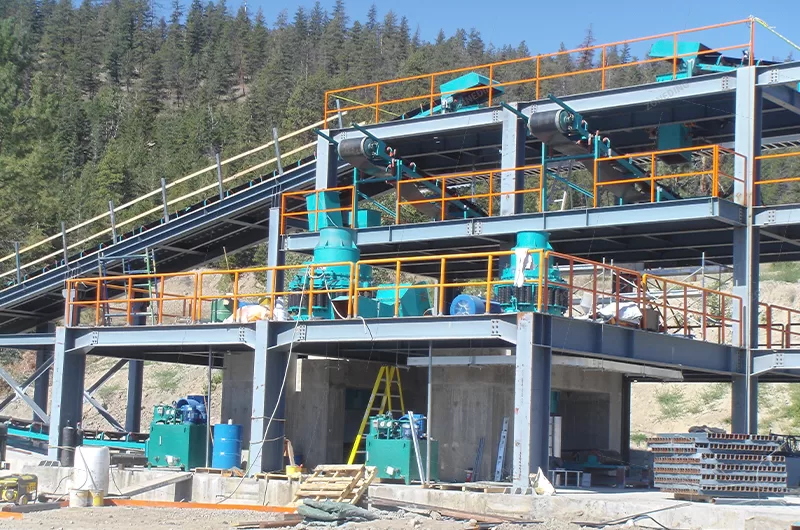
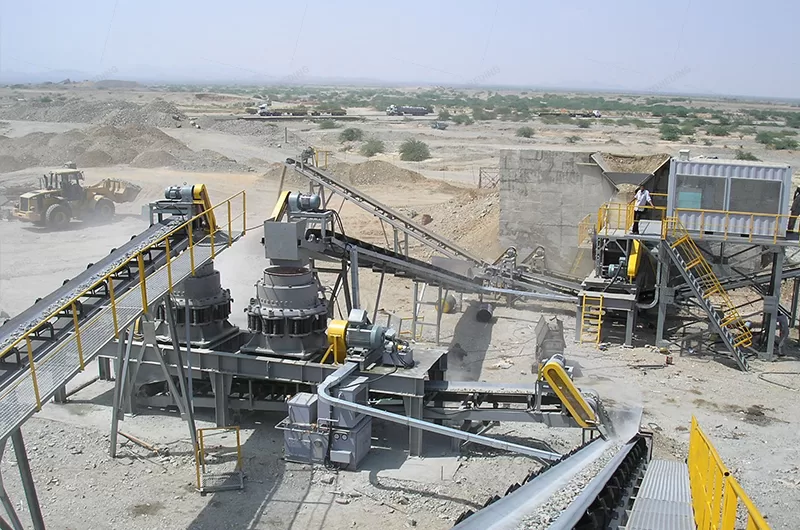
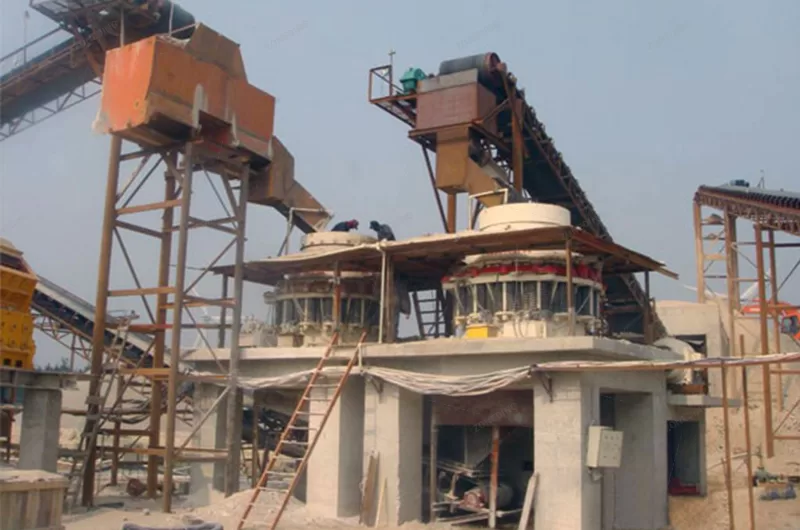
A spring cone crusher is a compression-type crusher using a spring release system for overload protection. It’s commonly used for secondary and tertiary crushing of hard materials. Reliable crushing equipment.
Spring cone crushers are known for their robust design, reliable performance, and cost-effectiveness in crushing hard materials. Offers consistent crushing results.
Spring cone crushers are effective for crushing materials like granite, basalt, river stone, and other hard and abrasive rocks. Ideal for hard rock crushing.
The spring system allows the crushing chamber to open under overload conditions, preventing damage to the crusher components. Protects from overload damage.
Regular maintenance includes inspecting and replacing liners, checking the spring tension, and lubricating bearings. Ensure long-term crusher performance with proper upkeep.