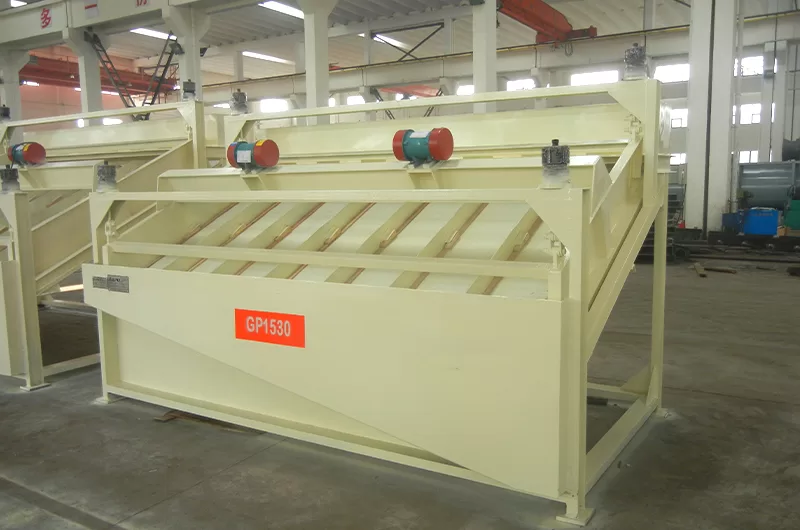
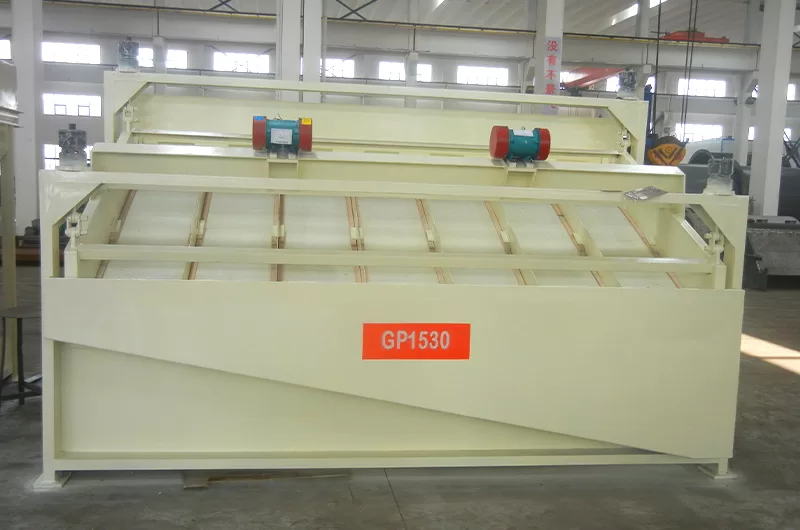
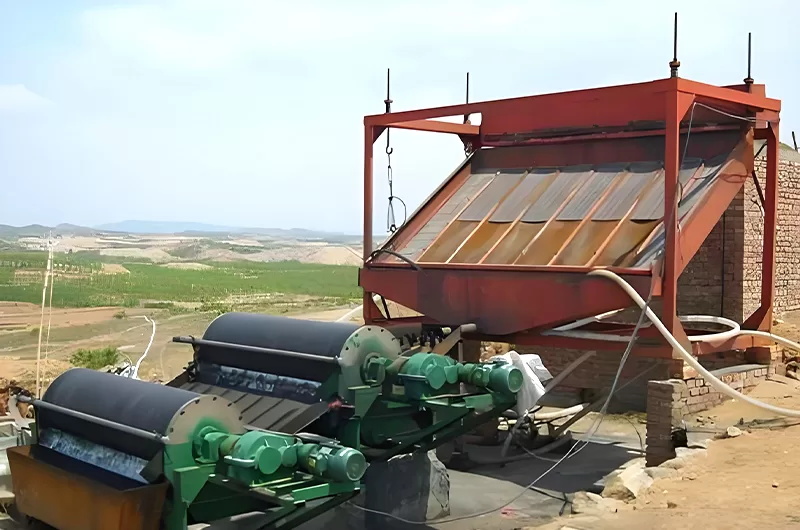
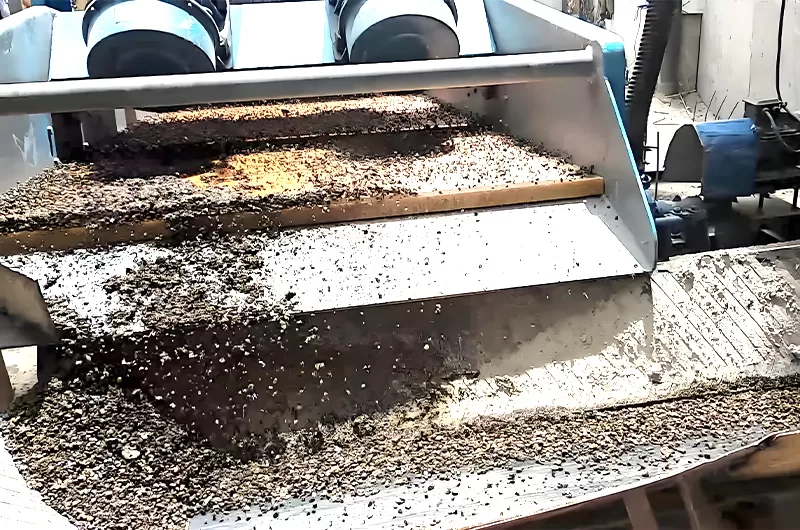
High frequency screen is short for high frequency vibrating screen. As the name suggests, high frequency vibrating screen is the equipment which uses high vibration frequency to screen materials.
Applied material:Iron ore, tin, tungsten, tantalum, niobium, etc.
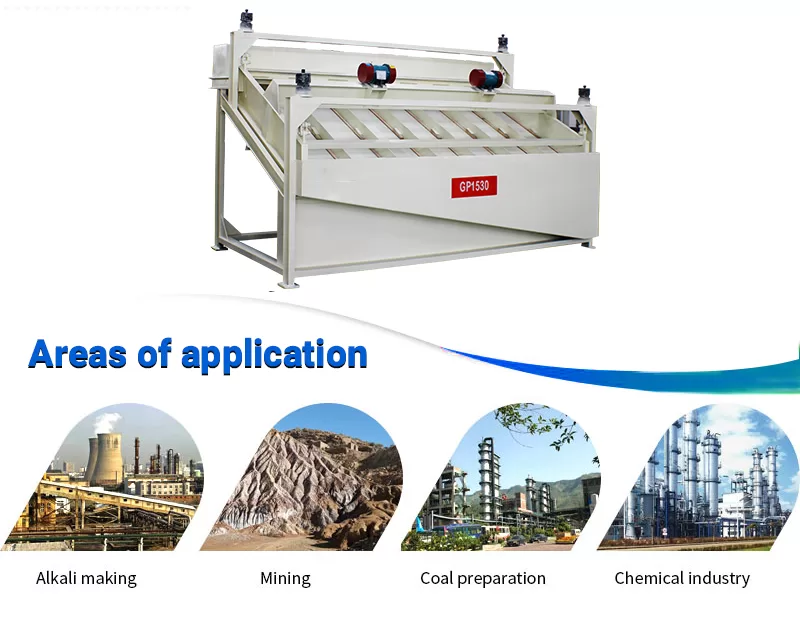
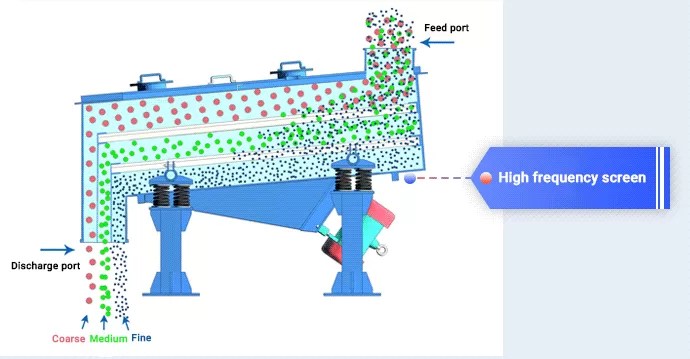
The high frequency vibrating screen is referred to as a high-frequency screen, which is composed of a vibration exciter, a slurry distributor, a screen frame, a frame, a suspension spring, and a screen. It is widely used in mineral processing, coal preparation, chemistry, brick making, food, pharmaceutics, alkali, fertilizer, paper, and other industries.
What is A High Frequency Screen?
A High Frequency Screen is a specialized screening machine that operates at high vibration frequencies (typically 1500 to 4000 RPM) to classify fine-grained materials.
While a standard screen shakes the whole frame to move rocks, a High Frequency Vibrating Screen often applies vibration directly to the screen mesh or uses a high-speed exciter on a fixed frame. The key difference is the intensity. The high frequency breaks down the surface tension of the water in the mineral slurry.
This “breaking” action is crucial. Without it, fine particles stick together like mud. With it, the material stratifies. Coarse particles float to the top, and fine particles (valuable concentrate) pass through the mesh.
Why is High Frequency Screen Essential for Fine Particles?
Separating large rocks is easy; gravity does the work. Separating microscopic dust in water is hard.
Surface Tension is the Enemy:In a wet slurry, water acts like glue. It holds coarse and fine particles together. If you use a normal low-frequency screen, the slurry just rides over the mesh like a waterslide. Nothing separates.
The Frequency Solution:By vibrating at 3000 RPM or higher, the High Frequency Screen acts like a sonic cleaner. It destroys the water tension. Imagine shaking a bottle of sand and water violently; the sand separates from the water.
Destruction of Hydration Film: It strips the water layer off the particles.
Stratification: It forces fine heavy particles to sink to the screen surface.
High Probability of Contact: The particles bounce thousands of times per minute, giving them many “chances” to find a hole in the mesh and pass through.
What are High Frequency Screen Used For?
The applications go beyond just “screening.” This machine acts as a filter, a grader, and a dewaterer.
Mineral Classification:This is the most common use. It separates ground ore into “coarse” (needs regrinding) and “fine” (ready for flotation or magnetic separation). It is replacing spiral classifiers in many modern plants.
Dewatering:A Mineral Dewatering Screen often uses high frequency to shake water out of sand or tailings. This creates a dry, stackable solid waste product (Dry Stacking), which is environmentally safer.
Trash Removal (Scalping):It removes wood chips, plastic, or organic trash from the slurry before it enters sensitive equipment like gravity spirals or flotation cells.
Desliming:It removes ultra-fine clay or slime that lowers the quality of the final product.
Application of High frequency screen
Iron ore, tin, tungsten, tantalum, niobium sand and other concentrator screening or grading operations, also suitable for mineral processing, coal processing, chemical industry, brick making, food, pharmaceutical, alkali production, chemical fertilizer, paper making and other industries.
Iron Ore, Coal, or Sand: Where Does This Screen Perform Best?
While versatile, this screen dominates in three specific sectors.
Iron Ore Fine Screening:This is the star application. In magnetite or hematite plants, upgrading the concentrate grade by just 1% increases the selling price significantly. ZONEDING screens are widely used here to replace hydrocyclones. The screen prevents coarse silica from slipping into the final concentrate, effectively boosting the Fe grade.
Coal Preparation:Coal slime contains a lot of water and fine sulfur. High frequency screens are used to recover fine coal that was previously wasted in ponds. It reduces the ash content and recovers useable fuel.
Silica Sand Washing:Glass manufacturing requires precise sand sizing. The screen removes the coarse grains (oversize) and the clay (undersize). It produces a specific size distribution required for high-quality glass or fracking sand.
What are Benefits and Advantages of High Frequency Screens?
Why are plant managers switching to this technology? The ROI (Return on Investment) is driven by classification efficiency.
High Screening Efficiency:A hydrocyclone separates by weight, which is often inaccurate. A screen separates by size, which is precise. The efficiency of a High Frequency Screen can reach 70-80%, whereas cyclones often struggle at 50-60%.
Lower Circulating Load:Because it separates better, it sends less “good” material back to the Ball Mill. This means the mill doesn’t waste energy grinding material that is already fine enough. This lowers the electricity bill of the entire grinding circuit.
Versatile Mesh Options:You can switch between Polyurethane (PU), Stainless Steel, or Nylon meshes depending on the abrasiveness of your ore.
Small Footprint:ZONEDING designs these units to be compact. You can fit high capacity into a small corner of your factory, or stack them vertically.
structure of High frequency screen
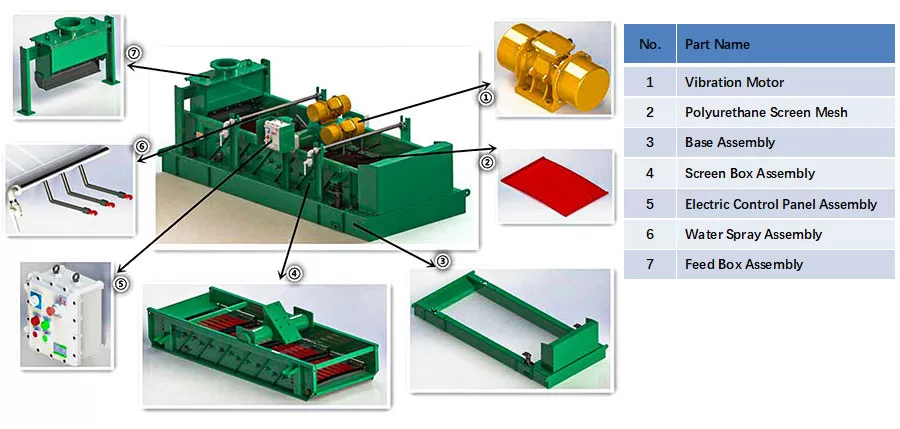
High frequency screen consists of vibration exciter, ore pulp distributor, screen frame, machine frame, suspension springs and sieve, etc. This series screen is always used in processing minerals such as ferrous metals including hematite magnet and nonferrous metals includinglead, zinc, gold and silver, etc.
Working principle of High frequency screen
High frequency vibrating mesh screen consists of base, frame, support, angle adjustment bar and electronic control box,etc.When the machine operates, the low frequency electromagnetic vibrator vibrates the feeder and outputs part of the mesh screen directly to move the whole screen. At the same time, the high frequency electromagnetic vibrator shakes the middle of mesh screen through the rubber cushion. The mesh screen is composed of three stainless steel screen layers; the lowest screen layer is high strength primary screen; the other two layers are workable screen in mine processing.
What is the Component of High Frequency Screens?
Understanding the build quality helps you judge the machine’s durability.
1. The Screen Box (Frame):It does not vibrate in some modern designs; only the mesh vibrates. In others, the whole frame vibrates. ZONEDING uses high-grade steel to resist fatigue cracks.
2. The Exciter (Vibration Source):This is the heart. It is a motor with eccentric weights or an electromagnetic vibrator. It generates the high G-force.
3. Screen Mesh (Media):The surface where separation happens. It must be tensioned correctly. Loose mesh breaks quickly.
4. Pulp Distributor:A box at the top that spreads the slurry evenly across the width of the screen. Without this, the slurry would channel down the middle, wearing out one spot and reducing efficiency.
5. Damping Springs:Rubber or steel springs that isolate the vibration so it doesn’t shake the factory floor.
How Does the High Frequency Screens Work?
The operation is a combination of gravity and aggressive vibration.
The Feed:Slurry enters the distributor. The flow speed is slowed down.
The Flow:The slurry flows down the inclined screen deck.
Action 1 (Stratification): The high-frequency vibration shakes the bed of material.
Action 2 (Sieving): Heavy, small mineral particles sink to the bottom of the flow. They touch the screen and pass through the holes (Undersize).
Action 3 (Transport): Large, light particles stay on top of the flow. They slide down to the end of the screen (Oversize).
The Result:You get two distinct products: The fine Underflow (Concentrate) and the coarse Overflow (Returns).
How Does It Work Within a Closed-Circuit Grinding System?
In a grinding circuit, the screen is the “Gatekeeper.”
Old Way:
Ball Mill -> Hydrocyclone. The Cyclone sends light stuff to the next step and heavy stuff back to the mill. Problem: Heavy minerals (like Iron) are heavy even when they are small. The cyclone gets confused and sends good, fine iron back to the mill to be over-ground. This is called “over-grinding.”
The Modern Way:
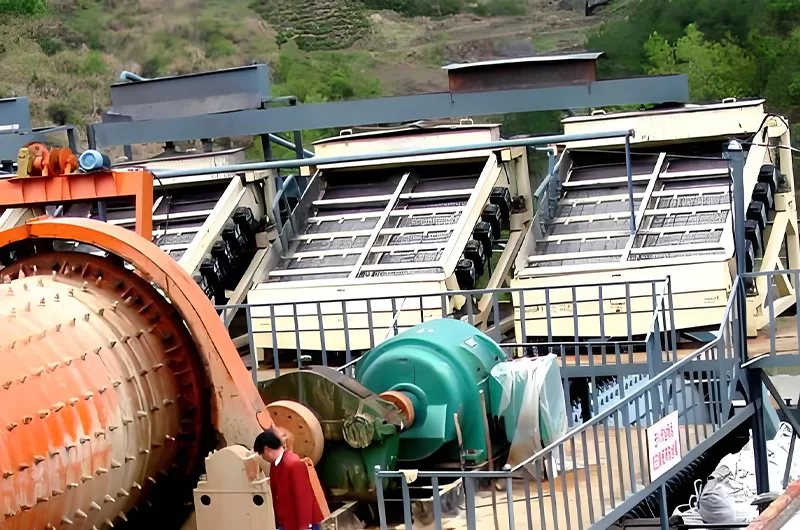
Ball Mill -> High Frequency Screen. The screen doesn’t care about weight; it only cares about size. If the iron particle is small enough, it passes through. It saves the iron from being ground again. This reduces sludge and increases recovery. ZONEDING systems utilizing this layout often see a capacity increase of 15% to 25% for the ball mill system.
What is the Price of High Frequency Screens? What are Affecting Factors?
Many clients ask about the High Frequency Vibrating Screen price. It is generally affordable compared to mills or crushers.
Price Range:A single standard unit usually costs between $5,000 and $20,000 USD, depending on size.
Cost Drivers:
Decks: A standard screen has one deck. A “Stack Sizer” (multi-deck) has 3 to 5 decks stacked vertically. This multiplies the price but saves floor space.
Mesh Material: Imported Polyurethane (PU) mesh is more expensive than steel wire but lasts 6 months instead of 1 month.
Vibrator Type: Electromagnetic vibrators offer higher frequency control and cost more than mechanical motor vibrators.
Brand: ZONEDING offers Factory Direct pricing, eliminating the 30% markup charged by trading companies.
How to Choose the Suitable High Frequency Screens?
Don’t just buy the biggest one. Size it correctly.
1. Analyze Material Properties:
Is your ore sticky? Is it abrasive? If it is silica, you need high wear resistance. If it is coal slime, you need a larger mesh opening.
2. Determine Cut Point:
What size do you need to separate? 100 microns? 74 microns (200 mesh)? The finer the cut, the lower the capacity per square meter.
3. Capacity Requirements:
How many tons per hour? ZONEDING engineers use a formula considering specific gravity and screen open area to calculate the required surface area.
4. Moisture Content:
For dry screening, high frequency is rare. This technology is 95% used for wet slurry.
What Are the Maintenance Tips to Extend the Vibration Motor Life?
The motor is the part most likely to fail because it works under high stress 24/7.
Lubrication: Grease the bearings strictly according to the schedule (e.g., every 400 hours). Use high-temperature grease.
Bolt Tightness: Vibration loosens bolts. Check the motor mount bolts weekly. A loose motor will destroy itself in minutes.
Heat Check: Monitor the bearing temperature. If it exceeds 70°C, shut down immediately. It usually means dirty grease or bearing damage.
Current Check: If the motor draws uneven amperage, the eccentric weights might be unbalanced.
How Does ZONEDING’s Multi-Deck Design Increase Processing Capacity?
Space is tight in mine sites. You can’t always just add more machines side-by-side.
The Stack Sizer: ZONEDING offers a multi-deck design. We stack typically 3 to 5 screen frames on top of each other in a single machine frame.
Parallel Feed: The feed pipe splits and feeds all 5 decks simultaneously.
Result: You get 5 times the capacity in the floor space of 1 machine. This is the standard for modern large-scale iron ore beneficiation plants. At ZONEDING, we combine 30 years of mining machinery experience with modern manufacturing precision. Our High Frequency Screens utilize imported wear-resistant materials and energy-efficient exciters to lower your operating costs. We don’t just sell a machine; we engineer the entire feedback circuit for your ball mill to ensure maximum throughput. Operating from our 8,000 sqm factory, we provide Factory Direct quality to over 120 countries.
Technical Parameter of High frequency screen
Specification Model
Processing capacity(t/h)
Power (kw)
GPS-4
15-25
0.72
GPS-5
20-30
1.1
GPS-6
24-36
1.5
GPS-8
32-48
2.2
Customer Cases
What is a High Frequency Screen?
A High Frequency Screen is a vibratory screen used for fine particle separation, typically operating at frequencies between 1500-3600 RPM.
How does a High Frequency Screen work?
High Frequency Screens use rapid vibrations to stratify and separate fine particles through a screen mesh, allowing undersize material to pass through.
What are the benefits of using a High Frequency Screen?
High Frequency Screens offer high screening efficiency, increased capacity for fine materials, and reduced blinding compared to conventional screens.
What materials can be processed with a High Frequency Screen?
High Frequency Screens are used for processing minerals, coal, sand, and other materials requiring fine particle separation in dry or wet applications.
What factors should I consider when choosing a High Frequency Screen?
Consider feed rate, particle size distribution, screen mesh size, vibration frequency, and material moisture content when selecting a High Frequency Screen.
Contact us to review our catalog and get more information about our products.
 Zoneding Mining