 Zoneding Mining

Site Search
Search products, equipment and solution articles
整站搜索产品中心新闻中心
点击开始搜索
热门搜索
UltraForm-MXFlexiPoly-RNanoForm Z300EcoFab P200
Search products, equipment and solution articles
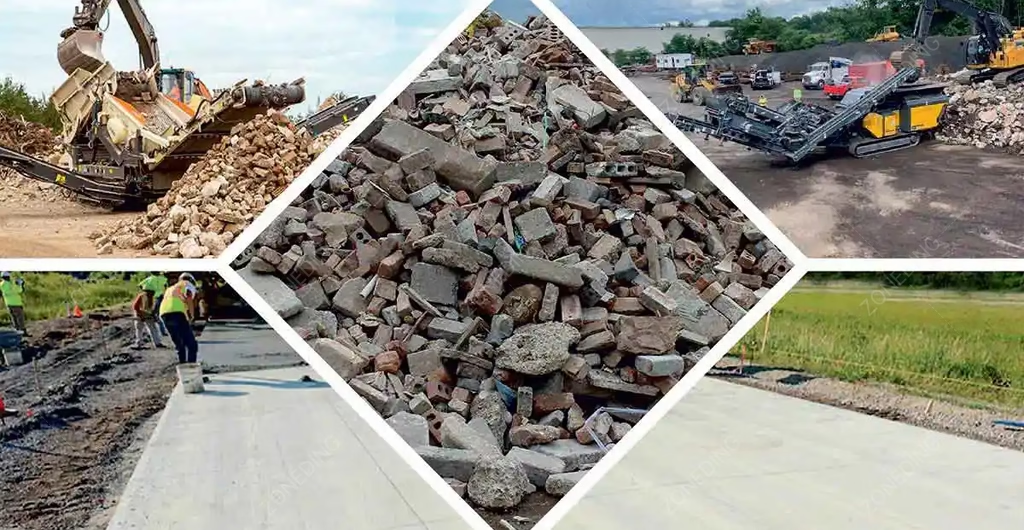
You have a mountain of solid waste—concrete, bricks, asphalt, or municipal debris—and you see it as a cost. But it is actually a resource. An integrated solid waste crushing processing line allows you to turn this waste into high-quality recycled aggregates that you can sell or reuse in your own projects. This system is not just a single machine; it is a synchronized sequence of feeders, crushers, screens, and conveyors that automate the entire recycling process. We design these lines to handle diverse materials and maximize throughput while keeping your operating costs low. This guide explains how to build a line that turns your waste liability into a profit center.
Last Updated: May 2026 | Estimated Reading Time: 18 Minutes
An integrated solid waste crushing processing line is a complete system of machinery designed to break down large pieces of solid waste into smaller, usable materials like sand and gravel. Instead of hauling waste to a landfill and paying disposal fees, you process it on-site or at a central facility. This process transforms “trash” into “industrial raw materials.”
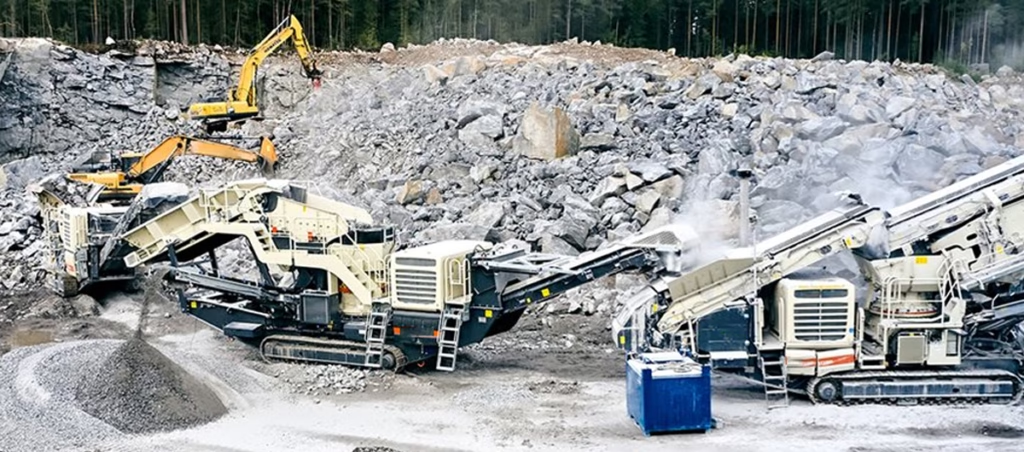
These lines are built to be flexible. Whether you are dealing with heavy construction and demolition (C&D) waste or municipal solid waste (MSW), the system can be adjusted. We start by feeding raw waste into a primary crusher to reduce the size. Then, we use screens to sort the material and secondary crushers to refine the shape and size. ZONEDING specializes in the “integration” part of this process. We ensure that the conveyor belt speed matches the crusher’s capacity and that the screen removes the right amount of waste. This prevents bottlenecks and ensures your plant runs 24/7 without unexpected stops.
You should process solid waste because dumping it is a disappearing business model that costs you money in taxes, transport, and wasted resources. In the past, the cheapest option was to haul debris to a landfill. Today, that is the most expensive mistake a company can make.
Rougher tables are large. They handle a high volume of material. They remove the bulk of the waste quickly. However, they are not very precise. You use a rougher table first to get a “rough concentrate.” Then, you send that concentrate to a cleaner table. Cleaner tables are smaller and have a more precise shaking motion. They produce a very high-purity gold concentrate that is ready for smelting.
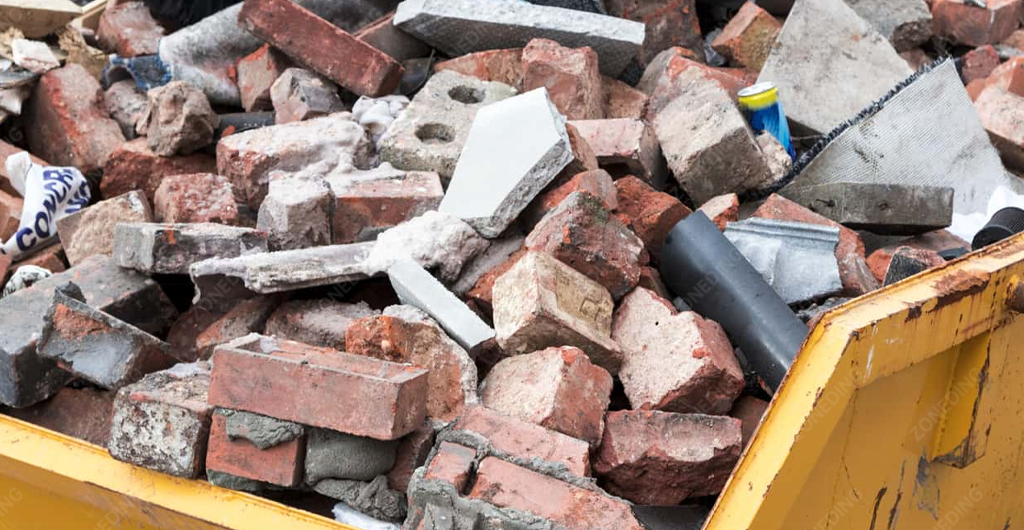
ZONEDING offers both sizes. We often sell them in pairs so you can run a two-stage cleaning process. This ensures that you get the maximum tonnage handled and the highest purity possible.When you process waste, you change your financial equation from “Paying to Dispose” to “Selling a Product.” First, landfill taxes are skyrocketing worldwide. Governments are charging huge fees to discourage dumping. By processing waste on-site, you eliminate these fees instantly. Second, there is a massive shortage of virgin aggregate. Mining new stone is slow and expensive. Recycled concrete and asphalt are now high-demand products for road bases and urban development. ZONEDING equipment allows you to capture this market. Instead of paying a truck driver to take your waste away, you pay a customer to buy your recycled stone. This shift transforms your waste pile into a bank account.
To understand the value, you have to look at the three main pressures facing construction and waste companies today.
| Driver | The “Old Way” (Dumping) | The “New Way” (Processing) | Your Bottom Line |
|---|---|---|---|
| Financial | Pay landfill fees + Fuel costs | Sell recycled aggregate | Turn a loss into a profit |
| Legal | Risk fines for illegal dumping | Meet “Green” building laws | Avoid lawsuits and penalties |
| Logistics | Long trips to the landfill | Process material on-site | Save hundreds of man-hours |
In 2026, being “Green” is not just about the environment; it is about winning contracts. Many governments now require a specific percentage of recycled materials for any public infrastructure project. If you can provide “Certified Recycled Aggregate,” you have a huge advantage over competitors who only offer virgin stone.
Using ZONEDING integrated lines allows you to provide this certification. Our machines produce consistent, clean materials that meet strict industrial standards. When you bid for a road project or a bridge construction, you can tell the client that your materials are 100% sustainable. This makes you the preferred partner for government contracts.
You need a combination of heavy-duty crushing and precision screening equipment to handle the unpredictable nature of solid waste. Unlike mining, where the ore is consistent, waste can contain a mix of concrete, steel, wood, and plastic. Your equipment must be tough enough to handle these “surprises.”
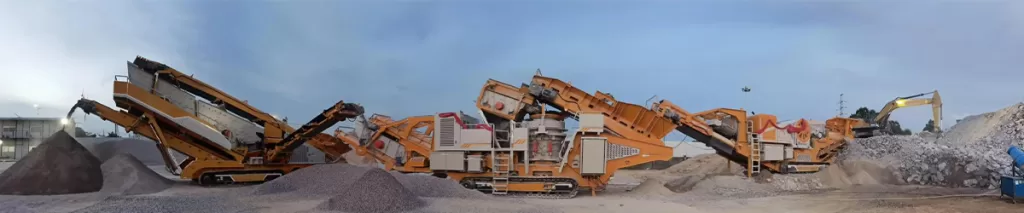
For the first stage, we use a Jaw Crusher or a heavy-duty shredder. The jaw crusher is perfect for concrete and bricks because it uses massive pressure to snap hard materials. After the primary crush, you need a Vibrating Screen to remove “oversize” material and separate the product by size. If you need a more cubic shape for your final aggregate—which is what construction companies prefer—we add an impact crusher. This machine hits the material at high speeds to break it into clean, sharp-edged stones. ZONEDING provides all these components as a single package, meaning every belt and motor is designed to work together.
Depending on the waste type, you will need different tools. A concrete recycling line looks different from a municipal waste line.
| Equipment | Primary Role | Best For | Your Practical Benefit |
|---|---|---|---|
| Feed Hopper | Controlled Input | All Waste | Prevents the crusher from choking |
| Jaw Crusher | Primary Breaking | Concrete, Rocks | Reduces huge blocks to <150mm |
| Impact Crusher | Secondary Shaping | Asphalt, Bricks | Creates high-value cubic aggregate |
| Magnetic Separator | Metal Removal | Mixed Waste | Protects machines from steel scrap |
| Vibrating Screen | Final Sizing | All Materials | Ensures you meet customer size specs |
The most efficient process flow follows a “Prepare → Crush → Sort → Refine” sequence. This logic ensures that you remove contaminants early so they don’t damage your expensive secondary machinery.
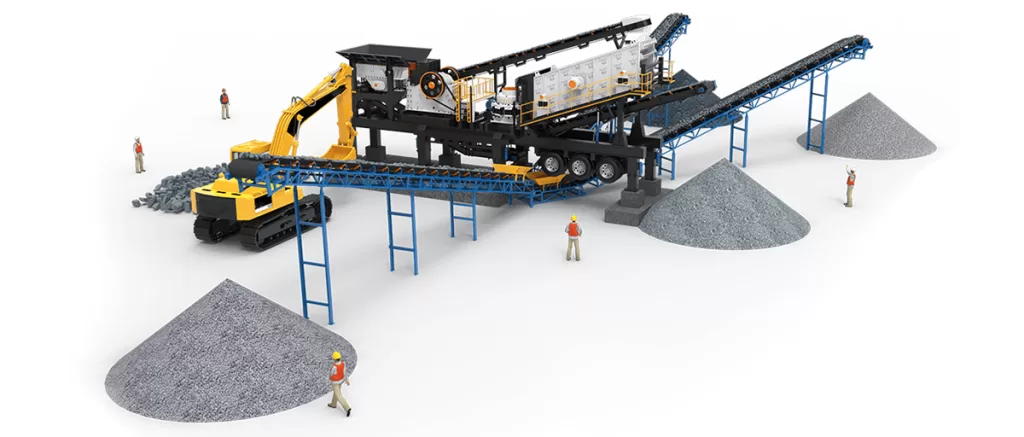
The choice depends on whether the waste comes to you, or you go to the waste. This is the most important financial decision you will make for your plant.
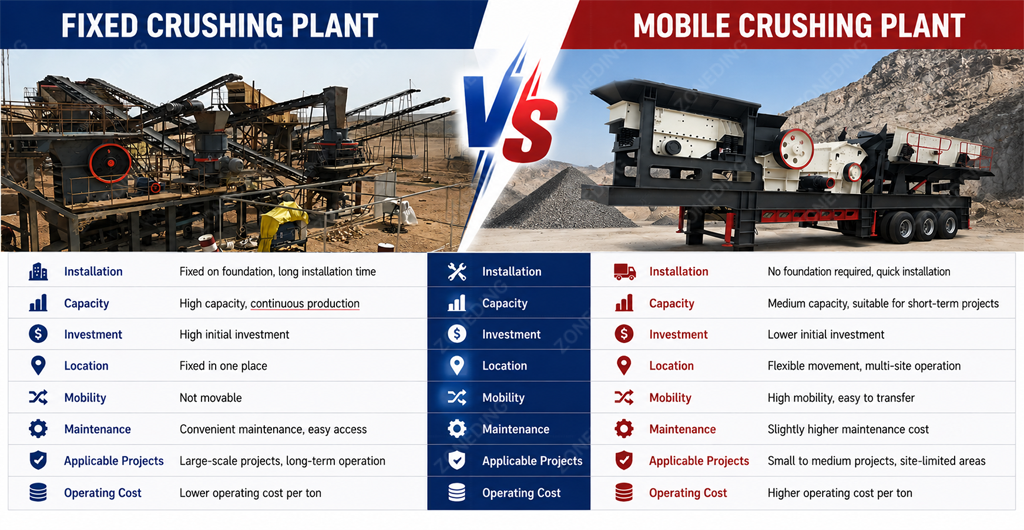
A stationary line is a permanent factory. It is best if you have a dedicated site where trucks bring waste from all over the city. These lines can handle massive volumes (up to 1000 TPH) and are generally more energy-efficient. However, they require huge amounts of concrete foundations and permanent electrical grids. A Mobile Crushing Station is the opposite. It is built on tracks or wheels. You can drive it directly into a demolished building site. You crush the concrete where it sits, load it into trucks, and leave. This eliminates the cost of transporting raw waste to a factory. ZONEDING is a leader in mobile technology. Our mobile units are “plug-and-play,” meaning you can start producing aggregate within hours of arriving at a site.
| Feature | Stationary Line | Mobile Station | Your Decision Factor |
|---|---|---|---|
| Capacity | Ultra-High | Medium to High | Volume of waste per site |
| Transport Cost | High (Waste moves) | Low (Machine moves) | Distance to the landfill |
| Setup Time | Months | Hours | Project duration |
| Investment | High Initial / Low OpEx | Lower Initial / Higher OpEx | Budget vs. Flexibility |
To maximize your profit, you must balance the “Feed Rate” with the “Screening Precision.” If you feed the crusher too fast, the product will be irregular. If you screen too slowly, the whole line stops.
ZONEDING screens use high-precision mesh and adjustable vibration angles. This allows you to “dial in” the exact size you need. We also suggest adding a “dust suppression system” (water sprays). This doesn’t just help the environment; it prevents dust from clogging your screens, which keeps your throughput high.
The two biggest enemies of a waste plant are “Contamination” and “Excessive Wear.” Waste is not a pure material; it is a mixture of everything.
Contamination happens when plastic, wood, or fabric gets mixed into your final aggregate. This makes the product “low grade” and hard to sell. To solve this, we integrate air separators (wind shifters) that blow the light plastics and paper away from the heavy stone. The second challenge is wear and tear. Waste contains silica and metals that act like sandpaper on your machine. If you use cheap steel, your crusher will wear out in six months. ZONEDING uses manganese steel and high-chrome alloys for all contact parts. We also design our machines with “Quick-Swap” components. This means your team can change a worn-out jaw plate in a few hours, minimizing your downtime.
Integrating a waste crushing line transforms a “cost center” into a “revenue stream” while helping you meet government “Green” mandates. In 2026, the “Circular Economy” is no longer a choice; it is a law in many countries.
From a money perspective, you save on two fronts. First, you stop paying landfill taxes. In many cities, dumping concrete is expensive. Second, you sell the end product. Recycled concrete aggregate (RCA) is widely used for road bases and parking lots. It is often cheaper than virgin stone, making it an easy sell to contractors. Environmentally, you reduce the need for new quarries. Every ton of waste you recycle is one less ton of mountain you have to blast. ZONEDING helps you calculate the ROI. Most of our clients find that the machine pays for itself in 12 to 24 months just through the savings in disposal fees and the sale of recycled sand.
The industry is shifting toward “AI-Sorting” and “Electric-Drive” systems to achieve zero-emission recycling. The goal for 2026 is to make recycling as clean as the final product.
ZONEDING is integrating these “Smart” features into our new lines. We are focusing on “High-Throughput, Low-Energy” designs. By using variable-frequency drives (VFD), our machines only use the power they need based on the load. This reduces your electricity bill by up to 15%.
Building an integrated solid waste crushing processing line is the fastest way to turn an environmental problem into a business opportunity. The secret to success is not the biggest machine, but the right “flow.”
Next Step: Do not buy a generic line. Send us a photo and a description of your waste material. Our engineers will create a custom process flowsheet and provide a direct factory quote to help you maximize your throughput and ROI.
Last Updated: May 2026
Learn the secrets to maximizing profit for Stone crushing business, from choosing the right crusher equipment to managing logistics and wear parts costs.
View details
Maximize yield with Gold Gravity Separation Equipment. From Centrifugal Concentrators to Shaking Tables, we offer a complete solution to recover fine gold.
View details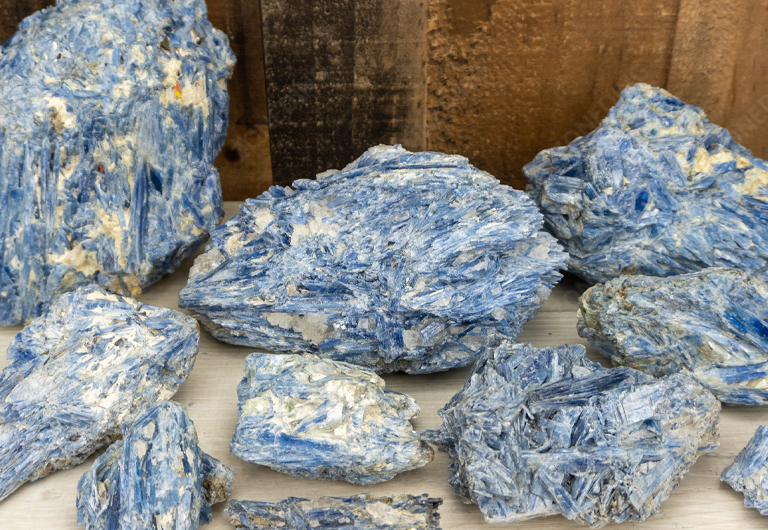
Explore full kyanite processing plant flowsheet, including crushing, grinding, flotation, and magnetic separation to achieve high-purity kyanite concentrate.
View details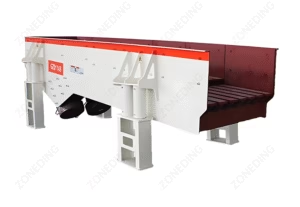
Feeling overwhelmed by vibrating feeder options? Follow 7-step checklist to select the perfect model based on material size, capacity, and operating conditions.
View details