全站搜索

Search the entire website

BLOG

A Complete Guide to Limonite: Processing & Key Applications

Blog 6650

Limonite is a common iron ore, and knowing its properties, uses, and how to process it efficiently is vital for your business. This guide helps you navigate all aspects of limonite, from its geological makeup to advanced Limonite Processing technologies. We focus on providing you with actionable insights. This information can help optimize your operations. It can improve your output. You will discover how our company, ZONEDING, provides robust equipment for all your limonite needs.

Table of Contents

What Exactly is Limonite?

Limonite is a common mixture of hydrated iron oxide minerals. It is a significant source of iron. It forms from the weathering of other iron-rich minerals. Its composition mainly includes goethite and lepidocrocite. This material is not a distinct mineral itself. Instead, it is a combination. It contains various iron hydroxides. Its earthy nature makes it easily recognizable.
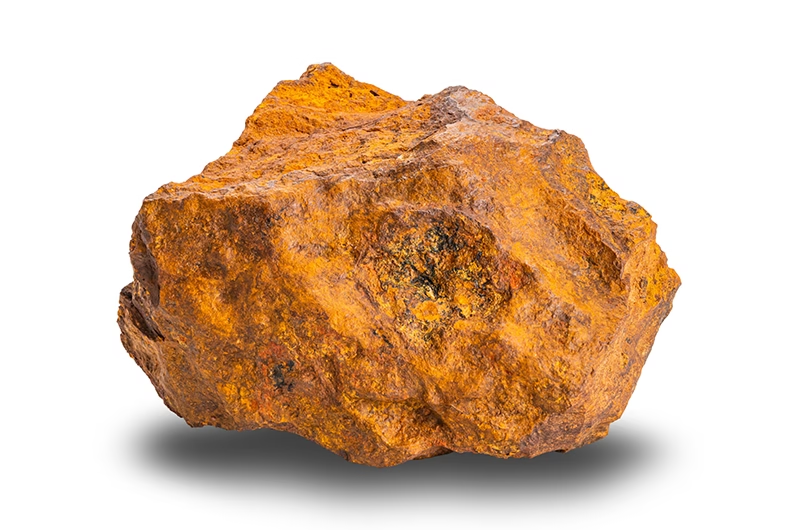
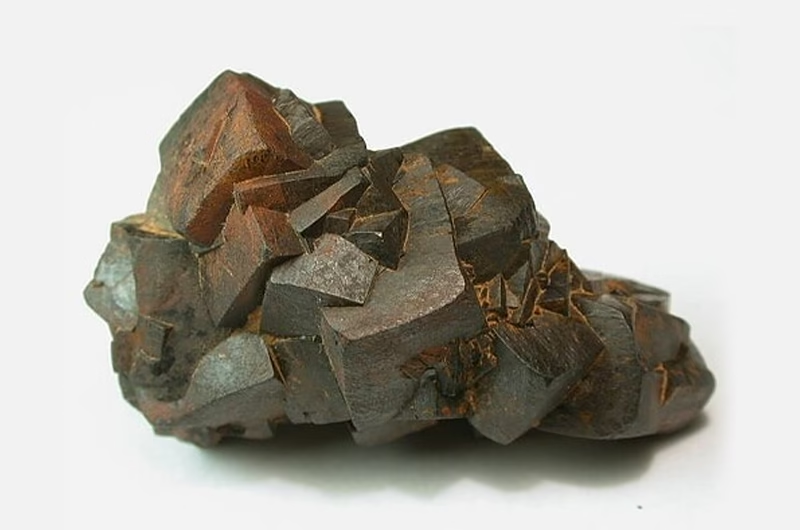
limonite
limonite

What are Applications of Limonite?

Limonite provides two primary uses: as a source of iron and as a natural pigment. Its iron content makes it valuable for metallurgical industries. Its distinct color allows its use in various coloring applications. These dual applications highlight its versatility. Each use requires specific processing steps.
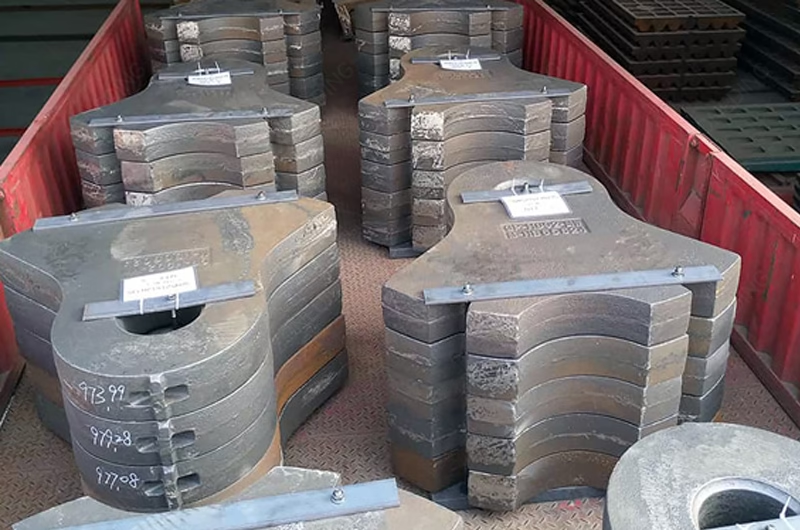
steel
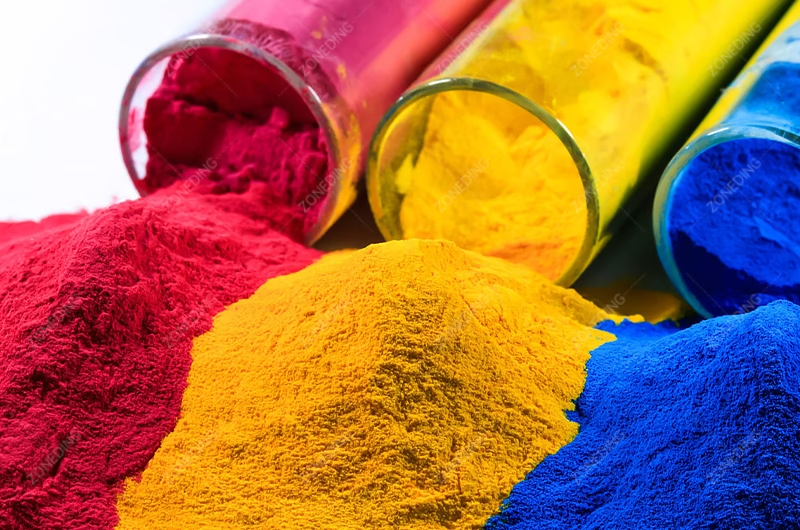
pigment
  • Iron Production:
    • It is used as an Iron Ore.
    • It undergoes smelting to extract metallic iron.
    • This iron is then used to make steel.
    • Processing focuses on removing impurities and moisture.
  • Natural Pigment:
    • It produces yellow, brown, and ochre colors.
    • These colors are stable and rich.
    • It is used in paints, coatings, and ceramics.
    • It is a natural, non-toxic coloring agent.
    • Processing for this use focuses on fine grinding and color control for Natural Iron Oxide Pigments.

What are Properties of Limonite?

Limonite possesses distinct physical and chemical properties. These traits guide how you can effectively process it. Key characteristics include its typically yellow-brown color, earthy luster, and variable hardness. Understanding these properties is crucial. They dictate the best methods for its extraction and beneficiation.

  • Color: Ranges from dark brown to ochre yellow. It has a yellow-brown streak.
  • Luster: Earthy, appearing dull or non-metallic.
  • Hardness: Varies from 4 to 5.5 on the Mohs scale. This depends on its mineral makeup.
  • Form: Often occurs as botryoidal, stalactitic, or earthy masses.
  • Porosity: It has a porous structure. This makes it absorb water.
  • Specific Gravity: Between 2.7 and 4.3. This is lower than many other iron ores.
  • Chemical Composition: It is a hydrated iron oxide. Its general formula is FeO(OH)·nH₂O. The variable water content is important for Limonite Extraction.

Where Can We Find Limonite Deposits?

Limonite deposits are widespread globally. They form in various geological environments. They are typically shallow. And They result from the weathering of other iron-rich rocks. You will find them in many regions. This wide distribution makes limonite an accessible ore.

  • Formation Areas:
    • Bog Iron Deposits: Forms in swampy areas. Iron-rich groundwater precipitates iron.
    • Lateritic Deposits: Common in tropical regions. Intense weathering processes create them.
    • Gossans: Occurs as caps over primary sulfide ore bodies. Oxidation of iron sulfides forms it.
  • Major Regions:
    • Countries like Australia, Brazil, and parts of Africa.
    • Regions in Europe and North America also have deposits.
  • Accessibility: Deposits are often shallow. This makes Limonite Mining usually an open-pit operation. This wide distribution ensures consistent supply for Iron Ore Processing Technology.

What are Processing Methods of Limonite?

Processing limonite aims to increase its iron content. It also reduces impurities. Key methods include physical separation and sometimes thermal treatment. The choice of method depends on the limonite’s characteristics and its intended use. Your unique deposit dictates the best approach.

  • Initial Preparation:
    • Washing and Scrubbing: Removes loose clay and fine particles.
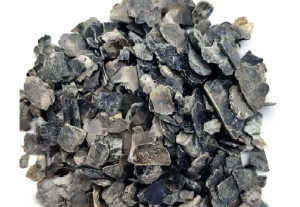
    • Crushing: Reduces large lumps to smaller sizes.
    • Grinding: Further reduces particle size to liberate minerals.
  • Concentration for Iron Production:
    • Gravity Separation: Uses jigs, spirals, or shaking tables. It separates based on density differences.
    • Magnetic Separation: Used for magnetic impurities. High-intensity separators can recover fine, weakly magnetic particles.
  • Processing for Pigment Production:
    • Fine Grinding: Crucial for achieving the desired pigment particle size.
    • Color Control: Methods focus on ensuring consistent color.
  • Thermal Treatment:
    • Calcination: Removes water content. Increases iron assay. Converts hydroxides to anhydrous oxides. This is vital for higher-grade iron products or Mineral Beneficiation Techniques.

What are Main Steps of Limonite Processing?

Limonite processing generally involves a sequence of steps. These steps begin with preparation and move towards concentration. The main stages include crushing, grinding, washing, and various separation techniques. Each step contributes to enhancing the final product. It makes it suitable for specific applications.
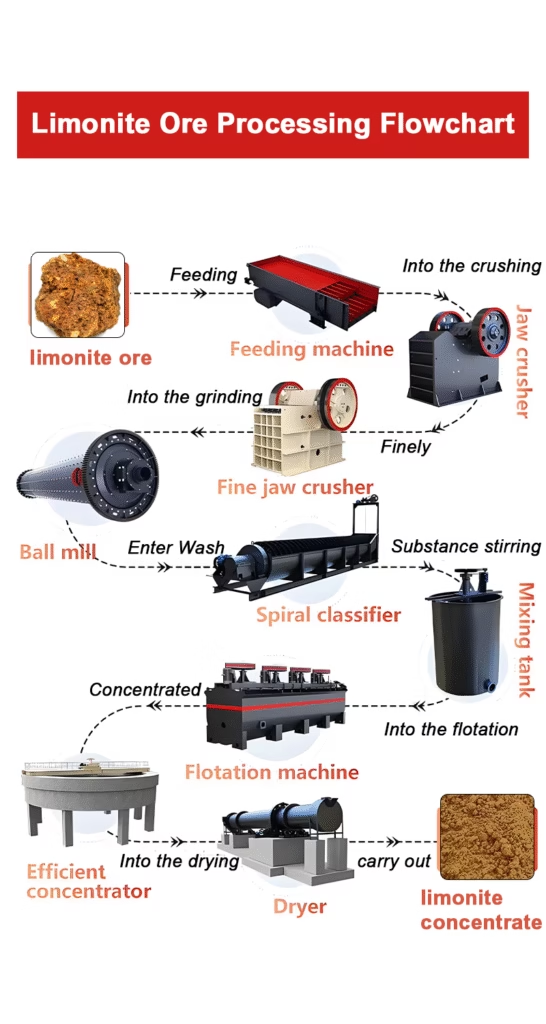
    limonite process flow chart
    • 1. Crushing:
      • Reduces large limonite lumps.
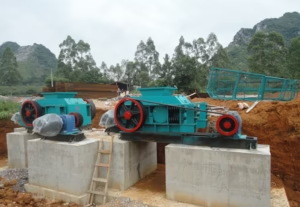
      • Uses jaw or impact crushers.
    • 2. Grinding:
      • Further reduces particle size.
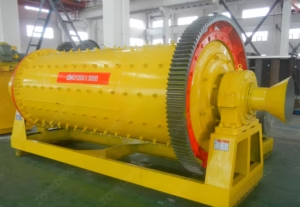
      • Uses ball or rod mills.
      • Liberates iron minerals from waste rock.
    • 3. Screening:
      • Separates particles by size.
      • Ensures consistent feed for downstream processes.
    • 4. Washing and Scrubbing:
      • Removes clay and fine impurities.
      • ZONEDING scrubbers perform well here.
    • 5. Magnetic Separation:
      • Used if weakly magnetic iron minerals or impurities are present.
      • High-intensity magnetic separators are effective.
    • 6. Drying or Calcination:
      • Removes remaining water.
      • Increases iron content for Limonite Refining or specific pigment properties.
      • Each ZONEDING machine integrates seamlessly into this sequence.

    What are Challenges When We Process Limonite?

    Limonite processing presents unique challenges. High moisture content, variable mineralogy, and the presence of fine clay particles are common hurdles. These issues can impact efficiency. They can increase operational costs. Addressing these challenges requires tailored solutions.

    • High Moisture Content:
      • Makes crushing and grinding harder.
      • Increases drying costs significantly.
      • Limonite naturally contains water.
    • Clay Impurities:
      • Often present with limonite.
      • Can form sticky masses and blind screens.
      • Reduces overall processing efficiency.
    • Fine Particle Sizes:
      • Results from limonite’s earthy nature.
      • Can lead to high losses during washing.
      • Creates slimes that are hard to dewater.
    • Environmental Concerns:
      • Requires careful management of tailings.
      • Minimizing water consumption is crucial.
    • Variable Mineralogy:
      • It is a mix of minerals like goethite and lepidocrocite.
      • Finding one optimal beneficiation strategy is difficult.
    • Pigment Consistency: Maintaining uniform color and particle size is hard. This is vital for Limonite Processing for pigment use.

    How Can ZONEDING’s Robust Material Handling & Processing Equipment Optimize Your Limonite Operations?

    ZONEDING offers custom-engineered solutions. Our equipment handles limonite’s unique characteristics. We can significantly enhance your processing efficiency. We do this by providing reliable crushing, grinding, and separation technologies. Our machines are designed for maximum uptime and productivity.

    • Comprehensive Equipment Line:
      • Crushers: Jaw, impact, and cone crushers handle varied hardness.
      • Grinding Mills: Ball and rod mills ensure precise particle size reduction.
      • Washing & Scrubbing: Rotary scrubbers and log washers remove tough clay.
      • Gravity Separation: Spirals and jigs efficiently recover limonite.
      • Magnetic Separation: High-intensity separators help with fine, difficult fines.
    • Advanced Material Handling:
      • Conveyor systems, feeders, and screens ensure smooth material flow.
      • Minimizes bottlenecks in your Iron Ore Processing Technology.
    • High-Quality Components:
      • Features high wear-resistant steel.
      • Key parts from Siemens (PLC), Schneider (inverters), and Keli Jia (hydraulics).
      • Ensures durability and long operational life for Limonite Refining.
    • End-to-End Solutions:
      • Design, manufacture, installation, and after-sales support.
      • Aims for maximum operational efficiency and profitability for you.

    The limonite processing industry is constantly evolving. In 2025, we are seeing significant progress. There is a strong focus on sustainability. Automation is becoming more prevalent. Advanced separation techniques improve efficiency. These trends aim to reduce environmental impact. They also drive down operational costs. You can benefit from these innovations. They make limonite extraction more productive and responsible.

    Overview of Latest Developments

    • Intelligent Automation: We now see improved sensor technology. Artificial intelligence (AI) guides process control. Equipment adjusts automatically. This optimizes throughput and resource use.
    • Eco-Friendly Beneficiation: New methods reduce water and energy consumption. There is a growing push for chemical-free or reduced-chemical processing.
    • Advanced Separation Techniques: Innovations target more efficient recovery of fine particles. Techniques like enhanced gravity separation and specialized flotation circuits are gaining traction.

    Market insights show a steady demand for iron. This is especially true for projects in developing infrastructures. The market for Natural Iron Oxide Pigments also remains robust. This is due to its natural and non-toxic properties. Businesses are increasingly adopting technologies that offer better environmental performance. This means equipment that uses less water and energy. Solutions that minimize waste are now preferred. We see a clear shift towards more integrated and automated processing lines. This maximizes both yield and sustainability.

    FAQ

    • Question 1: What is the main difference between limonite and hematite?
      • Answer: Limonite is a hydrated iron oxide. It contains water molecules in its chemical structure. This gives it a yellow-brown color. Hematite is an anhydrous iron oxide. It does not contain water. It typically has a reddish-brown to black color. This chemical difference also affects their ore grades and processing needs.
    • Question 2: Can limonite be directly used as iron ore?
      • Answer: Limonite can be used as an iron ore. However, its high moisture content and lower iron assay often require special treatment. It needs beneficiation and sometimes calcination. Calcination is heating to remove water. This makes it more efficient for use in blast furnaces compared to richer ores like hematite.
    • Question 3: How does ZONEDING handle the high moisture content in limonite?
      • Answer: We address high moisture with specialized washing, scrubbing, and dewatering equipment. Our rotary scrubbers efficiently separate clay and moisture-rich fines. Our thickeners and filter presses then prepare the material for further processing or transport. If necessary, drying solutions can be integrated.

    Summary and Recommendations

    Limonite is a versatile iron ore. It is crucial for both iron production and pigment industries. Understanding its properties and overcoming processing challenges is key. We have covered its nature, applications, locations, and processing steps. We also discussed the common hurdles. ZONEDING stands ready to help you navigate these complexities. We offer robust and efficient solutions. Our technology helps you maximize your limonite’s value.

    You need to optimize your limonite operations. Consider a tailored solution. Review your current processing steps. Identify areas for improvement.

    Contact ZONEDING today. Our team can provide expert consultation. We can design customized Limonite Processing lines. We will help you select the precise equipment. Unlock the full potential of your limonite resources.
    The prev: The next:

    Related recommendations