 Zoneding Mining

Site Search
Search products, equipment and solution articles
整站搜索产品中心新闻中心
点击开始搜索
热门搜索
UltraForm-MXFlexiPoly-RNanoForm Z300EcoFab P200
Search products, equipment and solution articles
Iron ore stands as the literal and metaphorical backbone of modern industrial civilization. It is the fourth most abundant element in the Earth’s crust, yet its economic significance rivals that of crude oil. When global markets analyze economic health, the price and demand for iron ore serve as primary indicators. For the vast majority of the population, the perception of iron ore is singular: it is the raw material for steel, which in turn builds skyscrapers, bridges, and automobiles. While accurate—approximately 98% of mined iron ore feeds the global steel industry—this generalization overlooks a vital 2% of the market.
This remaining percentage encompasses specialized, high-value applications that drive sectors ranging from advanced electronics and clean energy to medical safety and heavy industrial processing. Understanding the full spectrum of iron ore utility is crucial for mining companies seeking to diversify, aggregate producers looking for high-margin niches, and investors analyzing market trends.
This guide provides an in-depth analysis of the top five uses of iron ore in 2025, detailing the metallurgical requirements and the specific mechanical processing—crushing, grinding, and beneficiation—necessary to prepare the ore for these distinct industries.
Last Updated: January 2026 | Estimated Reading Time: 16 Minutes
The question “what is iron ore used for” finds its primary answer in steel production. Steel is an alloy consisting mostly of iron, with a small amount of carbon (usually less than 2%) and other elements to enhance its properties. It is the most used metal material on the planet due to its high tensile strength and relatively low cost.
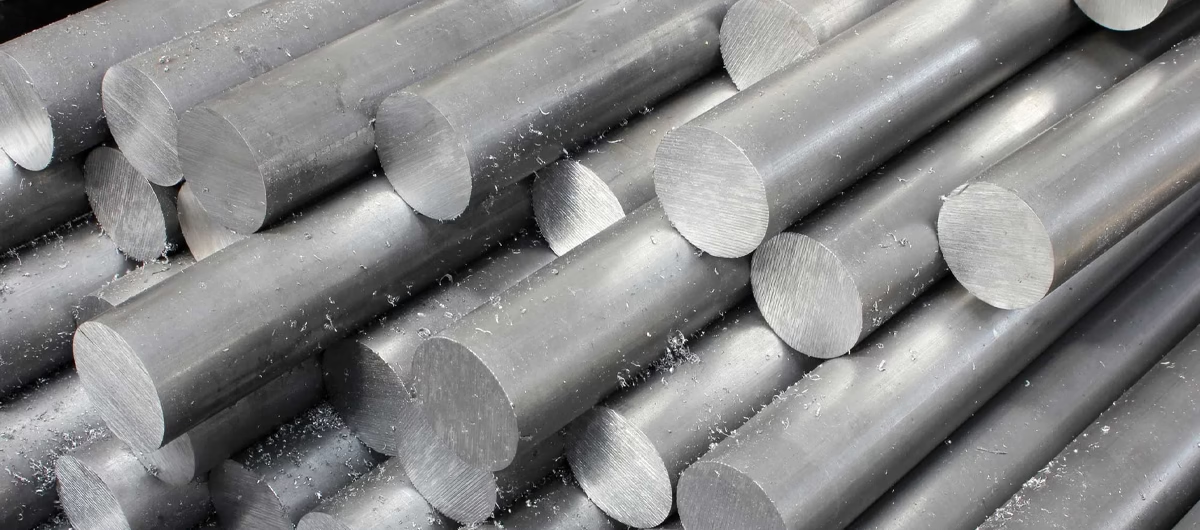
Raw iron ore—typically extracted as Hematite (Fe2O3) or Magnetite (Fe3O4)—is invaluable but unusable in its natural state due to oxygen bonds and impurities like silica.
The steel industry is currently undergoing a seismic shift toward decarbonization. Traditional blast furnaces are being supplemented or replaced by Direct Reduced Iron (DRI) technology. This process uses hydrogen gas instead of coal to remove oxygen from the iron ore, producing water vapor instead of CO2
Impact on Mining: This shift demands higher-purity iron ore pellets (DR-Grade). Mining companies are responding by upgrading their beneficiation plants with finer grinding mills and advanced screening equipment to achieve the ultra-low impurity levels required for green steel production.
While chemically similar to steel, cast iron is a distinct category of ferrous alloy utilized for specific engineering challenges. It contains a higher carbon content, typically between 2% and 4%, along with silicon.
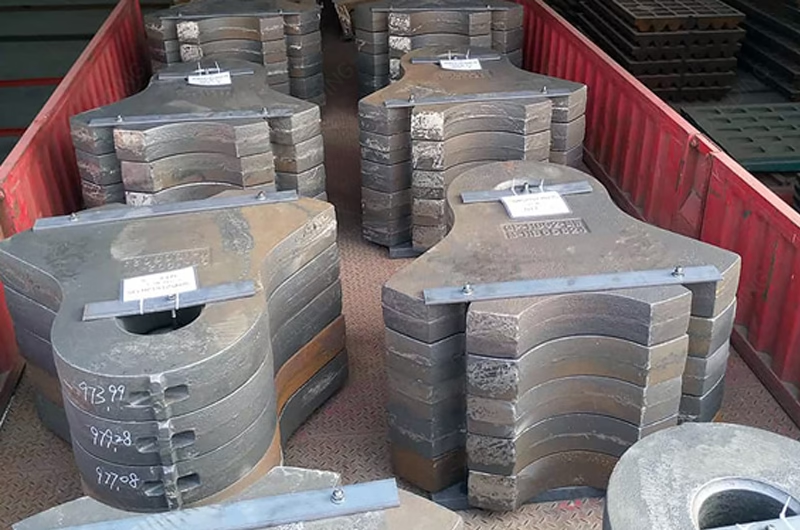
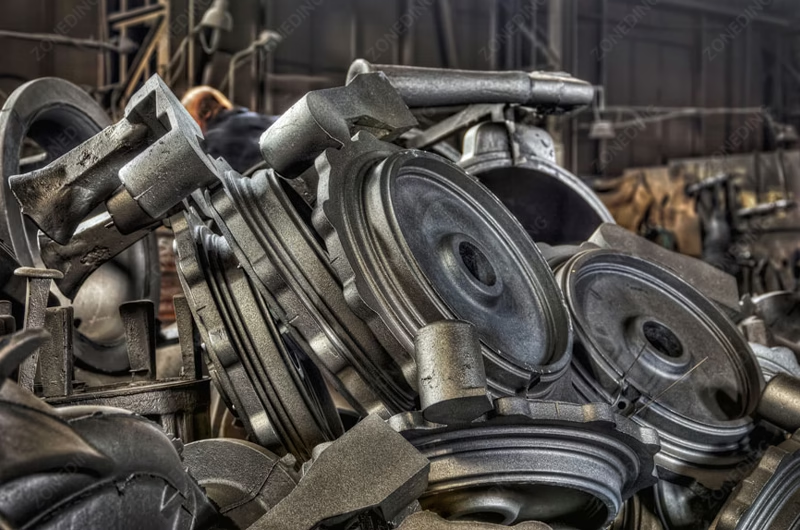
The increased carbon content lowers the melting point of the iron and improves its fluidity when molten. This characteristic allows the metal to be poured into intricate molds—hence the name “cast” iron—where it solidifies into complex shapes that would be difficult or impossible to machine from a solid block of steel.
Producing iron for casting requires consistent chemical composition. The raw iron ore concentrate must be free of deleterious elements like sulfur and phosphorus, which can cause brittleness in the final casting. Advanced Magnetic Separation processes are utilized during the beneficiation stage to ensure the ore concentrate meets the strict purity levels required by foundries.
Moving down the value chain from bulk commodities to high-tech materials, powdered iron represents one of the most sophisticated uses of iron ore. This is not merely crushed rock; it is highly refined, high-purity iron that has been atomized or chemically reduced into a precise, micron-sized powder.
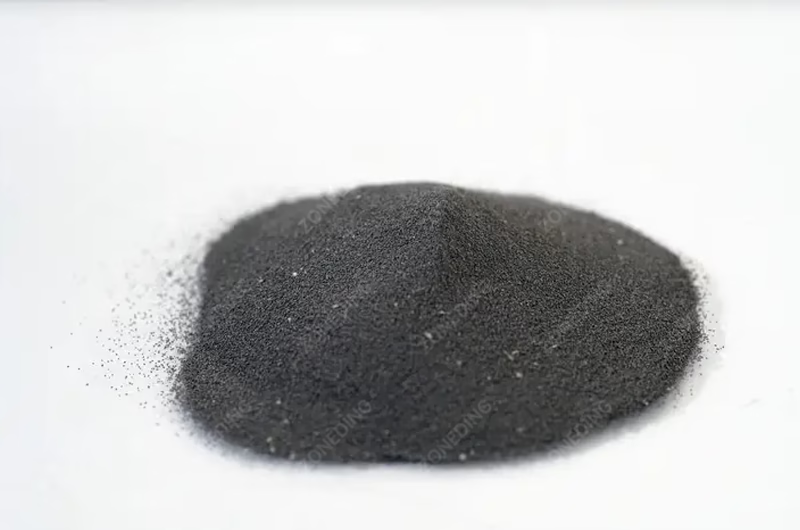
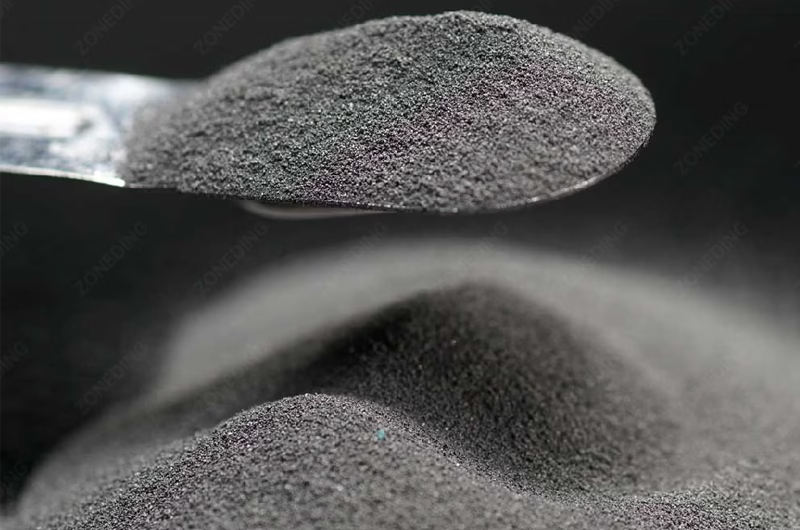
In the automotive and aerospace industries, manufacturers utilize a manufacturing technique known as “sintering.” Iron powder is mixed with alloying elements, pressed into a mold under extreme pressure, and then heated in a furnace. The particles fuse together at a molecular level without fully melting.
Efficiency: This process creates complex shapes—such as transmission gears, oil pump rotors, and camshaft pulleys—that require little to no machining. This results in “near-net-shape” manufacturing, virtually eliminating scrap metal waste and reducing energy consumption.
Magnetite (Fe3O4), the most magnetic of all naturally occurring minerals on Earth, is critical for the electronics industry.
Achieving the necessary fineness for powdered iron applications requires precision grinding technology. The ZONEDING Ball Mill plays a critical role here. After initial crushing, the ore is fed into the ball mill where steel balls grind the material into a fine powder. For high-grade powder metallurgy, the particle size distribution must be exact, often requiring air classifiers to separate and return oversized particles for re-grinding.
| Feature | Sintered Iron (Powder) | Cast Iron | Structural Steel |
|---|---|---|---|
| Carbon Content | < 0.1% (Variable) | 2% – 4% | < 1.5% |
| Primary State | Micron-sized Powder | Molten Liquid | Solid Billet/Slab |
| Key Property | Magnetic / Near-Net Shape | Castability / Damping | Tensile Strength |
| Major Use | Gears, Magnets, Chemicals | Engine Blocks, Pipes | Buildings, Bridges |
| Processing Need | Atomization / Ball Milling | Foundry Melting | Blast Furnace / Rolling |
A critical yet frequently overlooked application of iron ore lies within the safety and medical sectors. High-grade iron ore, particularly Hematite and Magnetite, possesses exceptional density (Specific Gravity of 5.0+). This physical property makes it an effective barrier against radiation.
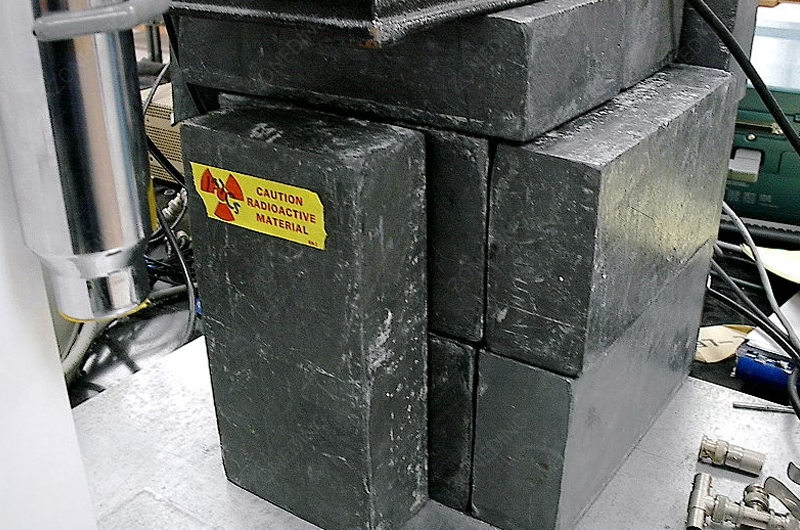
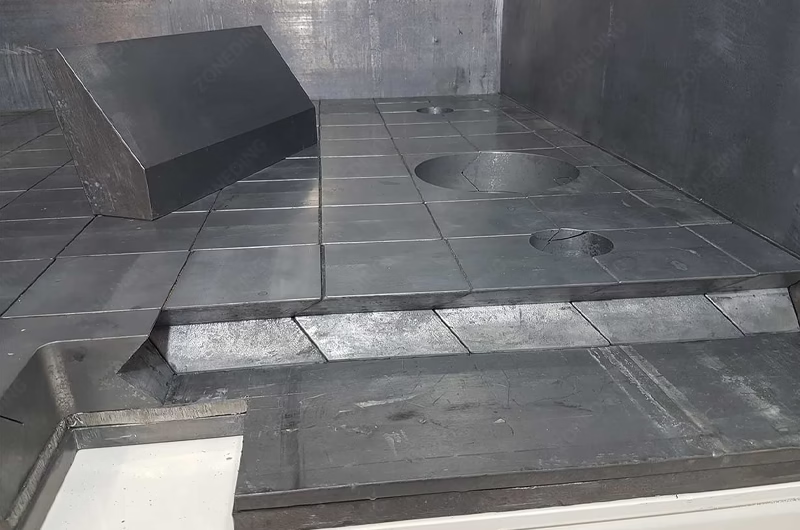
Standard construction concrete utilizes gravel or crushed stone as an aggregate, resulting in a density of approximately 2,400 kg/m³. However, for nuclear power plants, particle accelerators, and hospital radiation therapy rooms (LINAC bunkers), standard concrete walls would need to be impractically thick to block harmful gamma rays and neutrons.
Iron ore aggregates are also essential in the manufacturing of dry cask storage containers used for transporting and storing spent nuclear fuel. The iron content effectively absorbs gamma radiation, while the concrete matrix provides structural integrity, ensuring the safety of transport workers and the environment.
To produce aggregate for high-density concrete, the iron ore must be crushed to very specific construction specifications regarding particle shape (cubicity) and gradation. A ZONEDING Impact Crusher or Cone Crusher is typically employed to shape the ore into the precise aggregate sizes (e.g., 20mm, 10mm) required by the concrete batching plant, ensuring strong adhesion with the cement paste.
In the energy sector, iron ore is utilized not fuel, but as a tool to clean other minerals. Specifically, finely ground Magnetite is the industry standard for a coal beneficiation process known as “Heavy Media Separation” (HMS) or “Dense Medium Separation” (DMS).
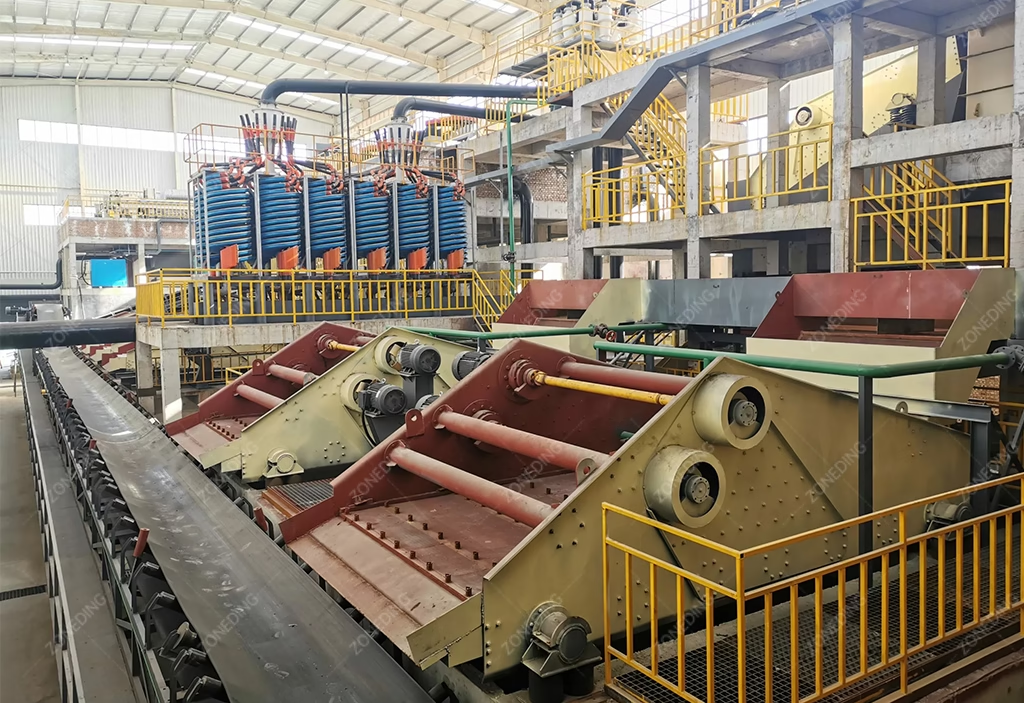
Raw coal mined from the earth is rarely pure; it is mixed with shale, rock, and ash-forming minerals. To make the coal marketable and efficient to burn, these impurities must be removed.
Magnetite is the material of choice for this process because of its magnetic properties. After the separation is complete, the expensive heavy medium must be recovered from the rinse water. Using Magnetic Separators, the plant can recover over 99% of the magnetite powder from the slurry, allowing it to be recycled and reused in the circuit. This makes Magnetite a reusable, cost-effective, and environmentally sustainable industrial consumable.
None of these five applications are possible with raw ore straight from the extraction face. The material must be processed through a rigorous circuit of size reduction and purification. This is where equipment selection defines the profitability of the operation. A typical processing line for high-grade iron ore involves three critical stages:
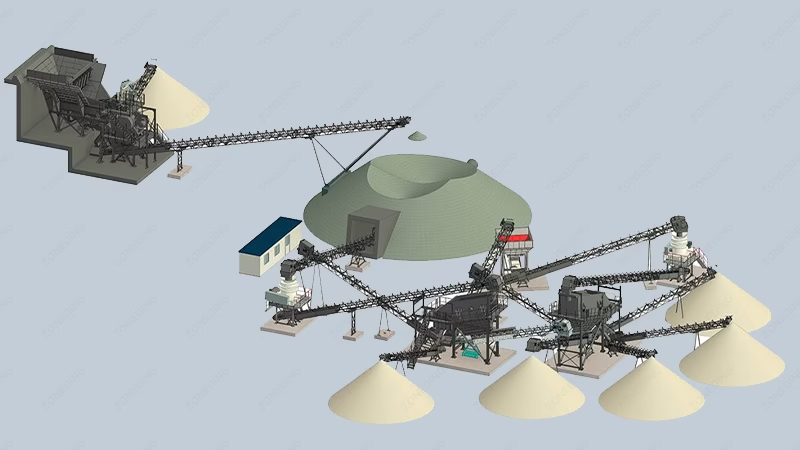
Huge boulders blasted from the pit must be reduced to manageable sizes.

To separate the valuable iron minerals from the waste rock (gangue), the ore must often be ground to a fine powder (liberation size).
Once ground, the iron must be separated.
Success in the competitive iron ore market depends on the efficiency and reliability of the beneficiation plant. ZONEDING offers complete crushing, grinding, screening, and separation solutions tailored to the specific minerology of the ore.
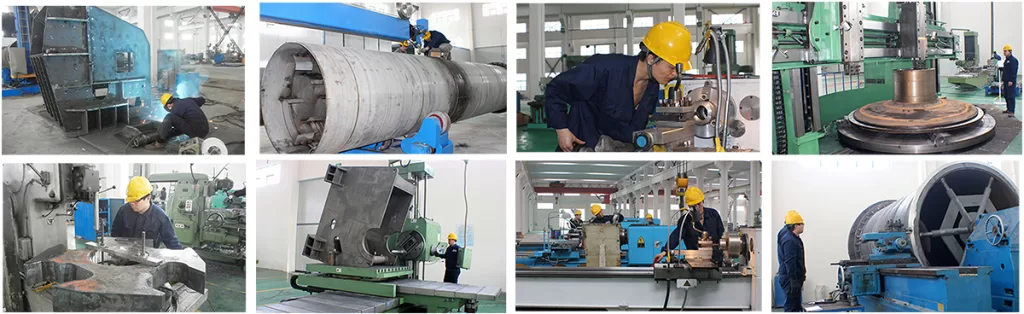
From rugged Jaw Crushers capable of handling hard rock to precision Magnetic Separators that maximize recovery rates, the equipment is designed to lower the cost per ton and maximize product value.
The question “what is iron ore used for” extends far beyond simple steel beams. Iron ore is a versatile mineral that supports the automotive industry through cast iron, enables green energy transitions through high-performance magnets and electric motors, protects human lives through radiation shielding, and improves energy efficiency through coal washing technologies.
For mining companies and aggregate producers, these diverse applications represent distinct revenue streams outside the fluctuating bulk steel market. However, accessing these high-value niche markets requires precise processing capabilities. A steel mill demands chemical purity; a concrete company demands precise particle shape; a coal washery demands ultra-fine powder.
Looking to design or upgrade an iron ore processing plant?
Contact the ZONEDING engineering team today for a customized flowchart design and equipment proposal tailored to specific production goals.
Last Updated: January 2026
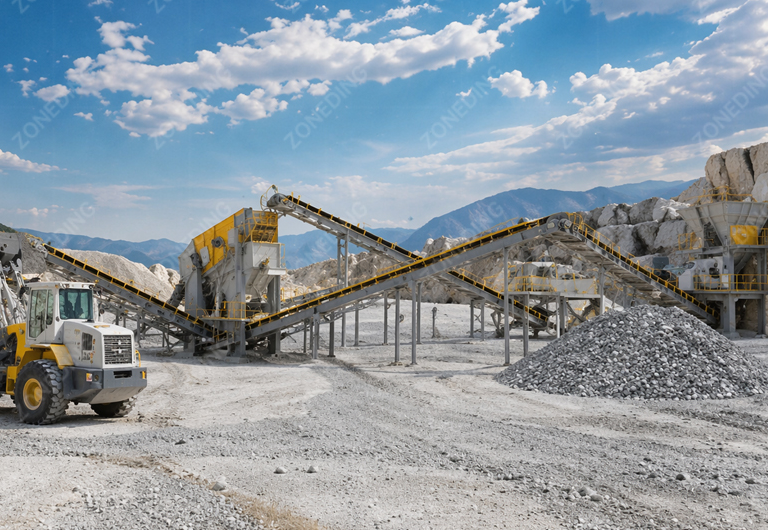
Transform raw pebbles into premium M-sand. Explore our river stone crushing plant layouts designed for high-yield, cubic-shaped construction sand.
View details
This expert guide details the 7 critical factors for an aggregate plant, from site selection and permitting to equipment choice and market analysis. Read Now!
View details
You know silica sand is used for glass, but what about in electronics, paints, or golf courses? Discover applications of silica sand.
View details
What are key differences between Hematite and Magnetite? A comparison of magnetism, streak color, chemical formula, crystal form, &iron content. Get answer NOW.
View details