 Zoneding Mining

Site Search
Search products, equipment and solution articles
整站搜索产品中心新闻中心
点击开始搜索
热门搜索
UltraForm-MXFlexiPoly-RNanoForm Z300EcoFab P200
Search products, equipment and solution articles
Diabase is a heavy, fine-grained igneous rock with extreme hardness and durability. These characteristics make it the gold standard for high-grade highway surfaces, railway ballast, and heavy-duty concrete. However, the exact strength that makes it valuable also makes it incredibly difficult to crush. Diabase is highly abrasive. It possesses high compressive strength and a dense mineral structure. Standard crushing setups often fail when processing this material. Frequent downtime and rapid wear of parts are the most common problems.
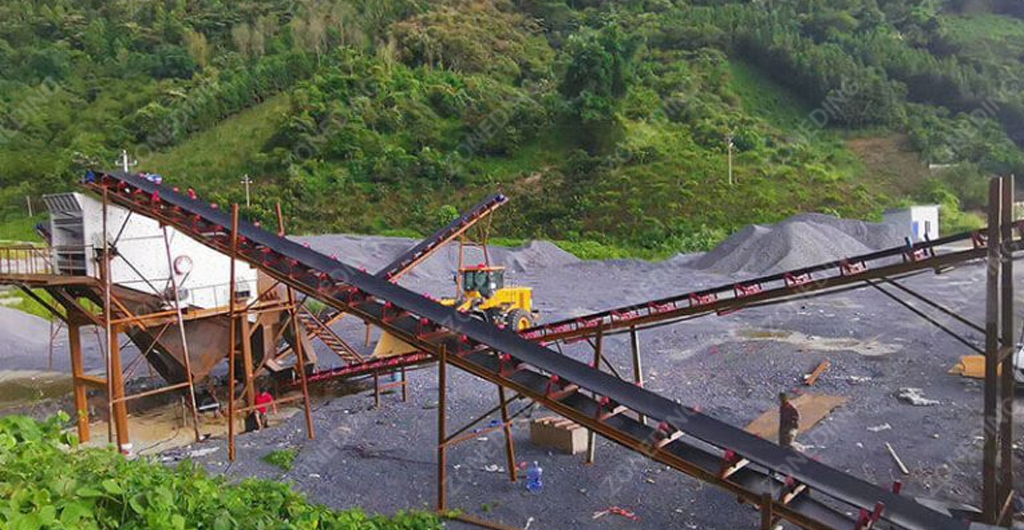
A high-efficiency Diabase Crushing Plant must utilize a multi-stage approach to manage these physical stresses. Success depends on selecting the right combination of jaw crushers, cone crushers, and vertical shaft impactors (VSI). ZONEDING industrial configurations focus on maximizing throughput while keeping the cost-per-ton low. This guide explores the mechanical requirements for crushing hard rock in 2025. It details the setup needed to produce high-quality cubic aggregate from the most abrasive materials found in nature.
Last Updated: March 2026 | Estimated Reading Time: 21 Minutes
Diabase is a basaltic rock that presents unique challenges for mining and aggregate companies. It usually has a Mohs hardness between 6 and 7. Its compressive strength often exceeds 200 MPa. This means the rock requires immense force to fracture. Along with hardness, the high silica content makes it very abrasive. This silica acts like an industrial grinder on metal machinery.
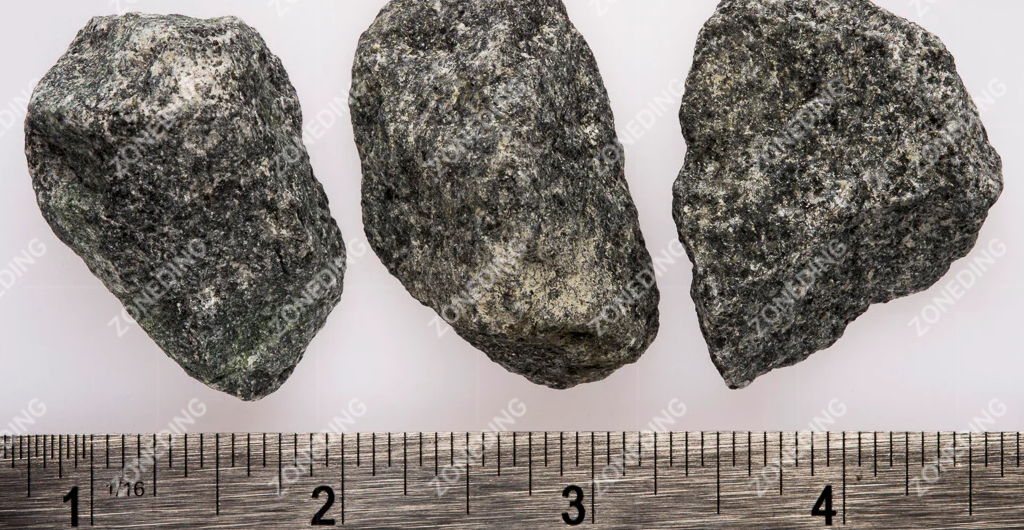
In common aggregate production, machines like impact crushers might work for limestone. But for diabase, an impact crusher would see its blow bars destroyed in a matter of days. Therefore, a Diabase Crushing Plant relies on compression-based technology. This method uses steady pressure rather than high-speed striking. This protects the equipment from the “sandpaper effect” of the diabase dust. ZONEDING designs use specialized alloys to counteract this abrasion.
When diabase enters a crusher, it creates intense friction. As the metal plates compress the stone, the stone scratches the metal surface. High-efficiency plants avoid “sliding friction” by using lamination crushing. In this process, the rocks crush against each other instead of just hitting the metal liners. This significantly extends the life of the machine. ZONEDING Cone Crusher systems are specifically designed to maximize this rock-on-rock interaction.
| Rock Property | Typical Value | Need for Engineering | Real Significance to You |
|---|---|---|---|
| Mohs Hardness | 6.0 – 7.5 | High-Manganese Liners | Reduces the frequency of part changes. |
| Compressive Strength | 200 – 320 MPa | Heavy-duty Flywheels | Ensures the machine doesn’t stall on big rocks. |
| Abrasiveness | High (High Silica) | Lamination Crushing | Lowers the cost per ton produced. |
| Grain Structure | Fine & Dense | Multi-stage Setup | Produces cubic shapes for road standards. |
A productive plant is an integrated system. Every machine serves a specific purpose in the size-reduction process. For hard rock, a three-stage setup is the industry standard in 2025.
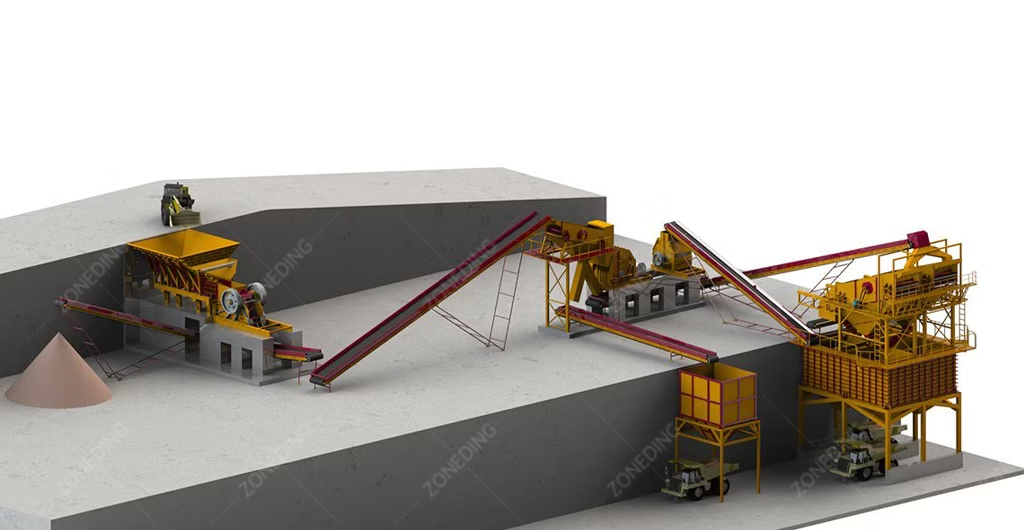
The first stage involves taking large boulders from the quarry and reducing them to a manageable size. A heavy-duty Jaw Crusher is the only reliable choice here.
Once the diabase is reduced to mid-sized rocks, it moves to the secondary stage. For hard and abrasive materials, the cone crusher is the king of the site. It uses a rotating mantle to press the stone against a stationary bowl.
The final stage focuses on the quality of the shape. Hard rocks like diabase often break into “needles” or “flakes.” These shapes are weak and do not meet construction standards. The VSI Sand Maker solves this.
Building a Diabase Crushing Plant is about balancing the flow. If one machine moves too fast while the next is slow, the system fails. A well-designed line moves material smoothly from the hopper to the stockpile.
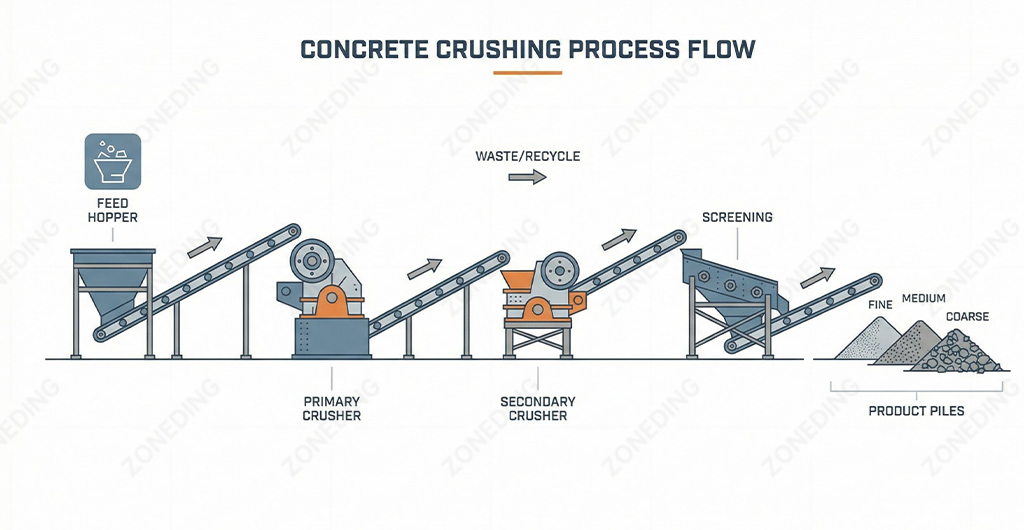
A Vibrating Feeder sits at the start. It must provide a steady stream of rock. ZONEDING feeders include “grizzly bars.” These bars allow small rocks and dirt to fall through before they reach the jaw crusher. This saves the jaw plates from unnecessary wear. It also keeps the primary crusher clear of “sticky” fine material that can slow down production.
In high-efficiency plants, a surge pile is placed after the primary jaw crusher. This pile acts like a battery. If the primary crusher stops for a few minutes, the secondary cone crusher can keep running using the material in the pile. This maintains a “choke feed” for the cone crusher. Choke feeding is when the crushing chamber is completely full. This is the only way to get the best rock-on-rock lamination effect.
The Vibrating Screen is the brain of the operation. It decides which rocks are finished and which need more crushing. For diabase, the screen must be heavy-duty. Stones hitting the mesh can cause rapid wear. ZONEDING uses high-manganese screen mesh to handle the impact. The screen sorts the material into different bins for sand, gravel, and large aggregate.
High-speed crushing of hard rock produces a lot of dust. This dust can damage engines and harm the health of workers. Modern plants use enclosed Belt Conveyors and water misting systems. These systems trap the dust at the source. This keeps the site clean and ensures the company meets 2025 environmental regulations.
The biggest expense in a Diabase Crushing Plant is the replacement of wear parts. Managing this cost is the difference between a profitable year and a loss.
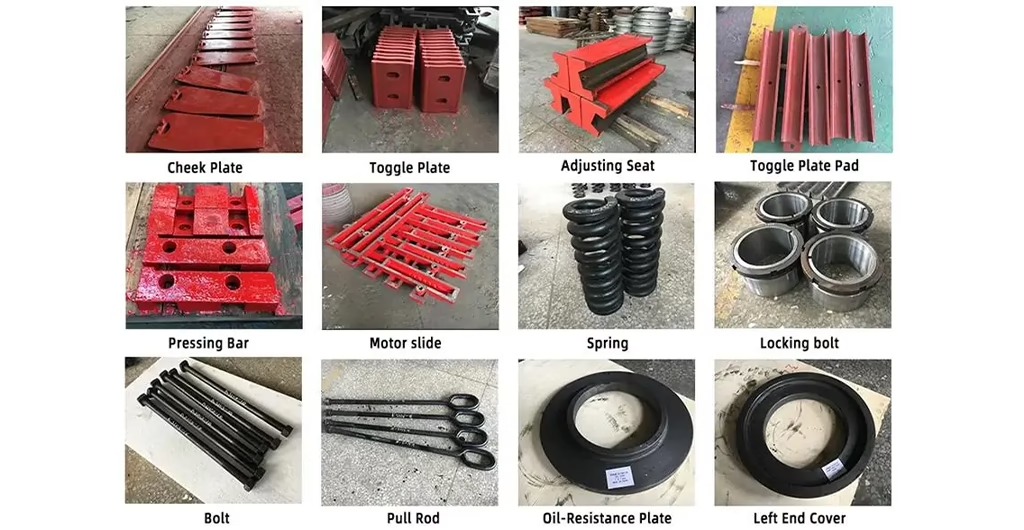
ZONEDING uses Mn18Cr2 or Mn22Cr2 alloy steel for jaw and cone liners. The high manganese content allows the metal to “work-harden.” This means the more the diabase hits the metal, the harder the metal surface becomes. This is a critical feature for abrasive rock. Cheaper machines use soft steel that wears out in half the time.
Old crushers used manual wedges or shims to change the discharge size. This took hours and was dangerous. Modern ZONEDING plants use hydraulic systems.
Don’t wait for a machine to break. High-efficiency plants use “predictive maintenance.” They track the number of tons processed and check the thickness of the liners every week. ZONEDING control panels now include sensors that monitor vibration and heat. If a bearing starts to get too hot, the system sends an alert. This prevents a small problem from becoming a million-dollar failure.
Hard rock crushing creates high heat inside the bearings. A dedicated lubrication station is essential. It filters the oil and cools it down before sending it back to the crusher. ZONEDING systems include an automatic heater for cold-weather starts and a cooler for desert environments. This keeps the machine running in any climate.
A Diabase Crushing Plant is a massive investment. B2B buyers must choose a supplier who understands the science of hard rock, not just the sales of iron.
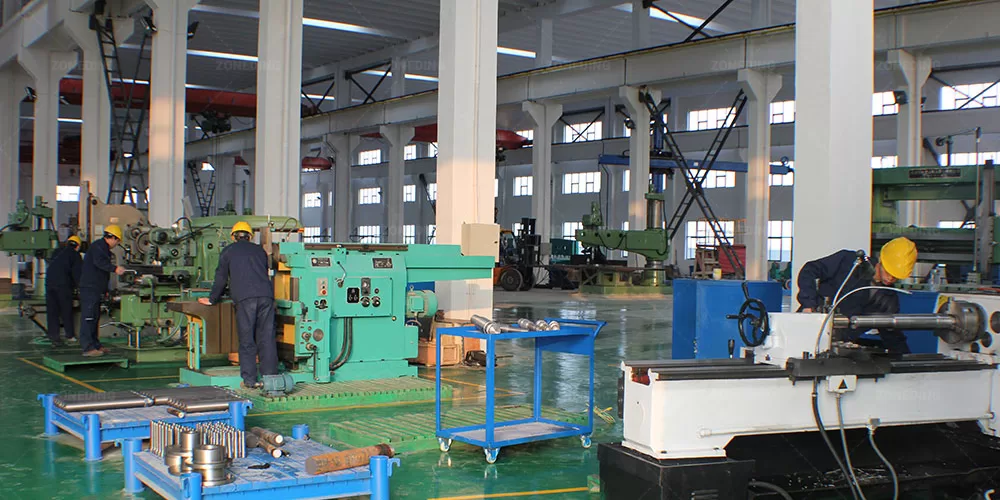
Every diabase deposit is slightly different. Some have more clay; some are harder. A good supplier should ask for a rock sample to test in their laboratory. ZONEDING provides custom flowcharts based on the specific “Crushing Work Index” of your stone. They don’t just sell a “Standard” plant; they sell a “Solved Solution.”
Buying from a trading company is risky. If a machine breaks, the trader must call the factory. ZONEDING is the manufacturer. They have an 8,000 square meter factory with advanced CNC machines and welding robots.
Setting up a 500-ton plant is complex. The supplier must send experienced engineers to your site. ZONEDING has installed equipment in over 120 countries. They provide on-site training for your staff. They teach them how to adjust the hydraulics, how to grease the bearings, and how to spot early signs of wear. This training is what ensures the plant stays profitable for 20 years.
The “skeleton” of the plant matters as much as the machines. The steel supports must be heavy enough to stop the vibrations from tearing the bolts loose. ZONEDING uses thickened H-beam steel and industrial-grade welding. They also provide walkways and safety stairs so your team can maintain the plant safely.
The crushing industry is changing fast. New technologies are making Diabase Crushing Plants smarter and more environmentally friendly.
In 2025, “Dry Dust Collection” is the standard. Older wet systems wasted water and created a muddy mess. New pulse bag filters from ZONEDING catch 99.9% of the fine diabase dust. This dust can then be sold as “Mineral Filler” for asphalt production, turning a waste product into another source of profit.
The global push for high-speed rail is the biggest driver for diabase demand. Countries like Indonesia, Saudi Arabia, and Brazil are buying more diabase plants because other stones simply aren’t strong enough for modern train tracks. Investing in a high-efficiency plant today positions a company to win these massive government contracts.
Processing diabase is a challenge that requires respect for the material’s hardness. A high-efficiency Diabase Crushing Plant is the best defense against high operating costs. To succeed in 2025:
Ready to start your hard rock project?
Contact ZONEDING today for a free technical consultation and a customized diabase crushing plant proposal. Let’s build something strong together.
Last Updated: February 2026
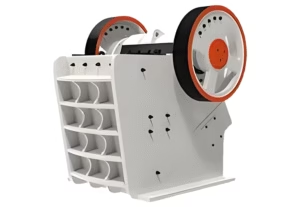
A jaw crusher is a primary stone crusher in mining&aggregate. Learn its types, parts, work principle, maintenance, how to choose. ZONEDING provides good choice!
View details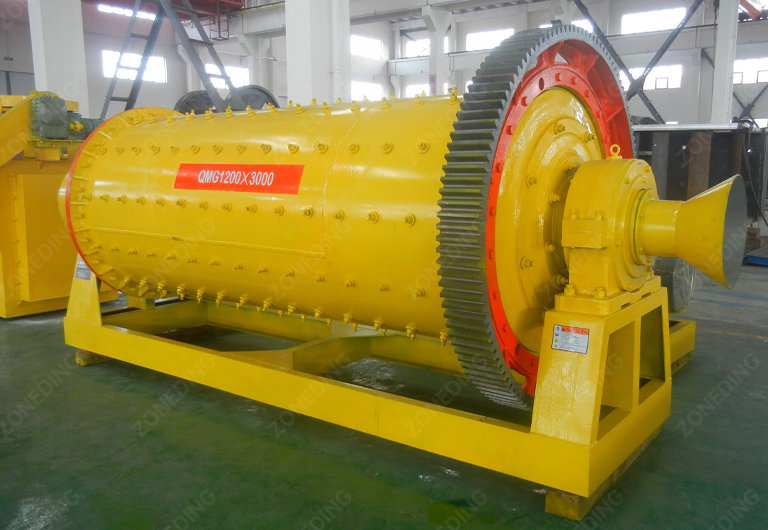
Want to boost your mill's performance? Uncover the 7 critical factors affecting grinding machine working efficiency and get actionable tips to maximize output.
View details
Understand froth flotation (foam flotation) in mineral processing. Explore its core principles, key steps, and how it separates valuable minerals from ore.
View details
Discover the essentials of Thorium (Th). Learn about its atomic properties, discovery, and how this radioactive element is processed and extracted.
View details