 Zoneding Mining

Site Search
Search products, equipment and solution articles
整站搜索产品中心新闻中心
点击开始搜索
热门搜索
UltraForm-MXFlexiPoly-RNanoForm Z300EcoFab P200
Search products, equipment and solution articles
Dry sand is a critical raw material for global infrastructure, industrial manufacturing, and chemical production. While natural sand often contains moisture levels between 10% and 15%, most industrial applications demand a moisture content of 0.5% or lower. High moisture leads to uneven mixing in dry mortar, blockages in glass manufacturing, and poor bonding in foundry casting. Transitioning from wet material to a dry, free-flowing state requires specialized thermal processing.
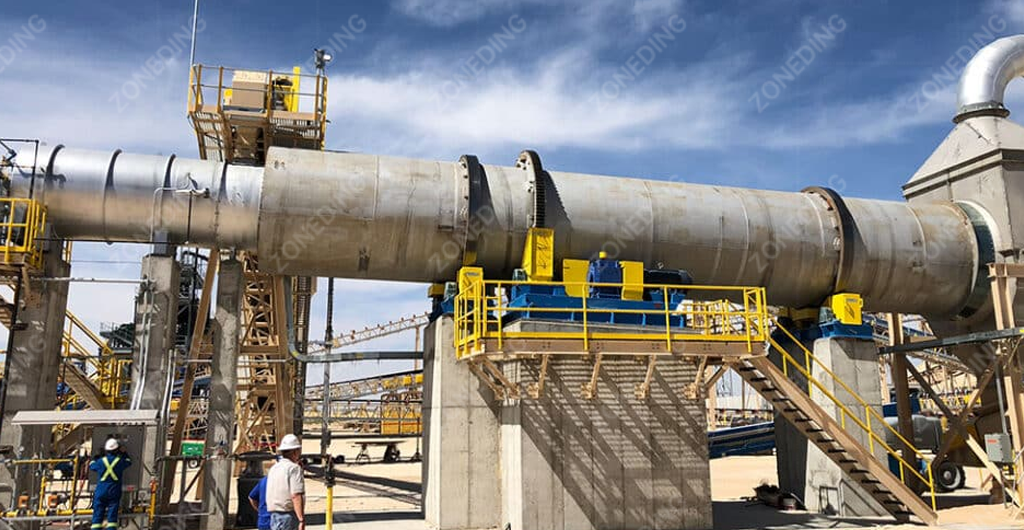
A Sand Dryer Machine acts as the core of this transformation by utilizing controlled heat exchange to evaporate water efficiently. Modern industrial drying technology has evolved from simple fire-heated drums to sophisticated three-pass systems with automated thermal monitoring. ZONEDING drying equipment is engineered to maximize throughput while minimizing fuel consumption per ton. This guide provides a comprehensive technical overview of san dryer operations. It explores equipment selection, process optimization, and the mechanical components required to achieve a consistent 0.5% moisture target in 2025.
Last Updated: March 2026 | Estimated Reading Time: 21 Minutes
An industrial sand dryer is a mechanical thermal processor designed specifically to remove water from sand and other granular minerals. The most widely adopted technology for this task is the rotary dryer. This machine consists of a large, inclined rotating cylinder. In this system, wet sand travels through the drum while being exposed to a stream of high-temperature air generated by a burner.
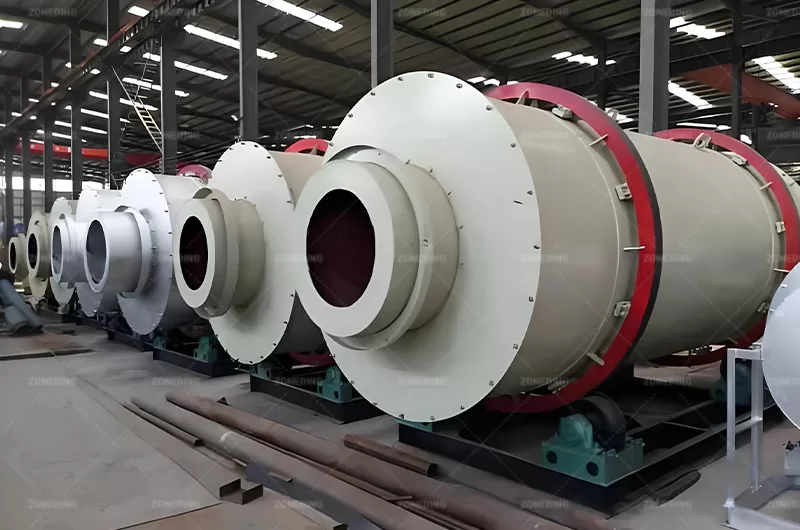
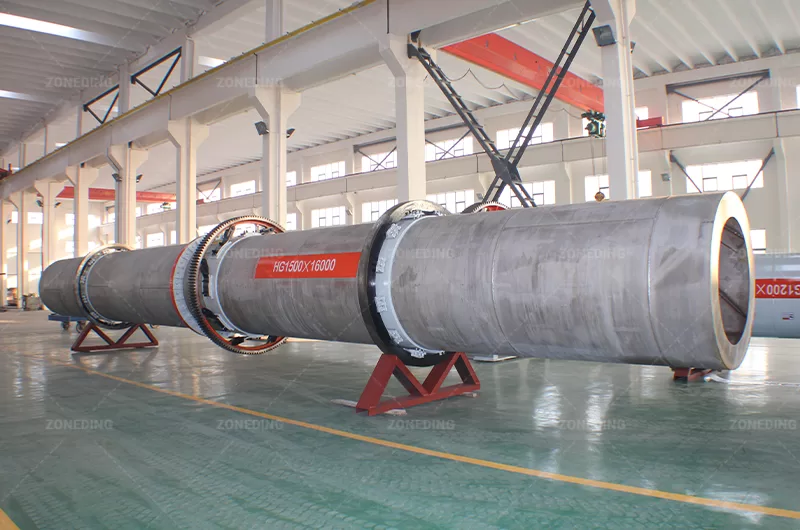
In the 2025 industrial landscape, moisture control is a prerequisite for quality assurance. For example, in the production of dry-mix mortar, even 1% excess moisture can trigger the cement’s hydration process prematurely. This ruins the shelf life of the product. Similarly, in fracking and glass making, silica sand must be bone-dry to ensure consistent viscosity and chemical reactions. ZONEDING Rotary Dryer solutions address these challenges by providing uniform heat distribution across every grain of sand.
To reach a 0.5% moisture target, the machine must overcome the surface tension of the water clinging to the sand particles. This requires three factors: heat, airflow, and agitation. The heat provides the energy for evaporation. The airflow carries the resulting water vapor away to prevent re-condensation. The agitation, provided by the rotating drum and internal lifters, ensures that “wet spots” are not trapped in the middle of a material pile.
| Sand Grade | Typical Initial Moisture | Requirement for 2025 | Industrial Application |
|---|---|---|---|
| River Sand | 12% – 15% | < 0.5% | Construction / Dry Mortar |
| Silica Sand | 18% – 22% | < 0.3% | Glass / Chemical / Fracking |
| Sea Sand | 15% – 20% | < 0.5% | Infrastructure Reclamation |
| Fine Tailings | 25% + | < 1.0% | Cement Additives / Bricks |
The operation of a high-efficiency drying line follows a strictly controlled sequence of mechanical and thermal stages. If any stage is mismanaged, the final moisture level will fluctuate, leading to inferior product quality.
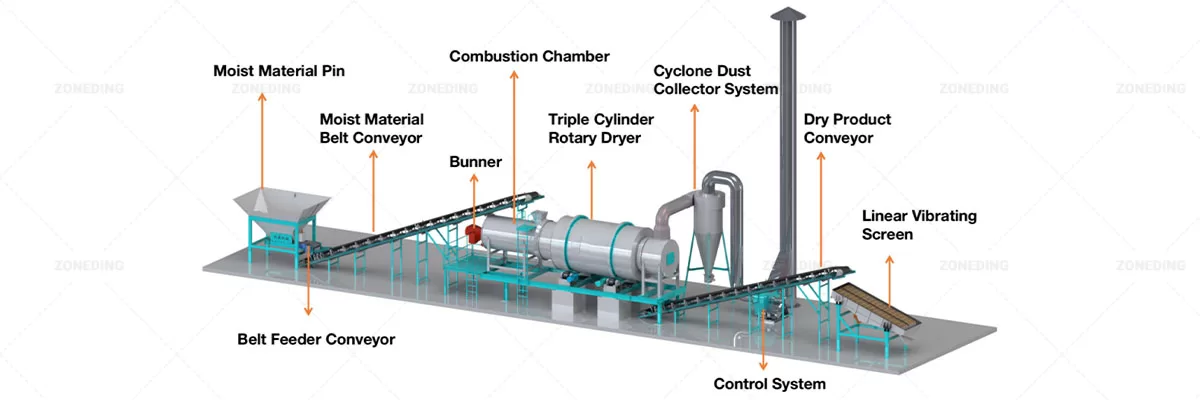
Consistency is the most important part of the drying process. Wet sand is stored in a hopper and then delivered to the dryer inlet via a belt conveyor. To prevent “slugging” (large clumps of wet material entering at once), ZONEDING systems utilize a frequency-controlled feeder. This ensures that the volume of sand matches the heat output of the burner. A steady feed allows the drum to maintain a thermal equilibrium.
Inside the rotary drum, specialized “flights” or lifting plates are welded to the inner shell. As the drum rotates at a speed of 3–8 RPM, these plates pick up the wet sand and carry it toward the top of the cylinder. When the plates reach the zenith, the sand falls back down, creating a dense “curtain” of material across the entire diameter of the drum. This ensures maximum contact between the hot air and the surface area of the sand.
The burner, located at one end of the system, injects hot air into the drum. In a concurrent flow configuration, the hot air and the sand both move in the same direction. As the air moves, it transfers its thermal energy to the water on the sand’s surface. This water turns into vapor almost instantly upon contact with the high-temp zone. As the sand moves toward the discharge end, it gradually absorbs enough heat to lose its internal moisture, reaching the desired 0.5% threshold.
The final stage involves separating the dry sand from the moisture-laden exhaust air. The sand falls through a discharge chute for cooling and storage. The air, containing fine sand dust, is pulled through a Dust Collector. This protects the environment and recovers the fine “fines” which are often sold as specialized fillers for other industries.
When selecting a Sand Dryer Machine, the choice of drum structure is the most critical decision for long-term profitability. The industry currently utilizes two main designs: the traditional single-pass and the advanced three-pass (triple-loop) system.
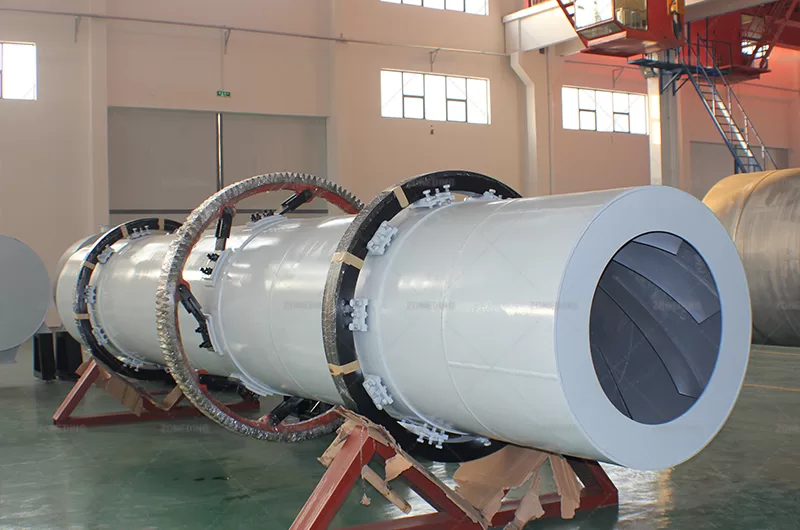
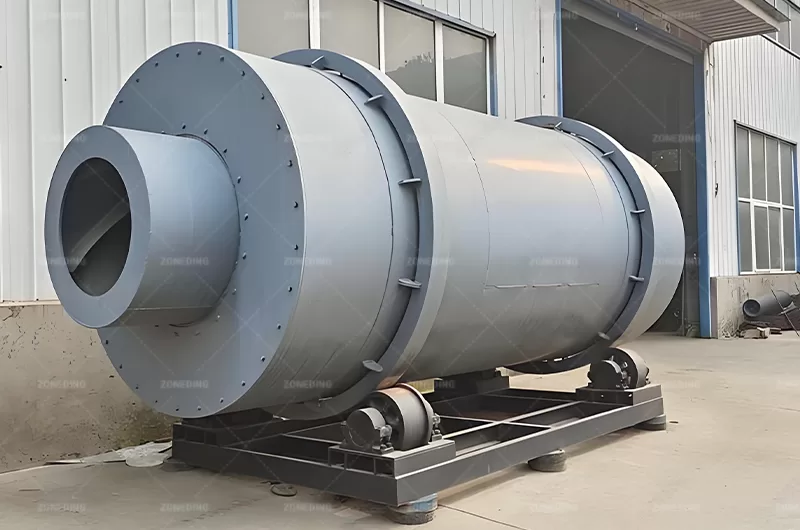
The single-pass dryer is a large, single cylinder. It is easy to repair and can handle larger particles and sticky materials more effectively than complex designs. However, it suffers from high radiation heat loss. Because the outer shell is directly exposed to the hot air, it becomes very hot, wasting energy into the surrounding atmosphere. This leads to higher fuel costs per ton of sand produced.
The Three-pass Dryer is a sophisticated solution where three concentric cylinders are nested. The sand travels down the inner cylinder, back through the middle cylinder, and out through the outer cylinder.
| Feature | Single-Pass Dryer | ZONEDING Three-Pass Dryer |
|---|---|---|
| Thermal Efficiency | ~50% – 60% | ~85% – 92% |
| Exit Temperature | High (Wasted heat) | Low (Retained heat) |
| Fuel Savings | Baseline | 30% – 45% Fuel Reduction |
| Space Required | 25 – 40 Meters | 8 – 15 Meters |
| Maintenance | Simple mechanical | Specialized mechanical |
To achieve consistent results, the drying drum must be supported by high-quality auxiliary equipment. Integrated systems are far more reliable than pieced-together lines.
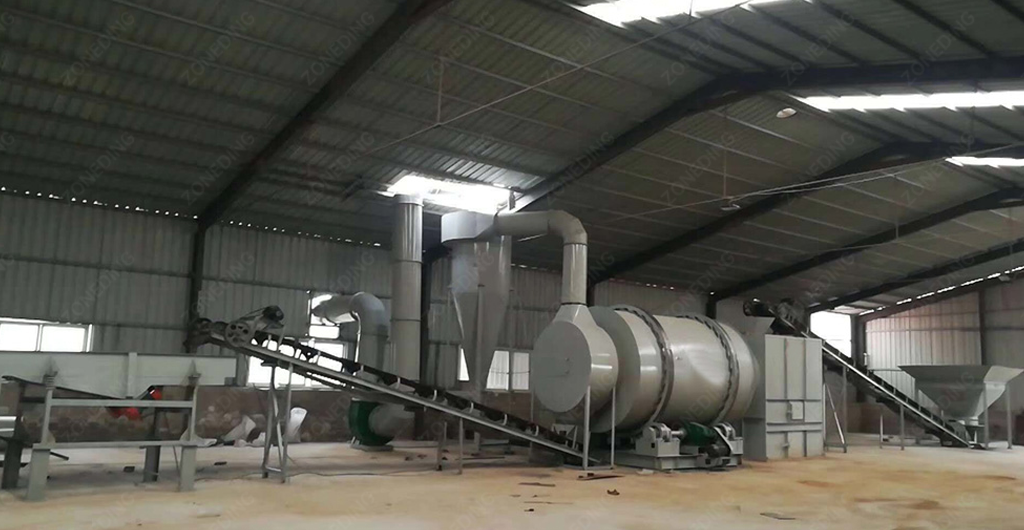
The heat source must be capable of maintaining a steady temperature regardless of external weather conditions. ZONEDING systems can be equipped with burners for Natural Gas, Diesel, Coal, or Biomass pellets. In 2025, natural gas is the preferred choice for silica sand to ensure zero color contamination. For road construction sand, biomass or coal-fired furnaces are often used to reduce fuel costs.
The drum sits on two heavy-duty steel “tyres” (riding rings) which are supported by four trunnion rollers. This mechanical interface is where most wear occurs. ZONEDING uses high-chrome cast steel for these parts to prevent warping and cracking. The drive system usually consists of a girth gear and a pinion driven by an electric motor with a soft-start variable frequency drive (VFD). This allows the operator to change the drum speed to match different moisture levels.
Silica sand produces extremely fine dust that is hazardous if inhaled. A drying line must include a pulse bag filter or a high-efficiency cyclone. ZONEDING dust collectors are designed to maintain a “vacuum” effect inside the drum. This prevents hot air and dust from leaking out of the feeding and discharge zones.
Sand discharged from a dryer is typically between 80°C and 120°C. If this hot sand is sent directly to a bagging machine, it will melt the plastic bags or cause condensation inside bulk containers. A Rotary Cooler uses ambient air to bring the temperature down to safe levels (under 45°C).
Achieving ultra-dry sand is a matter of precision rather than brute force. Simply turning up the heat can waste fuel and damage the machine shell.
| Problem | Cause | Solution |
|---|---|---|
| Sand is still wet | Feeding too fast | Reduce VFD speed on the feeder. |
| High fuel usage | Airflow too high | Adjust fan damper to reduce air velocity. |
| Drum vibrating | Misaligned rollers | Re-level the trunnion support base. |
| Moisture condensation | Cold discharge air | Increase discharge temperature to 75°C+. |
Every ton of sand requires a specific volume of hot air to carry away the evaporated water. If the airflow is too slow, the air becomes saturated with moisture, and the sand remains damp even at high temperatures. ZONEDING engineers calculate the “Air-to-Material” ratio based on the local humidity and the sand’s initial moisture. Adjusting the induction fan speed is just as important as adjusting the burner flame.
Human operators cannot monitor the moisture of sand grains in real-time. Modern ZONEDING lines use PLC (Programmable Logic Controller) systems. Sensors at the inlet detect the moisture level of the incoming sand. The system then automatically adjusts the feeder speed and fuel input. If the incoming sand is wetter than normal, the feeder slows down to give the material more “residence time” inside the drum.
Uninsulated dryer shells can lose 10% of their heat to the air. Higher-end models utilize thermal insulation jackets. Furthermore, waste heat from the discharge sand or the exhaust air can be piped back to the burner air intake to pre-heat the combustion air.
A Sand Dryer Machine is an investment that should generate profit for 15+ years. Assessing a supplier requires looking at their engineering depth and their ability to provide long-term parts support.
A supplier should not just offer “Standard” sizes. They must perform a thermal balance calculation. ZONEDING provides custom sizing based on the specific gravity of the ore, the local altitude (which affects air density), and the fuel type. An incorrectly sized dryer will either fail to dry the sand or consume double the fuel required.
Cheap dryers use standard carbon steel for the drum. Under high heat, these shells can bend or “sag,” which causes the gears to misalign. ZONEDING uses boiler-grade Q345R steel and thicker shell plates to ensure the drum remains perfectly cylindrical even after thousands of heat cycles.
Because dryers are large, shipping them for repairs is impossible. ZONEDING offers on-site installation and commissioning globally. Furthermore, as a direct manufacturer, ZONEDING stocks all wear parts—lifters, rollers, and gears—for every model built since 2004. This ensures that maintenance downtime is measured in hours, not weeks.
ZONEDING MACHINE is a specialized Chinese manufacturer of mining and thermal processing equipment with a history dating back to 2004. Operating from an 8,000 square meter factory, the company produces over 500 equipment sets annually for more than 120 countries.
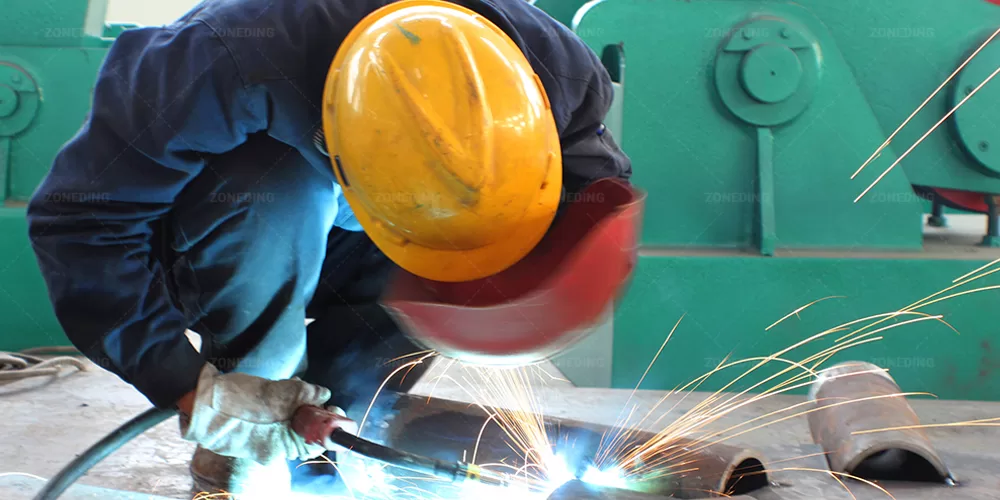
ZONEDING stands apart by offering a “Holistic Engineering” approach. Every sand drying line is custom-sized by a team of 15 mineral processing engineers. The company focuses on heavy-duty construction, using superior materials to ensure its dryers outlast cheaper alternatives. As a B2B focused manufacturer, ZONEDING prioritizes ROI for its clients, offering competitive factory-direct pricing and 24/7 technical support.
The industry is moving toward “Digitalization” and “Sustainable Energy.” Developments in 2025 are helping operators achieve higher precision with lower environmental impacts.
The global push for “Green Building” is increasing the demand for recycled sand from construction waste. This sand is often wetter and more irregular than river sand. Specialized dryers designed for “Recycled Aggregate” are becoming a fast-growing segment for ZONEDING.
The path to 0.5% moisture consistency is rooted in stable feeding and efficient heat exchange. A high-quality Sand Dryer Machine is the most effective tool to turn wet, unusable debris into premium industrial sand. In conclusion:
Ready to optimize your sand production?
Contact ZONEDING today for a free technical consultation and a customized sand dryer quote. Let’s achieve the perfect 0.5% moisture for your 2025 business goals.
Last Updated: February 2026
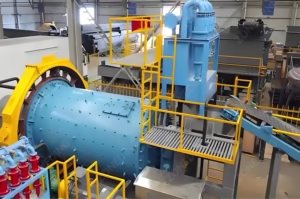
Our "Antimony 101" guide covers everything from its basic definition and properties to the detailed industrial processing techniques. Read More Now!
View details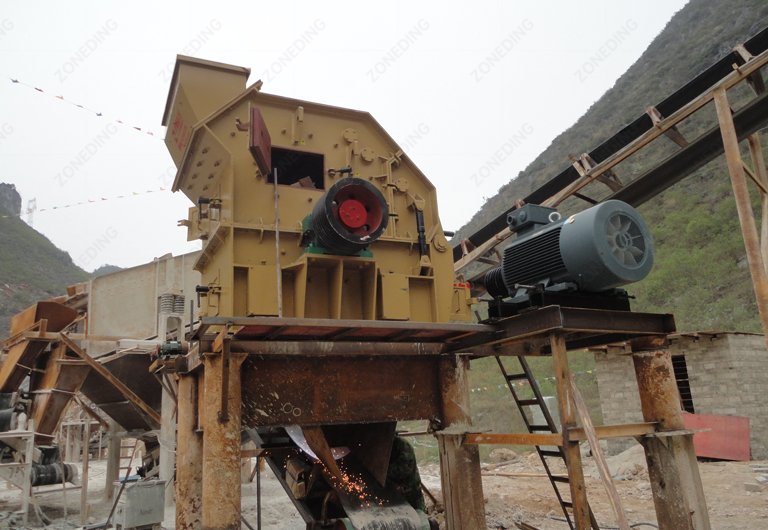
Weighing pros and cons of impact crushers? Read our objective review covering production efficiency, perfect cubic product shape, and expected maintenance costs.
View details
Explore detailed insights into limonite's extraction, beneficiation, and treatment methods.Learn its roles as an iron ore & pigment source in modern industries.
View details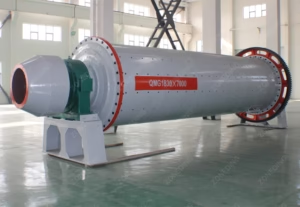
Discover 9 most common problems on ball mill, from excessive wear to power consumption. Learn how to identify issues and implement solutions to extend lifespan.
View details