全站搜索

Search the entire website

BLOG

Stone Crusher Plant Layout: Feeding, Crushing & Screening

Blog 11040

In the aggregate production industry, the machinery itself—jaw crushers, cone crushers, and vibrating screens—represents only half of the production equation. The other half, often overlooked yet equally critical, is the plant layout and process flow design. A poorly configured stone crusher plant layout results in bottlenecks, excessive energy consumption, and rapid wear of components, regardless of individual machine quality. Conversely, an optimized circuit utilizes gravity, balances crushing stages, and streamlines material flow to achieve maximum tonnage with minimum operational expenditure (OpEx).
LIMESTONE-CRUSHING-PLANTS

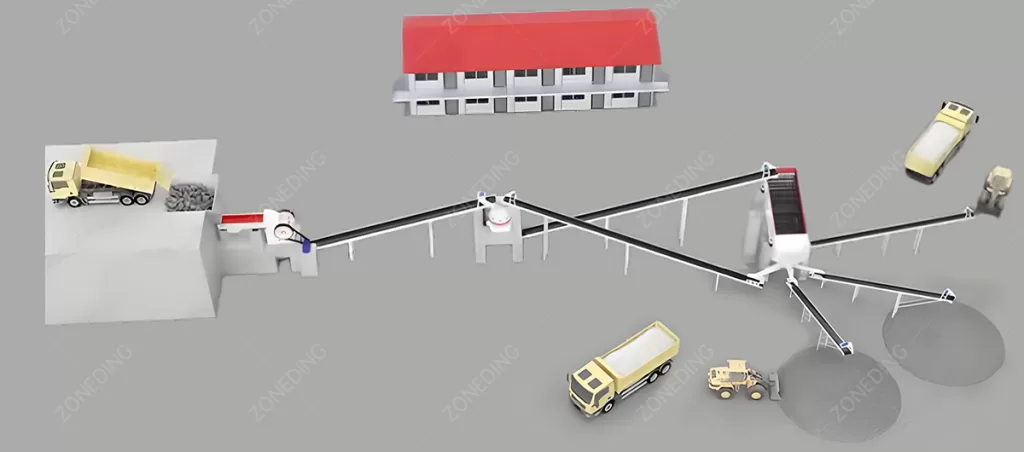
This technical guide dissects the anatomy of a complete stone crushing plant. It explores the engineering logic behind feeding systems, the strategic arrangement of primary and secondary crushers, and the crucial role of closed-circuit screening. By understanding these layout principles, mining operators and quarry owners can engineer production lines that are not merely collections of machines, but integrated, high-efficiency systems.

Last Updated: January 2025 | Estimated Reading Time: 15 Minutes

Table of Contents

The Principles of Process Flow Design

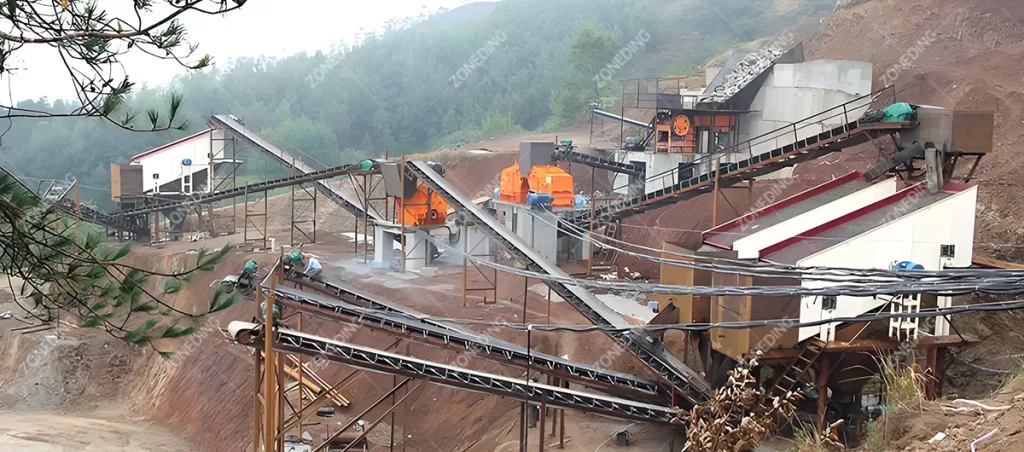
Before selecting individual equipment, engineers must establish the fundamental process flow. The layout design is dictated by three immutable factors: raw material characteristics (hardness, moisture, size), the target output (production capacity and gradation), and the physical topography of the site.
Limestone Crushing Production Line-2

Open Circuit vs. Closed Circuit Layouts

The most fundamental decision in plant design is the choice between open and closed circuits.

  • Open Circuit: Material passes through the crushers effectively in a straight line. If the material is not crushed to the desired specification in a single pass, it is screened out as oversize product or waste. This layout is simpler and cheaper to install but offers less control over the final product size distribution (gradation).
  • Closed Circuit: This is the industry standard for high-quality aggregate production. The plant layout includes a return conveyor (recirculating load). Material that does not pass through the screening mesh after secondary crushing is returned to the crusher for another pass. ZONEDING engineers typically recommend closed-circuit designs for projects requiring strict adherence to concrete or asphalt aggregate standards, as it guarantees 100% of the final pile meets the size specification.

Utilizing Topography (Gravity Flow)

A superior plant layout utilizes the natural terrain. By positioning the primary station at a higher elevation than the secondary and tertiary stations, the design can utilize gravity to assist material flow. This reduces the required length and power consumption of belt conveyors. A “terraced” layout minimizes the lifting work required by the conveyors, thereby reducing the plant’s total energy footprint.

Stage 1: The Feeding System and Pre-Screening

The efficiency of the entire line is often determined at the very beginning: the hopper and feeder. The goal of this stage is not just to move rock, but to condition the feed for the primary crusher.
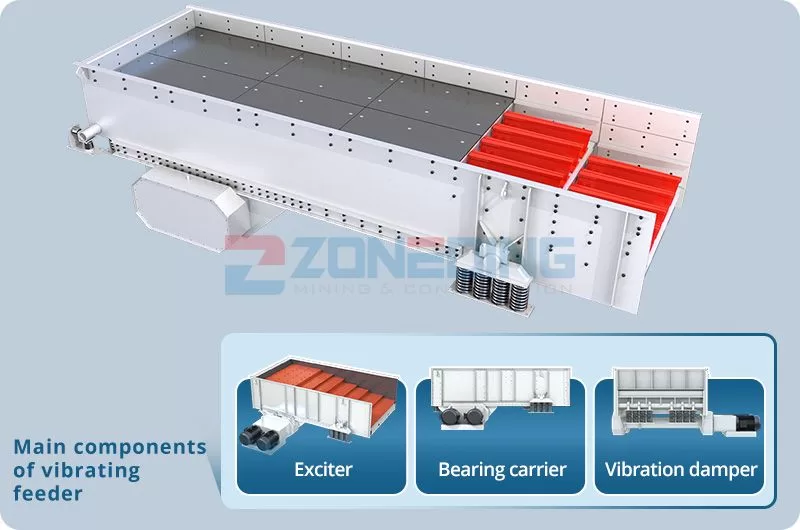
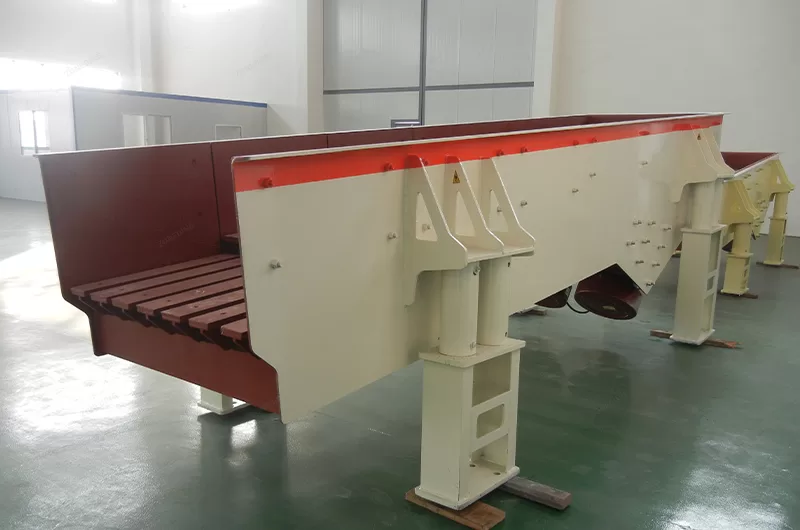
Vibratory Feeder _ Vibration Feeder _ Mining Feeder
Vibrating feeder

Vibrating Feeders and Grizzly Bars

The Vibrating Feeder is the gatekeeper of the plant. It must deliver a consistent, uniform flow of material. Erratic feeding leads to “surging,” where the crusher alternates between being empty (choking flow) and being overfilled (stalling).

  • Grizzly Bar Function: A critical feature in modern layouts is the grizzly bar section on the feeder. These widely spaced bars allow undersized material (fines, soil, and rocks already small enough to bypass the primary crusher) to fall through before entering the jaw crusher.
  • Efficiency Gain: By scalping this material (“bypassing”), the plant increases the effective capacity of the primary crusher. If the raw feed contains 20% soil and small rocks, removing this before the crusher instantly increases the crusher’s effective throughput by 20% and reduces wear on the jaw plates.

Stage 2: Primary Crushing Configuration

The primary stage is about size reduction, not product shaping. The objective is to break large blasted boulders (often 500mm to 1000mm) into manageable sizes (usually 150mm to 300mm) for the secondary crushers.
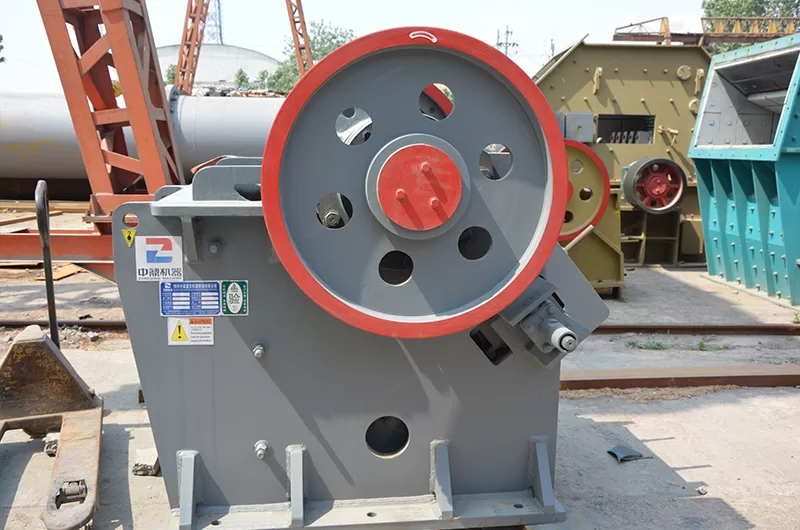
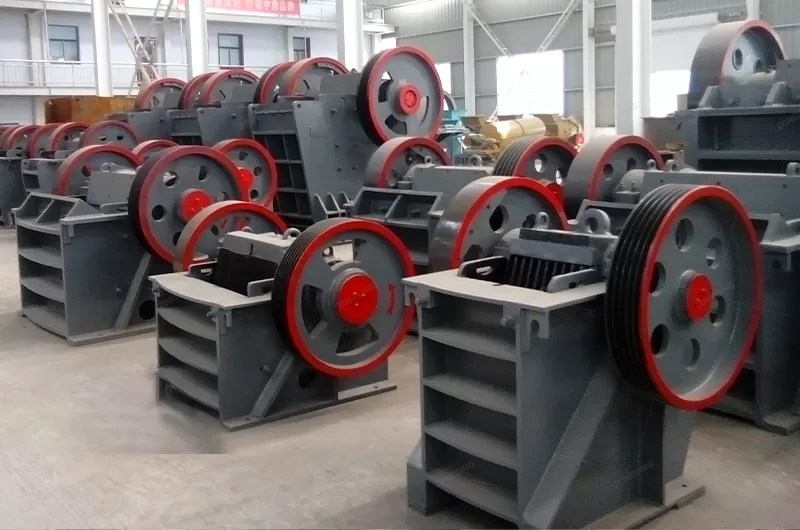
Jaw-Crusher
Jaw-Crusher

The Dominance of the Jaw Crusher

For the vast majority of hard rock applications (Granite, Basalt, River Stone), the Jaw Crusher is the standard primary unit.

  • Configuration Logic: The jaw crusher should be positioned as close to the extraction point as possible to minimize haul truck distance. In the layout, it is elevated sufficiently to allow a discharge conveyor to feed a surge pile or directly into the secondary stage.
  • Setting the CSS: The Closed Side Setting (CSS) of the jaw crusher dictates the size of the output. In an optimized layout, the CSS is balanced with the intake capacity of the secondary crusher. If the jaw crusher produces rock larger than the secondary crusher’s gape, blockages will occur, halting the entire production line.

Stage 3: Secondary Crushing and Shaping

This stage defines the quality and quantity of the final product. The layout configuration here splits based on material hardness.
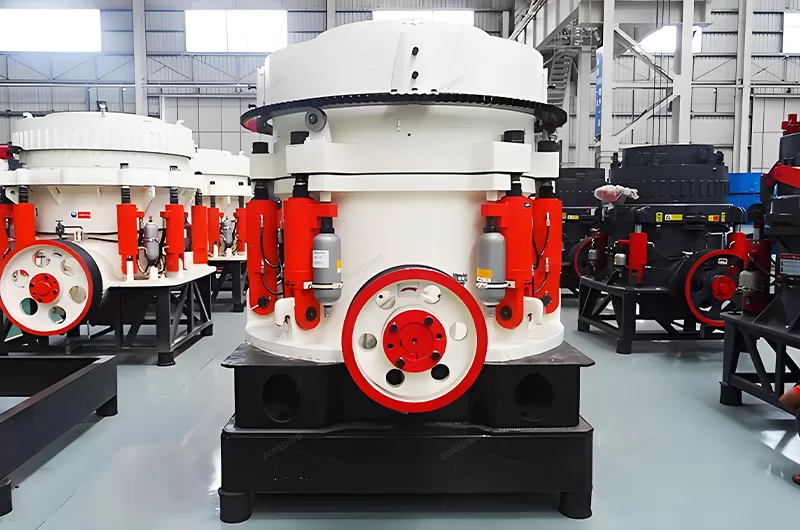
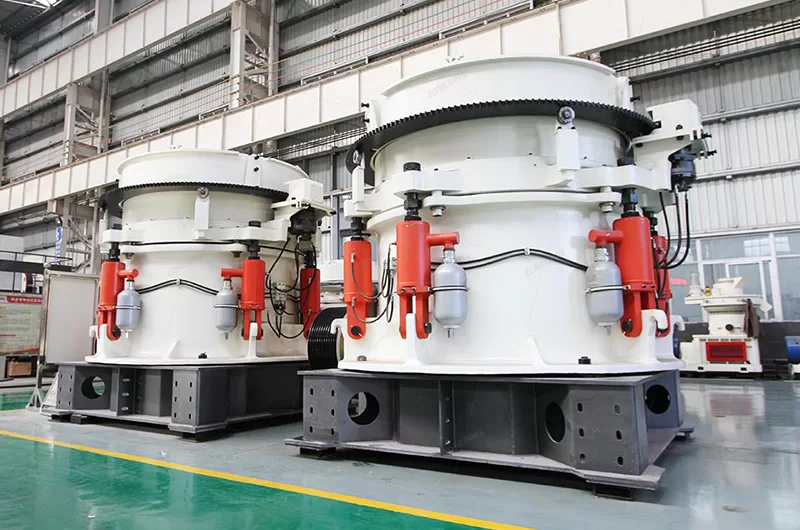
Hard Rock Layout: The Cone Crusher Circuit

Hydraulic Cone Crusher
Cone Crusher

For abrasive materials (Compressive strength > 150 MPa), a Cone Crusher is utilized.
  • Layout Dynamics: Cone crushers operate best under “choke feed” conditions, where the crushing chamber is full. Therefore, the layout often includes a small surge bin or hopper above the cone crusher to ensure a constant head of pressure.
  • Wear Management: Cone crushers use compression/lamination crushing, which minimizes liner wear on abrasive silica-rich rocks compared to impactors.

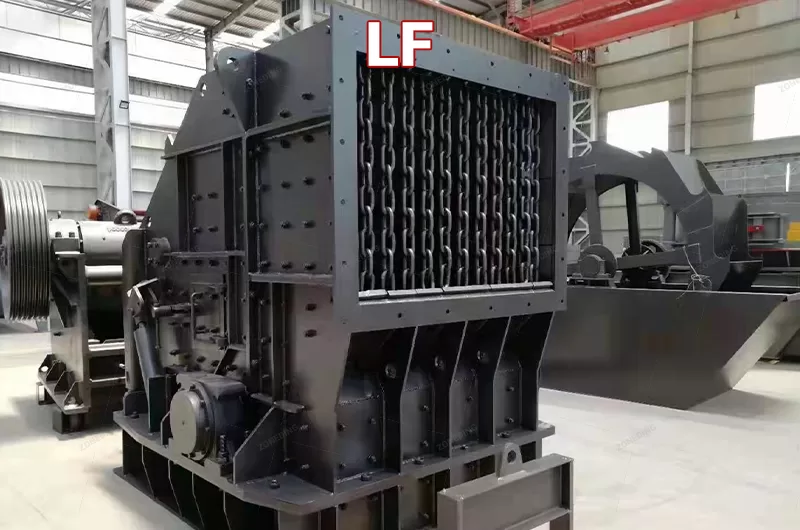
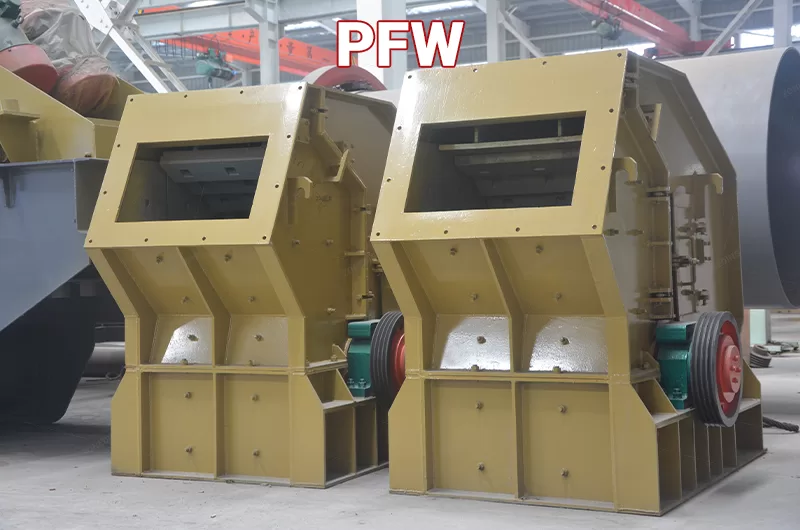
Soft Rock Layout: The Impact Crusher Circuit

Impact Crusher
Impact-Crusher

For non-abrasive materials like Limestone or Gypsum, an Impact Crusher is the preferred secondary unit.

  • Layout Dynamics: Impact crushers offer a high reduction ratio, often eliminating the need for a tertiary stage. They produce excellent cubical shapes.
  • Trade-off: If a layout uses an impact crusher for granite (hard rock), blow bar wear becomes cost-prohibitive. This is a common layout error observed in failed quarry operations.
FeatureCone Crusher CircuitImpact Crusher CircuitApplication Implications
Material TypeGranite, Basalt, Iron OreLimestone, Concrete, CoalHard vs. Soft rock determines selection
Crushing PrincipleLamination/CompressionImpact/ShearWear life vs. Reduction ratio
Product ShapeGood (with proper choke feed)Excellent (Cubical)Concrete aggregate standards
Fines ProductionLow to ModerateHighSand production vs. Clean aggregate

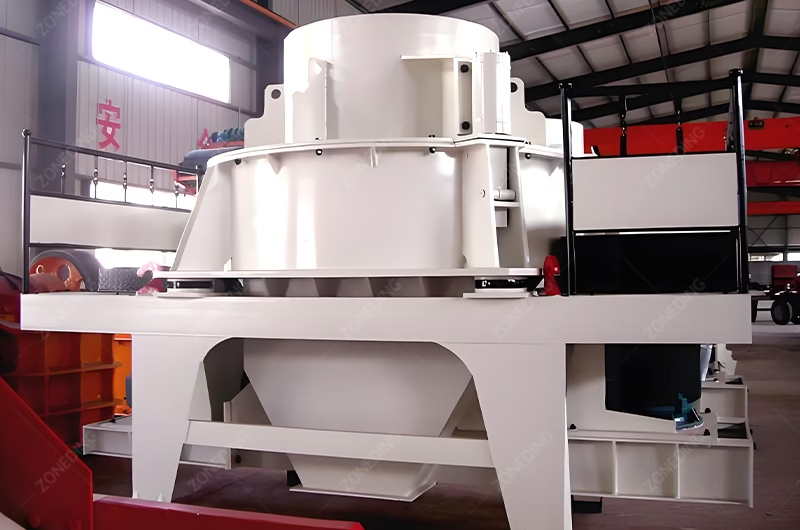
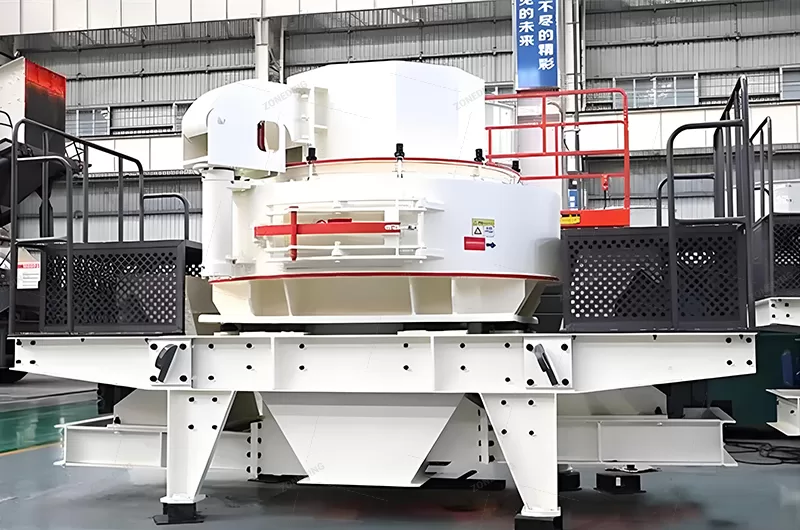
Tertiary Crushing (VSI)

VSI Sand Making Machine
Sand Making Machine

For layouts requiring manufactured sand or premium shaped heavy-duty road base, a Vertical Shaft Impact (VSI) crusher is added as a third stage. This machine polishes the aggregate, removing sharp edges and flakiness.

Stage 4: Screening and Classification

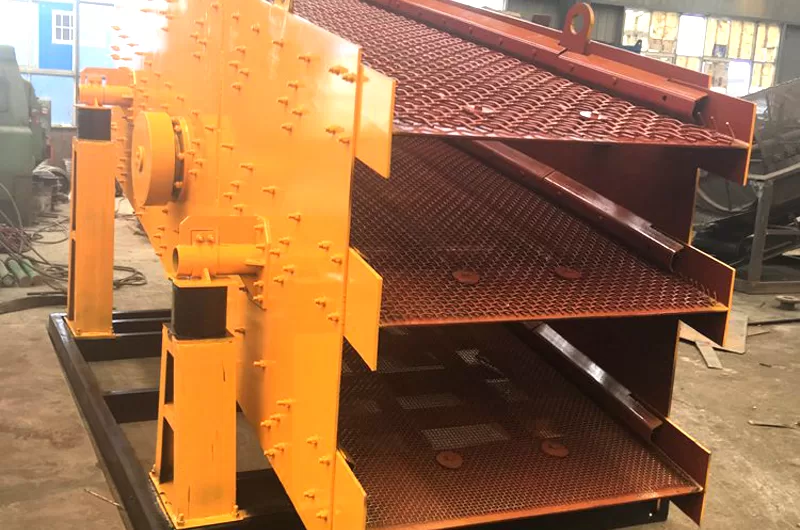
The Vibrating Screen forms the “lungs” of the plant layout. It breathes material in, separates it, and directs it to the appropriate bloodstream (conveyor).
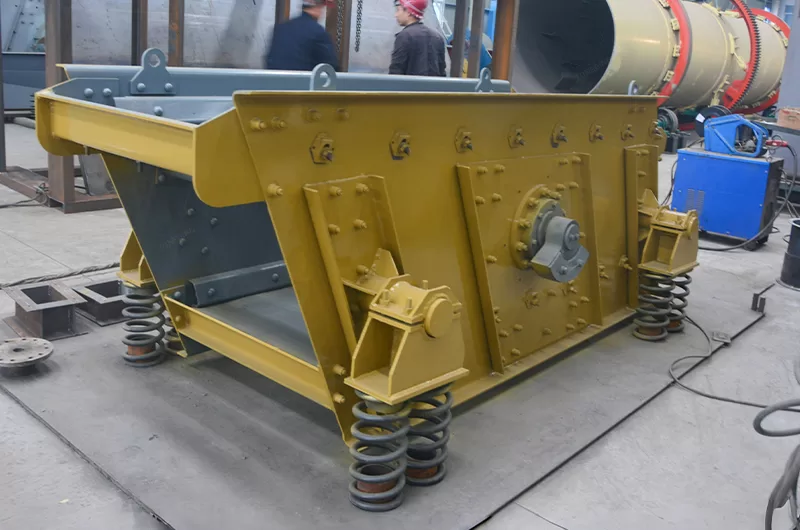
Vibrating-Screen
Stone Crusher Plant Layout: Feeding, Crushing & Screening(images 14)
  • Placement: Screens are typically positioned after the secondary crusher in a closed circuit.
  • Multi-Deck Configuration: A layout often utilizes 3-deck or 4-deck screens.
    • Top Deck: Retains oversize material (e.g., >40mm) which is sent back to the secondary crusher via a return belt.
    • Middle Decks: Separation of marketable sizes (e.g., 20mm, 10mm).
    • Bottom Deck: Separates Sand (0-5mm).
  • Capacity Matching: The screen area must be calculated carefully. A common bottleneck occurs when the crushers are powerful enough, but the screen is too small, causing material to carry over the top of the screen rather than falling through the mesh (“carryover”). This contaminates the piles and reduces efficiency.

Conveyor Belt System: The Arteries of the Plant

Belt conveyors connect all distinct machines into a unified organism. In the layout design, conveyor angles and widths are critical engineering calculations.

  • Angle of Reference: Standard belt conveyors generally cannot exceed an inclination of 18-20 degrees. If the plant layout is too compact and requires a steeper angle, material will roll back, creating spillage and safety hazards. Chevron (cleated) belts can allow for steeper angles (up to 30 degrees) but are more expensive.
  • Width and Speed: The belt width creates the capacity limit. A 300 TPH plant utilizing narrow 800mm belts running at high speed will experience spillage and belt tracking issues. ZONEDING designs typically favor wider belts moving at moderate speeds to reduce component wear and spillage.

The Role of Surge Piles

Advanced plant layouts incorporate an intermediate surge pile (stockpile) between the primary and secondary stages.

  • Decoupling Stages: This allows the primary jaw crusher to operate intermittently (e.g., during blast clearance) while the secondary cone crusher runs continuously from the surge pile. This buffer ensures the secondary stage—often the most sensitive to feed consistency—runs at optimal efficiency 100% of the time, regardless of interruptions at the mine face.

Factors Influencing Site Selection and Layout

Beyond the machinery, the physical site dictates the “footprint” of the layout.

  • Wind Direction: Crushers generate dust. The layout should position stock piles downwind of the crushing station and control room to minimize equipment fouling and operator health risks.
  • Power Access: The heavy motors of crushers (often 100kW to 400kW) require proximity to transformers. Long cable runs cause voltage drops that can stall large motors under load.
  • Maintenance Access: A common error in compact layouts is placing conveyors too close to crushers, preventing crane access for liner changes. ZONEDING layouts emphasize wide spacing to facilitate forklift and crane maneuverability for maintenance.

The crushing plant of the future is automated. Modern layouts now integrate Automated Control Systems. Sensors on the conveyors measure belt scales (tonnage) in real-time. If the secondary crusher draws too much amperage (indicating overload), the system automatically slows down the vibrating feeder at the start of the line. This interlocking feedback loop removes human error and ensures the plant runs at the maximum safe limit continuously.

Frequently Asked Questions (FAQ)

  • Q1: How much space is required for a standard 200 TPH stone crushing plant?
  • While highly dependent on topography, a typical 200 TPH stationary plant layout requires approximately 3,000 to 4,000 square meters. This includes space for the machinery, conveyors, maintenance access, and sufficient area for product stockpiles and truck loading loops.
  • Q2: Why is the return conveyor belt important in the layout?
  • The return belt creates the “closed circuit.” Without it, the plant produces an “Open Circuit” product, meaning the maximum size is not guaranteed. The return belt ensures that any rock larger than the desired spec is automatically recirculated and re-crushed, guaranteeing high-quality, spec-compliant aggregate.
  • Q3: Can a single plant process both limestone and granite?
  • Technically yes, but it is inefficient. A plant designed for granite (using Cone Crushers) can process limestone, but it will produce more flaky particles. A plant designed for limestone (using Impactors) should never process granite, as the wear costs will destroy profitability. The layout must be optimized for the primary material.
  • Q4: What is the optimal angle for a screening plant conveyor?
  • The optimal angle for standard material transport is 15 to 18 degrees. Exceeding 20 degrees generally requires specialized chevron belts. Keeping the angle lower reduces stress on the belt rollers and motor, extending component life.

Conclusion

Designing a stone crusher plant layout is an exercise in balancing physics, geology, and economics. It requires more than simply purchasing a Jaw Crusher and a Cone Crusher; it demands a holistic understanding of how these machines interact within a continuous flow system. An optimized layout reduces bottle-necks, lowers energy consumption per ton, and simplifies maintenance procedures.

Whether the application requires a simple open-circuit limestone line or a complex, multi-stage granite processing facility, the layout remains the blueprint for profitability. Buyers are advised to move beyond basic equipment lists and engage in detailed flow analysis during the feasibility stage.

Engineer Your Success:

ZONEDING provides not just machinery, but complete process design services. By analyzing the specific topography and mineralogy of a site, ZONEDING engineers create custom CAD/3D layouts that optimize space and efficiency.

Last Updated: January 2025
The prev:

Related recommendations