 Zoneding Mining

Site Search
Search products, equipment and solution articles
整站搜索产品中心新闻中心
点击开始搜索
热门搜索
UltraForm-MXFlexiPoly-RNanoForm Z300EcoFab P200
Search products, equipment and solution articles
Mining is, by definition, a temporary land use. However, the environmental and social legacy of a mine site can last for centuries. “Mine Closure” is no longer an afterthought triggered by resource depletion; it is a critical phase of the mining lifecycle that requires as much engineering, financial planning, and operational expertise as the extraction phase itself. With tightening global regulations and the rise of ESG (Environmental, Social, and Governance) investment criteria, mining companies are under immense pressure to demonstrate a “Cradle-to-Cradle” approach.
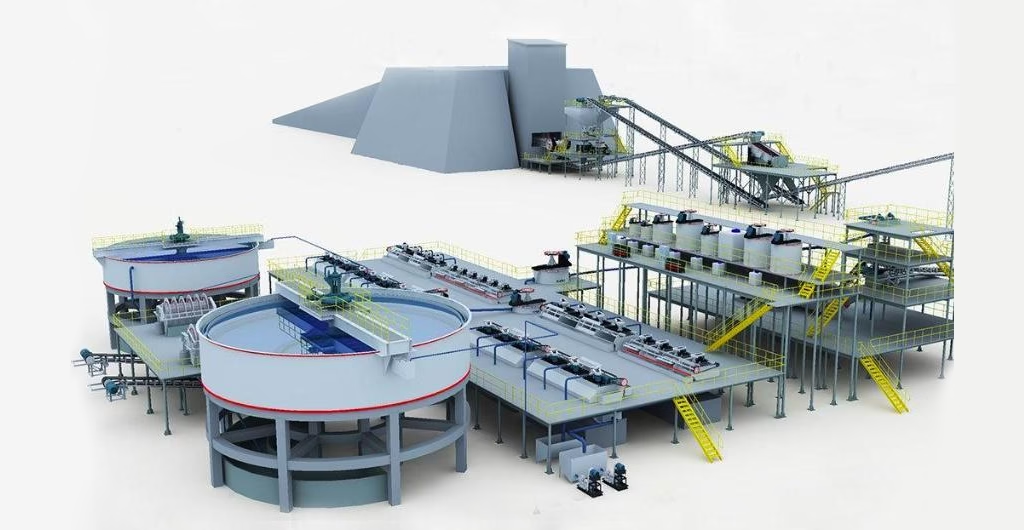
A sustainable mine closure strategy mitigates environmental risks such as Acid Mine Drainage (AMD), restores biodiversity, and ensures the physical safety of the land for future use—whether that be agriculture, conservation, or community development. This guide outlines the technical steps required for a successful closure capability, highlighting how modern equipment, including Mobile Crushing Stations, plays a pivotal role in the remediation and material recycling process.
Last Updated: February 2026 | Estimated Reading Time: 15 Minutes
Effective mine closure begins before the first shovel hits the ground. The industry standard has shifted from “end-of-pipe” solutions to “Progressive Rehabilitation,” where closure activities are integrated into the daily operations of the mine.
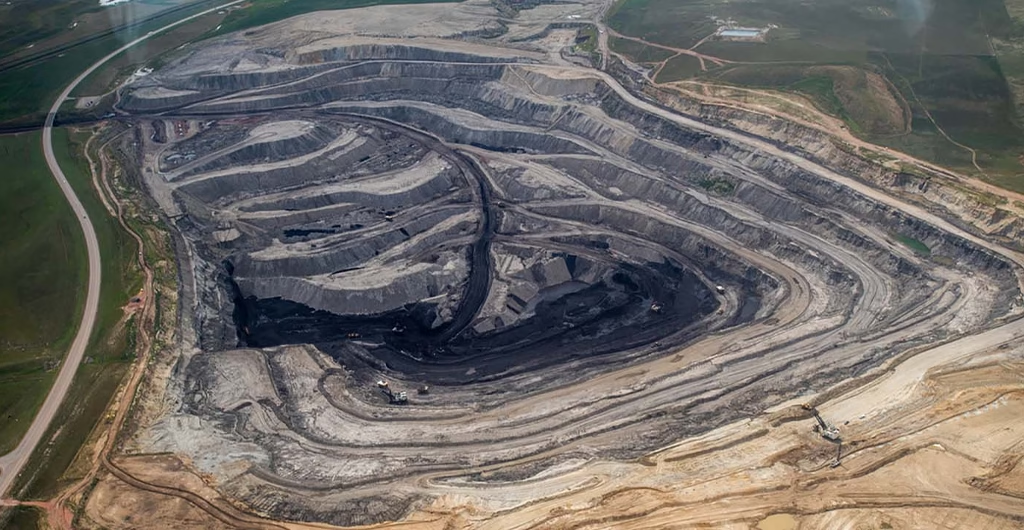
Waiting until operations cease to begin reclamation is a financial and logistical error. Progressive rehabilitation involves restoring mined-out areas continuously while active mining proceeds elsewhere on site.
Regulators now require “Financial Assurance”—a bond or trust fund set aside to cover the full cost of closure. This protects the public from inheriting liabilities if the mining company becomes insolvent.
Once production ceases, the site is cluttered with processing plants, conveyor systems, concrete foundations, and workshop structures. This phase transforms the site from an industrial zone back to a neutral landscape.
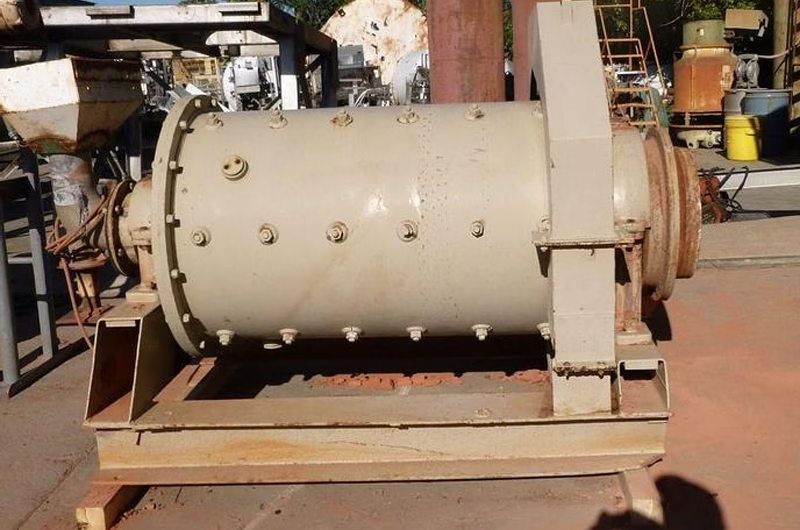
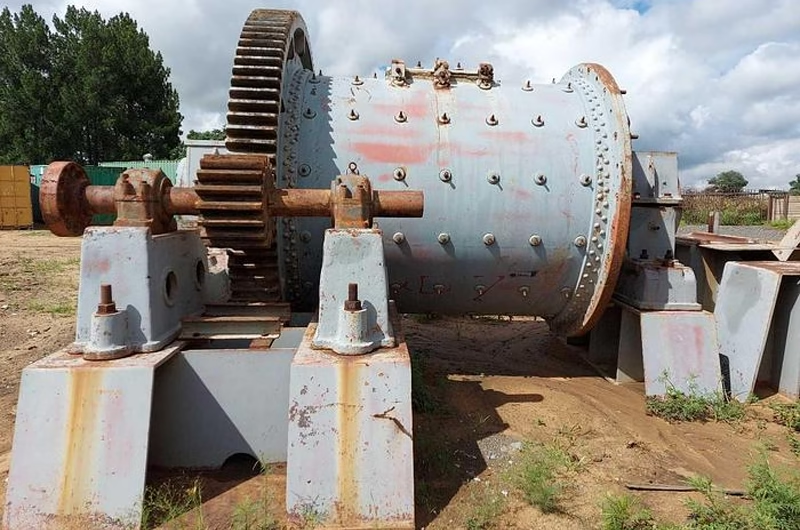
Before structural demolition, all hazardous substances must be purged. This includes:
The dismantling of the crushing plant and mill building generates thousands of tons of steel and concrete. Ideally, this material is not treated as waste but as a resource.
The most visible aspect of mine closure is the reshaping of the land. The goal is “Geotechnical Stability”—ensuring that slopes do not collapse and that the landform mimics the surrounding natural topography.
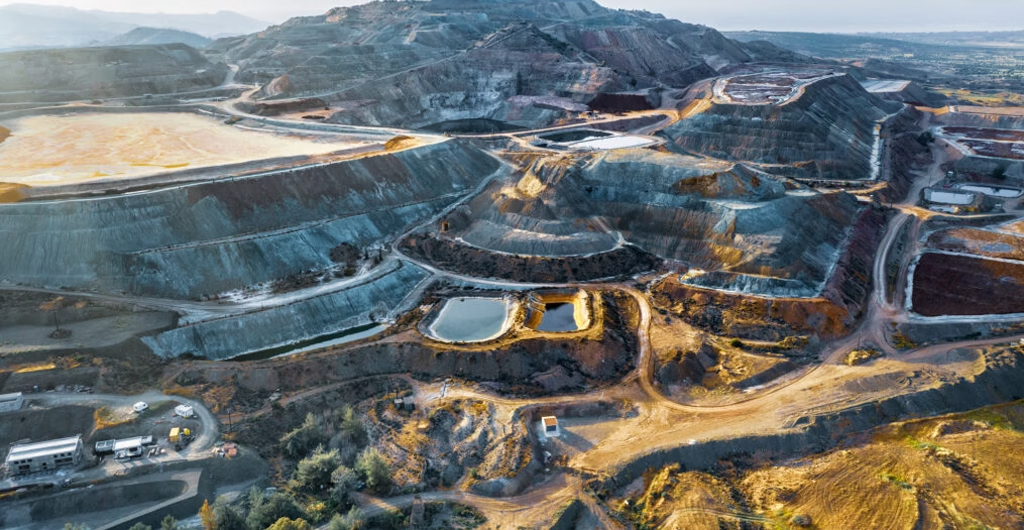
Open pits and underground voids represent significant safety hazards.
Soil is the biological engine of recovery. During the mine’s opening, topsoil should have been stripped and stockpiled. During closure, this soil is returned.
Water is the longest-lasting legacy of a mine. The management of Tailings Storage Facilities (TSF) and the prevention of chemical leaching are the highest priorities for environmental engineers.
| Closure Activity | Primary Risk Addressed | Equipment Used |
|---|---|---|
| Pit Backfilling | Wall Failure / Public Safety | Excavators, Haul Trucks |
| Concrete Recycling | Waste Volume / Site Cleanup | Mobile Impact Crushers |
| Topsoil Screening | Vegetation Failure | Vibrating Screens / Trommels |
| Tailings Capping | Groundwater Contamination | Dozers, Compactors |
| Water Monitoring | Environmental Leaching | Sensors, Pumps |
AMD occurs when sulfide minerals in waste rock are exposed to air and water, creating sulfuric acid. This acid leaches heavy metals into the groundwater.
Tailings dams are engineered structures that must remain stable forever.
Once the physical landform is stable, biology takes over. The aim is to establish a self-sustaining ecosystem that requires no further human intervention.
Certain plant species are “hyperaccumulators,” capable of extracting residual heavy metals from the soil through their roots. Planting these species can actively clean the soil over decades.
Monocultures (planting just one type of grass) are avoided in modern closures. Ecologists select a mix of native grasses, shrubs, and trees to recreate the biodiversity that existed pre-mining.
Monocultures (planting just one type of grass) are avoided in modern closures. Ecologists select a mix of native grasses, shrubs, and trees to recreate the biodiversity that existed pre-mining.
A mine is not “closed” when the gate is locked. It enters a “Care and Maintenance” or “Post-Closure Monitoring” phase, which can last from 5 to 50 years.
Before the government will release the financial assurance bond (Relinquishment), the site must meet specific criteria:
Modern monitoring utilizes satellite imagery (InSAR) to detect millimeter-level ground movement in tailings dams. Drones are used to survey vegetation health and identify erosion gullies without requiring personnel to walk on potentially unstable ground.
While ZONEDING is known for production equipment, these machines are vital assets during the destruction and restoration phases.
Sustainable mine closure is the ultimate validation of a mining company’s commitment to stewardship. It is a complex engineering challenge that transforms a site of extraction back into a site of natural or community value. It requires a disciplined adherence to the “Mitigation Hierarchy”: Avoid, Minimize, Rehabilitate, and Offset.
By utilizing advanced planning strategies and deploying versatile equipment like mobile crushers and screens for remediation work, operators can leave a legacy of safety and environmental health. ZONEDING supports the entire mining lifecycle, providing the robust machinery needed to extract value from the earth and, ultimately, to help return the earth to a stable state.
Last Updated: January 2025
Delve into dolomite:definition, properties,formation, and industrial processes for mining, crushing, grinding, and calcining it for various applications.
View details
Think you know cone crusher liners? Our blog reveals surprising facts about selection, wear, and replacement that could save you time and money.
View details
A comprehensive mobile crushing guide for buyers. Compare factors like material hardness, capacity, and mobility (track vs. wheel) to maximize your mining ROI.
View details
This guide details Aluminum essential roles, from everyday products like soda cans to critical industrial uses in aerospace, automotive, and construction.
View details