 Zoneding Mining

Site Search
Search products, equipment and solution articles
整站搜索产品中心新闻中心
点击开始搜索
热门搜索
UltraForm-MXFlexiPoly-RNanoForm Z300EcoFab P200
Search products, equipment and solution articles
In the evolving landscape of global mining and aggregate production, the static processing model is rapidly being supplemented—and in some cases replaced—by mobile crushing technology. For mining companies and construction contractors, the ability to process material directly at the blast face or demolition site is no longer a luxury; it is a critical strategy for controlling operational expenditures (OpEx). The selection of a mobile crushing plant, however, is a complex engineering decision that impacts profitability for a decade or more.
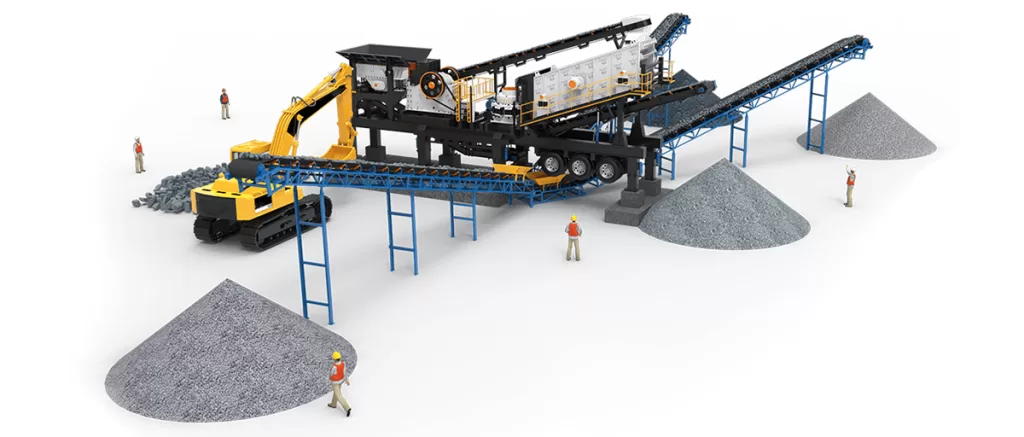
This guide provides a deep technical analysis of the factors critical to purchasing the correct mobile crushing equipment. It moves beyond basic specifications to analyze material geology, chassis physics (track vs. wheel), capacity planning, and the financial metrics of Return on Investment (ROI). By aligning equipment specifications with site realities, buyers can ensure their investment yields maximum productivity.
Last Updated: January 2026 | Estimated Reading Time: 15 Minutes
The primary determinant in any crushing plant configuration is the geological character of the raw material. The crusher is merely a tool; the rock dictates the rules. Ignoring compressive strength, abrasiveness, and moisture content leads to catastrophic wear rates and frequent mechanical failures.
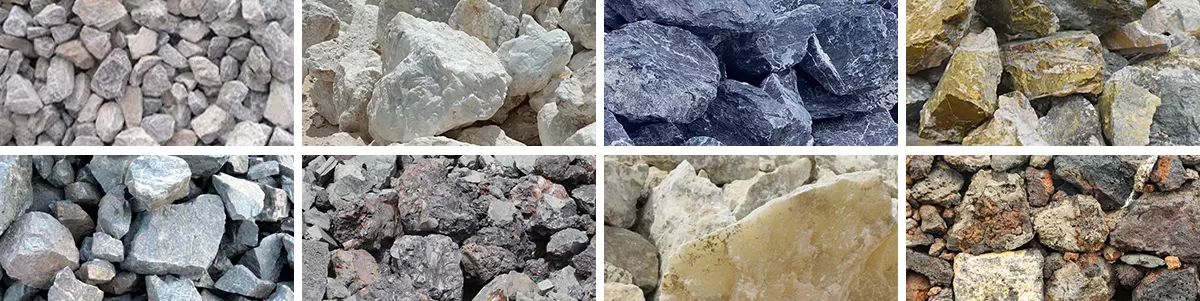
For materials such as granite, basalt, river pebbles, iron ore, and quartzite, the processing challenge is two-fold: resistance to crushing and high wear potential. These materials typically have high silica content.
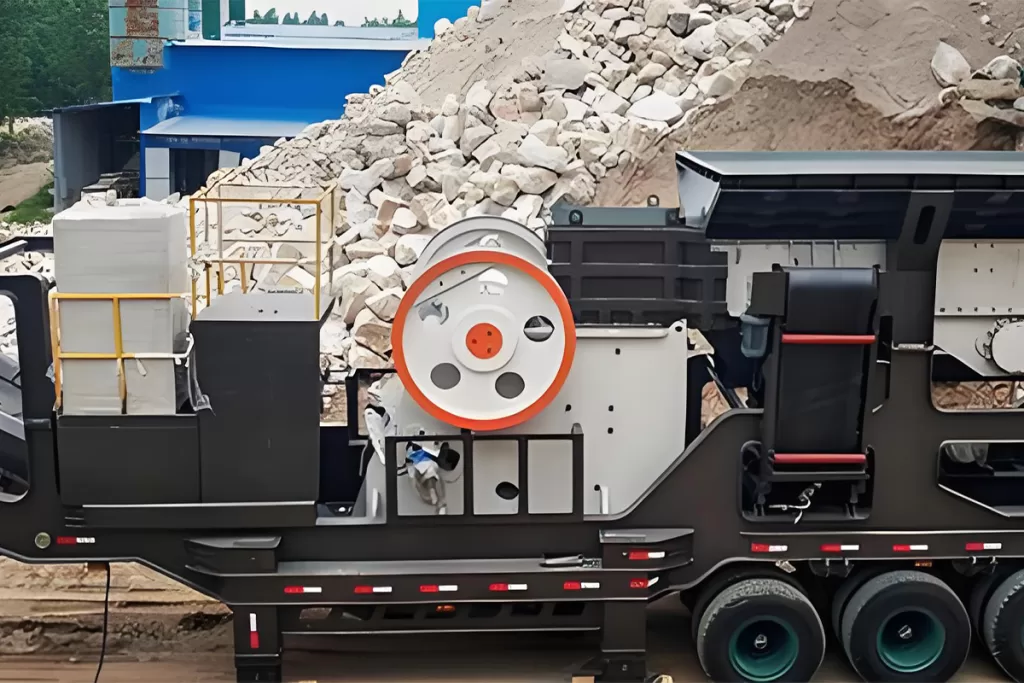
For limestone, coal, gypsum, and soft sandstone, the material breaks easily but may produce excessive fines if over-crushed.
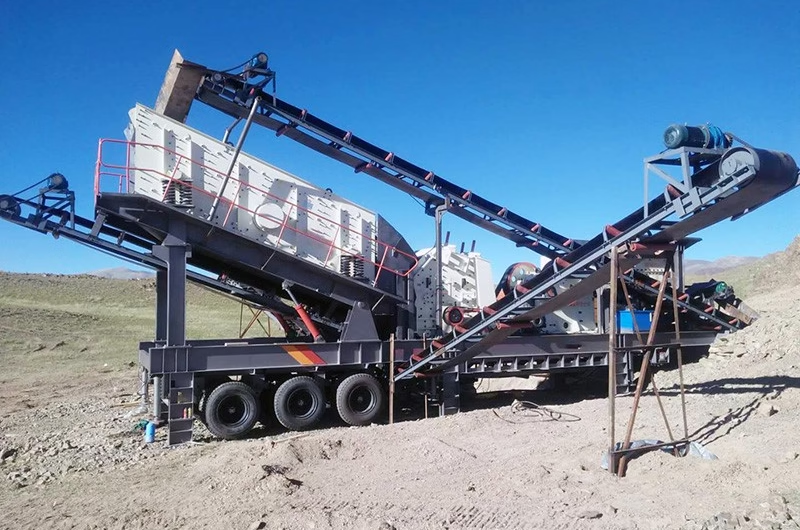
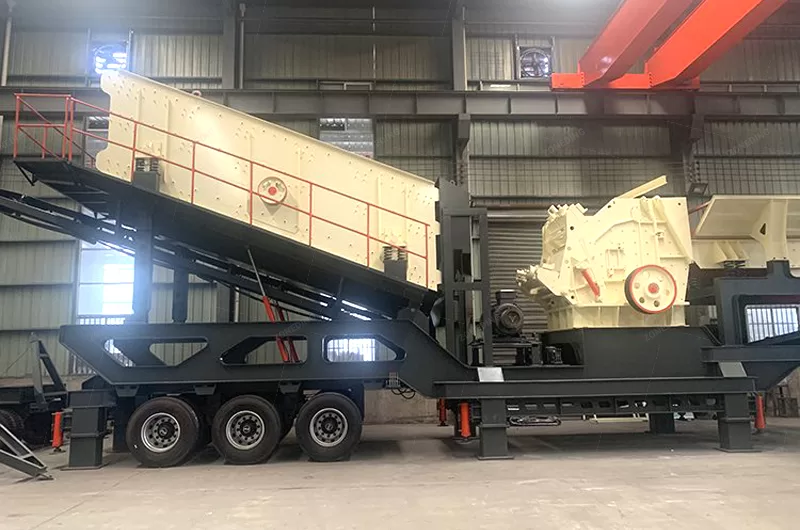
Sticky materials pose a significant risk to mobile plants. If the raw feed contains wet clay or soil, it can clog the crushing chamber (“packing”).
Once the crushing unit is selected, the specific mobility platform must be chosen. The debate between track-mounted (crawler) and wheel-mounted (tire) plants centers on the trade-off between terrain capability and transport speed.
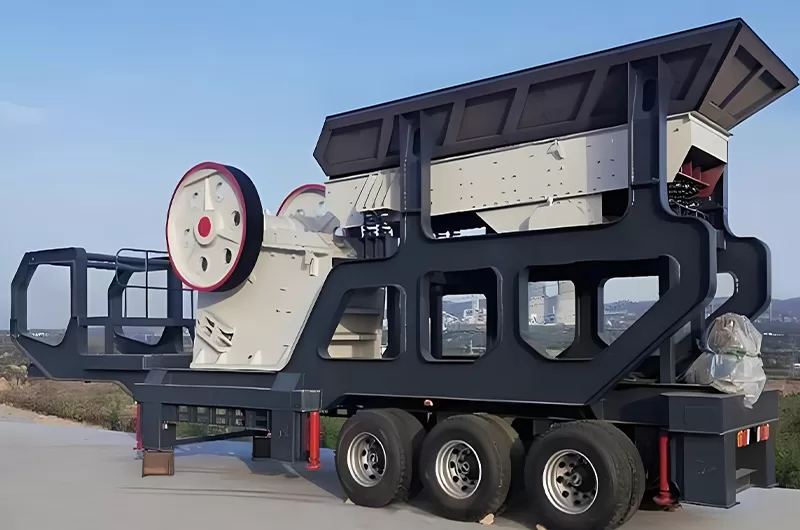
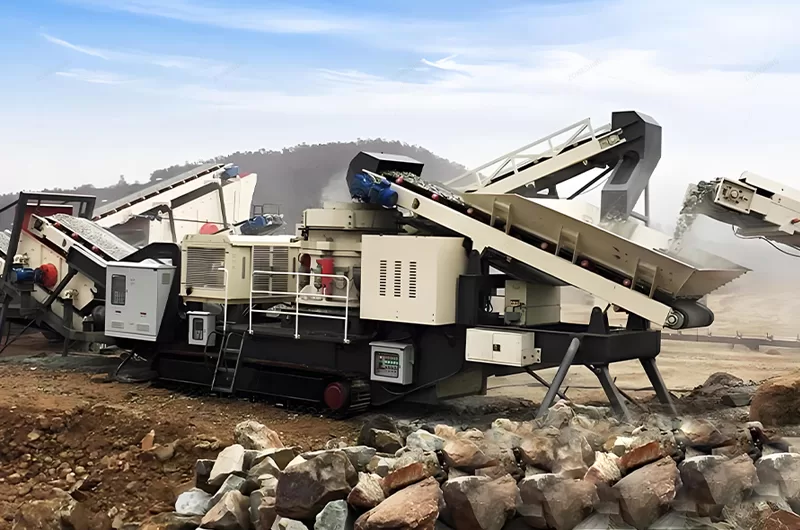
Track-mounted plants utilize a hydraulic undercarriage similar to an excavator. They are self-propelled and designed for rugged, unprepared environments.
Wheel-mounted plants are built on a chassis with axles and rubber tires, designed to be towed by a semi-truck tractor.
| Feature | Track-Mounted (Crawler) | Wheel-Mounted (Tire) | Ideal Application Scenario |
|---|---|---|---|
| Ground Pressure | Low (Suitable for soft ground) | High (Requires compacted pads) | Muddy mines vs. Concrete pads |
| Climbing Ability | High (Can climb slopes) | Low (Needs flat terrain) | Mountain mining vs. Flat quarries |
| Relocation Speed | Slow (Requires low-bed trailer) | Fast (Towed by truck head) | Permanent site vs. Mobile contracting |
| Setup Time | Fast (< 1 hour) | Moderate (1-2 days for leveling) | Frequent moves vs. Occasional moves |
| Power Source | Typically Diesel-Hydraulic | Typically Electric/Hybrid | Remote areas vs. Sites with Grid Power |
ZONEDING advises that if a project requires the crusher to move more than once a month within the same site, Track-Mounted is the superior choice. If the project requires moving between different geographical sites every few months, Wheel-Mounted offers better logistical ROI.
Selecting the correct throughput capacity (Tonnes Per Hour or TPH) is critical to avoiding bottlenecks. Over-sizing equipment wastes capital; under-sizing creates production limits that cannot be overcome.
Buyers should not choose a mobile plant based on the theoretical maximum capacity of the crusher alone. The entire system must be balanced.
As fuel prices fluctuate globally, the power source of the mobile crushing plant has become a major factor in the Total Cost of Ownership (TCO).
The traditional standard. A diesel engine drives hydraulic pumps, which power the crusher, conveyors, and tracks.
The crusher flows directly from electric motors. The unit may have a small onboard diesel generator for moving via tracks, but crushing requires a connection to the grid or a large external generator.
ZONEDING has observed a strong market shift toward hybrid units. These machines possess an onboard diesel generator sufficient to run the plant at full capacity but also feature a switchgear to accept external line power.
For B2B buyers, the purchase of a mobile crushing station is not an expense; it is an investment vehicle. The Return on Investment (ROI) is calculated by comparing the Total Cost of Ownership (TCO) against the Value Generated.
The primary economic driver for mobile crushing is the elimination of haulage.
Unlike stationary plants, which require expensive dismantling and civil work demolition to move, mobile plants retain high asset liquidity. A ZONEDING mobile plant can be sold on the international used equipment market after a 3-year project, often recovering 40-60% of the initial capital expenditure. This high residual value lowers the effective depreciation cost.
Stationary plants require concrete foundations, steel structures, and extensive site preparation, often costing $100,000 to $500,000 before the machine even arrives. Mobile plants require only a leveled, compacted surface. This “Zero Installation” benefit improves cash flow by allowing production to start weeks or months earlier than a stationary alternative.
Selecting a mobile crushing plant also involves selecting a partner. The complexity of mobile hydraulic and electric systems requires robust manufacturer support.
Buyers should distinguish between “Assemblers” (who buy a crusher from Company A, a chassis from Company B, and paint them) and “Manufacturers” like ZONEDING. ZONEDING manufactures the core crushing units (Jaw, Cone, Impact), the vibrating screens, and the chassis in-house. This ensures that the engine power curve perfectly matches the crusher’s inertia.
Standard models do not fit every mine. Effective suppliers must offer customization:
The acquisition of a mobile crushing plant is a pivotal step toward operational autonomy and efficiency. Whether processing construction waste in a dense city center or extracting gold ore in a remote jungle, the technology allows producers to adapt to the market instantly.
Summary of Key Recommendations:
For mining companies and contractors seeking to optimize their production lines, ZONEDING offers a comprehensive range of mobile solutions designed for durability and performance.
Take the Next Step:
Do not rely on estimation. Contact the ZONEDING engineering team to request a Material Flow Simulation. By providing data on raw material size, hardness, and desired output, a customized mobile crushing solution can be engineered to maximize your specific project’s ROI.
Last Updated: January 2025
New to mobile crushers? This guide clearly introduces their concept, key features, types, and widespread applications across various industries.
View details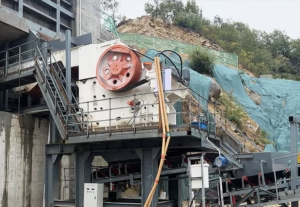
This expert guides you key factors: rock hardness (Ai), feed size, capacity requirements, and operational costs to tell how to choose right primary crusher.
View details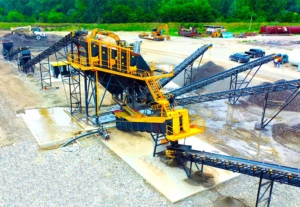
Explore the main types of vibrating screens. Learn how to choose the right screening equipment for mining & aggregate project. ZONEDING is your expert supplier.
View details
This article details extraction methods, pre-treatment strategies, and best practices to process refractory oxidized gold ore and improve gold yield.
View details