Froth flotation is a critical technique in mineral processing. It separates valuable minerals from gangue material. This method relies on differences in mineral surface properties. Chemical reagents manipulate these properties. Froth flotation makes minerals hydrophobic. and They attach to air bubbles. This allows them to float to the surface. Understanding its core principles, key steps, applicable materials, and equipment is essential. And This guide explores the science behind froth flotation. It details how it separates valuable minerals from ore.
The process of froth flotation (also known as foam flotation) is complex. It requires precise control of various parameters. High efficiency in this stage is crucial. It maximizes target mineral recovery. It minimizes waste. This process is vital for extracting many metals. These include copper, lead, zinc, and precious metals. This guide provides a comprehensive overview. It helps readers understand its significance in modern ore beneficiation.
Froth flotation is a physiochemical separation process. It exploits surface chemical differences between minerals. The goal is to separate desired minerals. These minerals separate from unwanted gangue. The process involves creating a mineral-rich froth. This froth collects on the surface of a pulp. This allows for easy removal.
The fundamental operation of froth flotation involves several key stages. These stages transform raw ore. They create a separated concentrate. This concentrate is then ready for further refining. This method is fundamental to modern mineral processing. It allows economic recovery of low-grade ores.
Understanding Hydrophobicity and Hydrophilicity
The core principle of froth flotation relies on surface properties.
Hydrophobicity: A substance repels water. Hydrophobic mineral particles undergo chemical treatment. They become water-repelling. and They attach to air bubbles. They float to the surface.
Hydrophilicity: A substance attracts water. Hydrophilic mineral particles remain wet. They do not attach to air bubbles. They settle to the bottom. Operators remove them as tailings.
Property
Description (Flotation)
Behavior in Flotation Cell
Hydrophobic
Water-repelling; surfaces resist wetting by water
Attaches to air bubbles, floats
Hydrophilic
Water-attracting; surfaces readily wet by water
Remains in water, sinks/stays in pulp
Collectors are chemical reagents. They selectively coat surfaces of valuable minerals. This makes them hydrophobic. Frothers are also added. They stabilize the air bubbles. This forms a robust froth layer. This differential behavior enables effective separation of valuable minerals from gangue.
Practical Tips for Flotation Operation
Monitor Froth Stability: Observe the froth layer visually. A stable froth should persist but not be too rigid. Unstable froth can lead to poor recovery.
Adjust Air Input: Optimize the air flow rate. This controls bubble generation. Too little air means poor recovery. Too much air can dilute the concentrate.
Pulp Level Control: Maintain a consistent pulp level. This ensures efficient froth overflow. Operators use manual or automated controls.
Key Steps in the Froth Flotation Process
The froth flotation process is a sequence of carefully controlled steps. Each step prepares the ore. It conditions the minerals. It ensures efficient separation. This sequence is crucial for achieving high recovery and concentrate grade. This process transforms raw ore. It converts it into a concentrated product. It enables valuable minerals to be extracted.
Ore Preparation: Crushing, Grinding, and Classification Equipment
Before froth flotation, mineral liberation is essential. This separates individual valuable mineral particles from gangue.
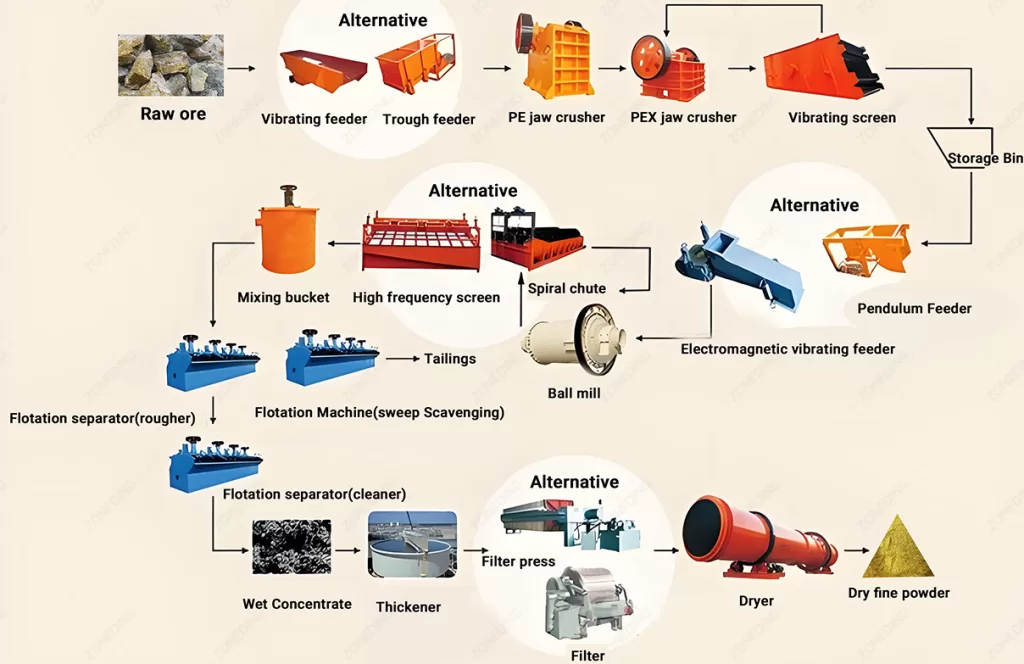
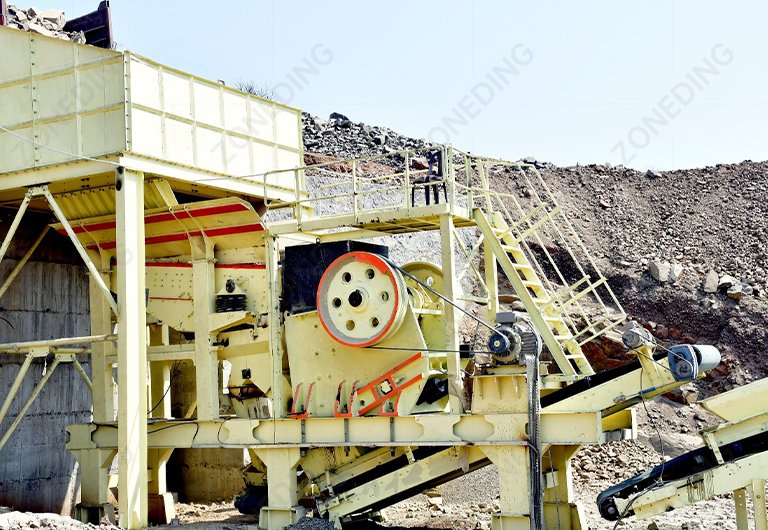
Crushing: Large run-of-mine ore undergoes multiple stages of crushing. Crushing equipment reduces ore size. ZONEDING’s jaw crushers provide primary size reduction. Cone crushers or impact crushers handle secondary and tertiary crushing. This reduces the ore to a manageable size for grinding.
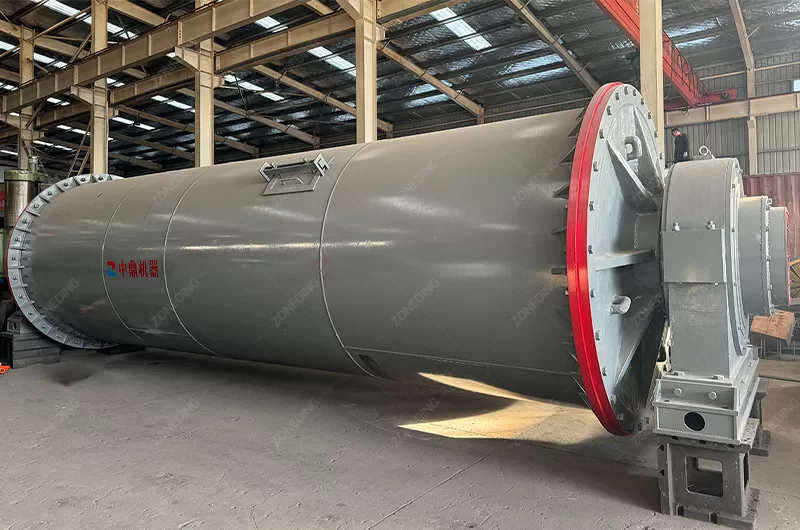
Grinding: The crushed ore then enters the grinding circuit. Grinding equipment processes the material further. ZONEDING’s ball mills or rod mills reduce particle size. They achieve very fine levels. This ensures sufficient liberation of valuable minerals. Flotation typically requires sizes below 250 microns.
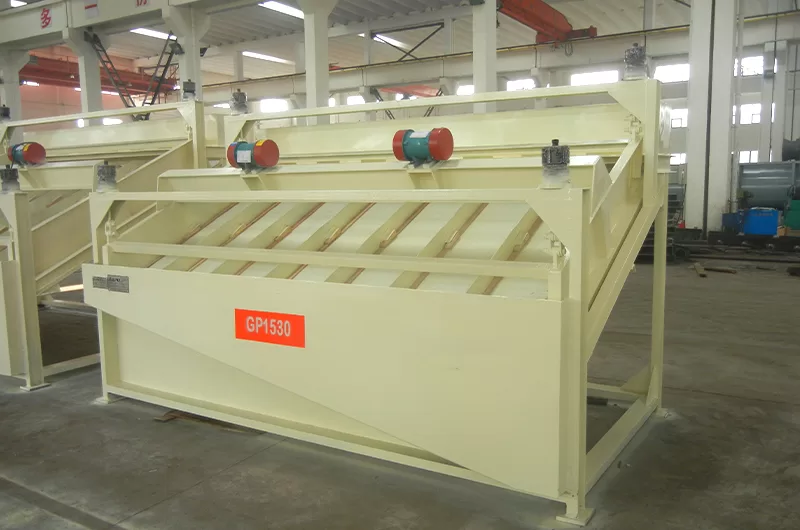
Classification: Hydrocyclones, spiral classifiers, or vibrating screens separate particles. This ensures particles are within the optimal size range for flotation. Operators return oversized particles for further grinding.
This careful preparation ensures mineral liberation. It allows effective selective attachment during flotation.
Conditioning: Chemical Addition
After grinding, the pulp (mixture of finely ground ore and water) undergoes conditioning. This involves adding specific chemical reagents. These reagents modify mineral surface properties. They create conditions necessary for separation. This step uses specialized reagent feeding systems and conditioning tanks.
Collectors: These organic chemicals selectively adsorb onto desired mineral surfaces. They make these minerals hydrophobic. For example, xanthates treat sulfide minerals.
Frothers: These chemicals lower water surface tension. They generate a stable froth of air bubbles. This froth must be stable enough to carry minerals. It should also break down after collection.
Modifiers: These reagents control collector and frother actions.
pH Regulators (e.g., lime, soda ash): They control pulp acidity or alkalinity. Different minerals float best at specific pH levels.
Depressants (e.g., sodium cyanide, starch): They make certain minerals hydrophilic. This prevents them from floating.
Activators (e.g., copper sulfate): They promote flotation of certain minerals.
Proper reagent selection and dosage are crucial. They ensure selective separation of valuable minerals. They ensure efficient froth flotation.
Flotation Cells: Aeration and Separation
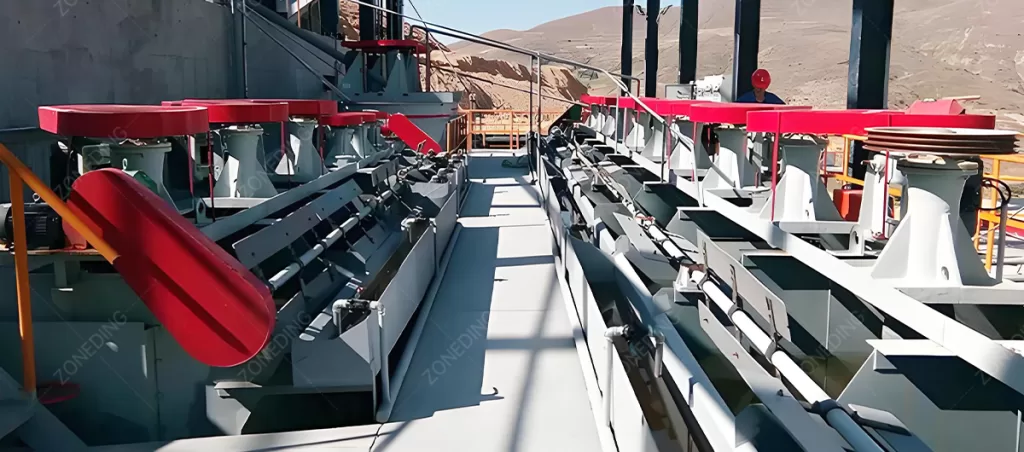
Conditioned pulp then enters flotation cells. These cells are critical equipment. They are central to the froth flotation process.
Aeration: Air is introduced into the pulp. Impellers or spargers create fine air bubbles. These bubbles attach to hydrophobic mineral particles.
Mineral Attachment: Air bubble buoyancy carries mineral-laden aggregates to the pulp surface. They form a mineralized froth layer.
Froth Skimming: The froth, rich in valuable minerals, is skimmed off the top. This removes it from the cell. The remaining pulp contains gangue and unfloated minerals. It proceeds to the next stage or discharges as tailings.
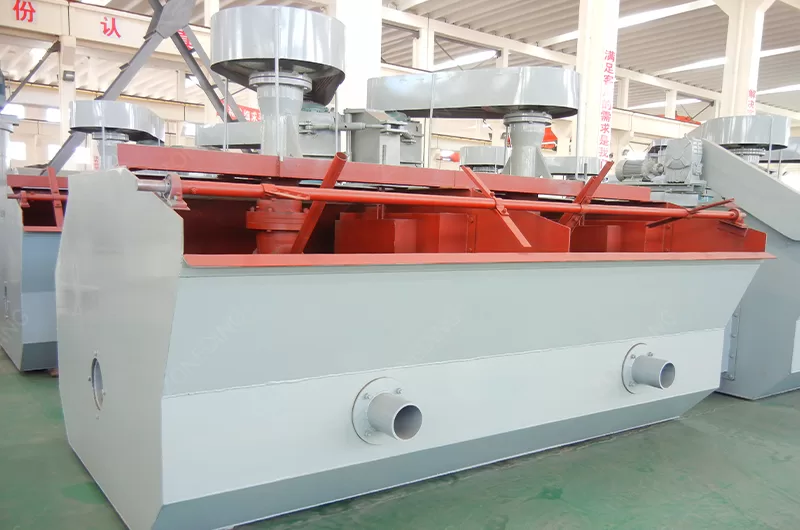
ZONEDING provides advanced flotation machines. These machines offer high aeration efficiency. They provide strong agitation. This ensures optimal mineral-bubble contact. They promote selective recovery. ZONEDING’s flotation cells are robust. They ensure continuous operation.
Froth Handling: Collection and Cleaning Equipment
Once the mineralized froth forms and skims, it undergoes further processing. This step involves configured series of flotation cells.
Collection: Initial froth (rougher concentrate) often contains some entrained gangue. Operators collect it for further cleaning.
Cleaning (Re-flotation): A rougher concentrate undergoes one or more re-flotation stages. This is cleaning. This process uses cleaner cells. It improves concentrate grade. Cleaner cells separate residual gangue from valuable minerals. This produces a higher-purity final concentrate.
Scavenging: Remaining pulp from rougher flotation (after concentrate skimming) can go to scavenger cells. These cells recover any valuable minerals. These minerals did not float in the rougher stage. This maximizes overall recovery.
What Are Applications of Flotation?
Froth flotation is an extremely versatile technique. It finds use across many mineral processing industries. Its ability to selectively separate valuable minerals makes it indispensable. It handles various ore types. These applications highlight its importance. They also demonstrate its flexibility in mineral extraction. The process allows for economic recovery of low-grade deposits. This makes resources commercially viable.
This broad applicability makes froth flotation a cornerstone of modern metallurgy. It helps produce raw materials. These materials are essential for global manufacturing and infrastructure. ZONEDING supplies flotation machines and other vital equipment for these diverse applications.
Metallurgical Materials
Flotation associates most commonly with metallic ores. It handles a wide range of applicable materials.
Sulfide Ores: This is the primary application. Copper, lead, zinc, nickel, and molybdenum sulfides almost exclusively process by flotation. It separates individual sulfide minerals from each other. It also separates them from gangue.
Precious Metals: Gold and silver often associate with sulfide minerals. Flotation recovers them. This is a crucial step for achieving economic recovery from complex ores.
Oxidized Ores: Oxidized copper, zinc, and iron minerals also float. This process is more challenging. It requires specific sulfidization or activation reagents.
Industrial Minerals
Beyond metals, flotation is vital for many non-metallic industrial minerals. These represent another set of important applicable materials.
Phosphate: Flotation upgrades phosphate rock. It removes gangue minerals like silica and silicates. This produces a high-grade product for fertilizer production.
Potash: Flotation separates potash minerals from sodium chloride. This creates high-purity potassium products.
Fluorspar: Flotation concentrates fluorite. It separates it from quartz and calcite. This meets various industrial needs.
Coal: Flotation reduces ash content. This improves coal’s calorific value. It makes it higher quality. This applies especially to fine coal particles.
Silica Sand: Flotation removes iron-bearing impurities from silica sand. This produces high-purity sand. It serves glassmaking and other specialized applications.
Recycling and Environmental Applications
Flotation principles apply increasingly in other fields. These fields also have their own applicable materials.
Waste Recycling: It separates plastics, paper, and other materials. This occurs in municipal solid waste or industrial waste streams. For example, flotation de-inks paper in recycling.
Water Treatment: Dissolved air flotation (DAF) removes suspended solids, oils, and greases from wastewater. This cleans water for discharge or reuse.
ZONEDING has a long history. The company supplies equipment. This equipment supports diverse flotation applications. This includes large-scale mineral processing and specialized industrial uses. The company’s expertise helps clients achieve optimal results.
Key Equipment in Modern Froth Flotation Plants
A successful froth flotation process relies on a suite of interconnected equipment. Each piece plays a specific role. From initial size reduction to final dewatering, the right equipment ensures efficiency. ZONEDING manufactures and supplies a comprehensive range of mineral processing equipment for complete flotation plants.
Choosing the correct flotation equipment is vital. It impacts overall plant performance. It directly impacts recovery rates and operating costs.
Flotation Machines (Cells)
These are the heart of the flotation plant. They create the environment for particle-bubble attachment.
Mechanical Flotation Cells: These are the most common type. They use a rotating impeller. This impeller disperses air. It agitates the pulp. This ensures good mixing and high collision probability. ZONEDING’s flotation machines are designed for high efficiency and reliability.
Column Flotation Cells: These are vertical columns. Air introduces at the bottom. This generates a counter-current flow of pulp and bubbles. They produce higher-grade concentrates. They have lower operating costs. and They are especially effective for fine particle separation.
Jameson Cells: These use a downcomer. It introduces slurry and air. This creates a high-intensity mixing zone. They are very efficient for fine particles. They have a small footprint.
Crushing and Grinding Equipment
These upstream equipment prepare ore for flotation. Correct particle size is critical for liberation.
Crushers: ZONEDING’s portfolio includes jaw crushers, cone crushers, and impact crushers. They reduce run-of-mine ore. They prepare it for suitable grinding.
Grinding Mills:Ball mills and rod mills achieve fine grinding. They liberate valuable minerals from gangue. ZONEDING manufactures various types of mills. These are for different ore characteristics and fineness.
Dewatering Equipment
After flotation, mineral concentrate remains a slurry. It requires dewatering.
Thickeners: These large tanks concentrate slurry. They separate water from solids using gravity sedimentation. ZONEDING offers various types of thickeners. They are for efficient liquid-solid separation.
Filter Presses: These mechanical devices remove more water. They produce a filter cake. This cake suits transportation or further processing.
Other Supporting Equipment
Reagent Feeding Systems: These accurately dose chemical reagents into the pulp. Precision is vital for flotation performance.
Pumps and Pipelines: They transport slurries and reagents throughout the plant.
Samplers and Analyzers: These monitor the process. They provide data for control and optimization.
ZONEDING provides integrated solutions. This ensures all equipment works seamlessly. It optimizes your entire froth flotation process.
Types of Flotation Circuits: Tailoring the Process
Different flotation circuits configure based on ore mineralogy. They also depend on desired products. These circuits optimize the process for various situations. This customization ensures efficient and economic separation.
Circuit design is a critical aspect. It impacts overall performance. It affects cost-effectiveness of mineral processing.
Direct vs. Reverse Flotation
The choice between direct and reverse flotation depends on proportions. These are proportions of valuable minerals and gangue.
Direct Flotation: This is the most common circuit. Valuable minerals float. Gangue minerals depress. They remain in the pulp (tailings).
Reverse Flotation: This circuit finds use when valuable minerals are minor. It applies when gangue is easily floatable. In this case, gangue minerals float. Operators remove them as froth. Valuable minerals depress. They remain in the pulp.
Bulk vs. Selective Flotation
Operations often need to separate multiple valuable minerals.
Bulk Flotation: This circuit floats all valuable minerals together. This occurs in the first stage. It forms a bulk concentrate. This concentrate then re-flotation. This includes using depressants. This separates individual valuable minerals.
Selective Flotation: This circuit floats one valuable mineral at a time. It uses highly specific reagents. It employs carefully controlled pH conditions. This works well for ores with different sulfide minerals, like copper and lead.
Factors Influencing Froth Flotation Efficiency
Froth flotation efficiency is sensitive to many variables. These categorize as ore characteristics and operational parameters. Optimizing these factors is key. It ensures maximum recovery and concentrate quality.
Achieving efficient mineral processing relies on precise control. This applies to these influencing factors.
Mineralogy: Mineral type and association (valuable vs. gangue) dictates reagent selection. It influences circuit design. Complex mineralogy requires sophisticated approaches.
Grade: The amount of valuable mineral in ore affects concentrate grade and recovery. Low-grade ores can be challenging. They demand high selectivity.
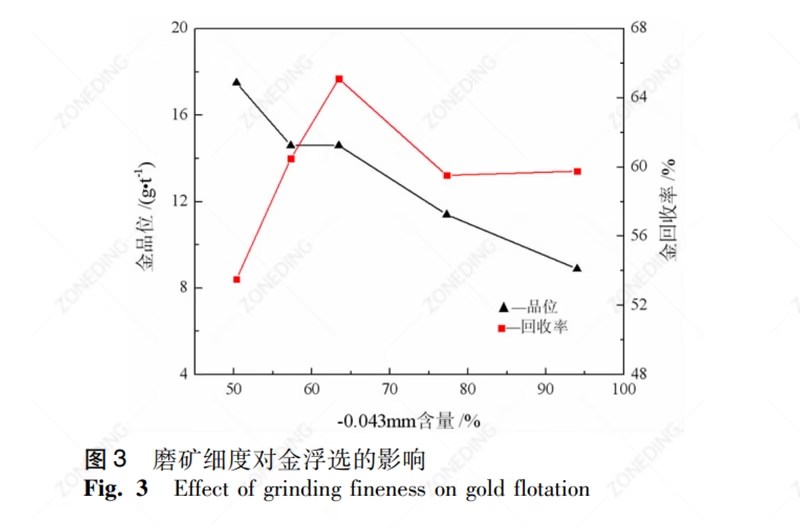
Particle Size: Optimal liberation size is crucial. If particles are too coarse, liberation is incomplete. If they are too fine (slimes), flotation becomes difficult. They can also consume excessive reagents.
Reagent Type and Dosage
Correct selection and precise control of chemical reagents are paramount.
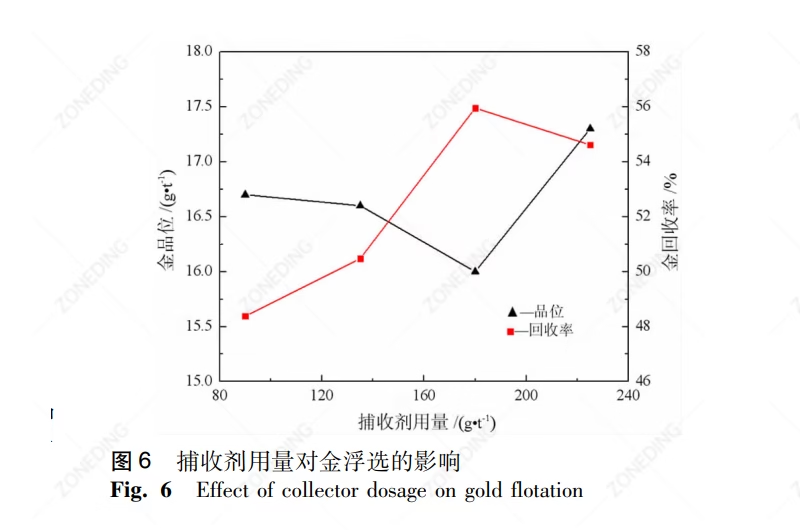
Collector Selectivity: The collector must selectively attach to the desired mineral. It should avoid attachment to gangue or other valuable minerals.
Frother Stability: The frother must create a stable froth. It should be strong enough to carry minerals. It should not be too stable, which makes handling difficult.
Modifier Effectiveness: pH regulators, depressants, and activators must perform reliably. Incorrect dosage can lead to poor selectivity or low recovery.
Process Parameters (pH, Pulp Density, Air Rate)
Operational conditions within the flotation cell also play a significant role.
pH: Pulp pH affects mineral surface charge. It influences reagent adsorption. Maintaining optimal pH is critical for selectivity.
Pulp Density: The solids-to-water ratio in pulp affects mineral-bubble contact. It also impacts froth stability. High pulp density can hinder bubble movement. Low density can cause excessive water reporting to concentrate.
Air Rate: Air volume introduced affects air bubble number and size. This impacts probability of mineral-bubble collision. It also influences froth volume.
2025 Latest Trends in Froth Flotation
The field of froth flotation continues to evolve. Innovations focus on increasing efficiency and sustainability. They also aim to reduce costs and environmental impact. Complex ores and stricter regulations drive these trends.
Staying informed about these advancements is critical. It helps companies remain competitive. It ensures long-term operational success in mineral processing.
Latest Advances in Flotation Technology
Automation and Digitalization: Advanced control systems use real-time data. They optimize reagent dosage, air flow, and pulp levels for flotation equipment. Digital twins simulate flotation behavior. This allows for predictive maintenance and parameter optimization. It leads to more efficient and stable operations.
Sustainable Reagents: Research focuses on developing environmentally friendly flotation reagents. These include bio-collectors and biodegradable frothers. These reduce flotation’s ecological footprint.
Advanced Sensor Technologies: In-line sensors measure pulp chemistry, particle size, and froth characteristics. This occurs within flotation cells. This provides immediate feedback. Operators make quick adjustments. This improves recovery and grade stability.
Column Flotation and Jameson Cells: These technologies offer advantages over conventional mechanical cells. This applies especially to fine particles. They provide better selectivity and recovery. This results from their unique hydrodynamics. These specialized flotation equipment types represent key advancements.
Market Insights
Global demand for base metals and critical minerals continues to rise. This fuels innovation in froth flotation. Processing increasingly complex and low-grade ores necessitates efficient flotation. It also requires selective flotation techniques. Environmental pressures push for reduced water usage. They also promote eco-friendly reagents. The trend toward modular and mobile mineral processing plants impacts flotation cell design. It promotes more compact and adaptable equipment.
Why Choose ZONEDING for Flotation Equipment?
Choosing the right partner for mineral processing equipment is vital. ZONEDING offers a distinct competitive edge in froth flotation solutions. The company’s expertise and comprehensive product range ensure optimal results for clients worldwide.
ZONEDING combines long-standing industry experience with direct manufacturing advantages. This ensures high-quality, cost-effective solutions.
Comprehensive Product Line: ZONEDING provides a full range of equipment. This covers the entire flotation circuit. This includes crushing equipment, grinding equipment like ball mills, flotation machines, and dewatering equipment like thickeners. This one-stop approach simplifies procurement. It ensures seamless integration.
Customization Capabilities: ZONEDING understands each ore body is unique. The company offers tailored solutions. These solutions match specific mineralogy, throughput requirements, and site conditions for various applicable materials. This customization maximizes efficiency and recovery.
Full-Service Support: From initial process design to equipment manufacturing, installation, commissioning, and after-sales maintenance, ZONEDING offers end-to-end support. This ensures smooth project execution. It guarantees long-term operational reliability for your froth flotation process.
Factory Direct Sales: ZONEDING is a direct manufacturer. It eliminates intermediaries. This reduces costs for clients. It provides more competitive pricing. It does not compromise equipment quality or performance.
Global Presence and Experience: ZONEDING exports products to over 120 countries. The company possesses extensive international project experience. It understands diverse market needs and operational challenges.
Industry Experience and Expertise: ZONEDING established in 2004. It has deep industry knowledge. It employs 15 professional beneficiation and crushing engineers. They bring rigorous design and quality control to every product.
Partner with ZONEDING. Leverage expertise in froth flotation. Achieve superior mineral recovery and operational efficiency using the right equipment.
Common Questions About Froth Flotation
Question 1: What type of minerals separate using froth flotation?
Froth flotation widely separates sulfide minerals (e.g., copper, lead, zinc). It also processes oxidized ores (e.g., iron, manganese). Non-metallic minerals (e.g., phosphate, fluorite) also apply. These are the main applicable materials.
Question 2: How does foam flotation differ from froth flotation?
“Foam flotation” and “froth flotation” refer to the same process. The terms are interchangeable. “Froth” is the more common and technically precise term in the industry.
Question 3: Why is particle size so important in froth flotation?
Particle size is crucial. Minerals must liberate (separate from gangue). Particles should not be too fine (slimes). This makes them difficult to float. Optimal size allows good mineral-bubble attachment. This directly impacts grinding equipment choice.
Question 4: What is the role of chemicals in the froth flotation process?
Chemicals (reagents) modify mineral surfaces. They make them hydrophobic. They generate and stabilize froth. and They also control pulp pH. This selective action allows valuable minerals to float.
Question 5: Can ZONEDING design a complete froth flotation plant for a new project?
Yes, ZONEDING specializes in designing complete customized mineral processing lines. This includes full froth flotation plants. It covers crushing equipment, grinding equipment, flotation machines, and dewatering equipment.
Conclusion and Recommendations
Froth flotation stands as a pillar of modern mineral processing. Its ability to selectively separate valuable minerals from complex ores is unparalleled. This relies on intricate chemical and physical principles. Successful application of froth flotation demands thorough understanding. It also requires high-quality equipment. The wide range of applicable materials demonstrates its versatility.
Optimal froth flotation process efficiency depends on key factors. These include precise ore preparation. They also include careful chemical conditioning. They involve expertly selected flotation cells and related equipment. Continuous advancements in automation and sustainable reagents will enhance benefits. This applies to environmental and economic aspects of the technique. ZONEDING is a trusted partner. The company provides cutting-edge flotation machines and comprehensive solutions. These solutions support clients. They help achieve ambitious recovery and production goals. Contact ZONEDING today to discuss your specific flotation needs for your applicable materials.
Learn the list of the top 10 most precious metals. Understand their critical uses, market value, and the scientific reasons behind their exceptional scarcity.
Learn how to recycle steel slag? Our processing solution covers crushing, magnetic separation, and screening to help you recover iron and produce aggregate.
This guide covers various slag types,methods, equipment, and diverse utilization pathways for slag processing, helping for efficient resource transformation .
 Zoneding Mining