Minerals often require concentration. This process separates valuable minerals from gangue. Magnetic separation offers an effective solution for many ore types. It uses magnetic force to achieve this separation. The guide covers magnetic properties, separation equipment, and the step-by-step beneficiation process. It explores how industries achieve efficient mineral recovery.
This technique is crucial in modern mineral processing. It processes materials with varying magnetic susceptibilities. It optimizes mineral recovery. and It also reduces waste. Understanding its principles and applications helps implement robust beneficiation strategies. High-quality magnetic separation equipment is essential for successful operations.
Magnetic separation is a physical beneficiation process. It separates mineral particles based on their magnetic properties. This method applies strong or weak magnetic force. It attracts or repels minerals. It efficiently purifies ores. and It also recovers metals from waste.
Mineral processing plants use this technique widely. It handles iron ore, titania, and other metallic minerals. It removes magnetic impurities from non-magnetic products. For example, it purifies silica sand. ZONEDING manufactures various magnetic separators. These separators deliver high precision and efficiency for diverse applications.
Mineral Magnetic Properties
All materials respond to a magnetic field. Their response strength varies significantly. This variation defines their magnetic properties. Engineers classify minerals by these properties.
Ferromagnetic Minerals: These materials show strong attraction to magnetic fields. Iron, nickel, and cobalt are examples. Some iron oxides also fall into this category. They retain magnetism after the field removes.
Paramagnetic Minerals: These materials exhibit weak attraction to magnetic fields. They do not retain magnetism. Examples include chromium, titanium, manganese, and many of their associated minerals.
Diamagnetic Minerals: These materials are weakly repelled by magnetic fields. They have no permanent magnetic moment. Quartz, feldspar, and calcite are common diamagnetic minerals. Gold and silver also show diamagnetic behavior.
Magnetic separation leverages these differences. It isolates minerals selectively. Choosing the right strength of magnetic force is critical.
Mineral Type
Magnetic Behavior
Examples
Typical Magnetic Field Strength
Ferromagnetic
Strong Attraction
Magnetite, Pyrrhotite, Native Iron
Low Intensity
Paramagnetic (Weak)
Weak Attraction
Hematite, Ilmenite, Chromite, Limonite
High Intensity
Diamagnetic
Weak Repulsion
Quartz, Feldspar, Calcite, Gold, Silver
Very High Intensity (for repulsion)
Practical Tips for Magnetic Separation
Characterize Ore: Understand the magnetic properties of minerals in the ore. This determines the required magnetic field intensity.
Optimize Feed Rate: Maintain a consistent feed rate to the separator. This prevents overloading. It ensures effective separation of all particles.
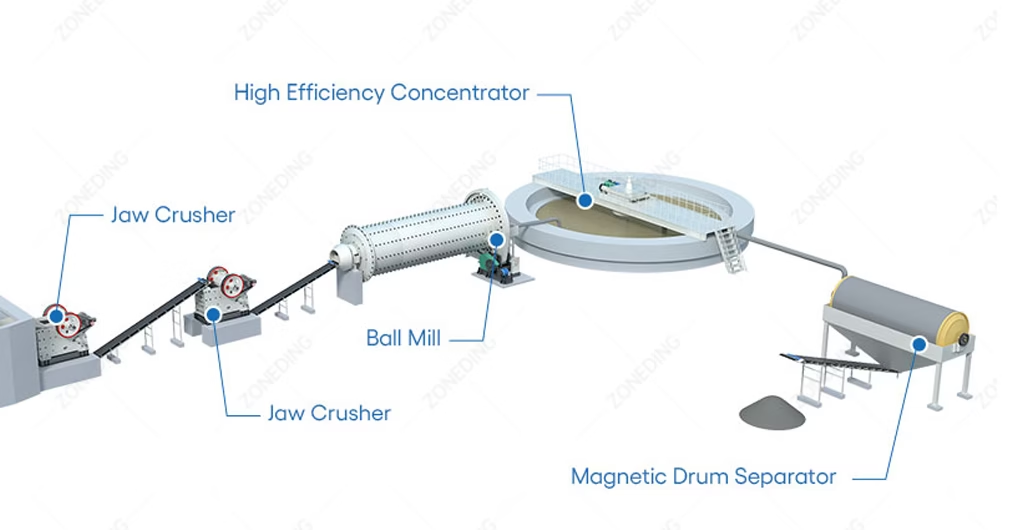
Control Particle Size: Crush and grind ore to an optimal particle size. This liberates valuable minerals. This allows efficient magnetic separation. ZONEDING’s jaw crushers and ball mills can help prepare materials.
How Does Magnetic Separation Work?
The magnetic separation process functions by exposing a mixed mineral feed to a magnetic field. This field attracts or repels specific mineral particles. Operators typically use conveyors or drum surfaces to move the material. Magnetic components adhere to the magnetic surface. The non-magnetic components continue their path. This achieves a physical separation.
This method requires careful calibration. It involves adjusting magnetic field strength and material flow. It ensures precise mineral separation. ZONEDING’s commitment to quality ensures its magnetic separation equipment performs reliably.
The Working Principle of Magnetic Force
Magnetic separation utilizes the principle of varying magnetic susceptibility among minerals. When a mixture of particles enters a magnetic field, magnetic forces act upon them.
Magnetic Attraction: Highly magnetic particles (ferromagnetic or strongly paramagnetic) are pulled towards the magnetic elements. This separates them from less magnetic material.
Non-Magnetic Path: Less magnetic or diamagnetic particles follow their original trajectory. They are unaffected or weakly repelled by the field. This causes them to fall away from the magnetic trajectory.
The strength of the magnetic force applies determines the separation efficiency. Weak magnetic fields separate ferromagnetic materials. Stronger fields separate weakly paramagnetic minerals. The type of separator used also influences the force application.
Wet vs. Dry Magnetic Separation
Minerals undergo magnetic separation in either a wet or dry state. Each method suits different material characteristics and processing goals.
Dry Magnetic Separation: This method treats dry, granular materials. It removes magnetic contaminants from non-magnetic products. It also concentrates magnetic ores. and It avoids water use. This reduces dewatering costs. However, it requires highly liberated, dust-free feed.
Wet Magnetic Separation: This method treats mineral slurries. It offers better separation efficiency for fine particles. Water acts as a medium. It helps to disperse particles. It also reduces mechanical entanglement. ZONEDING provides both wet and dry magnetic separators. These cater to various beneficiation process requirements. Wet separators often integrate with other wet mineral processing steps.
Key Equipment for Efficient Mineral Separation
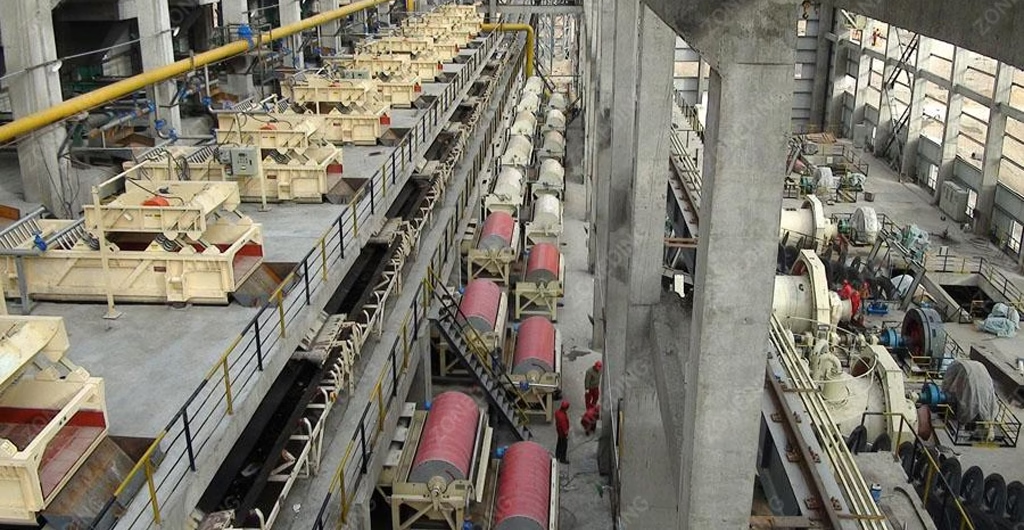
Implementing effective magnetic separation requires specialized separation equipment. These machines generate the necessary magnetic force. They also manage material flow. Different equipment types suit different applications, particle sizes, and magnetic properties.
Choosing the right magnetic separation equipment depends on specific ore characteristics. It also depends on the desired concentrate quality. ZONEDING offers a comprehensive range of quality magnetic separators. These separators deliver reliability and high performance in diverse mineral processing environments.
Drum Magnetic Separators
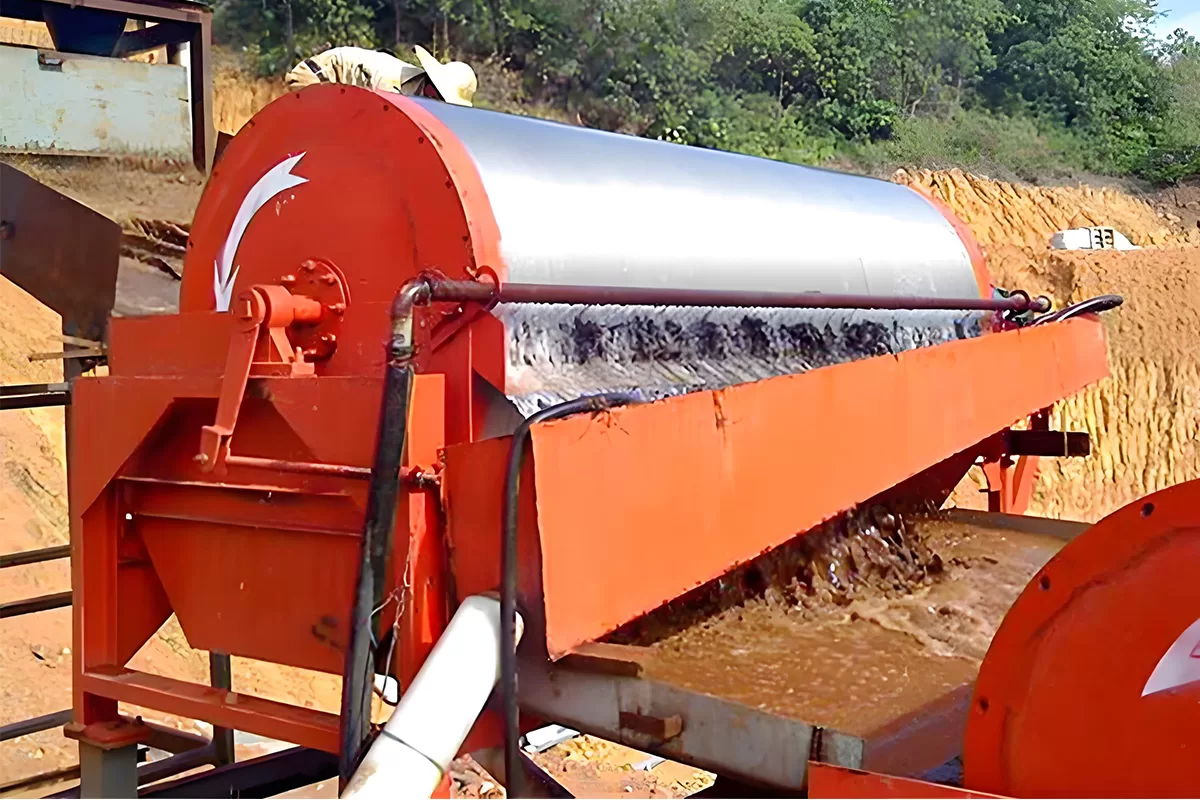
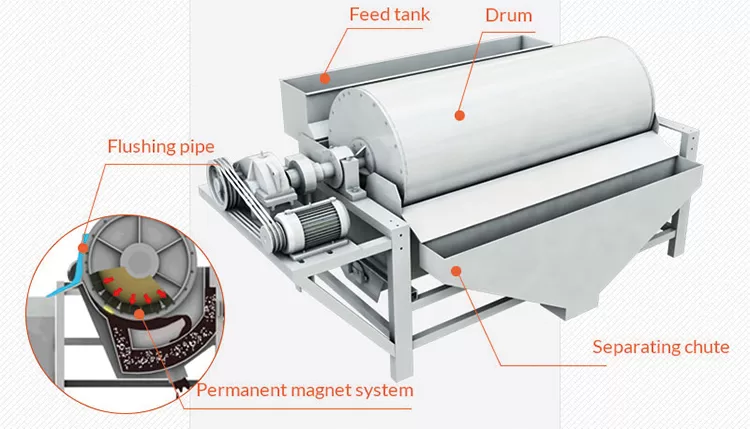
Drum magnetic separators are common for both wet and dry applications. They consist of a rotating drum. A stationary magnetic field inside the drum generates the magnetic force.
Working Principle: Feed material introduces onto the drum surface. Magnetic particles adhere to the drum as it rotates. Non-magnetic particles fall off. A scraper or water spray then removes magnetic particles.
Applications: They frequently process iron ore. They also remove tramp iron from other bulk materials. ZONEDING’s drum separators feature robust construction. They provide efficient separation. They are easy to maintain.
Roller Magnetic Separators
Roller magnetic separators typically use permanent magnets or electromagnets. These create a powerful magnetic field around the rollers.
Working Principle: Material passes over or under the rotating rollers. Magnetic particles stick to the roller surface. Non-magnetic particles fall away. Scrapers or changes in magnetic field remove the magnetic product.
Applications: They find use in concentrating weakly magnetic minerals. Examples include hematite and ilmenite. They also separate fine particles. Their design ensures effective separation even with challenging materials.
High Gradient Magnetic Separators (HGMS)
HGMS units provide an exceptionally strong magnetic force. They are suitable for separating very fine and weakly magnetic particles.
Working Principle: These separators use a matrix of steel wool or specialized elements. An intense magnetic field magnetizes this matrix. Weakly magnetic particles get trapped within the magnetized matrix. Non-magnetic particles pass through.
Applications: HGMS is crucial for purifying industrial minerals like kaolin. It also concentrates tantalite and cassiterite. ZONEDING’s HGMS designs maximize recovery. They deliver high-grade concentrates for demanding applications. These separation equipment are vital for modern operations.
Applicable Materials for Magnetic Separation
Magnetic separation effectively processes a wide array of raw materials. It purifies diverse minerals. This method plays a crucial role across various industries, from mining to recycling.
This versatility makes magnetic separation a powerful tool. It handles different magnetic properties and particle sizes. ZONEDING’s magnetic separators are adaptable. They suit various applicable materials.
Iron Ores
Iron ores are a primary application for magnetic separation.
Magnetite: Strongly ferromagnetic. Low-intensity magnetic separation efficiently extracts it. It removes gangue minerals like quartz.
Hematite and Limonite: These are weakly paramagnetic. They require high-intensity magnetic separation. This includes roller or high gradient separators. Operators use these after proper liberation.
Iron Ore Beneficiation: The process significantly upgrades iron ore concentrates. It meets specifications for steel production. ZONEDING provides complete iron ore beneficiation process solutions.
Non-Ferrous Metals and Industrial Minerals
Magnetic separation also benefits other essential mineral resources.
Titanium Ores (Ilmenite, Rutile): Ilmenite is paramagnetic. It requires high-intensity magnetic separation. Rutile is diamagnetic. Other methods extract rutile or it becomes a tailing in magnetic separation.
Chromite: This paramagnetic mineral is often processed magnetically. This separates it from silicates.
Manganese Ores: Many manganese minerals are weakly magnetic. They respond to high-intensity fields.
Silica Sand:Magnetic separation removes iron-bearing impurities from silica sand. This produces high-purity sand for glass, ceramics, and electronics.
Coal: It removes pyrite (a weakly magnetic sulfur-bearing mineral) from coal. This reduces sulfur content. It improves coal quality.
Recycling and Waste Management
Magnetic separation is critical in recycling.
Scrap Metal Recovery: Strong magnets separate ferrous metals from non-ferrous scrap and waste. This is common in municipal solid waste (MSW) processing.
Slag Treatment: It recovers valuable metals from industrial slag. This enhances resource utilization.
Construction Waste Recycling: Mobile crushers often integrate with magnetic separators. They recover rebar from concrete rubble. This supports construction waste recycling.
Factors Influencing Magnetic Separation Efficiency
Several factors critically affect magnetic separation efficiency. These include material characteristics and equipment settings. Optimizing these parameters ensures maximum recovery and concentrate grade.
Achieving efficient mineral separation relies on precise control. This applies to these influencing factors. ZONEDING’s engineers help clients fine-tune systems.
Mineral Characteristics
The inherent properties of the minerals are paramount.
Magnetic Susceptibility: The intrinsic magnetic strength of the target mineral. Strong differences between valuable and gangue minerals lead to easier separation.
Particle Size and Liberation: Minerals must be sufficiently liberated. They need to separate from non-magnetic gangue. Fine particle sizes generally require higher magnetic gradients. ZONEDING’s cone crushers ensure proper size reduction.
Particle Shape: Irregularly shaped particles can affect flow. This may reduce separation efficiency.
Feed Grade: High-grade feeds simplify separation. Low-grade feeds require more precise control and potentially multiple stages.
Equipment Design and Operational Parameters
The design and operation of the separation equipment directly impact performance.
Magnetic Field Intensity: The strength of the magnetic force. It must match the magnetic susceptibility of the target minerals. Too weak, and valuable magnetic minerals are lost. Too strong, and non-magnetic gangue reports to the concentrate.
Magnetic Field Gradient: The rate at which the magnetic field strength changes. A high gradient pulls weakly magnetic particles more effectively. This is crucial for HGMS.
Feed Rate and Distribution: A consistent and evenly distributed feed is essential. Overloading reduces efficiency. Uneven distribution leads to poor separation.
Pulp Density (for Wet Separators): The solids-to-water ratio. It affects particle mobility and magnetic capture. Optimal density prevents clumping. It maintains particle dispersion. This allows the magnetic force to act effectively.
Drum/Roller Speed: Rotational speed influences the residence time of particles in the magnetic field. It affects how effectively magnetic particles adhere and subsequently detach.
Customer Case Study: ZONEDING’s Magnetic Separation Solution
A mining company in Vietnam processed manganese ore. The ore contained valuable manganese oxides. It also had significant silica and iron oxide impurities. The client aimed for a manganese concentrate exceeding 45% Mn. Their existing gravity separation circuit struggled to meet this target. It lacked efficiency.
ZONEDING was consulted to upgrade the beneficiation process. After detailed mineralogical analysis, ZONEDING proposed a multi-stage magnetic separation circuit. This maximized manganese recovery and concentrate grade.
Crushing and Grinding: Raw manganese ore underwent crushing. ZONEDING’s impact crushers performed this. Then, a ball mill ground it to 80% passing 150 microns. This ensured adequate liberation.
Low-Intensity Magnetic Separation (LIMS): The ground slurry first passed through ZONEDING’s wet drum magnetic separators. This removed strongly magnetic iron contaminants. This reduced the load on subsequent stages.
High-Intensity Magnetic Separation (HIMS): The non-magnetic fraction from LIMS then fed into ZONEDING’s high-intensity wet magnetic separators. These machines applied a powerful magnetic force. They effectively captured weakly magnetic manganese minerals. Silica and other non-magnetic gangue were rejected.
Multi-Stage Cleaning: The manganese concentrate from HIMS underwent several cleaning stages. This utilized smaller ZONEDING HIMS units. This further refined the concentrate. It removed any entrained gangue.
Dewatering: The final concentrate received dewatering. ZONEDING used thickeners. This prepared the product for shipment.
The ZONEDING solution dramatically improved results. The manganese concentrate grade successfully reached 48% Mn. Overall manganese recovery increased by 15%. This demonstrated the effectiveness of their tailored magnetic separation equipment and optimized beneficiation process. The client achieved greater profitability.
2025 Latest Trends in Magnetic Separation Technology
The field of magnetic separation continuously evolves. Innovations focus on increasing efficiency and sustainability. They also aim to reduce costs. These trends respond to more complex ores and stricter environmental regulations.
Staying informed about these advancements is critical. It helps companies remain competitive. It ensures long-term operational success in mineral processing.
Latest Advances in Magnetic Separation Equipment
Superconducting Magnetic Separators: These devices generate extremely high magnetic force fields. They use superconducting magnets. They efficiently process very fine and ultra-low magnetic susceptibility materials. This technology offers high throughput and selectivity. Operators typically apply them for niche, high-value mineral applications.
Pulsed Magnetic Fields: Research explores pulsed magnetic fields. They offer advantages over continuous fields. This includes more effective particle dislodgment. It improves separation efficiency.
Intelligent Control Systems: Advanced sensors and AI-driven algorithms optimize separator performance. They adjust field strength, belt speed, and feed rates in real-time. This adapts to varying ore characteristics. ZONEDING integrates such intelligent controls into its latest magnetic separation equipment. This ensures consistent, high-quality output.
Energy Efficiency: Design focus aims at reducing power consumption. This applies especially to electromagnetic separators. Innovations include optimized coil designs and power management systems. This reduces operational costs. It promotes sustainable mineral processing.
Market Insights
Global demand for critical minerals drives innovation. This includes those used in electric vehicles and renewable energy. It necessitates more efficient mineral separation techniques. This applies especially for low-grade and finely disseminated ores. Environmental pressures also push for reduced water and energy consumption. This influences the development of new dry magnetic separation technologies. The market sees a growing demand for customized, integrated solutions. These solutions support specific ore bodies and processing requirements.
Common Questions About Magnetic Separation
Question 1: What types of minerals does magnetic separation recover?
Magnetic separation recovers ferromagnetic minerals (like magnetite). It also recovers weakly paramagnetic minerals (like hematite, ilmenite, chromite). It also removes iron from non-magnetic minerals.
Question 2: Is wet or dry magnetic separation better for fine particles?
Wet magnetic separation generally offers better efficiency for fine particles. Water disperses fine particles. It reduces clumping. This allows the magnetic force to act more effectively.
Question 3: How does magnetic intensity affect mineral separation?
Magnetic intensity dictates the strength of the magnetic force. Low intensity fields separate highly magnetic minerals. High intensity fields are necessary for weakly magnetic ones. Incorrect intensity leads to loss of valuable minerals or contamination.
Question 4: Can magnetic separation recover precious metals like gold?
Gold itself is diamagnetic (non-magnetic). Magnetic separation does not directly recover gold. However, it can separate magnetic gangue minerals from gold-bearing ore. This concentrates the non-magnetic fraction. It then undergoes further gold recovery processes.
Question 5: Does ZONEDING offer customized magnetic separation solutions?
Yes, ZONEDING specializes in designing and providing customized beneficiation process solutions. This includes tailored magnetic separation equipment. These solutions match specific ore characteristics and production targets.
Conclusion and Recommendations
Magnetic separation is an indispensable beneficiation process. It relies on separating minerals with distinct magnetic properties. This technique plays a central role in modern mineral processing. It ensures efficient recovery of valuable resources. It also purifies applicable materials.
Effective mineral separation depends on understanding magnetic principles. It also requires selecting appropriate separation equipment. These choices maximize efficiency. They optimize concentrate quality. Continuous innovation drives the development of more powerful and sustainable technologies. ZONEDING offers advanced magnetic separators and integrated solutions. These help clients achieve superior mineral recovery and operational efficiency. Contact ZONEDING today to discuss specific magnetic separation requirements.
Learn how to close a mine sustainably by ecological rehabilitation. Techniques for soil restoration, water management, and repurposing land for recycle use.
This checklist outlines the essential mineral tests required for any beneficiation project, from mineralogy and comminution to flotation and hydrometallurgy.
 Zoneding Mining