全站搜索

Search the entire website

BLOG

What is Gravity Separation in the Mineral Processing Plant?

Blog 8840

Gravity separation is a fundamental technique in mineral processing. It separates minerals based on their density differences. This method leverages physical forces. It separates valuable minerals from gangue material. Understanding gravity separation is vital. It applies across many mineral extraction industries. This guide explores its basic principles, methods, and the machinery involved. It reveals how density differences become a powerful tool. This tool ensures efficient mineral recovery.

The principles behind gravity separation are simple. However, its applications are diverse and sophisticated. High efficiency in this stage is crucial. It maximizes target mineral recovery. It minimizes waste. This process is essential for many mineral industries. This guide provides a comprehensive overview. It helps unlock the full potential of density-based separation.

Table of Contents

What is Gravity Separation in Mineral Processing?

Gravity separation is a physical beneficiation method. It separates particles based on their specific gravity. Specific gravity is the ratio of a material’s density to the density of water. Minerals with higher specific gravity settle faster or are less affected by flowing water. Minerals with lower specific gravity are carried away more easily. This differential movement allows for separation.
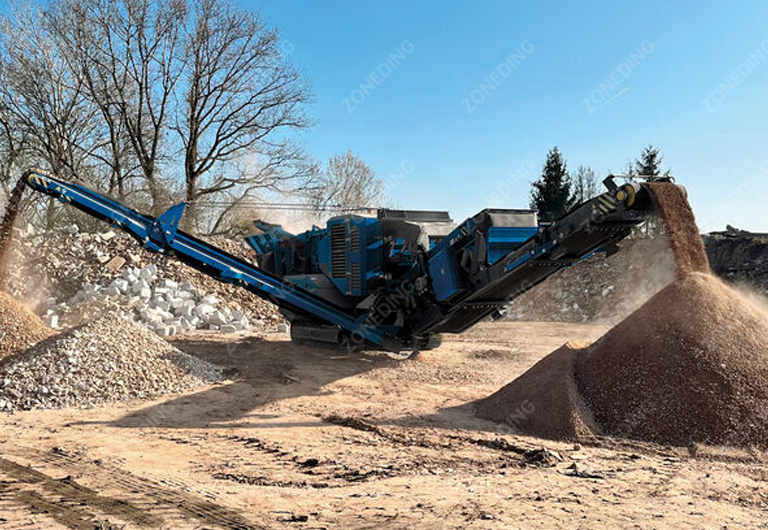
gravity separation

This method is one of the oldest in mineral processing. It remains highly effective for many applications. It is particularly useful for separating heavy minerals. These include gold, tin, tungsten, and iron ores. Density separation is central to this technique. It ensures a high recovery of valuable materials. This method relies on carefully controlled conditions.

The Basic Principle: Density Differences

The fundamental principle of gravity separation is simple. It uses the difference in densities between mineral particles. When particles are in a fluid medium (usually water), they move differently. Heavydense particles sink faster. Lighter less dense particles remain suspended or are carried away by the fluid. This differential settling in a flowing current creates the separation.

This process is governed by two main forces. They are gravity and drag force. Gravity pulls particles downwards. Drag force opposes this movement. It is caused by the fluid. The net effect separates the particles. Engineers carefully design equipment. They control fluid flow and particle movement. This ensures optimal separation.

Why Use Gravity Separation in Mineral Processing?

Gravity separation presents significant advantages. It is a preferred method for many mineral types. It offers benefits in terms of cost, environmental impact, and effectiveness. Understanding these benefits highlights its continued relevance in modern mineral processing.

This method also contributes to overall plant efficiency. It often serves as a pre-concentration step. This reduces the load on more expensive downstream processes.
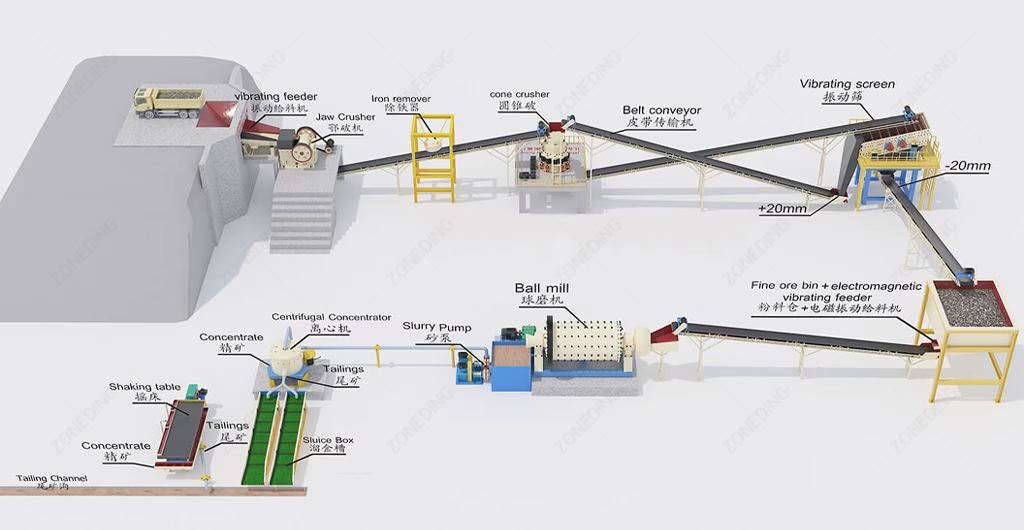
3-Feldspar-Processing-Flow

Key Advantages of Gravity Separation

Gravity separation provides several distinct advantages. These make it a popular choice in mineral beneficiation.

  • Low Operating Costs: Gravity separation machines often have lower energy consumption. They also have fewer consumable parts. This leads to reduced operating expenses.
  • Environmental Friendliness: This method primarily uses water. It uses very few or no chemical reagents. This minimizes environmental pollution. This helps a plant meet stricter environmental regulations.
  • Simplicity and Robustness: Gravity concentrators are generally simple in design. They are robust. They are easy to operate and maintain. This leads to higher uptime.
  • High Recovery for Coarse Particles: Gravity separation is very effective. It recovers coarser heavy mineral particles. Other methods may struggle with these sizes.
  • Adaptability: It can be used for a wide range of particle sizes. It works with various mineral types. This includes precious metals and industrial minerals.

Gravity separation is a suitable choice. It is applicable for many mineral streams. It represents a cost-effective and environmentally conscious solution in mineral processing.

Key Methods and Equipment for Gravity Separation

Gravity separation encompasses various methods. Each method uses different equipment designs. These designs optimize separation based on particle size and density. Understanding these methods is essential. It helps you choose the right technology. This ensures efficient heavy mineral separation.

ZONEDING offers a range of high-performance gravity separation equipment. The company’s machines are designed for reliability and efficiency. They are suitable for various mineral types.

MethodParticle Size RangeKey ApplicationZONEDING Advantage
JiggingCoarse to MediumIron ore, coal, some precious metalsRobust design, high recovery
Shaking TableFineGold, tin, tungsten, tantalumHigh separation efficiency, ideal for high-grade concentrate
Spiral ConcentratorMedium to FineIron ore, chromite, zirconContinuous, cost-effective for large tonnages
Heavy Media Sep.Coarse to MediumIron ore, diamonds, coalSharp separation, excellent pre-concentration

Jigging

Jigging is a gravity separation method. It separates particles based on their differing specific gravities. The process occurs in a jig machine.
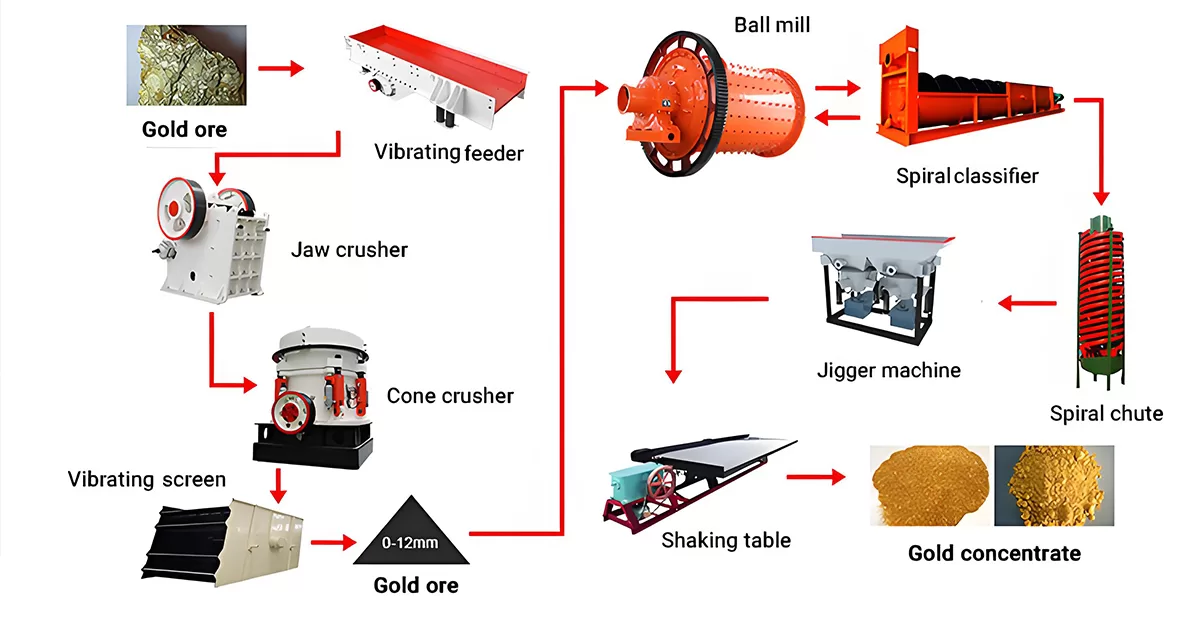
What is Gravity Separation in the Mineral Processing Plant?(images 3)
  • How it Works: A jig bed consists of a screen. Particles rest on this screen. Water pulsates through the bed. This creates an upward and downward motion. Heavy particles penetrate the bed. They settle at the bottom. Lighter particles are carried over the top by the water flow.
  • Applications: Jigs are suitable for coarse to medium-sized particles. They are effective for coal, iron ore, and some precious metals. ZONEDING’s jigging machines are known for their robust design. They offer high recovery rates.

Shaking Tables

Shaking tables separate fine material. They use a combination of factors. These include density, particle size, and shape.

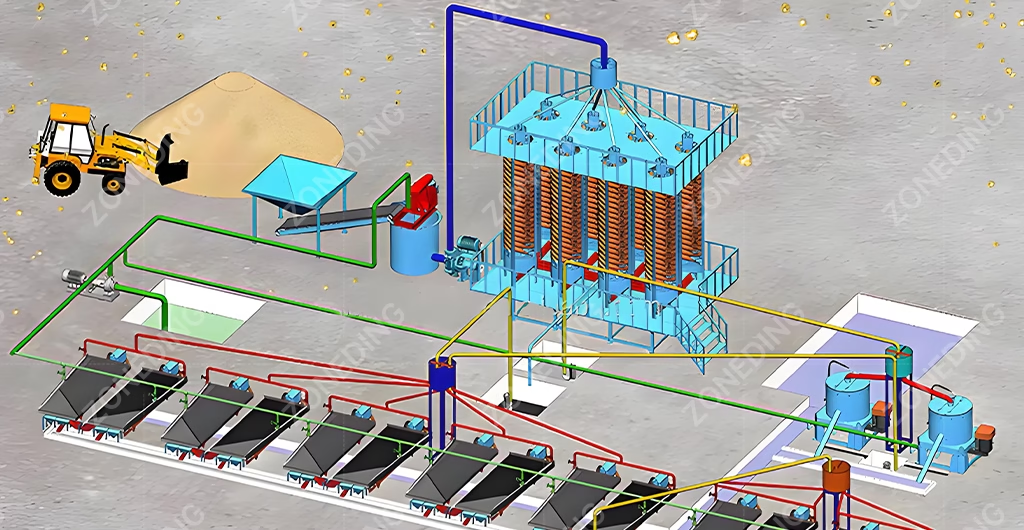
Spiral-chute-process-flow
  • How it Works: The table has a riffled deck. It oscillates longitudinally, moving back and forth. Water washes across the deck. Heavy particles are caught in the riffles. They move along the deck due to the shaking motion. Lighter particles are washed over the riffles. They are discharged at the side. The shaking motion separates the minerals into distinct bands. This allows for clean collection of concentrate, middlings, and tailings.
  • Applications: Shaking tables are ideal for fine particles. They are used for gold, tin, tungsten, tantalum, and other heavy minerals. ZONEDING offers advanced shaking tables. They provide high separation efficiency. They are suitable for achieving high-grade concentrates.

Spiral Concentrators

Spiral concentrators offer a continuous and cost-effective method. They separate medium to fine-grained heavy minerals.
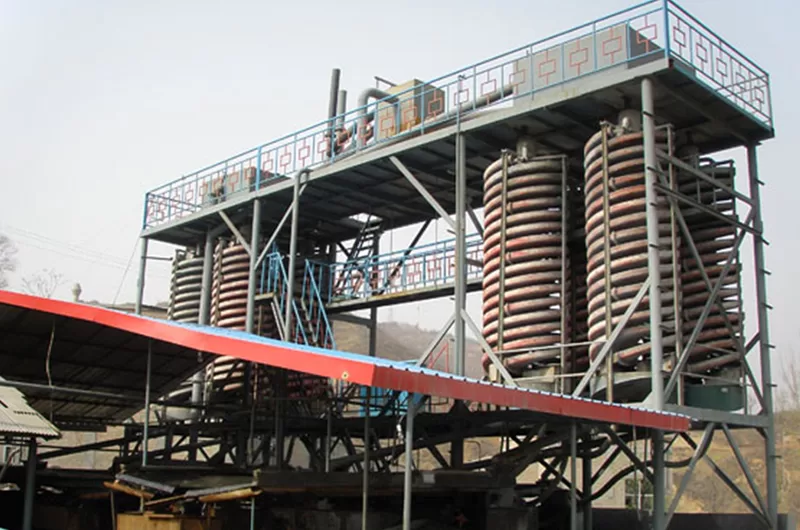
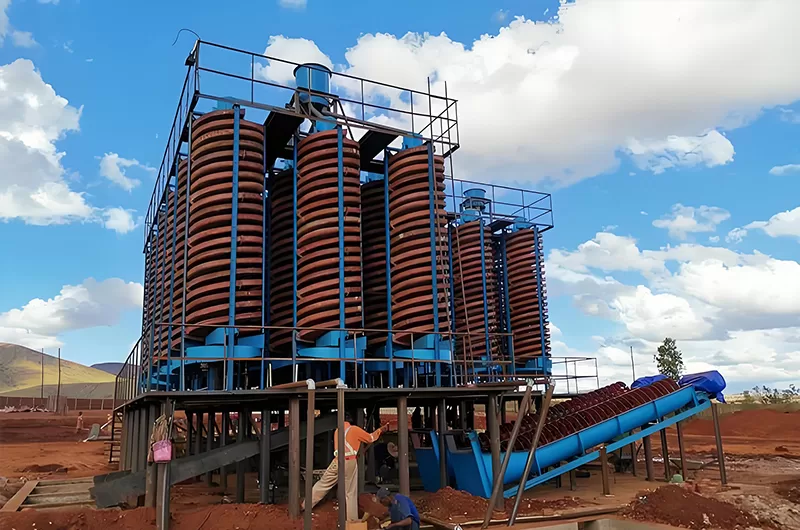
Spiral-chute-customer-site-2
Spiral-chute-customer-site-1
  • How it Works: A spiral concentrator is a circular trough. It wraps around a central column. A slurry of ore and water feeds into the top. As the slurry flows down, centrifugal force acts on the particles. Heavier particles migrate towards the inner part of the spiral. Lighter particles move towards the outer edge. Ports at the bottom collect the separated streams.
  • Applications: Spirals are widely used for iron ore, chromite, zircon, and coal. They are effective for processing large tonnages. They require minimal supervision. ZONEDING can integrate spiral concentrators. These enhance bulk mineral beneficiation projects.

Heavy Media Separation (HMS)

Heavy Media Separation (also called dense medium separation) is efficient. It works for separating particles across a wide size range.

  • How it Works: This method uses a fluid with a density intermediate to the minerals being separated. This “heavy media” is typically a suspension of fine ferrosilicon or magnetite in water. Particles denser than the heavy medium sink. They form the concentrate. Particles lighter than the medium float. They are discharged as tailings.
  • Applications: HMS is effective for iron ore, diamonds, and coal. It provides a sharp separation point. It produces high-quality products.and It is important for pre-concentration.

User Practical Tips and Recommendations

  • For Fine Gold Recovery: Consider combining ZONEDING’s shaking tables with a small jig. This captures both coarse and fine gold particles effectively.
  • Pre-Concentration of Iron Ore: Use spiral concentrators or jigs. They can remove significant gangue before grinding. This reduces later processing costs.
  • Optimizing Water Usage: Implement ZONEDING’s thickeners in your gravity separation circuit. This recycles process water. It minimizes fresh water consumption.

Factors Affecting Gravity Separation Efficiency

Several factors influence the efficiency of gravity separation. These factors relate to the particles themselves. They also relate to the equipment settings. Understanding these elements is crucial. It helps optimize the mineral processing flowsheet. This ensures maximum recovery and concentrate quality.

Controlling these variables is key. It helps achieve desired separation outcomes. Small adjustments can lead to significant improvements.
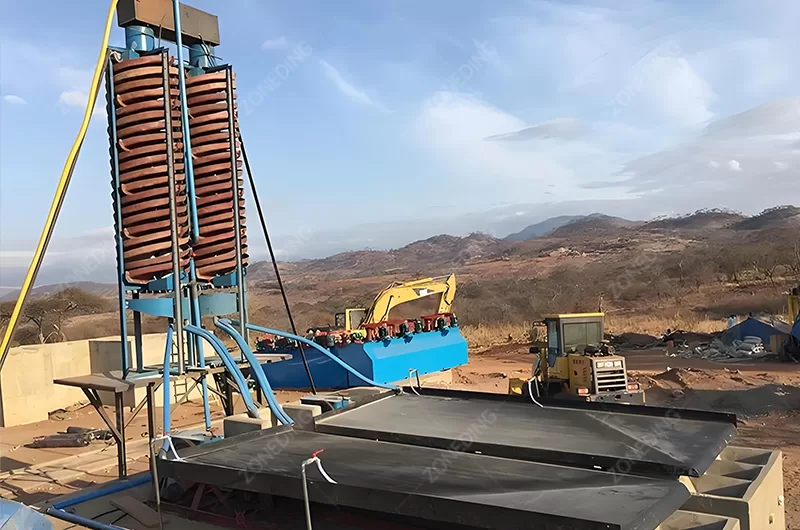
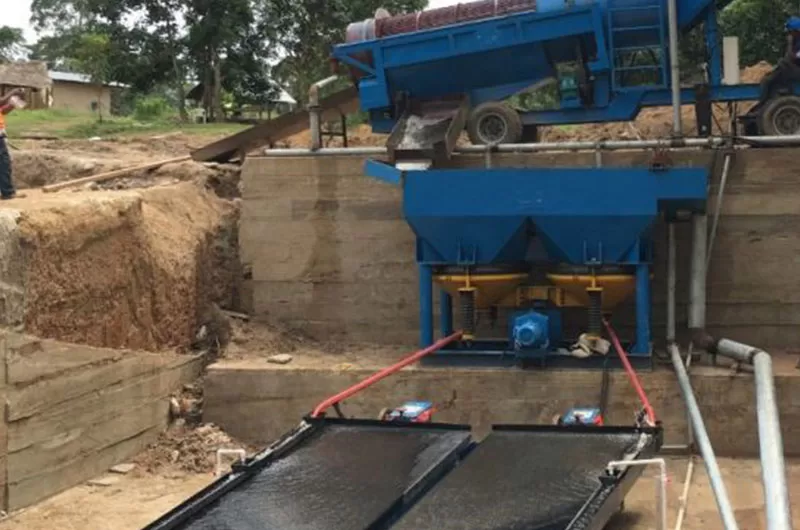
Gravity Separation
Shaking Table for gold

Particle Characteristics

The inherent properties of the mineral particles play a significant role.

  • Density Difference: This is the most critical factor. A larger density difference between valuable minerals and gangue leads to easier separation.
  • Particle Size: Gravity separation methods are effective within specific size ranges. Very fine particles can be difficult to separate due to drag forces. Very coarse particles require strong currents. ZONEDING designs equipment for optimal size ranges.
  • Particle Shape: Spherical or regular-shaped particles separate more easily. Flat or elongated particles can behave anomalously. Their movement is influenced by fluid dynamics.
  • Liberation Degree: Minerals must be sufficiently liberated. This means they must be free from entrained gangue. If valuable minerals are still attached to gangue, they will behave as a composite particle. This reduces separation efficiency.

Equipment Parameters and Operating Conditions

The way the equipment is operated directly impacts performance.

  • Water Flow Rate: The amount and velocity of wash water are critical. It affects the movement of lighter particles.
  • Stroke and Frequency (for jigs/tables): For jigs, the pulsation frequency and amplitude influence the bed stratification. For shaking tables, the stroke length and frequency impact particle movement along the deck.
  • Deck Slope (for tables): The angle of the shaking table deck gradient influences the speed at which particles move. It affects separation sharpness.
  • Feed Rate and Density: Consistent feed rate and slurry density are vital. They prevent overloading. They maintain stable separation conditions.

Proper control of these parameters ensures optimal gravity separation equipment performance. It maximizes concentrate grade and recovery.

Choosing a Supplier for Gravity Separation Equipment

Selecting the right equipment supplier is critical. It impacts the success of your mineral processing plant. Focus on suppliers that offer expertise. They should have reliable equipment. They must also provide comprehensive support. This ensures your investment yields long-term benefits.

Consider these factors when evaluating potential partners. They will help you make an informed decision. Look for companies that understand your specific needs.

Key Factors for Supplier Selection

When choosing a supplier for gravity separation equipment, you should consider:

  • Product Range: Does the supplier offer a comprehensive range of gravity separation machines? This includes jigs, shaking tables, spirals, and thickeners. ZONEDING provides a full suite of equipment. This encompasses crushing, grinding, beneficiation, and drying. This offers you a one-stop solution.
  • Customization Capability: Can the supplier tailor equipment and solutions? This should be based on your specific ore type, desired throughput, and site conditions. ZONEDING specializes in customized plant designs. They ensure optimal performance for your unique project.
  • After-Sales Support: What level of installation, commissioning, training, and maintenance support is offered? Reliable after-sales service is vital for smooth operations. ZONEDING offers full-service support. This lasts from design to post-installation maintenance.
  • Proven Track Record: Does the supplier have a history of successful projects? Can they provide client references or case studies? ZONEDING has a long history. The company was founded in 2004. It has installations in over 120 countries globally.
  • Cost-Effectiveness: Does the supplier offer competitive pricing? This should not compromise on quality or performance. ZONEDING is a direct manufacturer. This means the company can offer factory-direct pricing. This reduces costs for you.
  • Technical Expertise: Does the supplier have experienced engineers? These engineers should understand complex gravity separation principles. ZONEDING employs 15 professional beneficiation and crushing engineers. They ensure high-quality design and products.

By carefully evaluating these points, you can choose a partner. This partner will contribute to your plant’s efficiency. They will also improve profitability.

The field of gravity separation is constantly evolving. Advances in technology aim to improve efficiency. They also target finer particle recovery. They enhance automation. These trends ensure gravity separation remains competitive. It is crucial for modern mineral processing plants.

Staying informed about these trends is important. It helps maintain a cutting edge. It optimizes existing operations.

Latest Advances in Gravity Separation

SBS technologies are gaining traction. They are used for pre-concentration.

  • Enhanced Control Systems: Modern gravity separation equipment features more advanced control systems. These systems allow for precise adjustments. They control water flow, pulsation, and deck speed. This optimization leads to better separation and higher recovery.
  • Hybrid Technologies: New approaches combine gravity separation with other methods. For example, some systems integrate enhanced gravity centrifuges with flotation or magnetic separation. These hybrid solutions maximize recovery for complex ores.
  • Data Analytics and AI Integration: Real-time data collection from gravity concentrators is becoming standard. This data feeds into AI algorithms. These algorithms provide predictive maintenance. They optimize operational parameters. This leads to increased uptime and efficiency.

Market Insights

The market for gravity separation equipment is growing. This is driven by several factors. These include increasing demand for minerals. There is also a push for more environmentally friendly beneficiation methods. The focus on reducing chemical usage favors gravity-based solutions. Regions with abundant heavy mineral sands are also seeing significant investment. The demand for tin, tungsten, and rare earth elements supports this growth. Gravity separation offers a sustainable pathway to their extraction.

Common Questions About Gravity Separation

  • Question 1: What minerals are best suited for gravity separation?
  • Gravity separation works best for minerals with significant density differences from their gangue. This includes heavy minerals like gold, tin, tungsten, chromite, and iron ores.
  • Question 2: Does gravity separation use chemicals?
  • Generally, gravity separation uses very few or no chemical reagents. It primarily relies on physical density differences in a water medium. This makes it an environmentally friendly method.
  • Question 3: How does particle size affect gravity separation efficiency?
  • Particle size is critical. Each gravity separation method has an optimal size range. Very fine or very coarse particles can be challenging to separate efficiently due to varying fluid dynamics and forces.
  • Question 4: Can ZONEDING provide custom gravity separation solutions?
  • Yes, ZONEDING specializes in customized solutions. The company designs and manufactures gravity separation equipment. This equipment is tailored to your specific ore characteristics and processing goals.
  • Question 5: What are the main benefits of using gravity separation over other methods?
  • The main benefits include lower operating costs, minimal environmental impact due to less chemical use, simplicity of operation, and high efficiency for specific applications, especially for coarse heavy minerals.

Conclusion and Recommendations

Gravity separation is a cornerstone of mineral processing. It offers an effective and environmentally sound way to concentrate minerals. It relies on fundamental density differences. From simple jigging to advanced shaking tables and spirals, various methods cater to different mineral types and particle sizes. This technique is continuously evolving. New advancements improve efficiency and expand applications.

Implementing the right gravity separation equipment is vital. It improves recovery. It optimizes concentrate quality.and It also ensures sustainable operations. ZONEDING offers a comprehensive range of high-performance machines. These are suitable for all stages of gravity separation. The company provides complete solutions. These range from design to ongoing support. Contact ZONEDING today. Discuss your specific gravity separation needs. Unlock the full potential of your mineral resources.

The prev: The next:

Related recommendations