 Zoneding Mining

Site Search
Search products, equipment and solution articles
整站搜索产品中心新闻中心
点击开始搜索
热门搜索
UltraForm-MXFlexiPoly-RNanoForm Z300EcoFab P200
Search products, equipment and solution articles
In the complex circuit of a mineral processing plant, the crushing and grinding equipment often receive the most attention due to their massive size and energy consumption. However, the success of the subsequent separation phase—specifically flotation—relies heavily on a less conspicuous but equally vital machine: the Slurry Agitator Tank (also known as the Conditioning Tank).
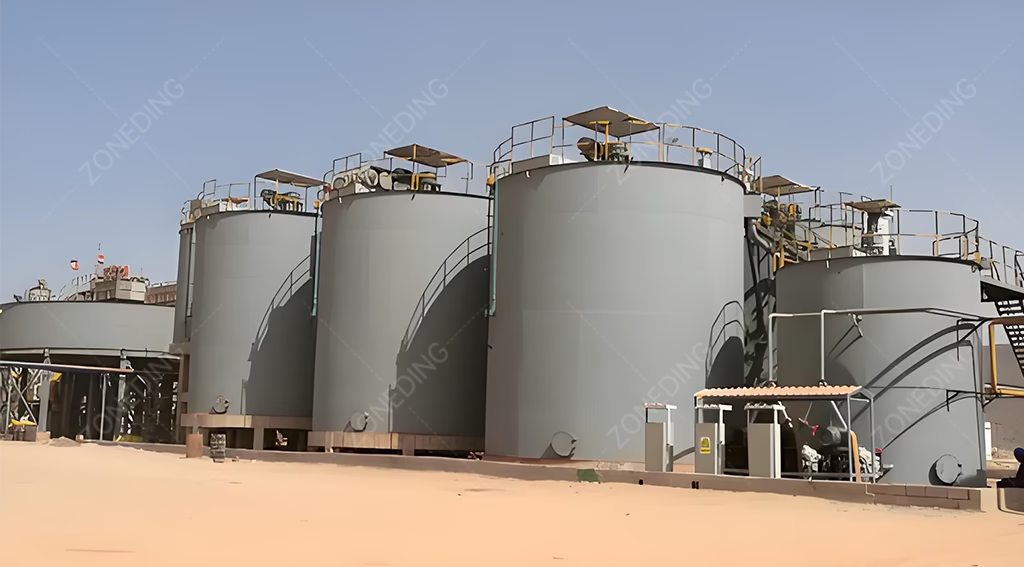
Functioning as the critical bridge between the Ball Mill and the Flotation Machine, the agitator tank is responsible for the physicochemical preparation of the ore. It is not merely a mixing vessel; it is a reactor where the mineral surface properties are altered to enable separation. Without effective agitation, valuable minerals sink to the tailings, and expensive chemical reagents are wasted. For mining operations, optimizing this specific stage is often the most cost-effective method to boost recovery rates.
This guide explores the engineering principles behind slurry agitation, the prevention of sedimentation, and the selection of the correct ZONEDING equipment for specific mineral applications.
Last Updated: February 2026| Estimated Reading Time: 15 Minutes
To understand the critical nature of the agitator tank, one must first understand the state of the material entering it. When ore leaves the grinding circuit, it is a “pulp”—a mixture of water and finely ground rock powder. At this stage, valuable minerals (such as gold, copper, or lead) are physically liberated from the gangue (waste rock), yet they behave identically in water.
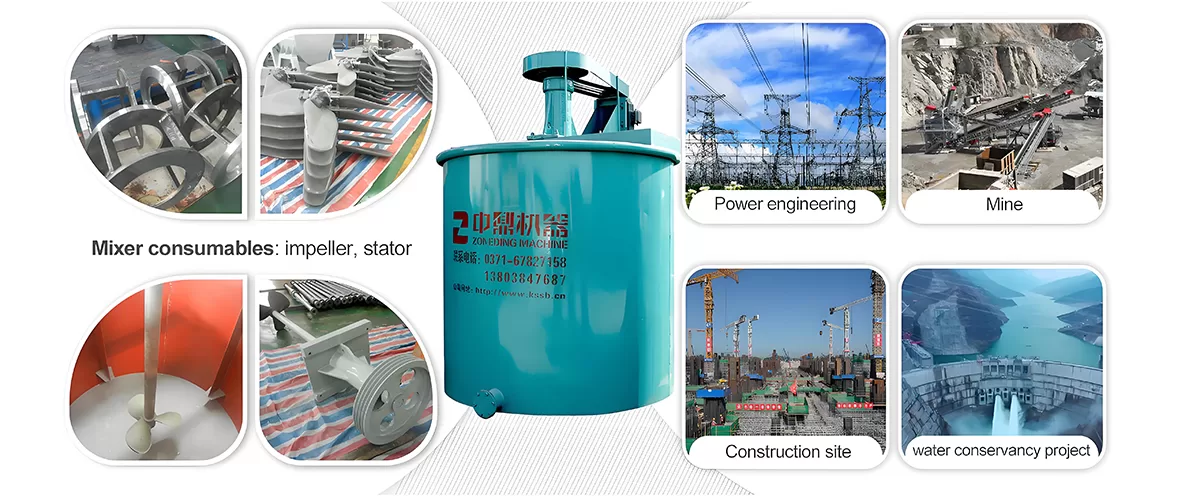
Flotation relies on making specific minerals hydrophobic (water-repelling) so they can attach to air bubbles. This is achieved through the addition of chemical reagents:
These chemical reactions are not instantaneous. The reagents require Conditioning Time (also called Residence Time) to fully adsorb onto the mineral surfaces. Furthermore, simply adding chemicals to a pipe is insufficient. The probability of a reagent molecule colliding with a specific mineral particle in a homogenous stream is low. High-energy turbulence is required to force these collisions.
The Slurry Agitator Tank provides both the required time and the kinetic energy. It ensures that when the slurry enters the flotation cell, every particle of valuable ore is fully “active” and ready to float. A poorly conditioned slurry leads to “naked” minerals that sink, resulting in direct financial loss.
An effective agitation system must overcome two major physical challenges: Sedimentation and Short-Circuiting.
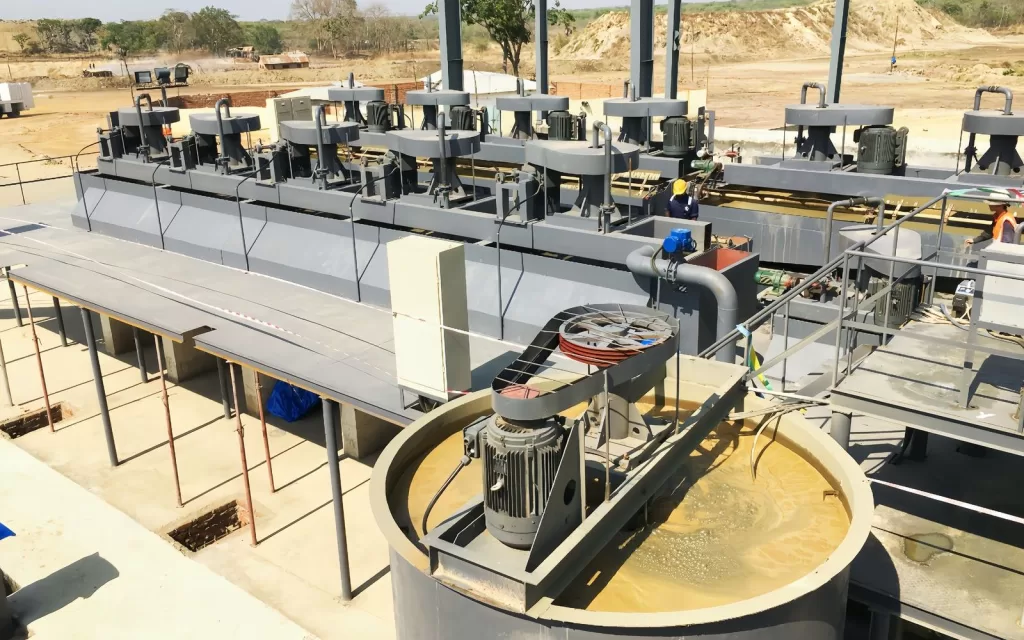
Mineral slurries are high-density fluids. Heavy ores, particularly metal sulfides and iron oxides, settle rapidly due to gravity. If the agitation speed is insufficient, solids accumulate at the bottom of the tank.
“Short-circuiting” occurs when slurry enters the tank inlet and flows directly to the outlet without circulating through the mixing zone. This results in a portion of the ore receiving zero conditioning time.
ZONEDING manufactures distinct series of agitator tanks, each engineered for specific pulp characteristics and process stages. Selecting the correct model is vital for operational stability.
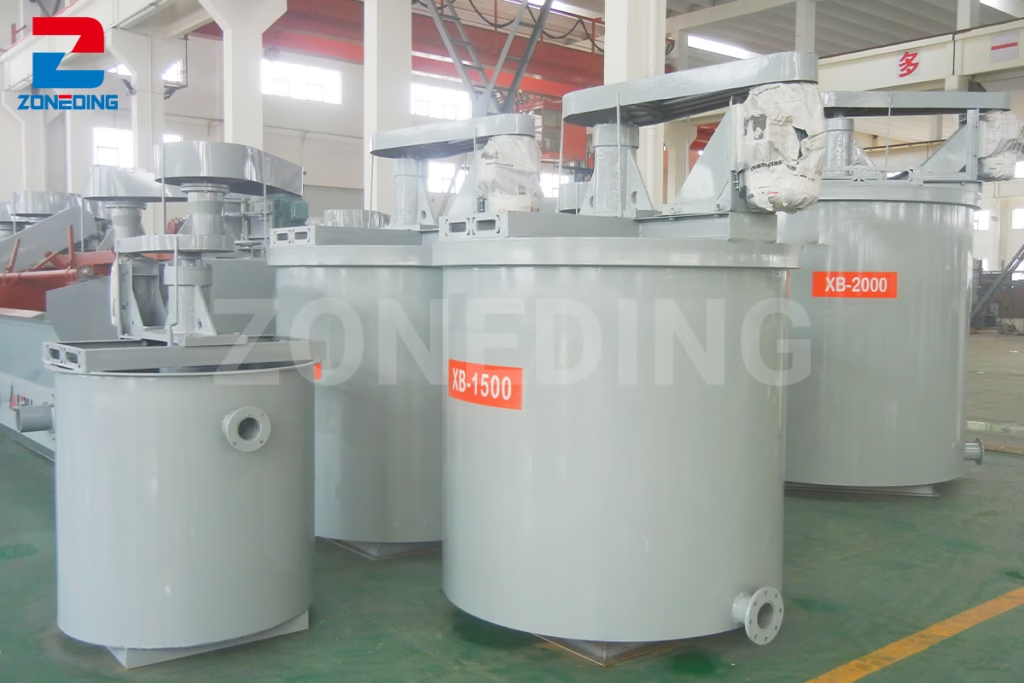
This type is the workhorse of the flotation circuit, designed specifically for the conditioning stage prior to separation.
For more demanding applications involving thicker slurries or coarser materials, this type is deployed.
Distinct from slurry tanks, these smaller units are used to dissolve solid reagents (powders or pellets) into liquid solutions. Constructed from acid-resistant materials or lined with fiberglass/PE, they feature specialized impellers for dissolving rather than suspending.
| Feature | Standard | High Concentration |
|---|---|---|
| Max Pulp Density | < 35% Solids | 30% – 70% Solids |
| Flow Pattern | High Circulation / Turbulent | High Suspension / Laminar |
| Impeller Design | Single Umbrella Type | Multi-blade / Large Diameter |
| Primary Use | Flotation Conditioning | Storage / Thickening Feed |
The internal environment of an agitator tank is extremely hostile. The combination of abrasive rock particles and potentially corrosive chemical reagents necessitates robust construction.
Standard steel impellers wear down rapidly when agitating silica-rich ores. As the impeller diameter decreases due to wear, the tip speed drops, reducing agitation efficiency and leading to sedimentation.
Without baffles, a rapidly rotating impeller creates a vortex—the liquid simply spins as a solid body with a hollow center. This provides very little mixing action.
The diversion tube is the defining feature of high-efficiency conditioning tanks. It acts as a guide, organizing the flow of fluid.
Proper sizing is a mathematical exercise, not a guess. Engineers must calculate the required tank volume to achieve the necessary retention time.
Different reagents require different contact times to react:
The formula used is:V=Q×T/60
Operators often blame the flotation cell for poor performance when the root cause lies upstream in the agitator.
The Slurry Agitator Tank is often the unsung hero of the mineral processing plant. While it does not crush rock or produce the final concentrate, it creates the essential conditions that make separation possible. By preventing sedimentation and ensuring thorough chemical conditioning, it maximizes the efficiency of the downstream Flotation Machine.
For mining companies, investing in high-quality agitation—with proper circulation design and wear-resistant materials—is a direct investment in recovery rates and profitability.
Looking to optimize your flotation circuit?
ZONEDING offers a full range of agitation tanks, customizable for various tank volumes and slurry densities.
Last Updated: January 2025
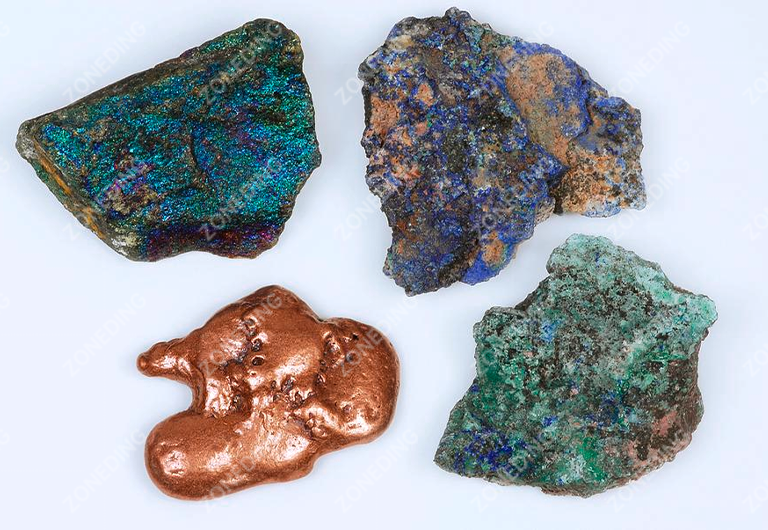
Wondering what are challenges when processing copper ore? Discover the main hurdles like declining ore grades and complex mineralogy, plus expert solutions.
View details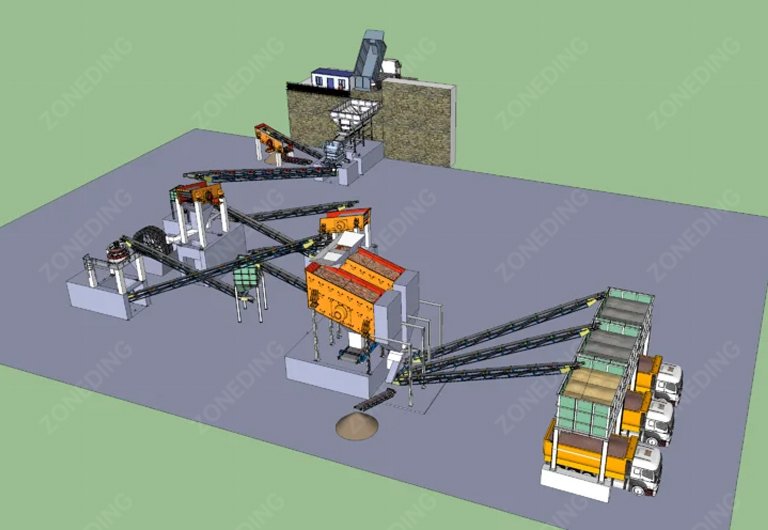
Why stop at cement? Learn how producing your own aggregates with in-house crushing plants is helping major companies cut costs and control quality.
View details
This expert guides you key factors: rock hardness (Ai), feed size, capacity requirements, and operational costs to tell how to choose right primary crusher.
View details
If you need a stone crusher? If you need on-site aggregate, this guide is for you. Learn 5 key signs that a crusher is the right investment for your project.
View details