 Zoneding Mining

Site Search
Search products, equipment and solution articles
整站搜索产品中心新闻中心
点击开始搜索
热门搜索
UltraForm-MXFlexiPoly-RNanoForm Z300EcoFab P200
Search products, equipment and solution articles
A ball mill investment requires careful consideration. The choice between a used ball mill and a new ball mill significantly affects operational efficiency and overall project profitability. This detailed guide explores the advantages, disadvantages, costs, and performance aspects of both options. It helps identify the optimal grinding solution for specific needs. Understanding these factors ensures any decision aligns with budget, production targets, and long-term sustainability.
This ball mill selection guide decision impacts the efficiency of mineral liberation. It directly influences subsequent processing stages. Investing wisely ensures both immediate and future operational success. This analysis provides clarity for an informed purchase of mineral grinding equipment.
A ball mill functions as a primary piece of grinding equipment. It efficiently reduces material size through a combination of impact and attrition. The core component is a rotating cylindrical shell. Inside this shell, grinding media, typically steel balls, are housed. Material enters one end of the mill. It undergoes a grinding process as the shell rotates. This action lifts the grinding media and material, which then fall back, pulverizing the feed. This process proves essential for preparing various ores for further processing steps.
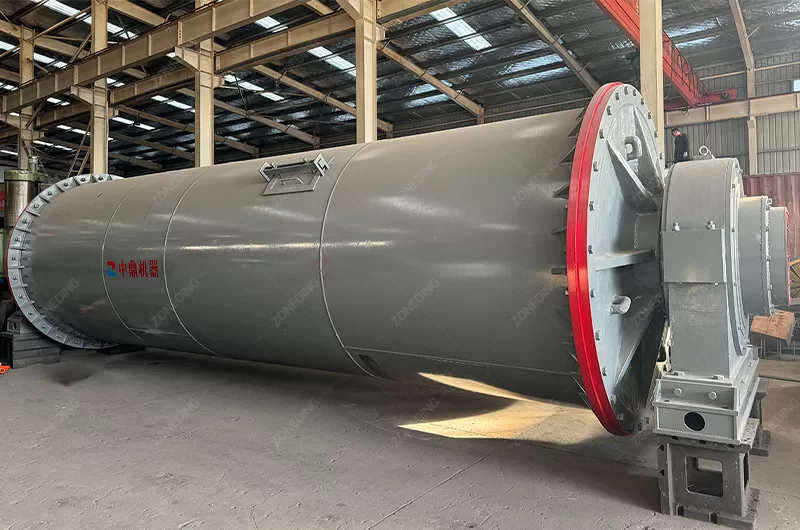
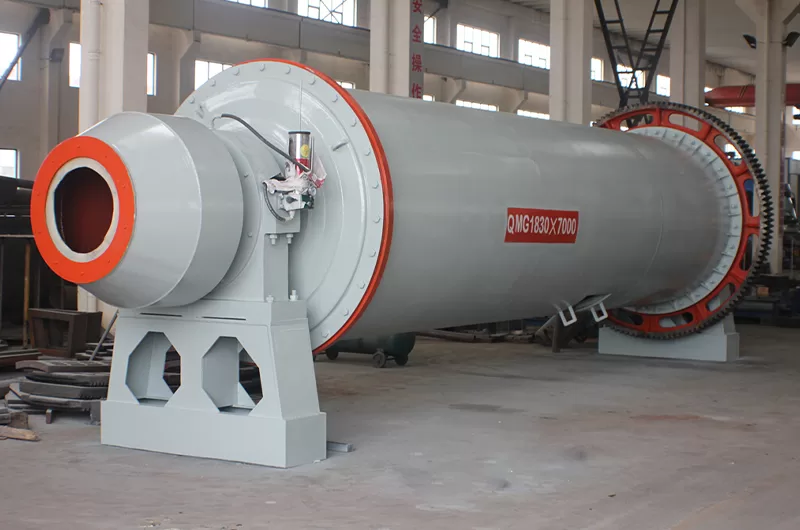
Globally, industries widely utilize ball mills. These sectors include mining, cement, chemicals, and ceramics. The primary goal involves achieving a desired particle size distribution. This fine grinding increases the material’s surface area considerably. This proves beneficial for subsequent physical or chemical processing. For example, mineral ores often require fine grinding before flotation or magnetic separation to efficiently liberate valuable minerals. ZONEDING’s ball mill designs cater to diverse material reduction requirements. These ensure precise output for varied industrial applications.
The grinding performance of a ball mill directly impacts the overall efficiency and profitability of any mineral processing operation. Optimal ball mill performance ensures that raw materials reduce to the precise particle size required for subsequent stages. Inefficient grinding results in higher energy consumption, reduced mineral recovery, and increased operational costs. A mill that consistently achieves the target grind size quickly reduces processing time and optimizes downstream processes.
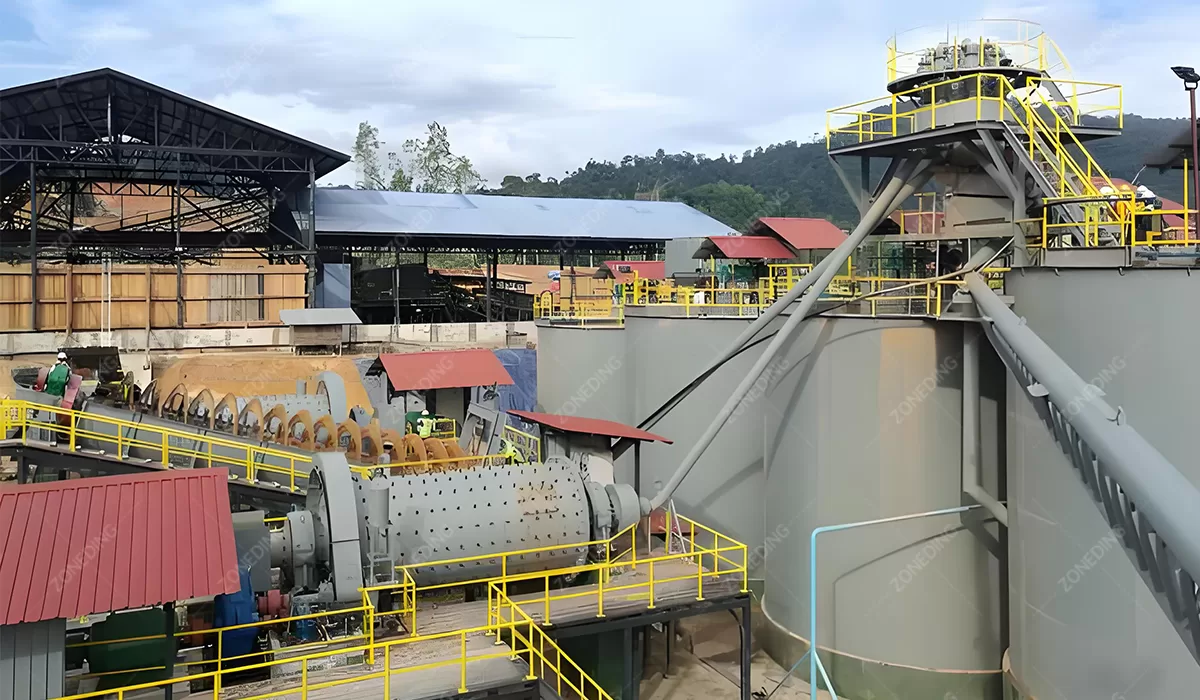
Effective grinding process optimization maximizes valuable mineral recovery. For example, in gold mining, insufficient grinding leaves gold particles trapped within the ore matrix, thus lowering recovery rates. In cement production, fine grinding dictates cement quality and strength. A high-performing ball mill reduces energy costs and improves product quality. This enhances overall profitability. ZONEDING’s grinding solutions prioritize energy efficiency and reliability. These factors are critical for your ball mill investment to achieve a competitive edge.
Considering a used ball mill presents both compelling advantages and significant disadvantages for your ball mill investment. The decision often balances immediate financial savings against potential long-term operational costs and risks. Careful evaluation of these aspects determines if a used ball mill represents the right grinding solution for your project. Companies often weigh these ball mill pros cons carefully.
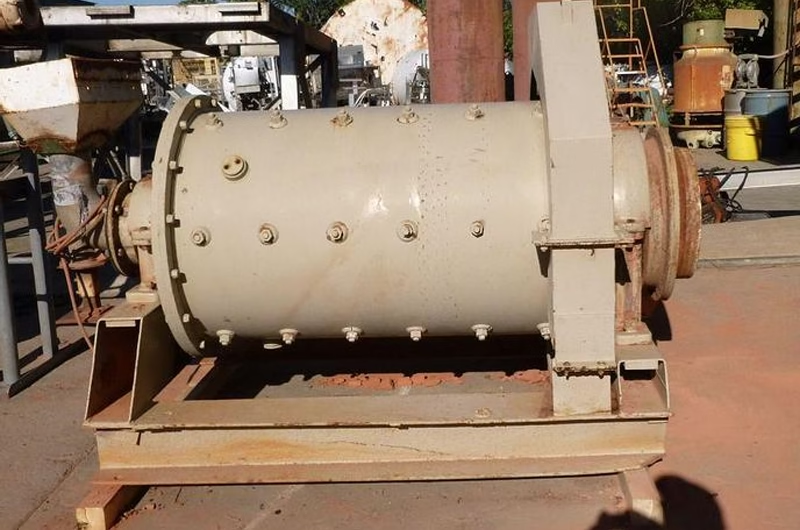
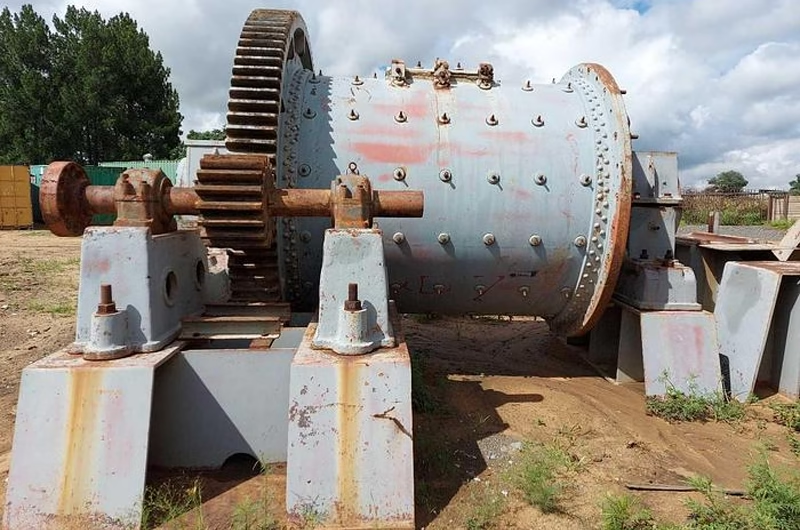
Purchasing a used ball mill primarily offers a lower ball mill cost upfront. This reduced initial outlay proves attractive for projects with tight budgets or those testing market viability. Availability can be another benefit. Used machines are often available for immediate purchase, which shortens lead times compared to new equipment. For established operations expanding on a budget, an older mill might suffice. It provides a quick capacity increase without a large investment. The price of used ball mill options offers a lower entry barrier.
A used ball mill carries several notable disadvantages. Unknown operational history poses a major risk. A lack of complete ball mill maintenance records makes assessing its true condition difficult. Components often show advanced wear. This leads to higher, unpredictable ball mill maintenance costs shortly after purchase. Sourcing spare parts for older models can also be challenging and expensive. Outdated technology typically means lower energy efficiency compared to a new ball mill. This results in higher operational costs over time. These used mining equipment risks quickly erode initial cost savings.
Investing in a new ball mill offers distinct advantages for long-term operations. These benefits often outweigh the higher initial cost of new ball mill. This makes it an attractive proposition for companies prioritizing efficiency, reliability, and sustained ball mill performance. However, new equipment does present its own set of challenges that need careful consideration.
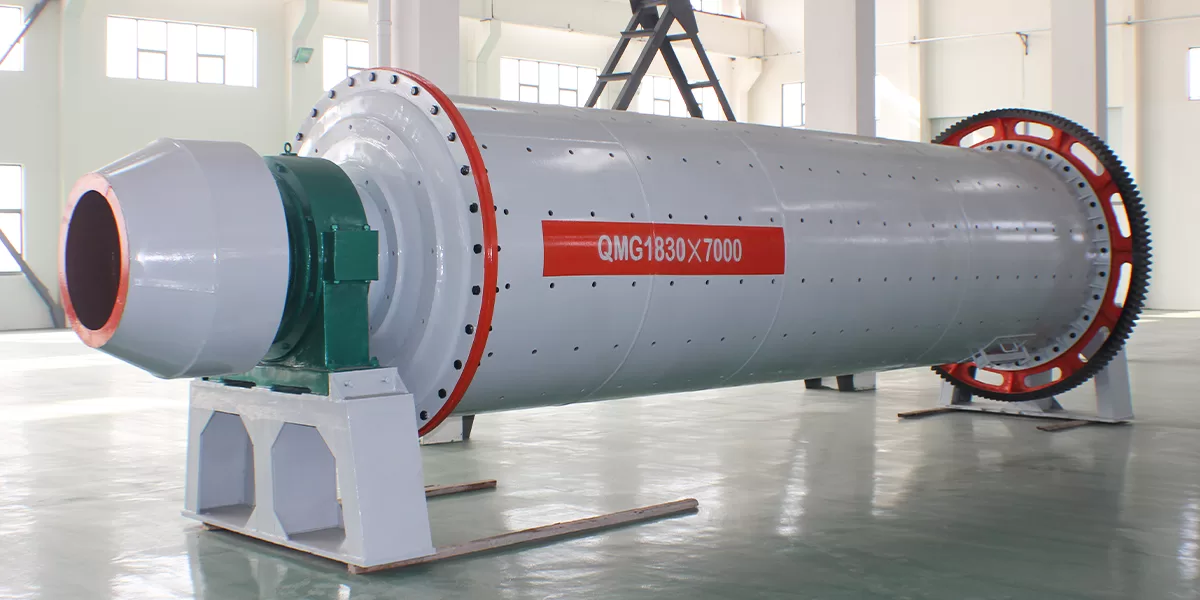
A new ball mill provides superior ball mill performance and high energy efficiency. Modern designs incorporate advanced technology. This optimizes grinding parameters. Manufacturers offer a full warranty. This protects your investment against manufacturing defects. This ensures peace of mind. Customization options allow for precise tailoring to specific material properties and production targets. This ensures optimal results from commissioning. These new mining equipment benefits translate into a higher ball mill ROI due to lower operational costs and consistent output. ZONEDING’s new ball mill solutions often lead the industry in efficiency.
The primary disadvantage of a new ball mill is its higher upfront cost of new ball mill. This requires a substantial initial investment compared to a used ball mill. Another factor is the longer lead time. Design, manufacturing, and delivery can take several months. This might not suit projects requiring immediate equipment deployment. Projects with tight budgets often face this financial hurdle. However, the comprehensive support and long-term benefits typically justify this larger initial capital expenditure.
The distinctions between a new ball mill and a second-hand ball mill extend beyond just price, significantly impacting ball mill investment decisions. Key areas of difference include technology, reliability, operational efficiency, and overall lifespan. Understanding these differences informs the ball mill selection guide. Each type presents varying levels of risk and return. This comparison provides a crucial segment of any comprehensive ball mill buying guide.
| Feature | New Ball Mill | Second-Hand Ball Mill |
|---|---|---|
| Initial Cost | Higher upfront ball mill cost | Significantly lower initial price of used ball mill |
| Technology & Efficiency | Incorporates latest technology, high energy efficiency, optimized performance | Older technology, potentially lower efficiency, higher energy consumption |
| Reliability & Maintenance | High reliability, predictable ball mill maintenance, manufacturer support | Potential for high, unpredictable ball mill maintenance costs due to wear |
| Lifespan | Full estimated operational life, typically 20-30+ years | Remaining lifespan uncertain, shorter operational period expected |
| Warranty & Support | Full manufacturer’s warranty, readily available spare parts, technical support | Little to no warranty, challenging spare parts sourcing for older models |
| Customization | Fully customizable to specific project requirements | Limited to no customization, “as-is” condition |
| Depreciation | Slower initial depreciation | Rapid initial depreciation already occurred |
This table highlights that while a second-hand ball mill offers immediate savings, a new ball mill provides long-term value, reliability, and modern efficiency. This is vital for any mineral processing equipment selection.
A well-informed ball mill investment requires careful consideration of several critical factors. Your ultimate choice impacts not only capital expenditure but also long-term profitability and operational reliability. This comprehensive approach guides you through the complex choices involved in mineral processing equipment selection. Companies must use a thorough ball mill buying guide to make the best decision.
Your available budget is often the most immediate constraint. A used ball mill offers a lower entry point, making it attractive for limited funds. However, a new ball mill demands a higher initial cost of new ball mill. Evaluate whether your budget can absorb the initial outlay for a new unit despite its long-term savings. The total cost of ownership ball mill analysis is essential here.
Assess required throughput, desired output particle size, and material characteristics. A new ball mill can be precisely designed for optimal ball mill performance specific to your ore. This ensures efficient grinding solution delivery. A used ball mill might struggle to meet modern, stringent requirements.
Consider the expected operational lifespan. A new ball mill guarantees a full, long service life with fewer unexpected breakdowns. A used ball mill carries an uncertain remaining lifespan. This increases the risk of higher ball mill maintenance and unplanned downtime. This impacts your ball mill ROI.
Ball mill maintenance costs form a significant part of operational costs. A new ball mill benefits from readily available parts and manufacturer support from ZONEDING. Older used mining equipment risks include difficult-to-source parts and higher repair complexities.
Modern new ball mill designs prioritize energy efficiency. This significantly reduces power consumption and operational costs. Older, second-hand ball mill units typically consume more energy per ton of material, leading to higher ongoing expenses and a larger environmental footprint.
New ball mill technology incorporates the latest advancements in controls and materials. This offers better grinding process optimization and adaptability. A used ball mill might mean investing in outdated technology that will quickly become obsolete. This necessitates a future ball mill upgrade.
ZONEDING MACHINE stands as a leading manufacturer in mineral processing equipment. The company specializes in providing robust and reliable grinding solutions. Its product range includes various types of ball mills, such as its efficient ball mill series, rod mills, and intermittent ball mills. Each is engineered for different material characteristics and throughput requirements. Direct manufacturer sales offer a significant price advantage to clients without compromising on quality or service.
ZONEDING provides a full-service approach. This includes initial consultation, customized design for any grinding solution, equipment manufacturing, installation, and comprehensive after-sales support. Its team offers expertise for integrating its ball mills into complete mineral processing plants. This ensures optimal performance and operational efficiency for any ball mill investment. Choosing ZONEDING means investing in quality and reliability for any mineral processing project. It helps maximize return on investment. This commitment ensures seamless project execution and continuous support.
The decision between a used ball mill and a new ball mill is a critical ball mill investment. It impacts long-term operational success. A used ball mill offers lower upfront costs but carries significant risks of higher ball mill maintenance and inefficiency. Conversely, a new ball mill demands a larger initial investment but delivers superior ball mill performance, energy efficiency, and reliability. This leads to a lower total cost of ownership ball mill over its lifespan.
For a strategic grinding solution and optimized grinding process optimization, investing in a new ball mill often provides greater long-term return and peace of mind. ZONEDING assists clients in making this pivotal selection. A comprehensive ball mill selection guide ensures any choice aligns perfectly with production goals and budget.
An expert comparison of 4 stone crushers: Jaw, Cone, Impact (HSI), and Hammer, including advantages,disadvantages ,cost, output shape, and suitable rock types.
View details
Dive deep into complete Gold Ore CIP (Carbon-in-Pulp) Process Flow including crushing, grinding, leaching, adsorption, elution, electrowinning, and smelting.
View details
Learning how to crush coal efficiently is vital for energy production. From primary breaking to fine pulverizing, we explain process and match right crushers.
View details
Explore detailed insights into limonite's extraction, beneficiation, and treatment methods.Learn its roles as an iron ore & pigment source in modern industries.
View details