As natural sand resources become increasingly scarce and regulated, the construction industry is turning to a reliable and high-quality alternative: manufactured sand from pebbles. River pebbles, with their abundance and ideal physical properties, represent a perfect raw material for producing premium construction sand. This guide provides a comprehensive roadmap for anyone looking to enter or optimize their pebble sand manufacturing operation. You will learn the entire process, from selecting the right raw material to choosing the essential equipment and calculating your return on investment.
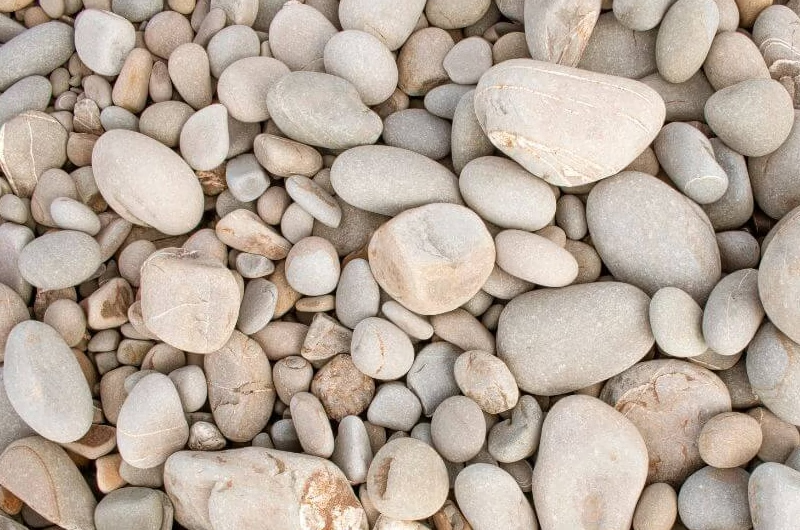
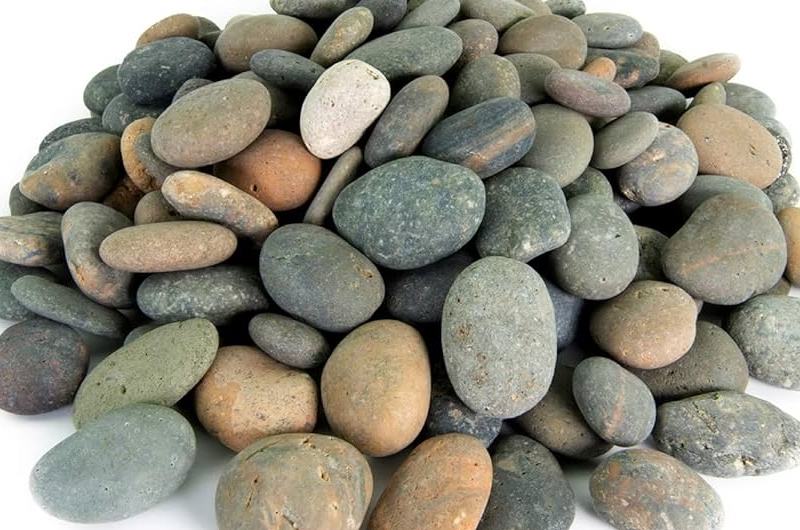
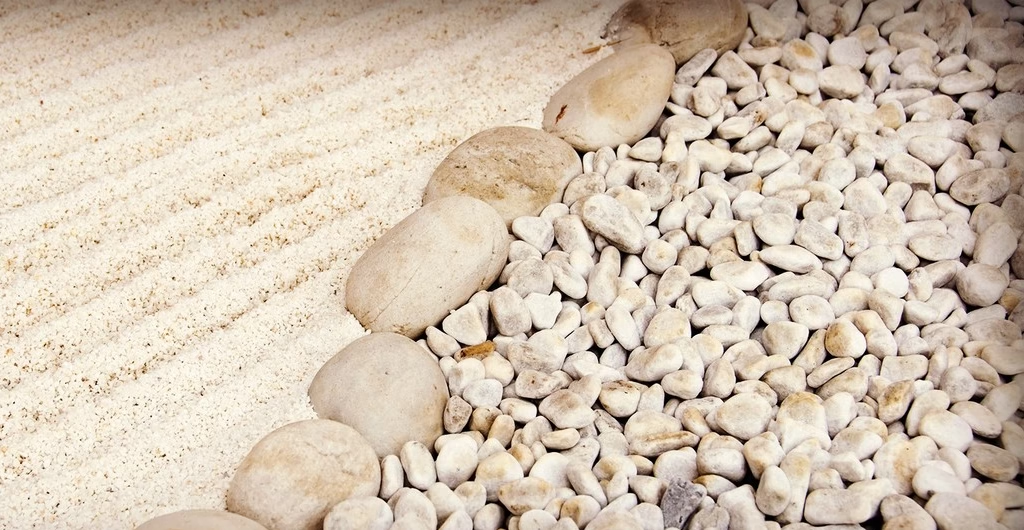
Pebbles are naturally occurring, smooth, rounded stones found in rivers, streams, and ancient seabeds. Geologically, they are rock fragments that have been worn down by the action of water over thousands of years. They typically range in size from 4 to 64 millimeters in diameter.
Their composition varies but often includes hard, durable minerals like silica (quartz), making them exceptionally resistant to wear and pressure. This inherent hardness is what makes them an excellent raw material for producing manufactured sand that can meet or even exceed the quality standards of natural river sand.
What are Applications of Pebbles?
Beyond their use in landscaping and decoration, processed pebbles—specifically the manufactured sand derived from them—are a critical component in the construction industry. The high quality of river pebble sand makes it suitable for a wide array of demanding applications.
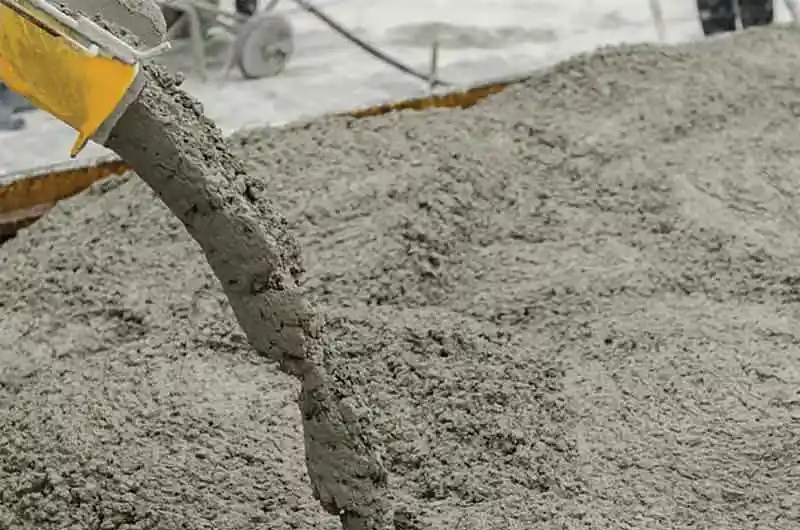
High-Strength Concrete: The cubical shape and consistent grading of manufactured sand create stronger, more durable concrete for high-rise buildings, bridges, and dams.
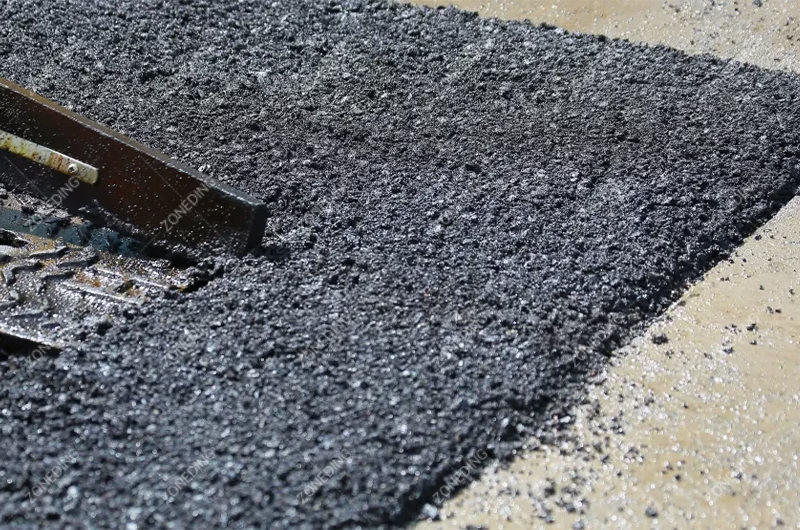
Asphalt Mixtures: It serves as a fine aggregate in asphalt, improving the stability and longevity of road surfaces.
Dry-Mix Mortar: Its consistent quality makes it ideal for producing pre-mixed mortars, plasters, and tile adhesives.
Glass Manufacturing: High-purity silica sand derived from quartz pebbles is a primary raw material for making glass.
Which Pebbles Are Ideal for Producing High-Quality Manufactured Sand?
Not all pebbles are equal when it comes to making sand from pebbles. Selecting the right raw material is the first and most critical step toward producing a premium product. The ideal pebbles possess specific geological and physical characteristics.
The primary factor is hardness, followed by low impurity content. Harder pebbles, like those rich in quartz, break down into strong, angular sand particles. Soft or flaky materials like shale will produce weak, elongated particles that are unsuitable for quality concrete. ZONEDING’s technical teams can help you analyze your local pebble resources to determine their suitability for a pebble sand production line.
Characteristic
Ideal Specification
Why It’s Important for Your Sand Quality
Hardness (Mohs Scale)
7 or higher (e.g., Quartz, Granite)
Produces durable, angular sand particles that create strong concrete.
Silica (SiO₂) Content
Above 90%
High silica content indicates hardness and resistance to chemical attack.
Crushing Value Index
Less than 20%
A low crushing value means the resulting sand is strong and won’t break down under load.
Impurity Content
Low in clay, silt, and organic matter
Impurities weaken the bond in concrete and increase water demand.
What is the Complete Step-by-Step Process for Turning Pebbles into Sand?
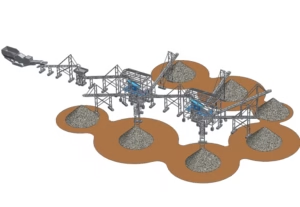
Transforming hard, rounded pebbles into uniformly graded, cubical sand is a multi-stage process that requires a sequence of precisely engineered machines. A typical pebble sand production line follows a logical flow of crushing, shaping, screening, and cleaning.
Feeding: Raw pebbles (typically under 200mm) goes into a hopper and fed uniformly into the primary crusher by a vibrating feeder. This ensures a steady flow and prevents blockages.
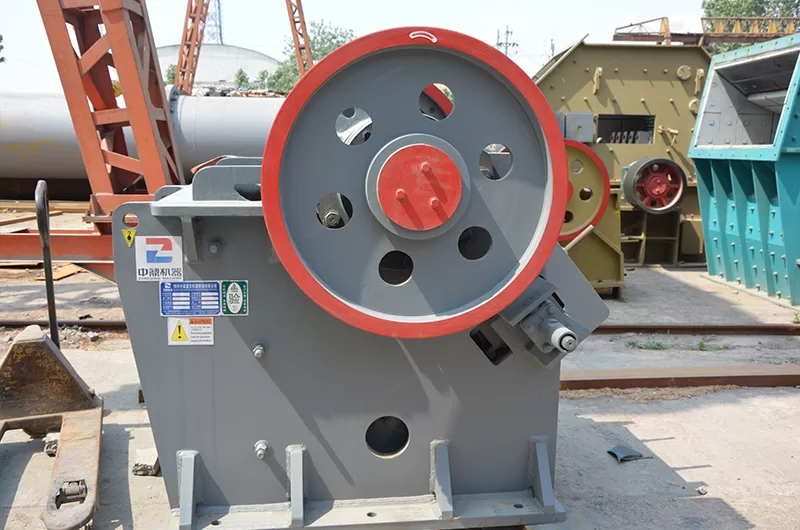
Primary Crushing: A Jaw Crusher performs the initial size reduction. It crushes the large pebbles into smaller pieces, usually around 50-80mm, preparing them for the next stage.
Secondary (Fine) Crushing: The output from the jaw crusher will go to a Cone Crusher. This machine further reduces the pebble size to less than 40mm. The cone crusher is crucial for handling the high hardness of pebbles efficiently.
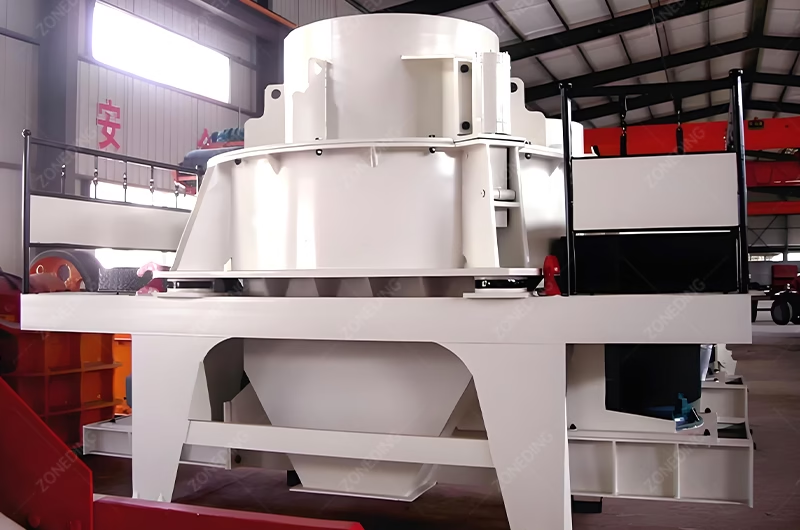
Sand Making (Shaping): This is the most critical stage. The finely crushed pebbles are fed into a VSI Sand Maker (Vertical Shaft Impactor). The VSI uses a high-speed rotor to accelerate the stones and hurl them against an anvil or other stones. This “rock-on-rock” impact action shapes the particles into a desirable cubical form, which is ideal for construction applications.
Screening and Recirculation: The material from the VSI sand maker is going to a Vibrating Screen. The screen separates the mixture into different sizes. Qualified sand (e.g., 0-5mm) is going to the next step. Oversized particles are back to the VSI sand maker for further processing. This creates a closed-loop system that ensures all material is to the final product size.
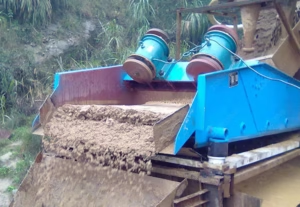
Sand Washing (Optional but Recommended): The finished sand is fed into a Sand Washing Machine to remove excess fine dust, silt, and impurities. This final step significantly improves the cleanliness and quality of the sand, making it suitable for high-spec concrete.
What Core Equipment is Essential for a High-Efficiency Pebble Sand Production Line?
Your choice of equipment directly determines the efficiency, output quality, and profitability of your pebble sand manufacturing operation. A well-designed plant integrates several key machines, with the sand maker at its heart.
Vibrating Feeder: Ensures a continuous and controlled feed rate from the hopper to the primary crusher.
Jaw Crusher: The workhorse for primary crushing, reliably breaking down large, hard pebbles.
Cone Crusher: Essential for secondary crushing. Its high compressive force is ideal for tackling abrasive river pebbles.
VSI Sand Maker: The core of the operation. The VSI sand maker is the “pebble to sand converter machine” that shapes the crushed stone into high-quality, cubical manufactured sand.
Vibrating Screen: Accurately classifies the sand into the required sizes and separates oversized material for reprocessing.
Sand Washing Machine: Cleans the final product by removing fine powder and impurities, guaranteeing premium quality.
Conveyor Belts: Connect all the machines, creating a seamless and automated production flow.
What are the Advantages of ZONEDING Equipment for Pebbles Sand Making?
When investing in a pebble crushing plant, partnering with an experienced manufacturer like ZONEDING offers significant advantages. ZONEDING’s equipment is specifically engineered to handle the challenges of processing hard and abrasive materials like river pebbles.
Optimized for Hard Rock: ZONEDING’s Cone Crushers and VSI Sand Makers are designed with high-chromium wear parts and robust construction, providing longer service life and lower operating costs when processing abrasive pebbles.
Superior Sand Quality: Our VSI Sand Maker utilizes advanced “rock-on-rock” and “rock-on-iron” crushing principles. This technology produces sand with an excellent cubical shape and a consistent particle size distribution, meeting the strictest standards for construction sand quality.
Customized Solutions: We don’t offer a one-size-fits-all solution. Our team of 15 engineers designs each pebble sand production line based on your specific raw material, capacity requirements, and site conditions. This ensures maximum efficiency and profitability.
Full-Service Support: ZONEDING provides a complete service package, from initial site planning and flowsheet design to equipment installation, commissioning, and operator training. Our global export experience to over 120 countries guarantees professional project execution.
Competitive Pricing: As a factory-direct manufacturer, ZONEDING eliminates middlemen, offering a competitive sand making machine price without compromising on quality or performance.
What Are the Most Common Challenges in Pebble Sand Making and How to Solve Them?
While profitable, making sand from pebbles presents unique challenges, primarily due to the material’s hardness and abrasiveness. Awareness and proper planning can overcome these hurdles.
High Wear on Equipment:
Challenge: Pebbles, especially those with high quartz content, are highly abrasive and cause rapid wear on crusher liners, hammers, and impellers.
Solution: Invest in equipment built with high-manganese steel and chromium alloy wear parts. ZONEDING’s VSI Sand Makers are designed with easily replaceable, wear-resistant components to minimize downtime and maintenance costs.
Excessive Fine Powder Generation:
Challenge: Improper crushing can generate too much fine dust (particles below 75 microns), which can negatively impact concrete quality and represent a loss of yield.
Solution: Use a VSI Sand Maker in a closed-circuit system with a vibrating screen. This allows for precise control over the final product size. Adding a sand washing machine can effectively remove excess dust, creating a cleaner, higher-value product.
Inconsistent Product Shape:
Challenge: Using the wrong type of crusher can produce flaky or elongated particles, which are undesirable for concrete applications.
Solution: The a VSI as the final sand-making stage is non-negotiable. Its high-speed impact crushing method is specifically designed to produce the cubical shape required for high-performance aggregates.
What Key Factors Determine the Total Cost of Setting Up a Pebble Sand Plant?
Understanding the complete financial picture is crucial before you start a sand manufacturing business. The cost of a manufactured sand plant is influenced by several interconnected factors.
Production Capacity: The desired output in tons per hour (TPH) is the single biggest cost driver. A 50 TPH plant will have a significantly lower initial investment than a 300 TPH plant.
Equipment Configuration: The selection of specific models of crushers, screens, and washers will impact the price. Higher-end models may cost more upfront but offer lower operating costs and better performance.
Site Development: This includes land acquisition, foundation construction for the equipment, electrical infrastructure, and water supply for sand washing.
Automation Level: A fully automated plant with a central control system will have a higher initial cost but requires less labor and can be operated more efficiently.
Environmental Compliance: Costs associated with dust suppression systems, water recycling facilities, and obtaining necessary permits must be factored into the budget.
FAQ: Making Sand from Pebbles
Question 1: Can all types of pebbles be used to make sand?
Not ideally. The best pebbles are hard (Mohs hardness >7), like quartz and granite, and have low impurity content. Softer pebbles like limestone can be used but may produce lower-strength sand.
Question 2: What is the most important machine in a pebble sand production line?
The VSI Sand Maker (Vertical Shaft Impactor) is the most critical machine. It is responsible for shaping the crushed particles into the desirable cubical form, which is essential for producing high-quality manufactured sand.
Question 3: How is the quality of manufactured sand from pebbles compared to natural sand?
When produced correctly with the right equipment, manufactured sand from pebbles is often superior to natural sand. It has a better shape (more cubical), a more consistent particle size distribution, and is free from organic impurities.
Question 4: What is the typical output size of sand from a VSI sand maker?
The output can be precisely controlled by adjusting the machine’s speed and the size of the screen mesh. The most common product sizes are 0-5mm for concrete sand and other specific gradations as required.
Question 5: How much does it cost to start a 100 TPH pebble sand production line?
The cost of a manufactured sand plant varies widely based on equipment configuration, location, and the level of automation. A rough estimate can range from $200,000 to over $800,000 USD. For a precise quotation, you should consult with an equipment manufacturer like ZONEDING to get a custom-designed solution.
Know how mining tailings as a source for minerals, rare earths, and other valuable metals. Understand the economics and technologies to process tailings.
Explore efficient stone crusher plant layouts. Learn how we configure feeder, jaw crusher, impact crusher, and vibrating screen for maximum aggregate output.
Follow limestone journey from raw material to finished product! This blog provides a detailed breakdown of each processing stage, from crushing to screening.
This guide tells 5 critical factors for selecting right dewatering screen. Learn to evaluate feed tonnage, particle size, desired moisture content, and more.
 Zoneding Mining