 Zoneding Mining

Site Search
Search products, equipment and solution articles
整站搜索产品中心新闻中心
点击开始搜索
热门搜索
UltraForm-MXFlexiPoly-RNanoForm Z300EcoFab P200
Search products, equipment and solution articles
When most people hear the word “gold,” they visualize a wedding ring or a stack of bullion bars in a bank vault. While these images are accurate, they represent only a fraction of the story. Gold is not merely a symbol of wealth; it is one of the most chemically unique and functional elements on the Periodic Table. It is highly conductive, incredibly dense, incredibly malleable, and virtually indestructible. It does not rust, tarnish, or corrode.
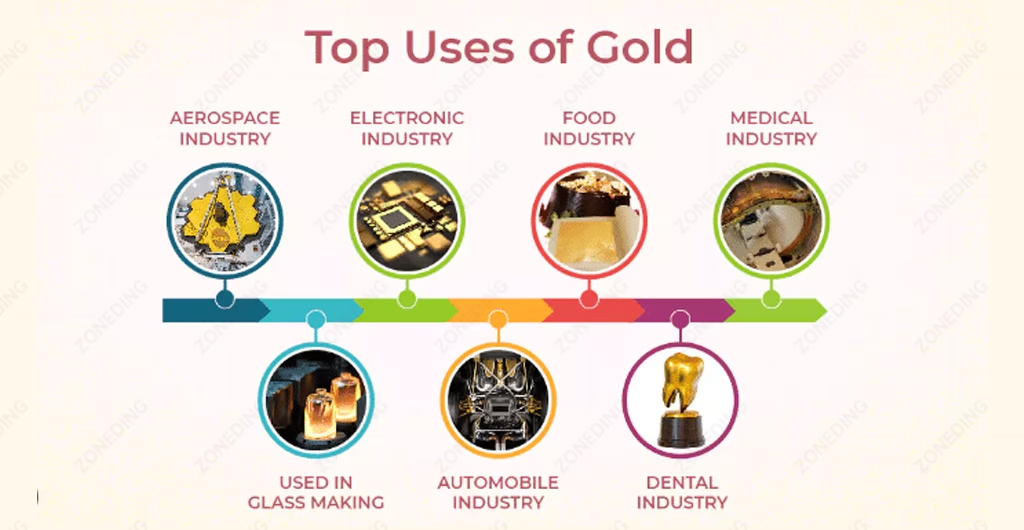
These physical properties make gold indispensable in sectors far removed from fashion and finance. From the smartphone in a user’s pocket to the visor of an astronaut’s helmet, gold performs critical functions that no other metal can replace. As the global demand for high-tech electronics and medical devices grows, the industrial reliance on gold supply deepens. This article explores the top seven applications of this precious metal, revealing why mining it remains a cornerstone of the global economy.
Last Updated: January 2026 | Estimated Reading Time: 16 Minutes
By a significant margin, the primary global use of gold is still the manufacturing of jewelry. Approximately 50% of all gold mined today—and recycled from the past—ends up as rings, necklaces, bracelets, and earrings.
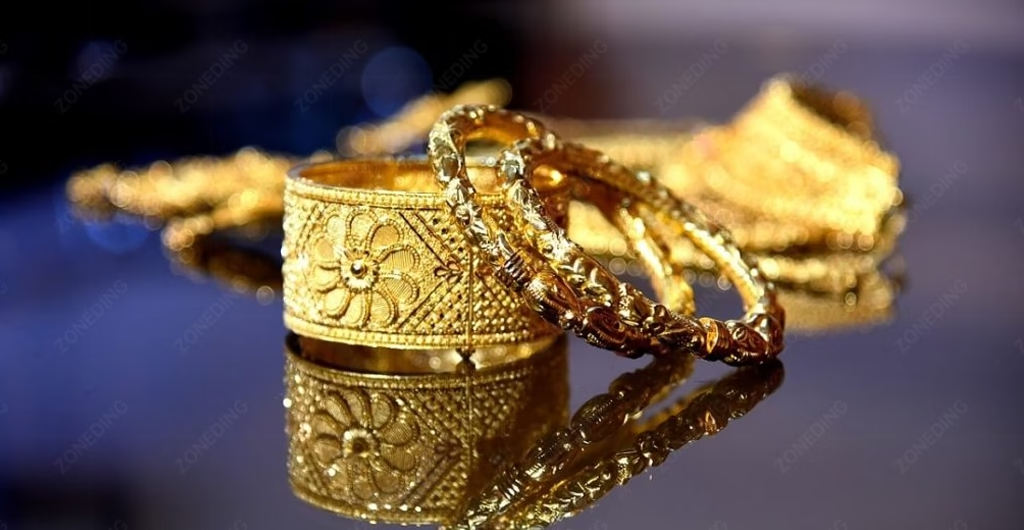
Why is gold the standard for adornment? The answer lies in its chemical stability. Unlike copper, which turns green, or silver, which tarnishes black, gold remains lustrous forever. A gold ring found in a 2,000-year-old shipwreck looks as brilliant today as the day it was forged. This permanence makes it the ultimate symbol for eternal commitments, such as marriage.
Pure gold (24 karat) is often too soft for daily wear. It scratches and bends easily. To solve this, jewelers mix gold with other metals to create alloys. This increases strength and alters color.
If jewelry is the most visible use of gold, electronics is the most vital for modern civilization. Roughly 10-15% of the world’s gold supply is consumed by the industrial sector, dominated by electronics manufacturing.
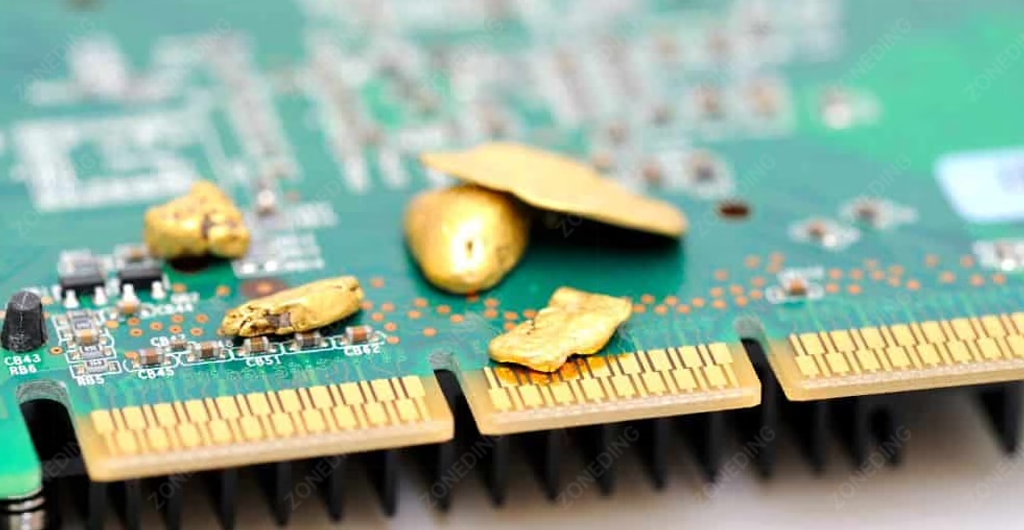
A common misconception is that gold is the best conductor of electricity. It is not; silver and copper are actually better conductors. However, silver tarnishes and copper corrodes when exposed to air. This corrosion creates a layer of insulation that blocks electrical signals.
Gold is used because it never corrodes. In sophisticated devices like computers, smartphones, and GPS units, reliability is paramount. A tiny spot of rust on a connection point could cause a server to fail or an airbag sensor to malfunction. Therefore, manufacturers use a thin layer of gold plating on:
Because every smartphone contains approximately 0.034 grams of gold, old electronics represent a massive “urban mine.” Recycling e-waste is now a major source of gold supply, though it requires specialized crushing and chemical separation equipment similar to that used in primary mining.
Gold is unique among commodities because it is treated as a currency. Approximately 20-30% of the world’s gold is locked away in vaults, serving as a hedge against economic instability.
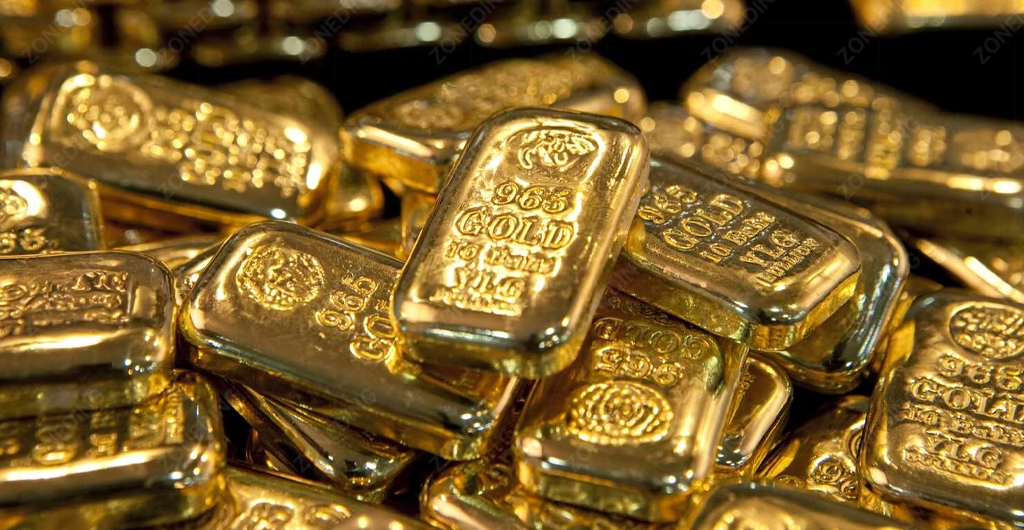
Nations hold gold to back the value of their currency and provide security during geopolitical crises. The United States holds the largest stockpile (over 8,000 tonnes), followed by Germany, Italy, and increasingly, China and Russia. For these institutions, gold is a form of money that requires no counterparty trust.
Individuals and funds invest in gold through:
This sector drives the price of gold. When inflation rises or stock markets crash, investors flock to gold, driving up the incentive for mining companies to explore for new deposits.
Gold has a long history in medicine, dating back to ancient civilizations that used it to bind loose teeth. Today, its role is both structural and therapeutic.
| Application | Property Used | Key Benefit |
|---|---|---|
| Dentistry | Chemical Inertness | Non-toxic, does not corrode in mouth. |
| Implants | Biocompatibility | Body does not reject the material. |
| Rapid Tests | Optical Properties | Clear visual indicator for diagnosis. |
| Cancer Therapy | Thermal Conductivity | Targeted cell destruction via heat. |
The mouth is a harsh environment. It is wet, chemically active, and subject to immense bite forces. Gold alloys are chemically inert, meaning they do not react with saliva or body tissue. They are also non-allergenic.
In modern medicine, gold has moved beyond structure to treatment.
In the vacuum of space, reliability is the only thing that matters. Maintenance is impossible, and conditions are extreme. Gold plays a vital role in keeping astronauts and satellites safe.
Gold is an excellent reflector of infrared radiation (heat).
In space, traditional oil lubricants evaporate or freeze. Gold acts as a dry lubricant. Gold molecules can shear (slide) past one another easily. Aerospace engineers coat mechanical moving parts in a thin film of gold to prevent cold welding and ensure movement in the vacuum of space.
The use of gold in glass is not just for decoration; it is often for advanced engineering in architecture and automotive design.
Modern skyscrapers and luxury vehicles use glass coated with an incredibly thin layer of gold.
Because the layer is so thin, the glass remains transparent, often with a slight tint.
On the decorative side, adding a tiny amount of gold chloride to molten glass turns it a rich, ruby red color. This technique has been used for centuries to create expensive “Cranberry Glass” vases and tableware.
Gold is the universal symbol of first place. Its rarity and beauty make it the material of choice for honoring human achievement.
Gold is the most malleable of all metals. A single ounce of gold can be hammered into a sheet covering 100 square feet. This allows artists to cover large objects—like the domes of cathedrals or the frames of paintings—with “gold leaf.” It gives the appearance of solid gold using a tiny amount of metal.
Despite often being plated, these items represent the pinnacle of success in sports and arts, driving a consistent, albeit smaller, demand for gold plating services.
With these seven sectors consuming thousands of tonnes of gold annually, where does the supply come from? It comes from the earth, processed through reliable beneficiation chains.The journey of gold from rock to ring (or microchip) relies on maximizing recovery rates. As high-grade deposits become rarer, mining companies rely on manufacturers like ZONEDING to extract gold from low-grade ore.
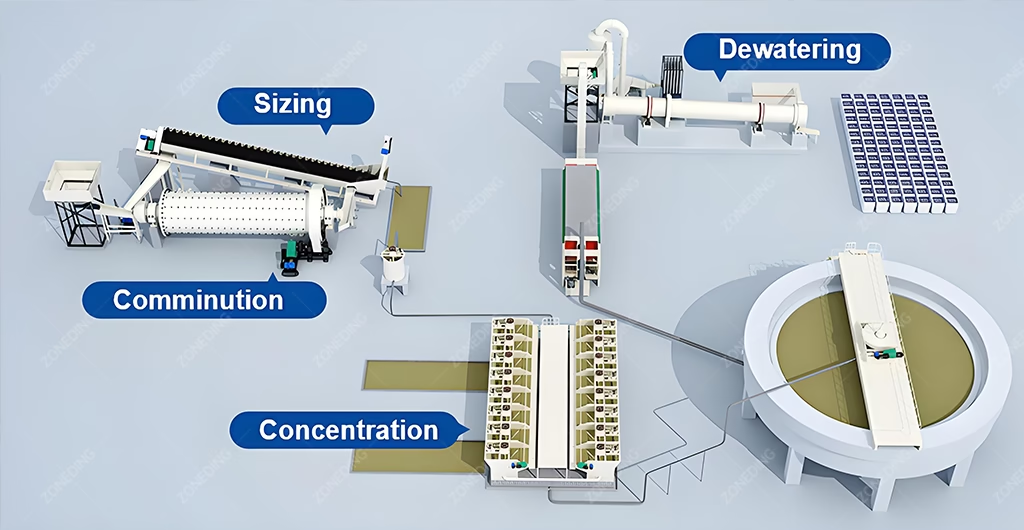
Without advanced mineral processing machinery, the $200 billion electronics industry and the global banking system would face a catastrophic supply shortage.
Gold is far more than a shiny yellow metal used to display wealth. It is a functional industrial material that safeguards our data, protects our astronauts, cures our diseases, and stabilizes our economies.
From the Ball Mill that grinds the ore to the intricate connector in a supercomputer, gold connects the physical world of mining with the digital world of technology. As new technologies emerge—specifically in nanotechnology and green energy—the uses for gold will only expand, reinforcing the critical need for efficient mining and processing solutions.
Last Updated: January 2025
Learn steps, permits, machine, cost and market analysis needed to launch a quarry business. Get advice for new starters and successful project initiation.
View details
This resource covers calculation methodologies, influencing factors, and advanced strategies for perfect grinding media loading and improved mill performance.
View details
Learn steps involved in making asphalt concrete, from selecting raw materials to the precise mixing process. Your comprehensive guide to asphalt production.
View details
From jaw crushers to impactors, discover the 7 essential rock crusher types you need to know for crushing operations. Learn when and where to use each one.
View details