 Zoneding Mining

Site Search
Search products, equipment and solution articles
整站搜索产品中心新闻中心
点击开始搜索
热门搜索
UltraForm-MXFlexiPoly-RNanoForm Z300EcoFab P200
Search products, equipment and solution articles
Aluminum truly shapes our modern world. From the soda can in your hand to the aircraft soaring overhead, this lightweight metal plays an essential role. You see it everywhere, yet you might not fully appreciate its extensive reach. As industries evolve in 2025, aluminum’s unique properties make it indispensable. This guide explores aluminum’s vital contributions. It covers both common consumer goods and critical industrial applications. At ZONEDING, we manufacture the mineral processing equipment that helps extract and refine the raw materials for this incredibly versatile metal. We help bring aluminum from the earth to every corner of your life.
Aluminum’s unique combination of properties makes it a cornerstone material for modern industries. Its exceptional characteristics drive innovation. They allow manufacturers to create advanced products. Without aluminum, many technologies you rely on today simply would not exist.
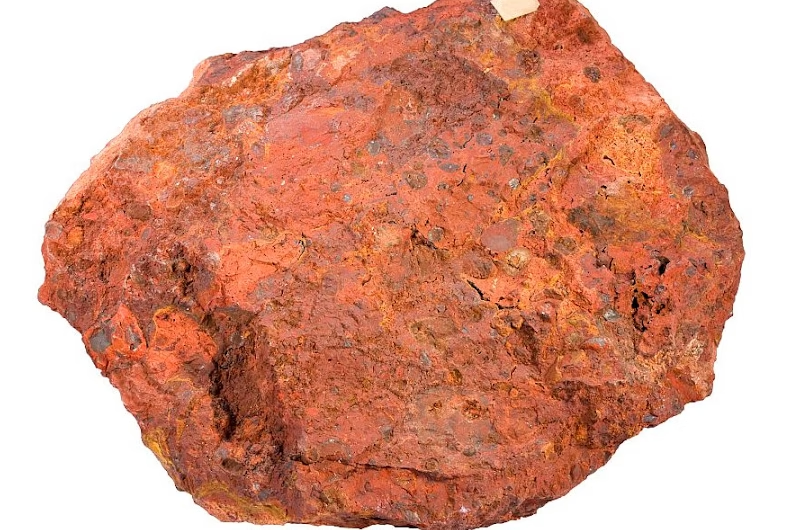
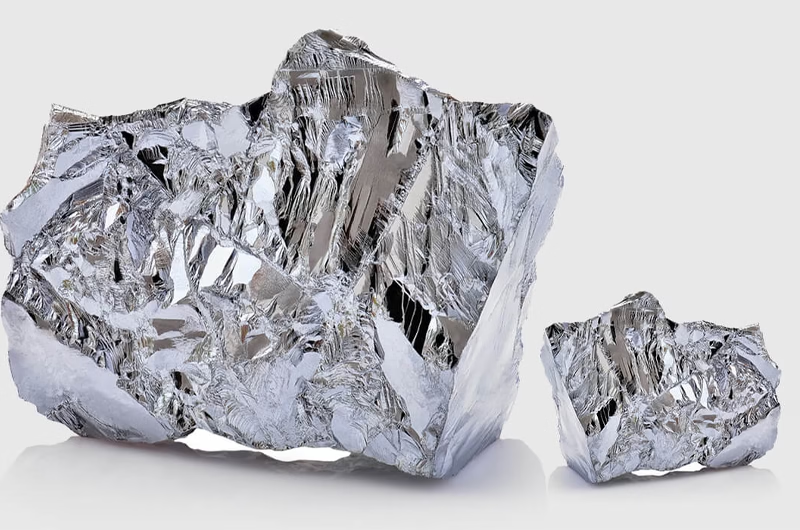
Manufacturers choose aluminum for its critical role in reducing weight and increasing efficiency across demanding sectors. ZONEDING’s crushing equipment efficiently processes bauxite, the primary aluminum ore. It prepares the ore for refinement. This initial step proves crucial for unlocking aluminum’s potential. Aluminum helps industries develop advanced solutions for a changing world.
Aluminum boasts a unique set of properties. These properties give it exceptional versatility. They allow it to outperform many other materials in various demanding applications. Understanding these specific properties helps you appreciate why aluminum is so widely adopted.
Aluminum combines lightweight strength, superior corrosion resistance, high conductivity, and infinite recyclability. These traits make it an engineering marvel. ZONEDING’s grinding equipment helps reduce bauxite ore to a fine powder. This critical step ensures the purity of the aluminum. It allows these valuable properties to fully manifest. Without precise initial processing, the full potential of aluminum’s inherent properties could not be realized. Our machines facilitate this foundational work.
You often need strong materials that do not add excessive weight. Aluminum excels here. It has a density roughly one-third that of steel. Yet, certain aluminum alloys achieve strength comparable to steel. This remarkable strength-to-weight ratio is crucial. It directly impacts performance and efficiency. For example, it reduces fuel consumption in vehicles and aircraft. This property is why you find aluminum in high-performance applications.
Unlike many metals, aluminum resists corrosion exceptionally well. When exposed to air, it naturally forms a thin, dense oxide layer. This layer acts as a protective barrier. It prevents further oxidation and chemical attack. This means you do not need extensive coatings for protection. This makes aluminum ideal for outdoor applications and marine environments.
Aluminum conducts both electricity and heat very efficiently. It is second only to copper in electrical conductivity by volume. This makes it an excellent choice for electrical wiring and power transmission lines. Its thermal conductivity means it dissipates heat quickly. You find it in heat exchangers, computer components, and engine parts for this reason.
You can recycle aluminum endlessly. It retains its physical properties without degradation. This makes aluminum an incredibly sustainable material. Recycling aluminum uses only about 5% of the energy needed for new production. This significantly reduces carbon emissions and energy consumption. This benefit drives its use in packaging and automotive parts.
Aluminum is non-magnetic. This property is vital in sensitive electronic equipment. It prevents interference. It is also non-toxic. This makes it safe for use in food and beverage packaging and medical devices. These varied traits highlight aluminum’s fundamental importance in modern design.
Aluminum sits at the heart of the aerospace and automotive industries today. Its lightweight nature is a game-changer. It allows for more efficient, faster, and environmentally friendly transportation. Manufacturers constantly seek ways to integrate more aluminum.


Industries rely on aluminum for aerospace frames and automotive components. It cuts vehicle weight by 10-15% while maintaining structural integrity. ZONEDING supplies grinding equipment that prepares bauxite. This ensures high-quality raw materials for aluminum producers. Modern aircraft, including large passenger jets, consist of over 80% aluminum by weight. This dramatically reduces fuel consumption and increases payload capacity. In the automotive sector, aluminum finds extensive use in engine blocks, chassis, wheels, and body structures. Its ability to absorb crash energy effectively also boosts vehicle safety. As ZONEDING, we support the foundational processing. We ensure a reliable supply chain for these demanding applications.
In construction and architecture, aluminum offers architects and builders unparalleled design flexibility, durability, and a clean aesthetic. From skyscrapers to functional residential components, aluminum creates structures that are both modern and sustainable.

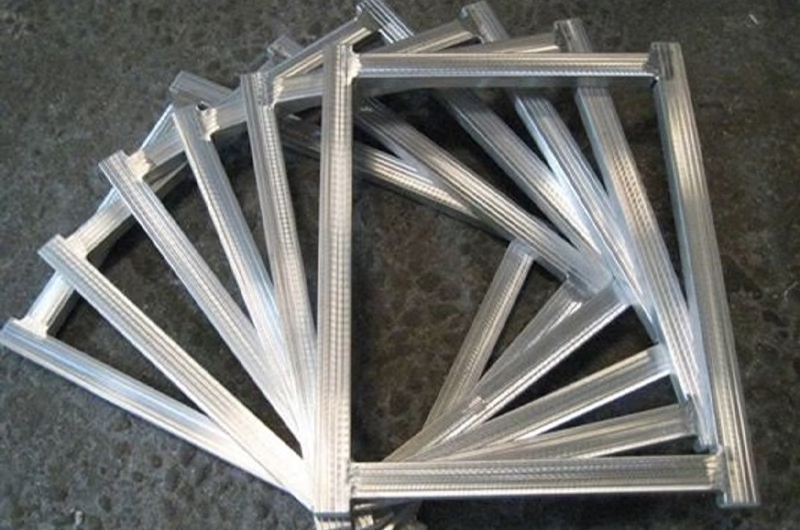
Architects choose aluminum for curtain walls, roofs, and window frames. It provides durability, weather resistance, and helps buildings last longer. ZONEDING’s complete production line solutions play a part much earlier. They process the raw bauxite ore to produce the aluminum used in these applications. Aluminum’s strength allows for slender, elegant profiles. This results in larger glass areas and more natural light. Its corrosion resistance means you need minimal maintenance. This significantly reduces long-term operational costs for buildings. Moreover, its light weight simplifies transportation and installation. Architects increasingly specify aluminum for its aesthetic appeal. They value its ability to form complex shapes and its wide range of finishes. All these factors contribute to its growing popularity in urban development.
Beyond its industrial might, aluminum seamlessly integrates into your daily life. You interact with aluminum constantly, often without even noticing. You find it in countless consumer products and most food and beverage packaging.
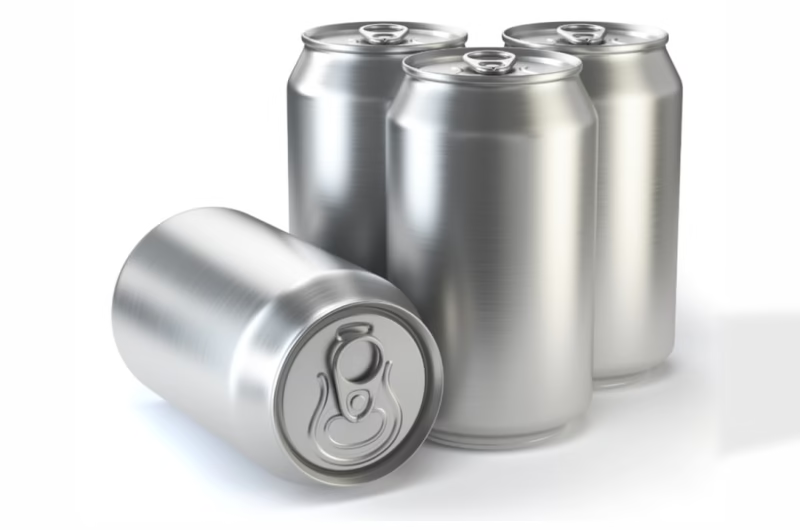
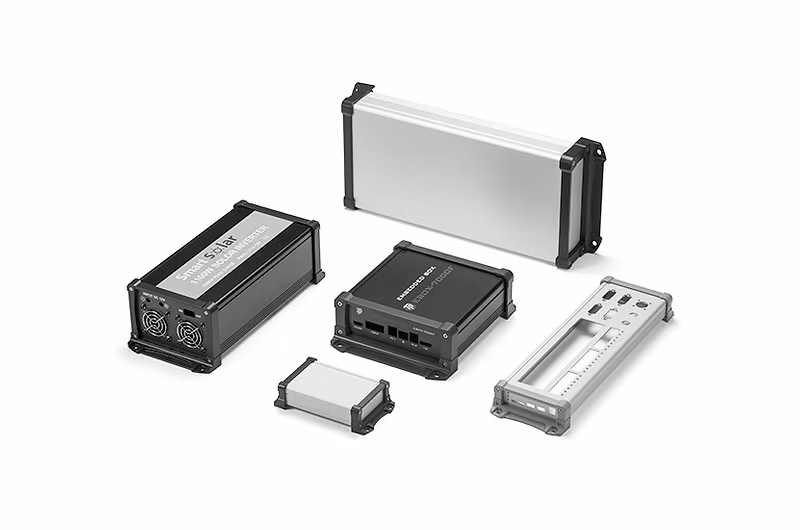
Aluminum foil, beverage cans, and food containers dominate the packaging sector. They provide excellent barrier protection and extend product shelf life. This makes them highly preferred choices. ZONEDING’s drying equipment plays a role in processing bauxite ore for aluminum production. This ensures manufacturers receive high-quality raw materials. Your morning coffee might come in an aluminum pod. Your favorite drink probably comes in an aluminum can. This is not just random; aluminum offers unmatched barrier properties. It protects contents from light, moisture, and oxygen. This preserves freshness without refrigeration. Its light weight also reduces transportation costs for packaged goods. These benefits make it an optimal choice for you and for manufacturers.
Before aluminum becomes a car part or a soda can, it undergoes a complex mineral processing journey. This journey starts with bauxite ore. The efficiency of these initial steps directly impacts the final aluminum product’s cost and quality.
We begin with bauxite, the primary aluminum ore. We crush it and then refine it into alumina. This is a critical step before smelting. ZONEDING’s mining equipment plays a crucial role at the very beginning of this process. Our jaw crushers break down large bauxite rocks into smaller, manageable sizes. Then, our grinding mills further reduce the bauxite to a fine powder. This prepares it for the Bayer process. This process extracts alumina (aluminum oxide) from the bauxite. Our rotary dryers often dry the bauxite prior to further refinement. Efficient bauxite processing directly impacts the overall cost and environmental footprint of aluminum production.
Recycling aluminum represents a triumph of industrial sustainability. It not only conserves natural resources but also dramatically cuts down on energy consumption and environmental impact. For industries, it offers both economic and ecological advantages.
Recycling aluminum uses only about 5% of the energy required to produce primary aluminum. This saves vast amounts of electricity and reduces greenhouse gas emissions by 95%. ZONEDING’s mobile crushing stations play a vital role in processing aluminum scrap and solid waste. They efficiently break down discarded aluminum into manageable sizes. This prepares it for re-melting and repurposing. You can recycle aluminum indefinitely. It retains its quality and properties cycle after cycle. This makes it an ideal material for a circular economy. Industries, from automotive to packaging, rely heavily on recycled aluminum. It reduces their raw material costs and fosters their sustainability credentials. We empower efficient scrap processing, enabling this crucial cycle.
At ZONEDING, we understand the specific processing demands of aluminum. We design and deliver robust mineral processing equipment that meets your exact requirements. We help you maximize efficiency and profitability in every stage.
ZONEDING provides key equipment for processing bauxite ore and recycling aluminum scrap. This includes crushers, grinding mills, and material handling systems. Our solutions ensure high recovery and operational efficiency. We offer a comprehensive suite of products. You can find jaw crushers for primary size reduction, cone crushers for secondary refining, and ball mills for fine grinding. We also provide rotary dryers and kilns for various thermal processes. Our mobile crushing plants prove invaluable for flexible, on-site processing of bauxite or aluminum waste. We customize each solution for your specific ore characteristics, desired output, and operational environment.
When you consider improving your mineral processing operations for aluminum or bauxite, your choice of supplier matters immensely. It determines the efficiency, reliability, and ultimate profitability of your entire operation. Here are the crucial factors you should consider to make an informed decision.
The aluminum industry constantly evolves. It addresses demands for sustainability, efficiency, and advanced material properties. Understanding these trends helps you stay competitive in 2025.
Aluminum’s role in modern life will only continue to expand. Its unique blend of lightweight strength, corrosion resistance, and infinite recyclability makes it indispensable. From the smallest consumer items to the largest industrial structures, aluminum drives efficiency, sustainability, and innovation. We recognize that efficient mineral processing at the raw material stage is paramount. This ensures a consistent, high-quality supply of this vital metal.
Partnering with an experienced mineral processing equipment manufacturer like ZONEDING provides you with more than just machines. You gain a comprehensive solution. This solution considers every aspect of your bauxite extraction or aluminum recycling needs. Our expertise helps you navigate the complexities, implement the latest technologies, and ultimately achieve higher efficiency for enduring success.
Explore 7 key distinctions between cone crushers and hammer crushers: work principles, material suitability, product shape, applications, wear parts, and price.
View details
Discover how to process zeolite. Learn about cleaning, crushing, and the activation methods that make zeolite work for filtration and adsorption.
View details
A comprehensive mobile crushing guide for buyers. Compare factors like material hardness, capacity, and mobility (track vs. wheel) to maximize your mining ROI.
View details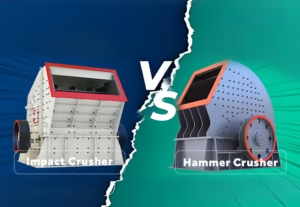
Dive into the ultimate comparison of impact and hammer crushers. Understand key differences in design, operation, andscenarios for maximum crushing efficiency.
View details