 Zoneding Mining

Site Search
Search products, equipment and solution articles
整站搜索产品中心新闻中心
点击开始搜索
热门搜索
UltraForm-MXFlexiPoly-RNanoForm Z300EcoFab P200
Search products, equipment and solution articles
You want smooth material flow in your aggregate plant. A vibrating feeder solves this problem entirely. This guide explains how this feeding machine works perfectly. We answer your most urgent questions about heavy ore feeding. You will learn how to stop crusher blockages today. We show you the exact mechanics of vibratory feeding. You can use this information to boost your production immediately. We provide real data for your mineral processing line.
Last Updated: April 2026 | Estimated Reading Time: 25 Minutes
A vibrating feeder is a heavy steel machine that moves rocks slowly and evenly. Dump trucks drop huge blocks of raw ore into a metal hopper. The feeder sits directly under this open hopper. It catches the heavy falling rocks. The machine shakes rapidly to move the rocks forward. It sends these massive rocks into the primary jaw crusher. You cannot put rocks directly from a truck into a crusher safely. The crusher will choke and stop completely. The feeder acts like a smart traffic controller for your rocks.
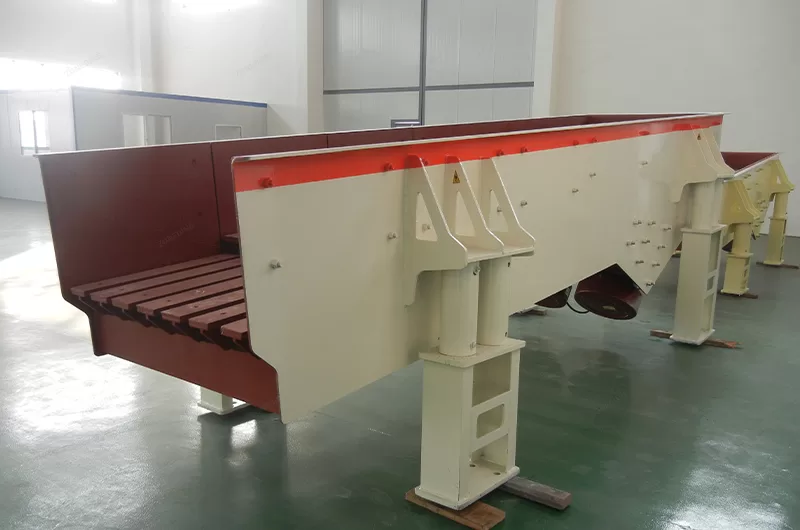
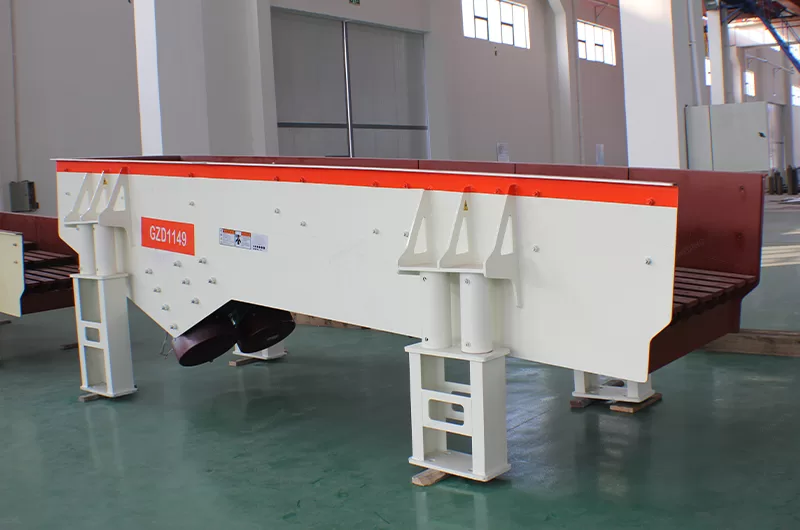
You need constant production in your mining project. An uneven rock supply destroys your profit margins. We at ZONEDING build our hopper feeders with high-strength anti-wear steel. The heavy steel pan absorbs the massive impact of falling stones. Our thick steel side plates stop the rocks from spilling onto the ground. A good feeder protects your downstream mineral processing equipment completely. It ensures the jaw crusher always stays full but never overflows. You keep your production strong and stable all day. You save money by avoiding sudden mechanical jams.
You must understand the parts to maintain the machine well. Every part performs a specific job under extreme stress. They work together to handle thousands of tons of heavy stone. We design these precise components to last many years.
| Feeder Component | Main Function | Material Used | Your Practical Benefit |
|---|---|---|---|
| Vibrating Exciter | Creates the shaking force | Hardened Steel | Drives the heavy rocks forward constantly |
| Steel Springs | Supports the heavy body | High-Carbon Steel | Prevents terrible vibration from breaking the ground |
| Grizzly Bars | Sorts small dirt out | Manganese Alloy | Saves crusher power by removing useless dirt |
Two eccentric shafts spin very fast to create a heavy shaking force. Electric motors turn these solid metal shafts. The shafts have uneven metal weights bolted to them. The fast spinning motion throws the heavy steel body forward and upward. This massive force pushes the rocks into the air tiny amounts. The rocks land a few millimeters forward on the steel pan. This rapid jumping cycle repeats hundreds of times every minute. You see the rocks flowing like a smooth river of stone.
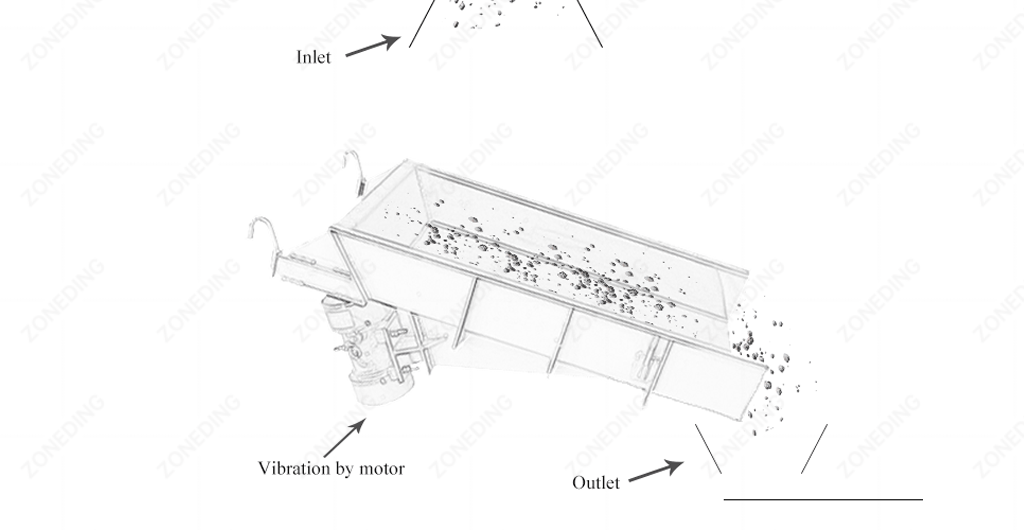
You control the exact speed of this stone river. The thick steel springs underneath allow the heavy body to move freely. They also protect the concrete foundation from cracking. We at ZONEDING test run every exciter box in our factory clearly. We align the heavy gears precisely to create a straight-line vibration. If the vibration goes sideways, the rocks will hit the side plates. Straight vibration pushes the rocks directly into the primary crusher. You get perfect material flow with our balanced mechanical design. You protect your electric motors from burning out prematurely.
You must feed your jaw crusher evenly to prevent sudden fatal jams. If you dump a whole truck of rocks directly into a crusher, the crushing chamber fills up immediately. The heavy jaw plates cannot move the mountain of rock. The main electric motor pulls too much electricity. The power breaker trips and shuts down your whole plant. A vibrating feeder prevents this exact disaster. It feeds the exact amount of rock the crusher can handle. It never feeds too much or too little.
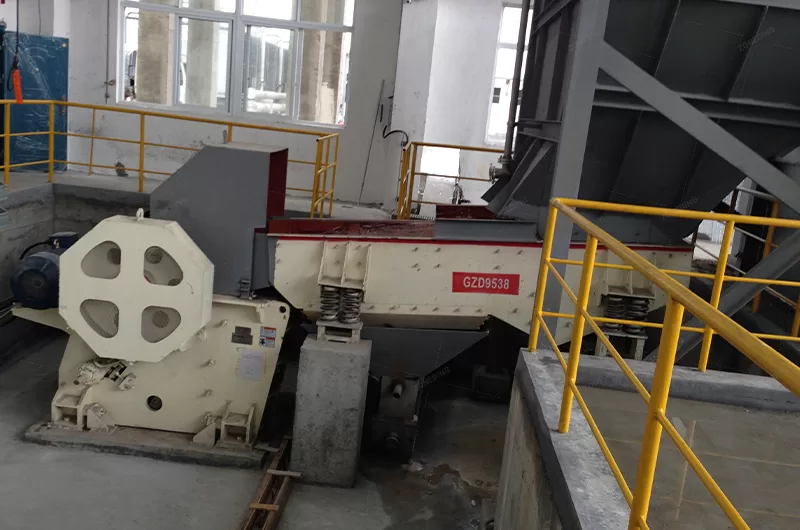
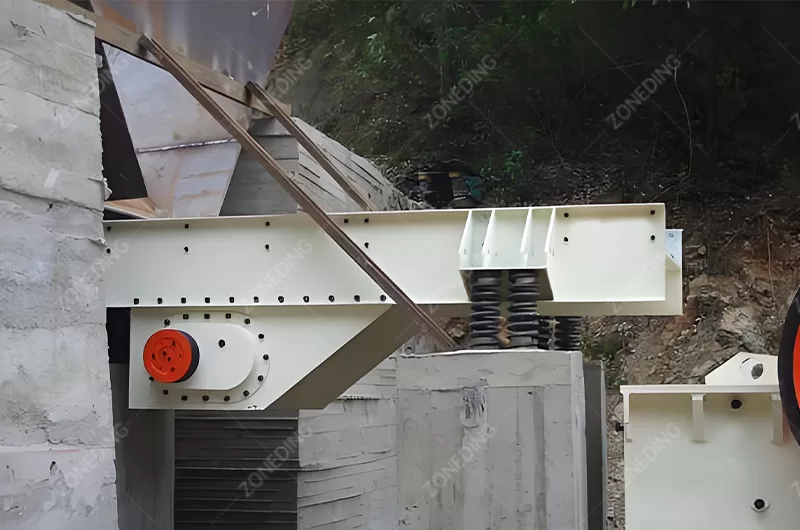
A starved crusher also wastes your money. If your crusher runs empty for ten minutes, you burn expensive diesel for nothing. We at ZONEDING engineer our vibratory feeding machines to match the crusher capacity perfectly. Our 15 professional engineers calculate the perfect pan width for your specific jaw crusher. A steady feed rate creates perfectly shaped aggregate stones. A full crushing chamber actually helps the rocks crush each other. You get better final product quality. You maximize your daily profit margins heavily.
Grizzly bars are thick steel gaps that sort small dirt before crushing. Raw ore from the mountain often contains loose dirt and small stones. You do not want to put soft dirt into a heavy jaw crusher. Dirt turns into sticky mud inside the crushing chamber. Mud coats the jaw plates and stops the crushing action completely. A grizzly vibrating feeder solves this messy problem. We install heavy steel bars with open gaps at the end of the vibrating pan. The small dirt falls through these gaps perfectly.
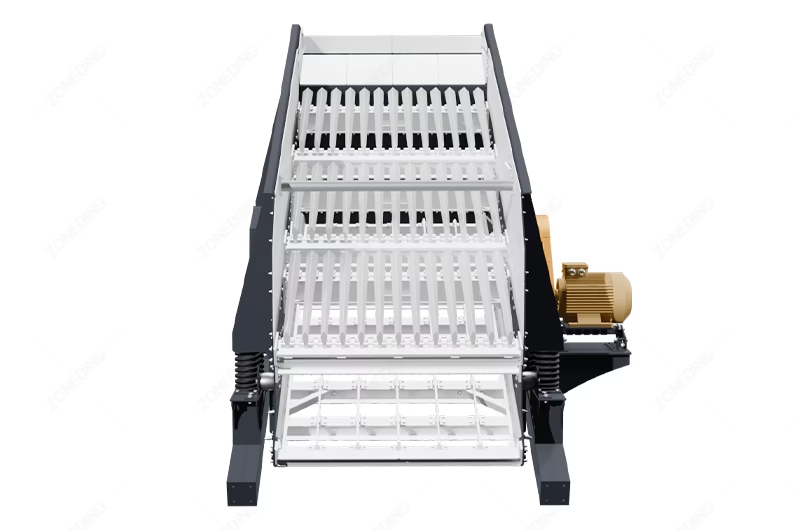
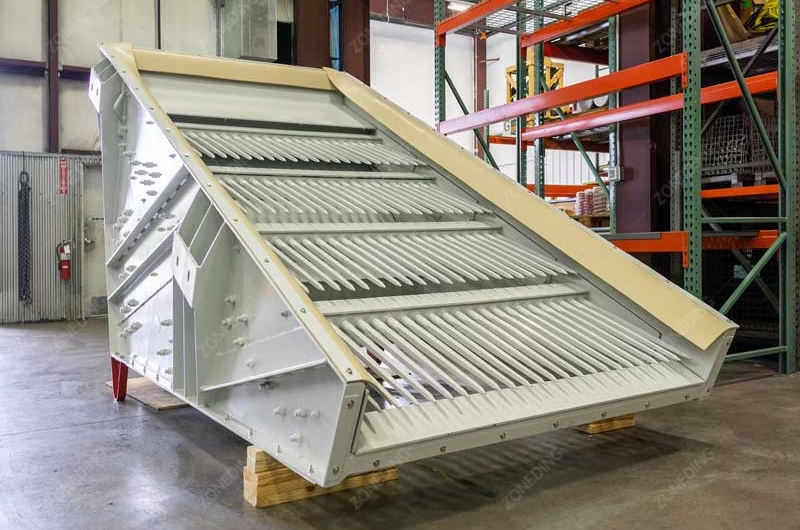
You save massive amounts of electrical power with this simple step. The small stones bypass the primary crusher entirely. They fall onto a separate conveyor belt underneath. Only the big, clean rocks enter the crusher jaw. We at ZONEDING use super-thick manganese steel for our grizzly bars. The sliding rocks wear down normal steel very fast. Our special alloy lasts three times longer. We design the gaps to be wider at the bottom. This clever shape stops wet rocks from wedging between the bars securely. You keep your mineral processing flow running cleanly.
You change the angle of the eccentric blocks to control the feed speed. Sometimes your raw rocks are very wet and heavy. Sometimes they are dry and light. You need different vibration speeds for different rock conditions. You can open the side cover of the exciter safely. You will see thick semi-circle steel blocks bolted to the spinning shaft. You loosen the heavy bolts manually. You rotate the outer block to change the angle. A wider angle creates massive force for heavy rocks.
You must align the blocks perfectly on both sides of the machine. If the left side pulls harder than the right side, the feeder will twist dangerously. The thick steel pan will crack eventually. We at ZONEDING mark the angle degrees clearly on the metal shaft. Your operators can match the angles perfectly with their own eyes. Many modern operators use a Variable Frequency Drive (VFD) today. You install this electrical box in your control room. You turn a simple dial to change the electric motor speed instantly. You slow down the feeder safely without turning off the whole plant.
You must buy from a factory that uses strong automatic welding robots. A vibrating feeder shakes itself millions of times every single month. Weak manual welding cracks under this endless stress. The heavy steel plates will separate and break apart. The whole machine will collapse under the massive rock hopper safely. You must verify the welding quality before you buy. Trading companies do not control the welding quality. They just sell cheap machines from unknown small workshops safely.
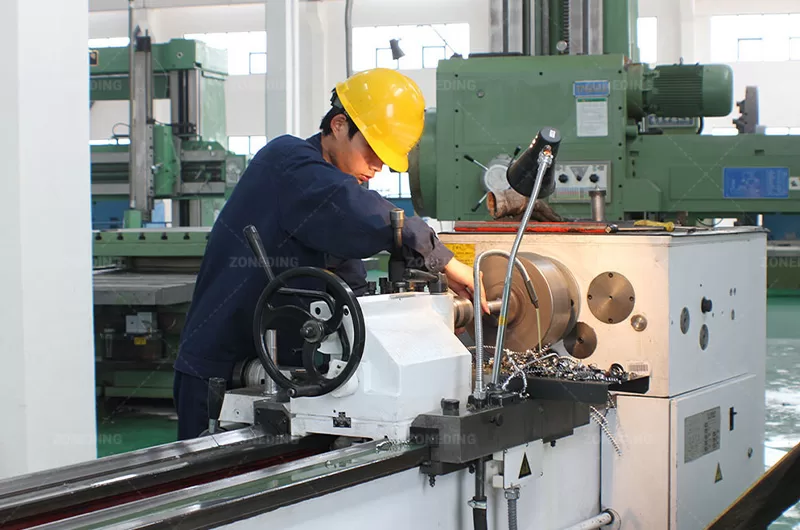
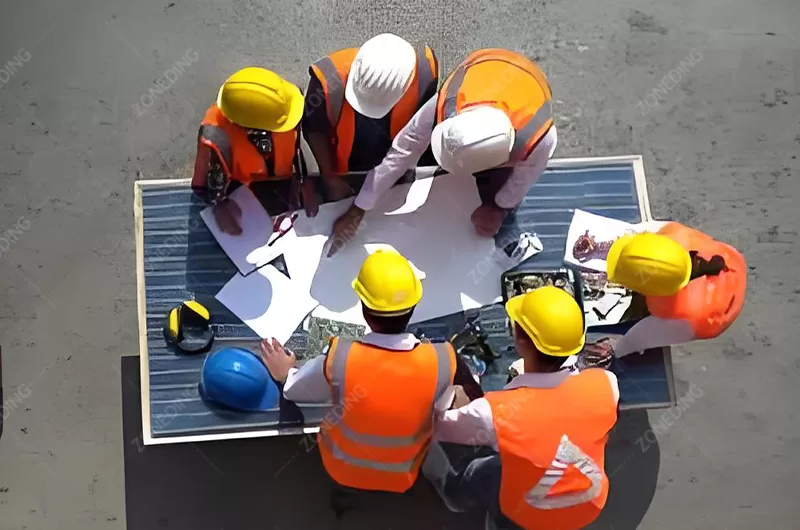
You must work with a real manufacturer like ZONEDING. We operate an 8000-square-meter modern factory in China. We use advanced submerged arc welding for all main feeder bodies. Our thick steel plates never crack under heavy load. You should consider these critical factors:
We invite you to inspect our factory directly. You talk to our experts face to face. We offer strong competitive prices because we cut out the middleman completely. You securely protect your aggregate production line when you deal with us.
Technology changes mineral processing equipment rapidly in 2025. Smart automation is the biggest trend for feeding machines today. Plants want fewer workers standing near dangerous dusty hoppers. New feeders connect to the main crusher computer directly. The jaw crusher monitors its own electrical current safely. If the crusher gets too full, it tells the feeder to slow down automatically. We at ZONEDING integrate these smart control panels into our new systems perfectly.
The global aggregate market demands higher energy efficiency heavily. Old mechanical feeders wasted massive grid power. The new variable frequency motors use 20 percent less electricity safely. They start spinning slowly and safely. This gentle start protects the main power grid from sudden voltage drops. You save thousands of dollars on your monthly power bill. ZONEDING helps you apply these smart 2025 trends to your own specific quarry.
A strong vibrating feeder is the absolute foundation of your crushing plant. It prevents sudden electrical overloads and dangerous mechanical jams. It sorts out soft dirt using heavy steel grizzly bars safely. You control the exact feed rate by simply adjusting the eccentric metal blocks. You save your jaw crusher from terrible daily damage safely. A reliable feeder increases your total mineral processing output directly.
You should inspect your current rock hopper setup today. Measure your biggest raw rock size safely. Calculate the exact tons you want to crush every hour. Write these two critical numbers down clearly. Contact our engineering team with these exact numbers. We will design the perfect heavy-duty vibratory feeding machine for your project. Do not let bad material flow ruin your profits securely.
Last Updated: April 2026
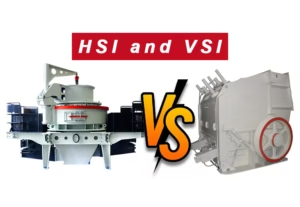
Confused between an HSI and VSI impact crusher? This guide breaks down the key differences in application, feed material, product shape (cubicity), and cost.
View details
This blog tells what a concrete crusher is, its work principle, and the purpose, process, and benefits in turning construction waste into valuable resources.
View details
How much gold remains underground? While about 212,000 tonnes are above ground, the USGS estimates only 59,000 tonnes of proven reserves are left to mine.
View details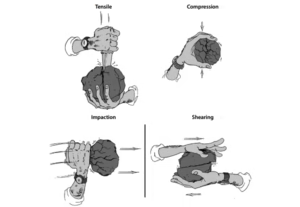
Learn crushing method of stone crusher. This guide explains the principles of Compression (Jaw/Cone), Impact, and Shear crushing for different rock types.
View details