 Zoneding Mining

Site Search
Search products, equipment and solution articles
整站搜索产品中心新闻中心
点击开始搜索
热门搜索
UltraForm-MXFlexiPoly-RNanoForm Z300EcoFab P200
Search products, equipment and solution articles
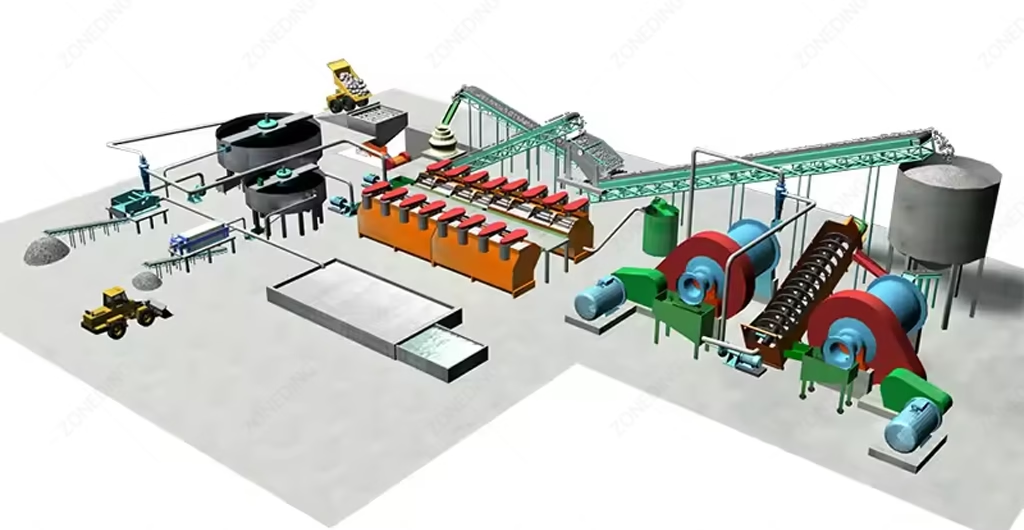
Crushing and grinding are the most expensive parts of any mineral processing plant. They consume the most electricity and cause the most wear and tear on machinery. If your plant is running slowly or your energy bills are too high, you have an efficiency problem. Many operators try to fix this by simply increasing the motor power, but that is a mistake. True efficiency comes from optimizing the flow of material and choosing the right equipment for the specific ore. At ZONEDING, we help our clients reduce energy waste and increase hourly throughput by focusing on the science of comminution. This guide shows you exactly how to find the bottlenecks in your system and fix them.
Last Updated: April 2026 | Estimated Reading Time: 25 Minutes
The most effective way to improve efficiency is to stop crushing material that is already small enough. Many plants feed raw ore directly into a primary crusher without screening. This means the machine wastes energy crushing particles that already meet the target size. These “undersize” particles also fill up the crushing chamber, which slows down the flow of larger rocks. This is called “packing,” and it can drastically reduce your tons-per-hour (TPH) rate.
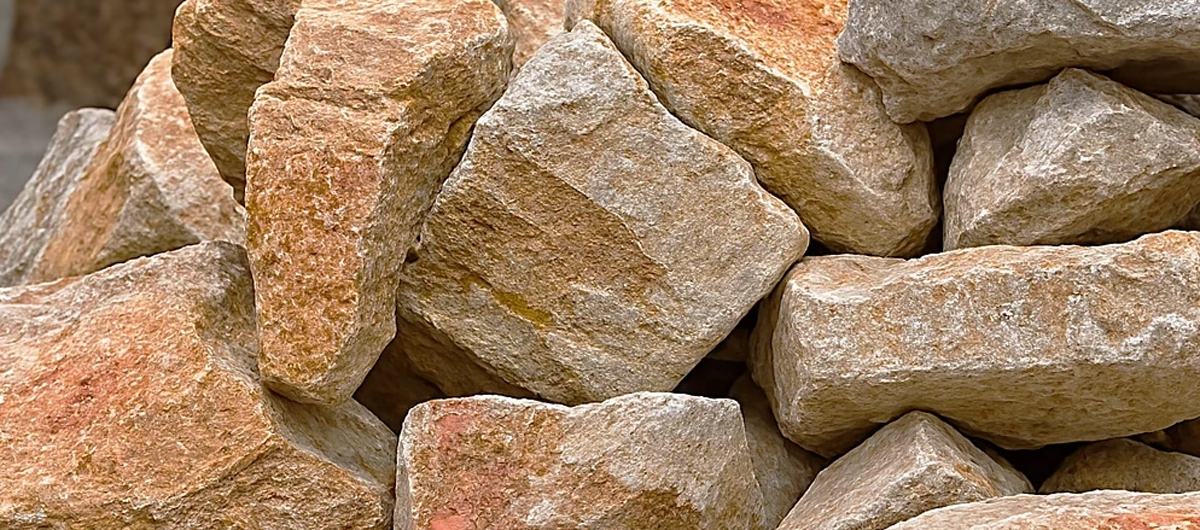
We recommend installing a heavy-duty vibrating screen before the primary crusher. This process is called “scalping.” The screen removes the small material and sends it directly to the next stage. This reduces the load on the primary crusher. As a result, the machine can process larger rocks more effectively. We design our ZONEDING screening systems to handle high moisture and abrasive materials, ensuring that only the necessary rocks enter the crusher. This simple change can increase your primary crushing capacity by 20% to 30% without adding a single new motor.
The following table shows how feed size affects the energy consumption of your plant.
| Feed Condition | Energy Use per Ton | Machine Wear Rate | Production Speed |
|---|---|---|---|
| Unscreened Feed | High | Fast | Slow (due to packing) |
| Scalped Feed | Moderate | Normal | Fast and Steady |
| Optimized Feed | Low | Slow | Maximum TPH |
Efficiency drops when one machine in your line is overworked while the next one is under-utilized. The “crushing ratio” is the ratio between the feed size and the product size. If you try to achieve too high a ratio in a single machine, you increase wear and energy consumption. The best approach is to spread the work across primary, secondary, and tertiary stages. We call this “balanced comminution.”
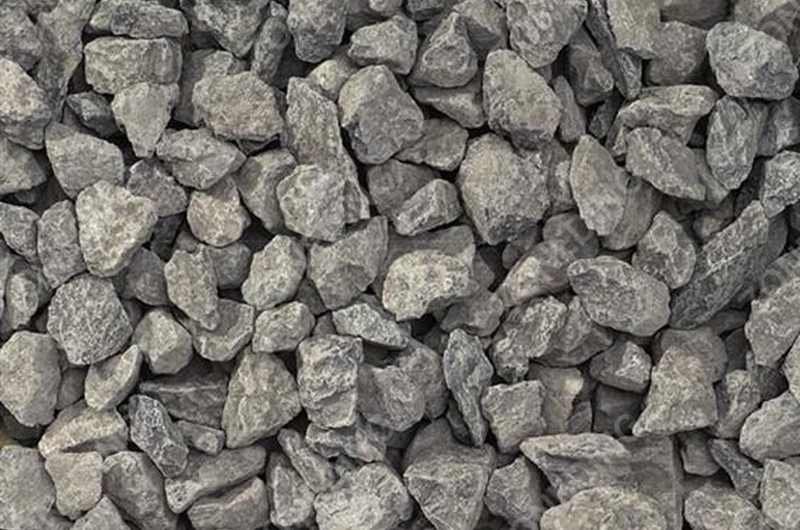
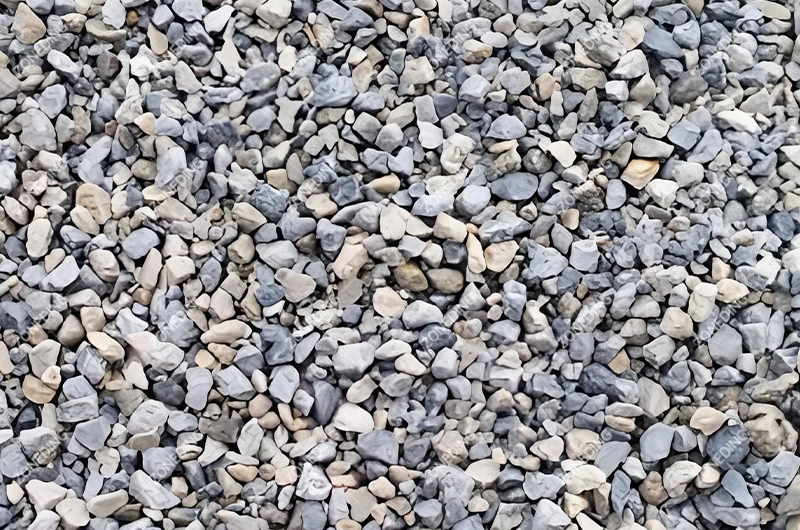
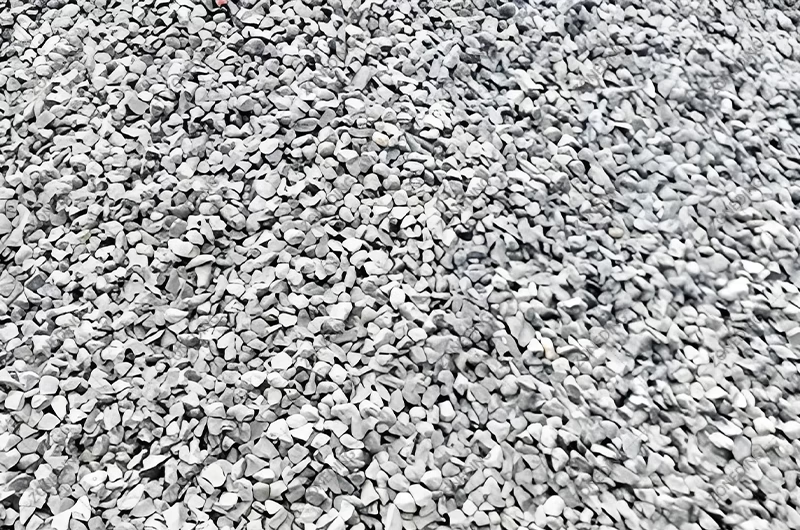
For example, if you need to go from 500mm boulders to 10mm gravel, do not try to do it in two steps. Use a primary Jaw Crusher to break the boulders to 100mm. Then, use a cone crusher to break the 100mm pieces to 20mm. Finally, use a fine crusher or a mill for the final 10mm. This ensures that each machine operates in its “sweet spot” of efficiency. ZONEDING specializes in designing these multi-stage circuits. We calculate the exact ratio for each machine to ensure the motors never overload and the liners last longer.
| Stage | Common Equipment | Target Ratio | Primary Goal |
|---|---|---|---|
| Primary | Jaw Crusher | 4:1 to 6:1 | Maximum reduction of raw ore |
| Secondary | Cone / Impact Crusher | 3:1 to 5:1 | Shaping andsizing |
| Tertiary | Fine Cone / Roll Crusher | 2:1 to 4:1 | Precision final size |
The Ball Mill is the most energy-hungry machine in the plant, so small changes here save the most money. Most inefficiency in grinding comes from a poor “ball charge.” If you use balls that are too large, you have fewer contact points, and the grinding is slow. If the balls are too small, they cannot break the larger particles. We recommend a “graded charge,” which is a strategic mix of different ball sizes.

Another major factor is liner wear. As the liners inside the mill wear down, the internal shape of the drum changes. This disrupts the “cataracting” action (the way balls fall and hit the ore). When the balls just slide instead of fall, you are wasting electricity to rotate a drum without actually grinding anything. We use high-chrome alloy liners in ZONEDING mills to maintain the internal profile for longer. We also advise our clients to monitor the mill’s power draw. A sudden drop in power usually means the ball charge is too low or the liners are worn out.
| Ball Size Mix | Grinding Effect | Best For | Practical Result |
|---|---|---|---|
| All Large Balls | High Impact | Coarse Feed | Fast initial break, poor fineness |
| All Small Balls | High Friction | Fine Feed | Great fineness, slow start |
| ZONEDING Graded Mix | Impact + Friction | All Sizes | Maximum efficiency, lowest energy |
Open-circuit grinding is inefficient because it allows “over-grinding” and “under-grinding” to happen at the same time. In an open circuit, material passes through the mill once and leaves. Some particles are too coarse (under-ground), and some are turned into useless dust (over-ground). Over-grinding is a massive waste of energy. You are spending electricity to grind a particle that was already small enough to be recovered.
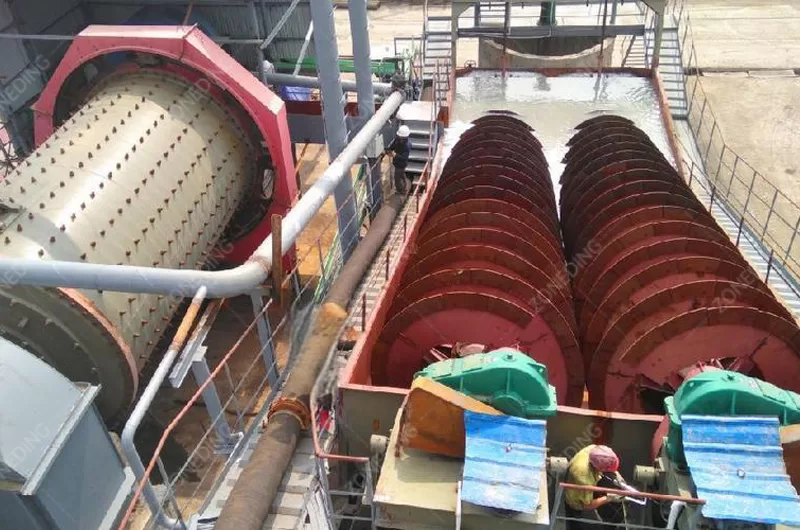
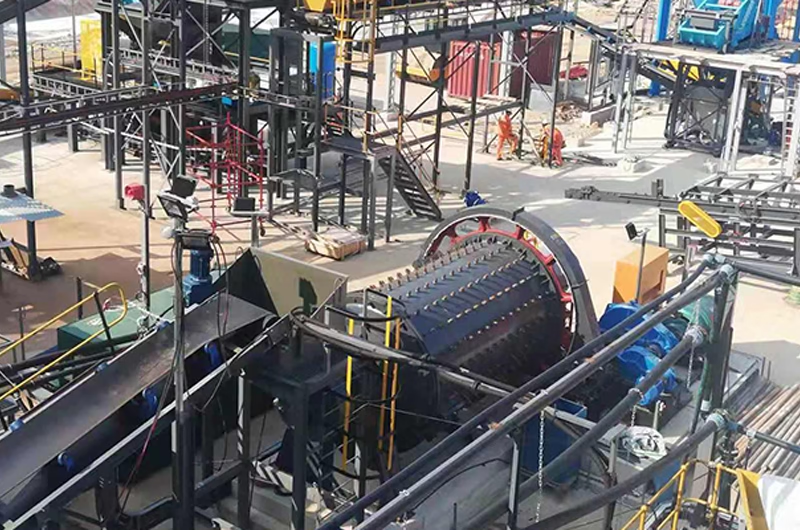
We solve this by implementing a “closed circuit.” This means we place a classifier, such as a hydrocyclone or a high-frequency screen, after the mill. The classifier separates the material. The particles that are small enough (the product) leave the system. The particles that are still too large (the oversize) are sent back into the mill for another round. This ensures that every particle stays in the mill for only as long as it needs to be. This increases the overall plant capacity and ensures a consistent product size. ZONEDING provides fully integrated closed-circuit designs that include the mill, the pumps, and the cyclones.
| Feature | Open Circuit | Closed Circuit (ZONEDING) | Benefit to You |
|---|---|---|---|
| Particle Consistency | Low (Wide range) | High (Tight range) | Better recovery in next stage |
| Energy Waste | High (Over-grinding) | Low (Precision grinding) | Lower electricity bills |
| Capacity (TPH) | Lower | Higher | More product in less time |
| Control | Basic | Professional | You control the exact micron size |
Using a machine designed for soft limestone on hard granite is a recipe for failure. Every ore has a “Bond Work Index” (BWI), which is a scientific measure of how much energy is needed to grind the rock. If you ignore the BWI, you will either under-size your equipment (causing bottlenecks) or over-size it (wasting money and energy).
We start every project by analyzing the client’s ore samples. If the ore is highly abrasive, we suggest a Jaw Crusher with high-manganese plates. If the ore is soft but requires a specific shape, we suggest an impact crusher. For the grinding stage, BWI determines whether you need a rod mill (for coarse grinding) or a ball mill (for fine grinding). ZONEDING does not sell “off-the-shelf” machines. We customize the motor power, the drum thickness, and the liner material to match the BWI of your specific mine. This prevents the common problem of motors overheating or liners wearing out in a few weeks.
| Material Hardness | Recommended Primary | Recommended Grinding | Key Focus |
|---|---|---|---|
| Soft (Limestone) | Impact Crusher | Ball Mill | High TPH, low wear |
| Medium (Copper/Gold) | Jaw → Cone | Ball Mill | Balance of wear and speed |
| Hard (Iron/Quartz) | Jaw → Cone | Rod Mill → Ball Mill | Durability and liberation |
When upgrading your plant for efficiency, do not just buy the newest machine. You must look at your plant as a single system. Improving one machine while ignoring the others often just moves the bottleneck to a different spot.
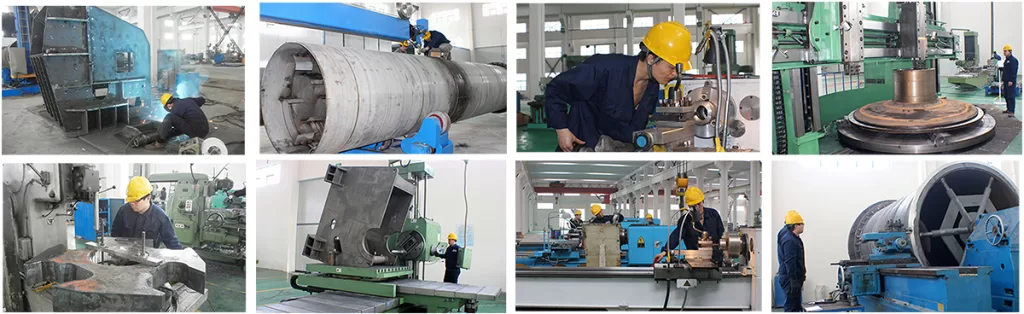
Consider these four factors:
The industry is moving toward “Smart Comminution.” The goal for 2026 is to eliminate human guesswork from the process.
ZONEDING is integrating these “Smart-Logic” controllers into our latest lines. By connecting the crusher and the mill via a single software interface, the plant can automatically slow down the crusher if the mill is overloaded, preventing downtime and energy spikes.
Improving crushing and grinding efficiency is about removing waste. First, stop crushing small rocks by using a scalping screen. Second, balance your crushing ratio across three stages to avoid overworking any single machine. Third, optimize your ball charge and liners in the mill. Finally, move from an open circuit to a closed circuit to eliminate over-grinding.
Your next step should be a “Plant Flow Audit.” Map out your current TPH and energy draw at every stage. Find the machine that is always at 100% capacity while others are at 60%—that is your bottleneck. Contact ZONEDING with your BWI data and current flow chart. We will provide a customized optimization plan to increase your TPH and lower your power bills.
Last Updated: April 2026
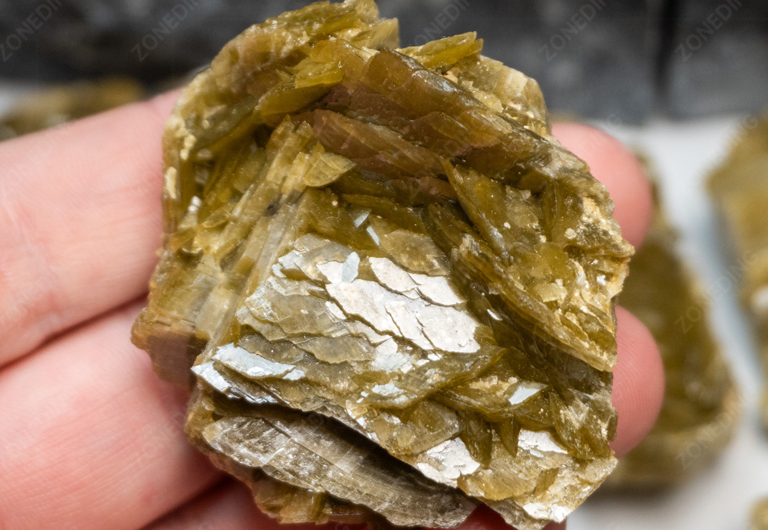
Step-by-step breakdown of the siderite ore dressing process. Explore the key machinery required for each stage to ensure high-grade iron concentrate.
View details
Understand froth flotation (foam flotation) in mineral processing. Explore its core principles, key steps, and how it separates valuable minerals from ore.
View details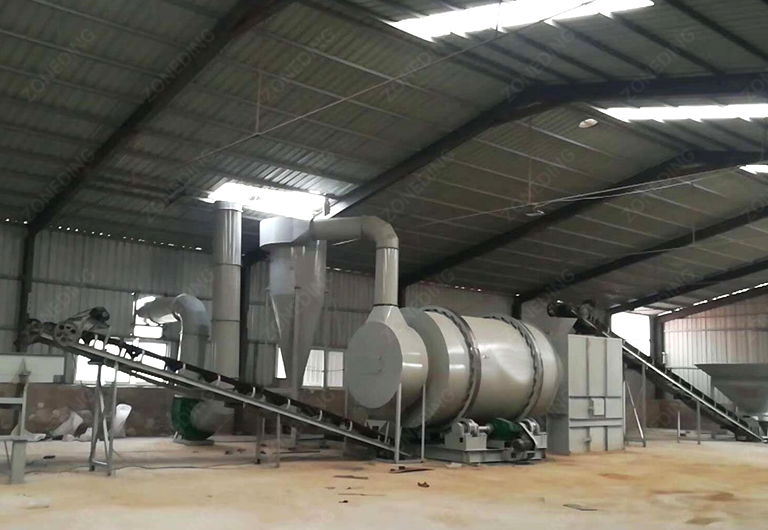
Our ultimate guide to drying sand covers everything from equipment selection to final drying process. Learn how to achieve 0.5% moisture with high efficiency.
View details
Maximize yield with Gold Gravity Separation Equipment. From Centrifugal Concentrators to Shaking Tables, we offer a complete solution to recover fine gold.
View details