 Zoneding Mining

Site Search
Search products, equipment and solution articles
整站搜索产品中心新闻中心
点击开始搜索
热门搜索
UltraForm-MXFlexiPoly-RNanoForm Z300EcoFab P200
Search products, equipment and solution articles
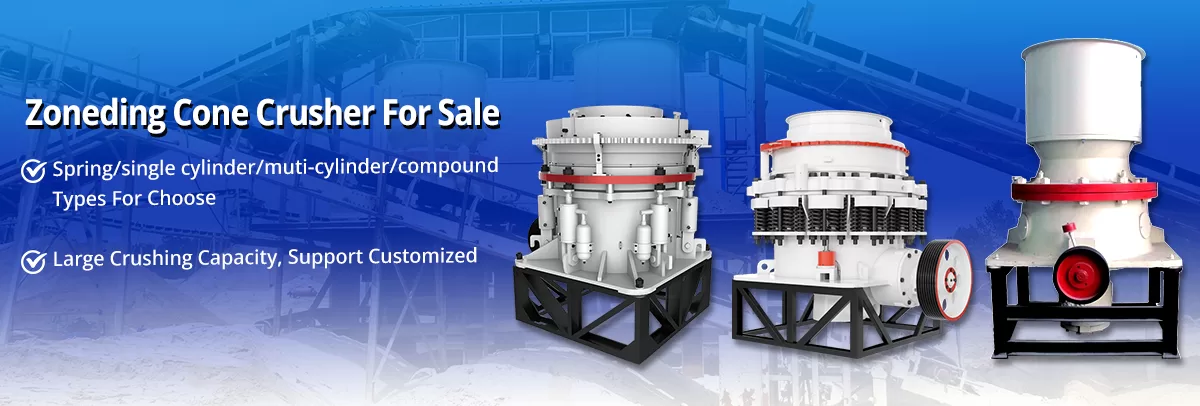
Maximizing the lifespan of a cone crusher requires a strict focus on daily habits and technical precision. These machines operate under extreme pressure every single hour. Small errors in feeding or lubrication lead to massive mechanical failures quickly. This guide provides specific actions to keep equipment running for many years. ZONEDING designs these crushers to be tough. But even the best steel needs proper care. This article covers the secrets that veteran operators use to keep plants profitable. Proper care ensures the machine remains a long-term asset for the business.
Last Updated: April 2026 | Estimated Reading Time: 25 Minutes
A well-maintained cone crusher should last between 10 to 15 years in a heavy mining environment. The actual number of years depends on rock hardness and the management of internal clearances. A machine is a long-term investment for a mining company. If the machine receives good care, it will pay back the investment for over a decade. ZONEDING uses superior metallurgy to ensure every machine starts with a strong structural foundation.
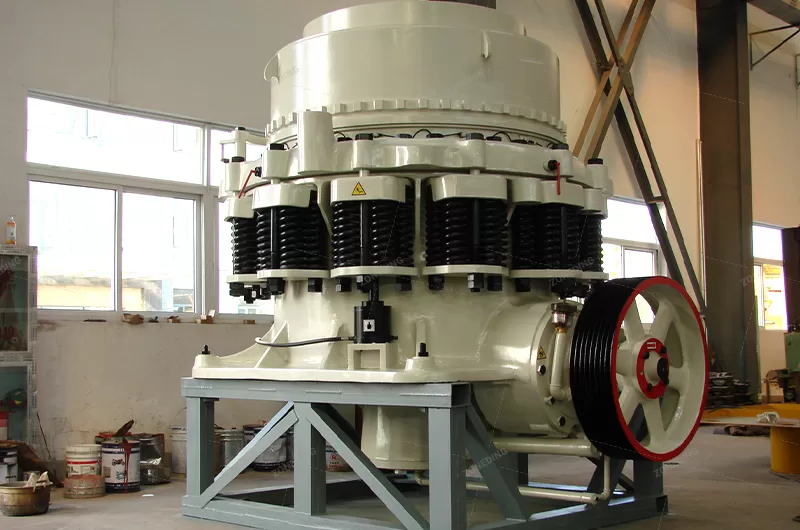
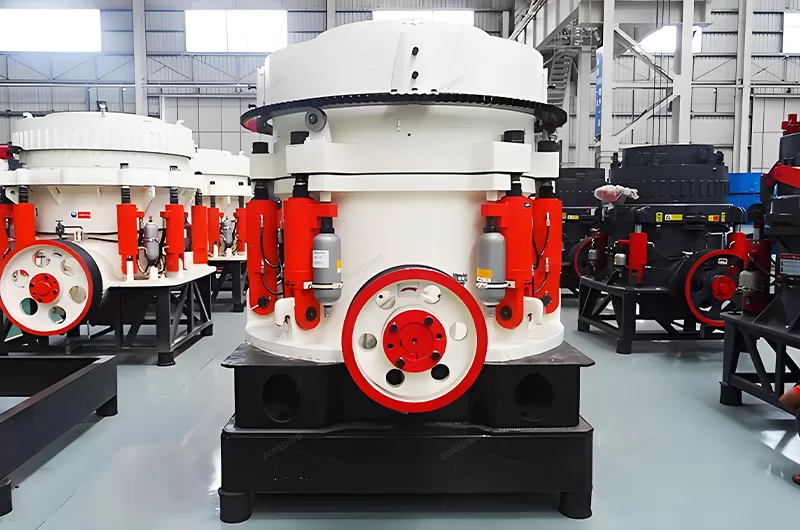
The environment in a mine is very harsh on metal components. Rocks are sharp and heavy. Machines experience thousands of impacts every minute. Some cheap machines fail after only 3 years. These failures happen because of bad design or poor steel quality.
ZONEDING uses high-grade steel and thick manganese liners to ensure a longer life. A 15-year lifespan is possible only with perfect daily habits. Operators must monitor the oil, the metal temperature, and the feed size. Machines do not die because they work hard. They die because humans ignore small signs of trouble. A daily log helps track every change in the machine performance.
Regular cone crusher maintenance prevents sudden breakdowns that stop the entire production line. A dead crusher means zero income for the whole mining operation. A single broken bolt can stop 20 trucks and 50 workers. The cost of that idle time is much higher than the price of a spare part. ZONEDING designs machines with easy access doors to make this maintenance faster for the crew.
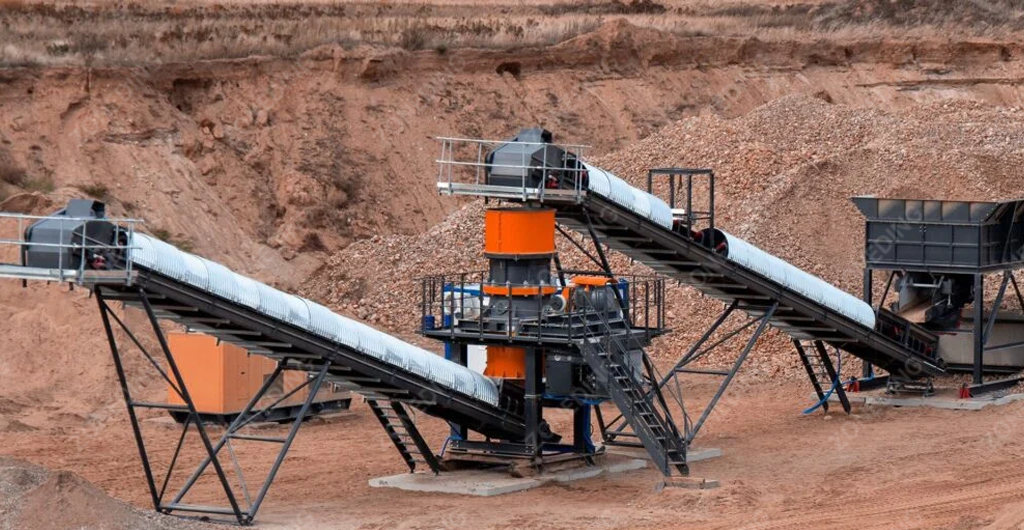
Downtime is the biggest cost in the mining industry. If the crusher stops, the trucks stop. The conveyors stop. The staff sits idle. The company still pays for power and labor but produces nothing. Maintenance is a small cost today. A broken main shaft is a massive cost tomorrow. Proper care also keeps product quality high. Worn machines produce flat, useless rocks that customers do not buy. Sharp, fresh machines produce high-value aggregate for roads. ZONEDING builds machines with replaceable bushings that protect expensive main parts. This reduces time spent on major repairs. The rule for every site should be: check first, crush second.
Most cone crushers fail due to poor lubrication, metal objects entering the chamber, or incorrect feeding methods. These issues cause component fatigue over long periods. Most failures are not truly accidents. They are the result of neglected warnings over many months. ZONEDING adds smart sensors to hydraulic systems to help catch these faults before the frame breaks.
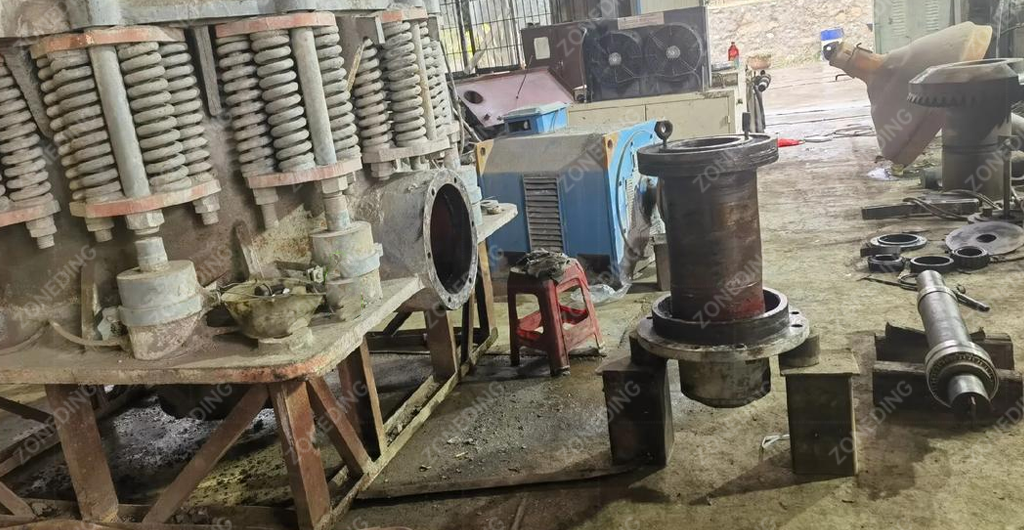
ZONEDING includes advanced hydraulic relief systems to catch these events instantly. But the operator must still keep the machine area clean. A strong magnet on the belt stops this problem.
Proper strategies turn a regular machine into a long-term profit asset. Use these 8 tips from ZONEDING to stay ahead of trouble.
Proper lubrication creates a thin film that stops metal-to-metal contact inside the bushings. Without this film, the brass parts will melt and seize the machine. Oil is the lifeblood of the crusher unit.
| Component | Standard Failure | ZONEDING Solution | Benefit to Operations |
|---|---|---|---|
| Main Bushing | Scorching due to heat | High-Lead Bronze | 3x longer life |
| Oil Pump | Low pressure | Dual-Pump System | Constant oil film |
| Cooling Unit | Clogging with dust | Air-oil Cooler | Stable temperature |
The oil filter is a diagnostic tool. Operators should interrogate the old oil during every change. If they find fine, glittering golden flakes in the filter, the machine is in danger. These flakes are bronze or copper from the bushings. This means the oil film has failed. Metal is rubbing against metal. The crew must check oil cooler efficiency or pump pressure immediately. ZONEDING provides advanced cone crusher lubrication systems with dual-pump designs. This ensures oil reaches the top of the eccentric even during heavy loads. Catching this gold early saves the company from a seized shaft.
Choke feeding means keeping the crusher head completely covered with material to center the crushing force. This leads to even crusher liner wear and higher efficiency.
Many plant managers have a misconception. They think running at 50% capacity saves the machine. This is a mistake. Under-feeding is more damaging than over-feeding. When a cone crusher is not choke fed, rocks bounce unevenly in the chamber. This creates massive lateral shocks on the main shaft. Choke feeding creates inter-particle crushing. This means rocks crush other rocks instead of just hitting the steel. This keeps the load centered. ZONEDING machines work best when they stay full. A surge bin keeps the feed constant all day long.
Using high-powered magnets on the feed conveyor is the best way to catch steel before it enters the machine. The crew must also check nitrogen levels in relief cylinders every month.
A single piece of steel can ruin a million-dollar frame. Tramp iron relief systems protect the frame from these hits. But many people ignore the nitrogen bladders in relief cylinders. Nitrogen can leak over time. If pressure is uneven across the cylinders, the crusher frame will twist. This twisting ruins the alignment forever. Checking accumulator nitrogen levels monthly is essential. Keeping these balanced ensures the crusher survives the hit without stripping threads. ZONEDING engineers provide tools to check this pressure easily.
Daily inspections of V-belts and oil levels catch faults before they become disasters. Check for vibrations and strange noises every morning before starting the motor.
Operators should listen to the V-belts. V-belt vibration is a perfect diagnostic tool. If belts are whipping or vibrating unevenly, the countershaft is misaligned. Excessive belt vibration stresses the countershaft bushings and the pinion gear. If the crew does not fix the belt harmonics, expensive gears will fail soon. ZONEDING builds countershaft assemblies that are easy to align. Small checks like this save millions in parts over the years. Keep a spare set of matched belts in the warehouse for quick replacements.
Consistent oil temperature prevents cold start seizures and keeps lubrication at the correct thickness. Cold oil is too thick to reach the top bearings.
Many crushers fail in the first 30 minutes of a cold morning. Oil viscosity is very important. If oil is too cold, it will not reach the top of the eccentric. The operator must never start the crusher until heaters bring the oil to 25°C. The crew should not feed the machine until it reaches 38°C. More bushings are scorched during the first 10 minutes of a cold shift than during summer heat. ZONEDING includes automatic oil heaters in lubrication units to prevent this mistake. This protects the machine during winter months.
Running with a setting that is too tight causes ring bounce and destroys the threaded parts of the machine frame. Always match the Closed Side Setting (CSS) to rock hardness and liner profile.
Ring Bounce is deadlier than tramp iron for a budget. If the stone is hard and the CSS is too tight, the adjustment ring will lift. Every bounce is a hammer blow to the mainframe. Frames are often ruined because managers ignore this sound. They think the hydraulic system will handle the stress. If the ring bounces, the operator must open the setting or change the liner profile. ZONEDING engineers help clients choose the right liner for specific rocks to avoid this pressure. This keeps the machine stable.
Replace cone crusher wear parts when liners reach about 70% to 80% wear. Waiting until they are paper-thin causes liners to crack and damage the head.
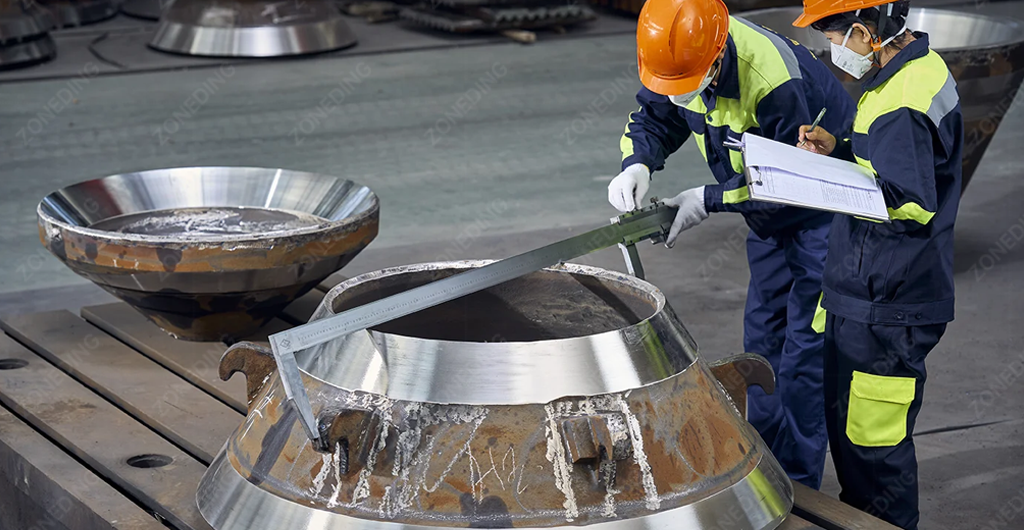
Backing material is a structural necessity and not just a filler. Many site crews treat epoxy backing as optional. This is a mistake. Backing material acts as a critical shock absorber for the steel. Without a high-quality pour, crushing forces go directly to the mainframe as point loads. Cheap backing leads to cracks in the expensive mainframe. That failure costs 10 times more than high-quality epoxy. ZONEDING sells high-quality backing materials to protect the machine foundation.
Staff must learn to identify golden flakes in oil and the sound of ring bounce immediately. A trained worker is the best defense against machine failure. Weekly meetings with the team should discuss machine performance and sounds.
| Training Topic | Why it Matters | Benefit to the Mining Site |
|---|---|---|
| Oil Checks | Identifies bushing wear early | Prevents seized shafts |
| Belt Sounds | Detects countershaft issues | Saves expensive gears |
| Feeding Habits | Keeps the pressure centered | Extends liner life by 30% |
Follow this list to stay organized. Use these mining equipment maintenance strategies daily. Printing this and putting it near the control panel is a good idea. ZONEDING can provide a digital version for tablets.
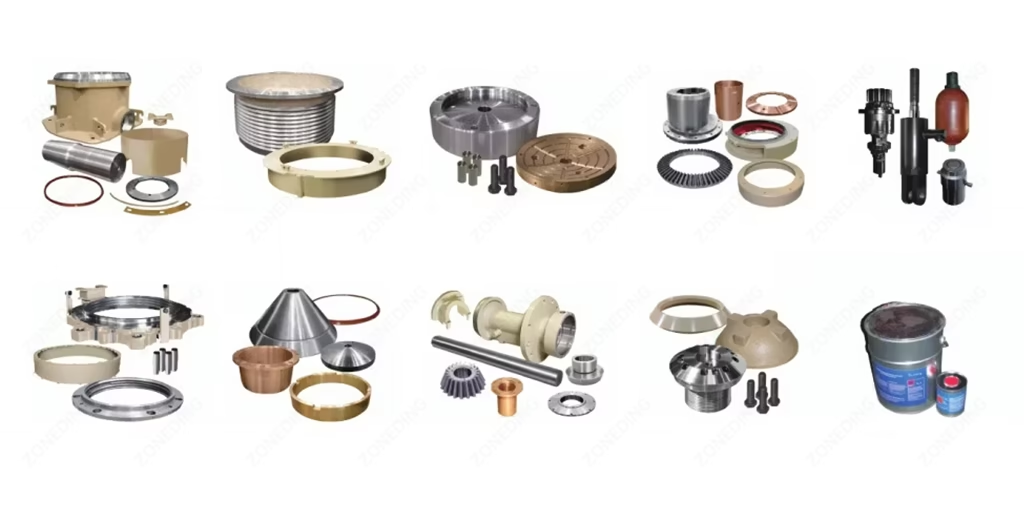
ZONEDING solves severe cone crusher problems by providing engineering expertise and high-precision machinery parts. Many mine operators face constant bearing failures or seized shafts. The ZONEDING team fixes these issues by using high-lead bronze bushings. These parts stop heat damage during heavy-duty operation. Engineers test specific rock samples in a laboratory first. They then manufacture custom cone crusher wear parts with the perfect metal alloy for the stone. This prevents liners from wearing out too quickly.
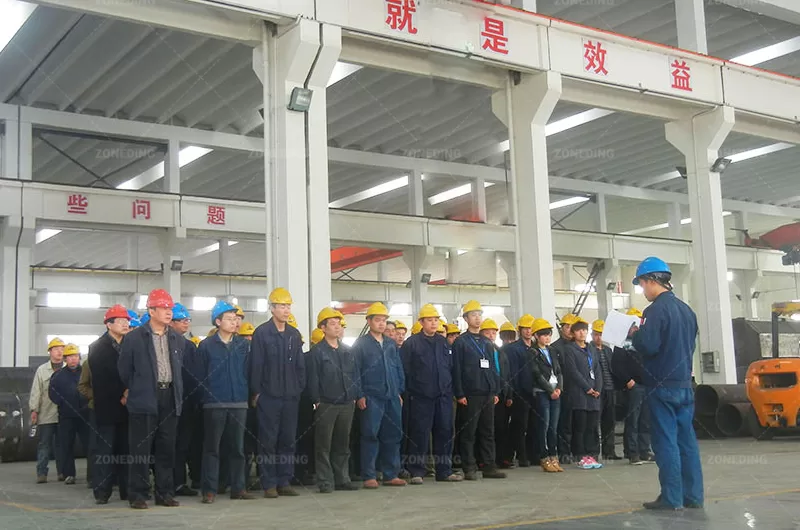
ZONEDING also includes advanced hydraulic relief systems in machine designs. These systems detect steel objects and open the machine gap instantly. This stops the adjustment ring from bouncing and prevents cracks in the main frame. Small errors often lead to expensive breakdowns because of poor staff training. ZONEDING flies senior technicians to the site to train workers on Choke Feeding and daily oil monitoring. This stops the silent killer of component fatigue before it happens.
As a direct manufacturer with an 8000-square-meter property, ZONEDING keeps all critical gears and shafts in stock. Genuine parts are shipped immediately to avoid long stops. The team has handled complex crushing issues in over 120 countries since 2004. ZONEDING acts as a technical partner that fixes the root cause of the failure.
New cone crusher operational tips involve using digital sensors to track Ring Bounce and oil quality automatically. The future of mining is smart maintenance. Many companies move away from manual checks toward automated alerts. ZONEDING leads this change with integrated sensors.
Modern plants use these tools to reduce human error. If a worker forgets to check the oil, the computer sends an alert to their phone. This is the best way to extend crusher lifespan in 2026. Global stone markets are getting more competitive. Operators need every hour of uptime to stay profitable in this economy.
To maximize lifespan, the operator must treat a cone crusher like a high-pressure machine. Manage internal clearances perfectly every day. Monitor oil temperature with high precision. Use the gold in the filter as a warning sign of wear. Always keep the chamber full to ensure choke feeding. Avoid ring bounce by choosing the correct settings. ZONEDING helps design a plant that lasts for many decades.
If a company wants a machine that works hard, contact ZONEDING today. Engineers will help select the right crushing equipment for the specific site needs.
Last Updated: April 2026
Explore the full lifecycle of an aggregate processing plant. Learn about crushing, screening, washing, and every stage involved in producing aggregates.
View details
Explore the typical price range of jaw crushers and understand the main factors influencing their cost, such as size, capacity, features, and machine quality.
View details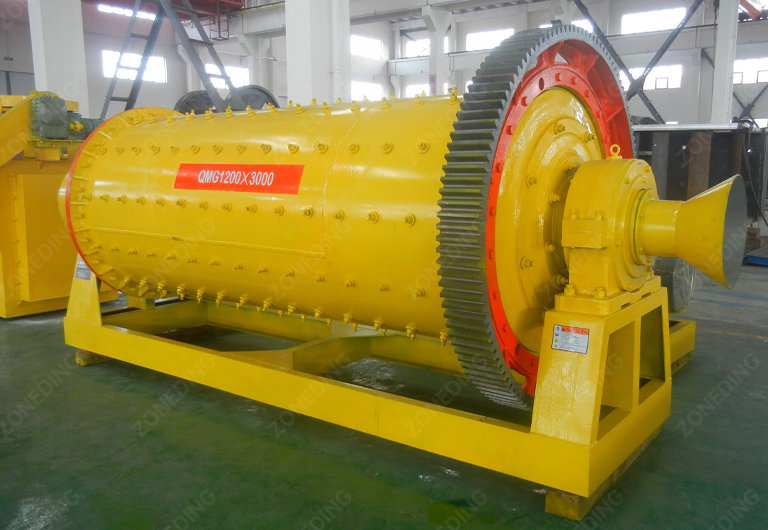
Want to boost your mill's performance? Uncover the 7 critical factors affecting grinding machine working efficiency and get actionable tips to maximize output.
View details
Learn steps, permits, machine, cost and market analysis needed to launch a quarry business. Get advice for new starters and successful project initiation.
View details