 Zoneding Mining

Site Search
Search products, equipment and solution articles
整站搜索产品中心新闻中心
点击开始搜索
热门搜索
UltraForm-MXFlexiPoly-RNanoForm Z300EcoFab P200
Search products, equipment and solution articles
You want to process hard rocks efficiently. You need secondary crushing equipment to make smaller gravel. A cone crusher answers this demand perfectly. This heavy machine crushes the hardest granite and metal ores easily. We explain the core cone crusher working principle clearly below. You will learn how to choose the right machine for your exact mining project today.
Last Updated: April 2026 | Estimated Reading Time: 25 Minutes
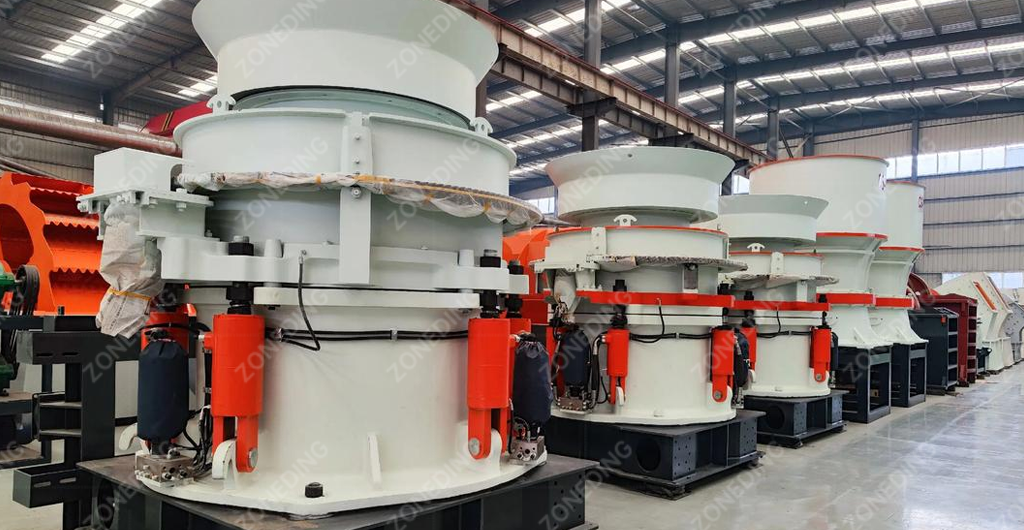
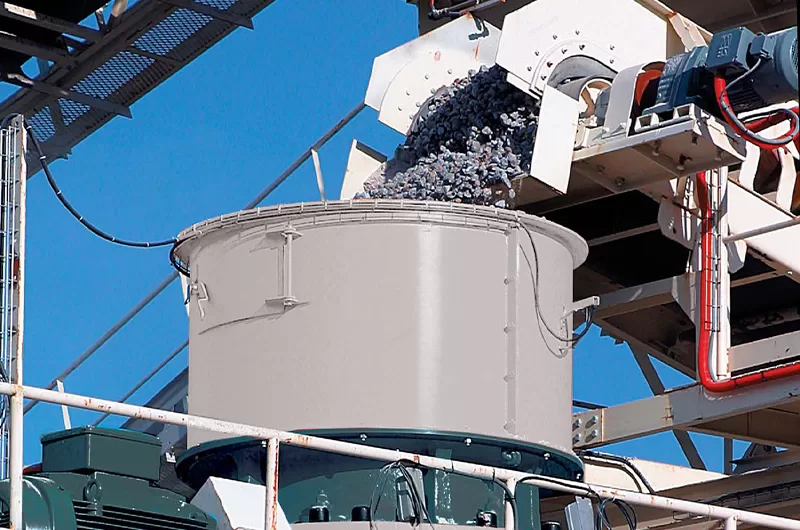
A cone crusher is a heavy compression machine that breaks rocks into smaller pieces. It uses a spinning metal cone inside a fixed metal bowl. The rocks fall into the top opening. The spinning cone squeezes the rocks against the outer bowl. This massive pressure shatters the hard rock instantly. The crushed rocks fall out through the bottom gap. You use this machine primarily for aggregate production and mineral processing.
You cannot put huge rocks directly into this machine. It acts as a secondary crusher usually. You put the rocks through a primary jaw crusher first. Then, the jaw crusher sends the medium rocks to the cone crusher. We at ZONEDING design these machines strictly for extreme durability. Our cast steel frames absorb terrible vibration safely. We build them to handle high silica materials like quartzite and river pebbles. You get a reliable machine that runs 24 hours a day without stopping.
You need this machine when your raw material is too hard for other crushers. Soft rocks like limestone break easily inside impact crushers. Hard rocks destroy impact crusher blow bars in just two days. You spend massive amounts of money replacing those broken bars. A cone uses simple compression force instead of impact force. This compression method saves your expensive steel wearing parts. You buy this machine to save money on daily maintenance costs.
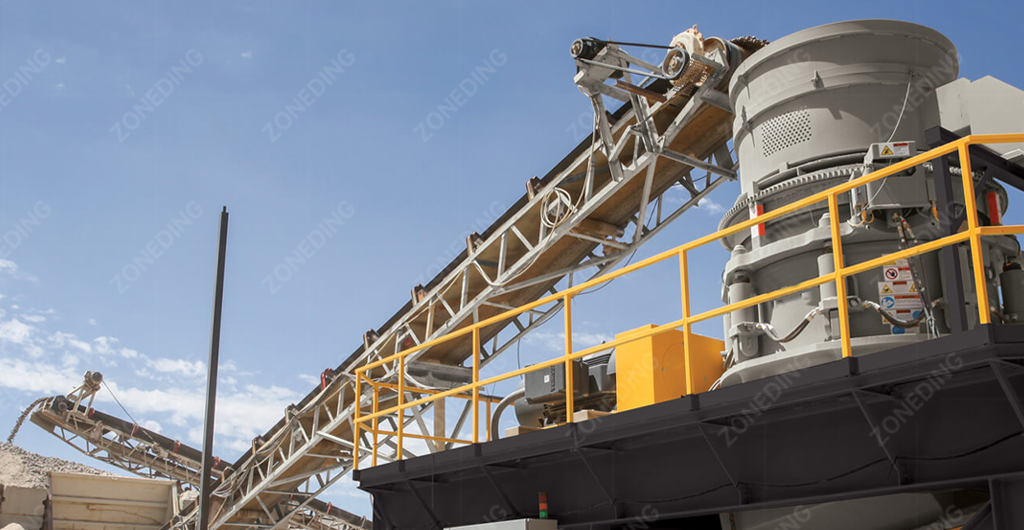
A cone crusher never works alone. It works inside a closed circuit loop with a vibrating screen. Many plant operators try to crush 100 percent of the rock to the final size in one single pass. This slows the machine to a crawl. It creates too much useless dust. We at ZONEDING configure your plant differently for maximum profit. We advise you to operate with a 25 to 35 percent recirculating load. You deliberately output slightly oversized rocks. You catch them on the screen and send them back. This optimizes your electrical costs heavily.
This machine reduces medium rocks into small gravel or fine feed for ball mills. The jaw crusher does the rough primary work. Your ball mills need very small rocks to grind efficiently. The cone bridges this huge size gap perfectly. It takes 150mm rocks and crushes them down to 20mm cleanly. This specific task prepares the ore for chemical extraction or concrete mixing.
| Processing Stage | Equipment Used | Typical Input Size | Typical Output Size |
|---|---|---|---|
| Primary Stage | Jaw Crusher | 500mm – 1000mm | 100mm – 200mm |
| Secondary Stage | Standard Cone Crusher | 100mm – 200mm | 20mm – 50mm |
| Tertiary Stage | Short Head Cone Crusher | 20mm – 50mm | 5mm – 15mm |
| Grinding Stage | Ball Mill | 5mm – 15mm | Fine Powder |
Different industries use the final output differently. Aggregate quarries sell the 20mm rocks directly to concrete factories. Mining companies send the exact same size to their grinding circuits. We at ZONEDING calculate the exact size reduction ratio your plant needs. We match the motor size to your required tons per hour perfectly. If you feed smaller rocks to your ball mill, your ball mill uses much less power. Your overall plant efficiency increases dramatically.
It increases your total daily production while controlling the final product quality. You want a specific size of stone to sell. This machine gives you exact control over the output size. Operators often make a terrible mistake reading the control panel. They watch the electrical amp meter closely. They see high amps and assume the machine is crushing efficiently. High power draw often means the machine is packing solid.
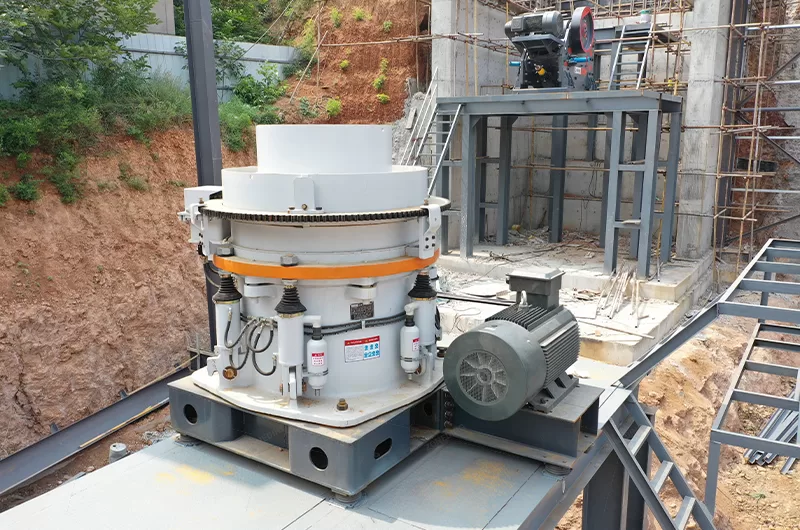
Wet clay and flat rocks cause severe packing. The material compresses into a solid brick inside the chamber instead of shattering. Your amps reach 100 percent capacity quickly. Your production drops to zero. You just turn expensive electricity into useless heat. This heat destroys your bronze bushings securely. We at ZONEDING install smart power monitors on our control cabinets. You must screen out the soft dirt before the rock enters our machine. Our smart panels warn you before the machine packs completely.
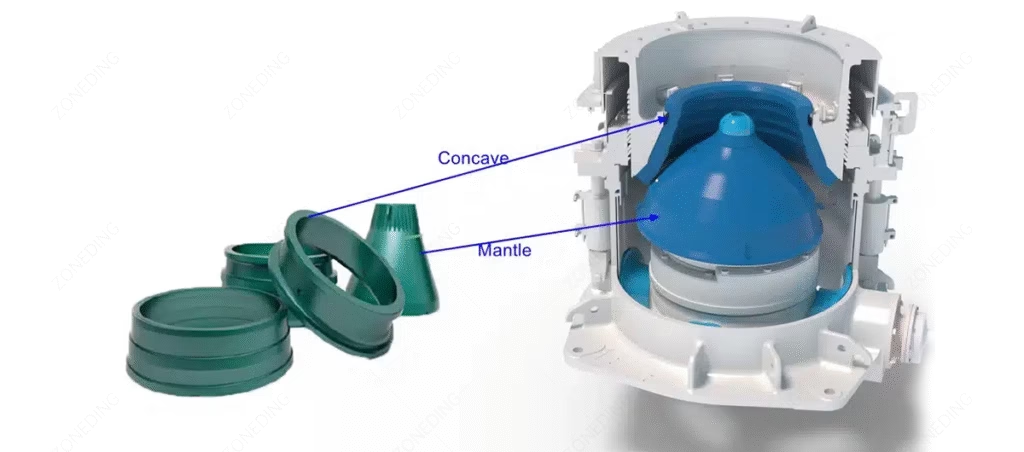
You must identify the main wearing parts to run your maintenance schedule. These parts perform different precise functions under massive stress. The steel frame holds everything together. The internal parts do the actual crushing work smoothly. You need to know these parts to order the correct spares. We at ZONEDING cast our own parts in our massive Chinese factory.
| Cone Crusher Parts | Main Function | Material Used | Your Practical Benefit |
|---|---|---|---|
| Mantle (Moving) | Squeezes rock outward | Manganese Steel | Takes direct rock impact safely |
| Concave (Fixed) | Takes pressure from mantle | Manganese Steel | Forms the fixed crushing wall |
| Eccentric Sleeve | Creates the swinging motion | Heavy Bronze | Prevents steel friction heating |
| Main Shaft | Supports the heavy mantle | Forged Alloy Steel | Prevents terrible machine snapping |
You must replace the wearing metal elements regularly. Overworn parts damage the main steel frame permanently. We check our cast parts with ultrasound tools safely. We find hidden air bubbles inside the metal easily. You receive perfect spare parts for your hard rock crushing equipment.
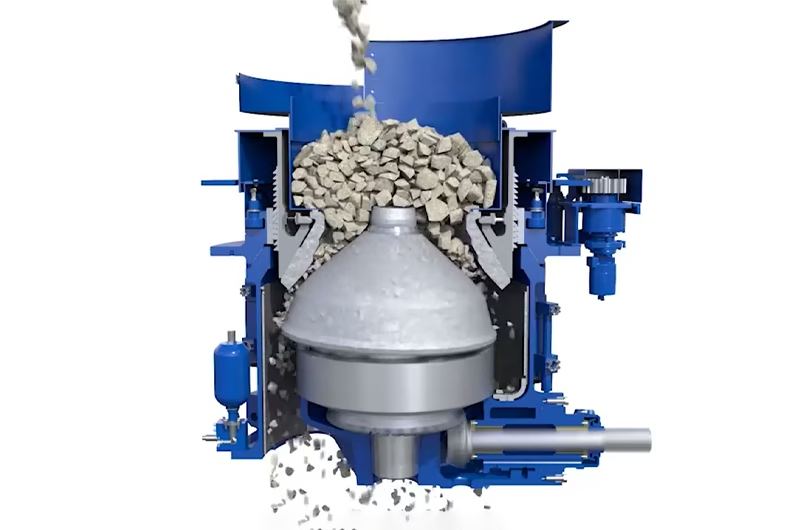
An eccentric metal sleeve forces the center shaft to swing in a wide circle. Heavy electric motors spin a horizontal shaft. This turns a large gear at the bottom. This gear rotates the eccentric sleeve. The main vertical shaft sits inside this angled sleeve. The spinning sleeve forces the main shaft to wobble around. The mantle attached to this shaft moves closer to the concave wall, then moves away. This rapid squeezing action breaks the falling rocks safely.
Most operators think the steel mantle breaks every single rock directly. This is mathematically wrong. If you operate the machine correctly, the steel only breaks about 40 percent of the rock. The other 60 percent of the crushing happens when rocks break each other. We call this inter-particle breaking. You must keep the crushing chamber completely full with rocks. We call this a choke feed exactly. We at ZONEDING design our feed hoppers to maintain this full level safely.
The inter-particle crushing action shapes rocks into perfect heavy cubes naturally. Government road builders demand cubical aggregates strictly. Flat and long rocks break easily under heavy truck tires. Flat rocks also require more expensive cement paste to mix concrete. A full cone chamber creates multi-directional pressure safely. Rocks squeeze against other rocks from all sides simultaneously. The weak flat edges break off completely. You get clean, square stones out the bottom.
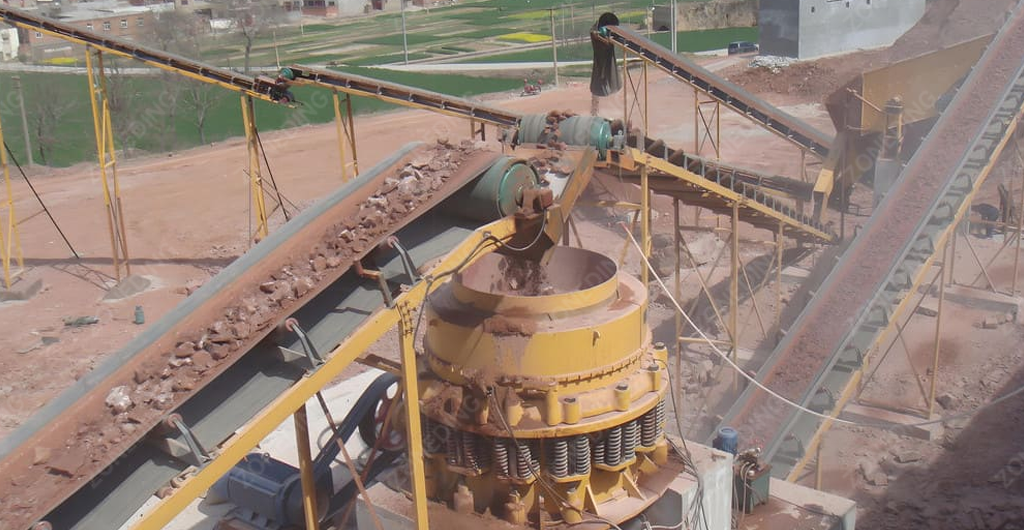
You dictate your profit margins with the machine’s eccentric throw. The throw is the actual distance the mantle swings off center. Changing this throw completely changes the machine completely. A copper mine wanted to maximize fine dust for their ball mills safely. I advised them to change our ZONEDING eccentric sleeve to a longer throw. We also lowered the spin speed. The longer throw created a larger open volume. More rocks fell deeper into the chamber before the next massive hit. They increased production by 20 percent immediately.
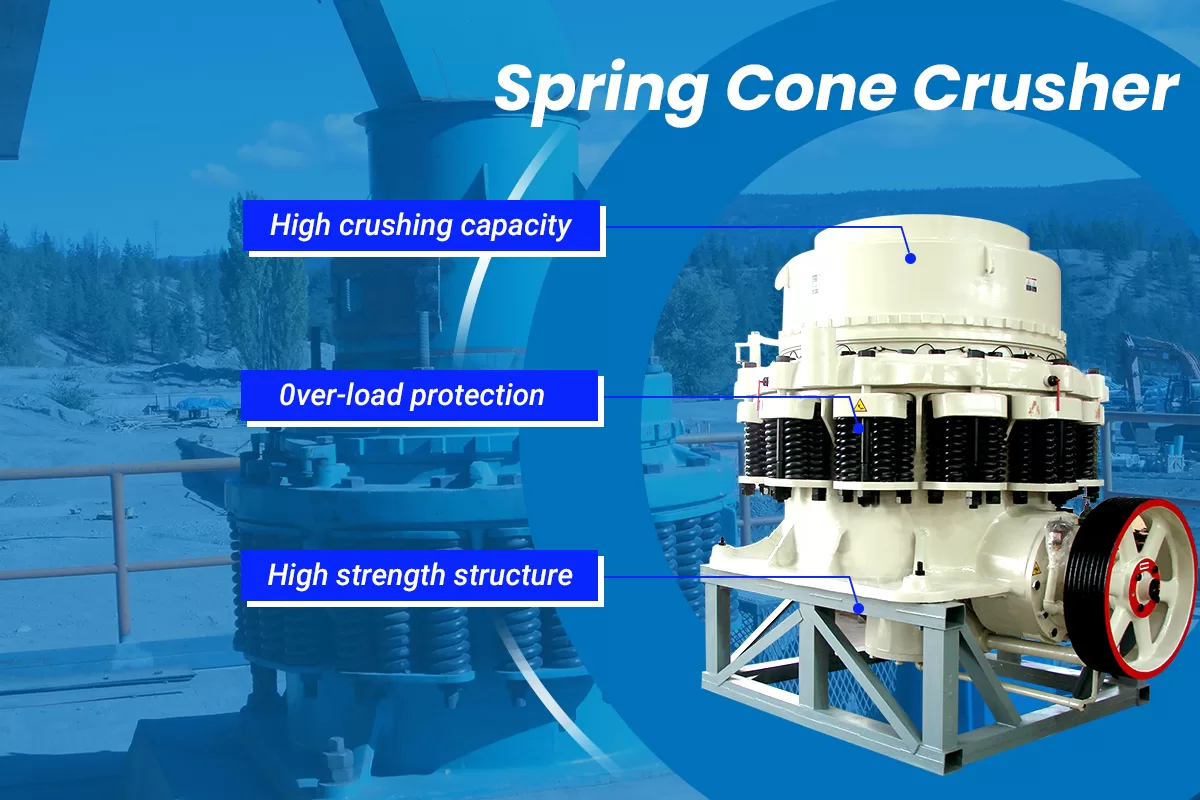
Hydraulic cylinders replace old steel springs to clear dangerous jammed rocks instantly. Old spring crushers use massive steel coils to hold the top frame down. If unbreakable iron enters the machine safely, the springs stretch to let it pass. You have to tighten heavy oily nuts manually to adjust the gaps securely. This takes three men and whole day.
| Feature Check | Old Spring Model | Modern Hydraulic Model | Your Direct Benefit |
|---|---|---|---|
| Overload Protection | Steel coil springs stretch | Hydraulic cylinders open automatically | Prevents broken shafts from tramp iron |
| Gap Adjustment | Manual wrenches and heavy labor | Push-button computer touch screen | Adjusts stone size in 10 seconds |
| Jam Clearing | Digging out rocks by hand | Single button raises the whole top bowl | Saves 5 hours of terrible downtime |
| Crushing Force | Medium pressure | Extreme high pressure | Creates finer output sizes |
A modern hydraulic cone crusher vs spring comparison favors hydraulics heavily. Hydraulic oil pressure locks the frame down firmly. You push a button on a screen to open the machine. You dump bad iron in two minutes safely. We at ZONEDING manufacture advanced multi-cylinder hydraulic machines. We give you total remote control over your heavy equipment. You keep your workers far away from dangerous heavy tools. You increase your daily running time massively.
You use this equipment for rocks harder than 150 MPa compressive strength safely. Soft rocks do not need this massive crushing force. You waste money entirely if you process soft coal in this machine safely. Granite, basalt, river stone, copper ore, and iron ore match this machine perfectly. You must match the feed size to the specific chamber design exactly.
| Chamber Type | Best Application | Top Opening | Suitable Feed Size | Output Size |
|---|---|---|---|---|
| Standard Cone | Secondary Crushing | Very Wide | 100mm to 250mm | 20mm to 50mm |
| Short Head Cone | Tertiary Crushing | Very Narrow | 20mm to 50mm | 5mm to 15mm |
A standard cone features a steep chamber and large top opening. It takes big rocks from the jaw crusher easily. A short head cone features a flat, shallow chamber for very small feed efficiently. If you force large rocks into a short head safely, they bounce around the top uselessly. They damage the mantle nut deeply.
You choose a cone completely when the rock contains high silica quartz safely. Silica looks like broken glass at a microscopic level cleanly. It eats metal extremely fast. Impact crushers use heavy spinning bars to hit rocks purely. High silica granite destroys these steel bars in 48 hours safely. You must stop the impactor plant constantly to buy new bars. Your operating costs explode quickly.
| Feature | Cone Crusher | Impact Crusher | Your Bottom Line |
|---|---|---|---|
| Best Rock Type | High silica, extreme hard granite | Low silica, soft limestone | Choose based on your specific mountain |
| Wear Part Cost | Very low daily cost | Very high daily cost | Cones save money on hard rocks |
| Crushing Method | Squeezing compression | Fast violent hitting | Compression creates less fine dust |
| Maintenance Stops | Once a month | Once a week | Cones give you more running days |
Cone machines squeeze the rocks safely. They do not hit them with fast swinging metal completely. The sliding wear is very low strictly. We at ZONEDING always test your raw stone composition deeply in our lab first strictly. If we see high silica safely, we only quote our heavy-duty compression machines purely. You protect your bank account by choosing the right working physics first firmly.
The CSS dictates the maximum size of the rock leaving the machine entirely. The CSS is the very smallest gap between the mantle and concave safely. The rocks cannot leave the machine until they break smaller than this physical gap purely. You lower the bowl to make the gap smaller slowly. You produce finer rocks securely. You raise the bowl to produce bigger rocks safely.
You must understand the difference between a static gap and a dynamic gap. Operators set the static Closed Side Setting (CSS) while the machine sits totally empty safely. They assume this number dictates their final product size strictly. This is an illusion completely. Your crusher frame stretches under heavy load. A static CSS of 19mm set while empty might actually become a dynamic CSS of 25mm when 200 tons of hard granite hit the chamber.
We at ZONEDING equip our modern logic panels to handle this completely. You must calibrate the CSS correctly.
You must also understand how the central choke point shifts. When a liner is new, the narrowest point is in the middle of the chamber. As the rocks wear the steel down over a month, this choke point moves downward. Your holding space drops. The power required to crush increases sharply. You must track your tons-per-hour output daily. When it drops significantly, you change the liners immediately. Do not run paper-thin liners. The lost production costs more than the new steel.
We manufacture extreme heavy-duty machines to handle the worst mining conditions safely. Our factory does not build cheap, light machines. We pour massive amounts of raw steel into our castings strictly. Heavy machines absorb terrible vibrations better strictly. Light machines crack their main base frames safely. We test mount our machines deeply before painting perfectly.
A cone crusher is your most powerful tool for hard rocks brightly strictly. You understand the rock-on-rock crushing action firmly. You know the exact difference between a standard and a short head clearly. You realize your machine stretches and the dynamic CSS changes completely. You use a 30% recirculating load to save massive electricity.
You take clear photos of your hard rocks safely immediately. You tell us your exact daily ton demands perfectly. You send these numbers purely rapidly. We design your strong crushing layout quickly explicitly. Start crushing stone cleanly tightly.
Last Updated: April 2026
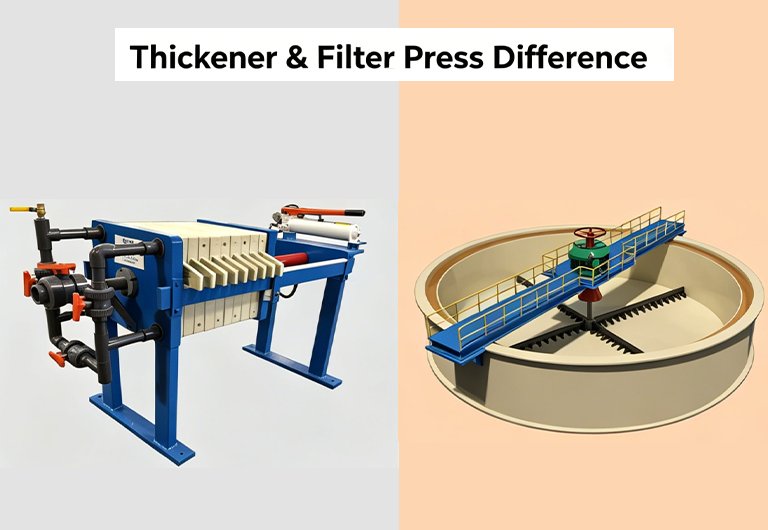
Confused about using a thickener or filter press for your mineral processing plant? Compare their differences, applications, and learn how to choose.
View details
Learn differences between single drum and three drum dryers. This detailed comparison tells thermal efficiency, footprint, initial cost, and ideal applications.
View details
Explore the 10 most common minerals, from Quartz to Halite. Discover their fascinating and essential uses in technology, construction, and your daily life.
View details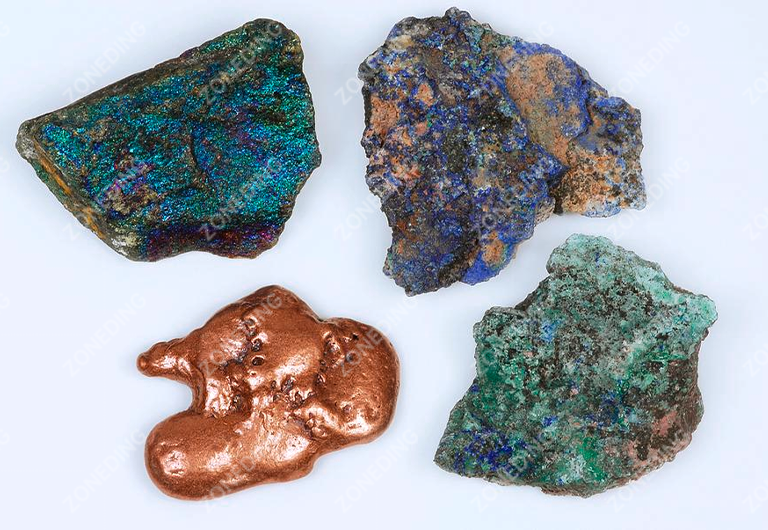
Wondering what are challenges when processing copper ore? Discover the main hurdles like declining ore grades and complex mineralogy, plus expert solutions.
View details