 Zoneding Mining

Site Search
Search products, equipment and solution articles
整站搜索产品中心新闻中心
点击开始搜索
热门搜索
UltraForm-MXFlexiPoly-RNanoForm Z300EcoFab P200
Search products, equipment and solution articles
Steel slag recycling is a highly profitable industrial venture in 2025. This byproduct of the steelmaking process contains valuable metallic iron and high-quality mineral aggregates. A professional Slag Processing Plant can separate these materials to generate massive revenue. Processing waste into road construction materials or cement additives reduces landfill costs and environmental impact. By using advanced crushing and magnetic separation technology, a steel mill or a recycling contractor can transform worthless “rubbish” into a high-demand commodity. Every ton of processed slag represents a dual stream of income from recovered scrap metal and recycled aggregate.
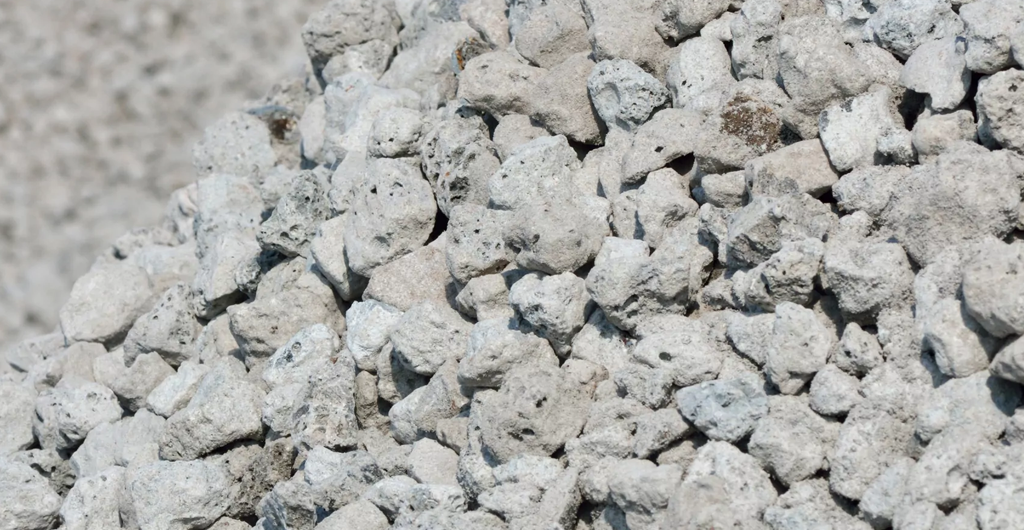
Profitability depends on the efficiency of the iron recovery from slag. High-quality machinery ensures that the metallic iron is fully liberated from the surrounding silicate matrix. ZONEDING MACHINE designs these systems to handle the extreme abrasiveness of the slag while maximizing the output of clean scrap. In many regions, the government provides subsidies for “Green Construction” projects that use recycled slag. This makes the business model even more attractive for private investors and industrial groups.
Last Updated: March 2026 | Estimated Reading Time: 25 Minutes
Steel slag is the non-metallic byproduct produced during the separation of molten steel from impurities in steelmaking furnaces. It is formed during two main processes: Basic Oxygen Furnace (BOF) and Electric Arc Furnace (EAF). The real value of steel slag lies in its 7% to 15% metallic iron content and its physical strength as a secondary aggregate. When properly processed in a ZONEDING Slag Processing Plant, the recovered iron can be directly returned to the furnace or sold to smelters as high-grade scrap. The remaining mineral portion is harder and more durable than many natural stones, making it a premium material for asphalt and concrete production.
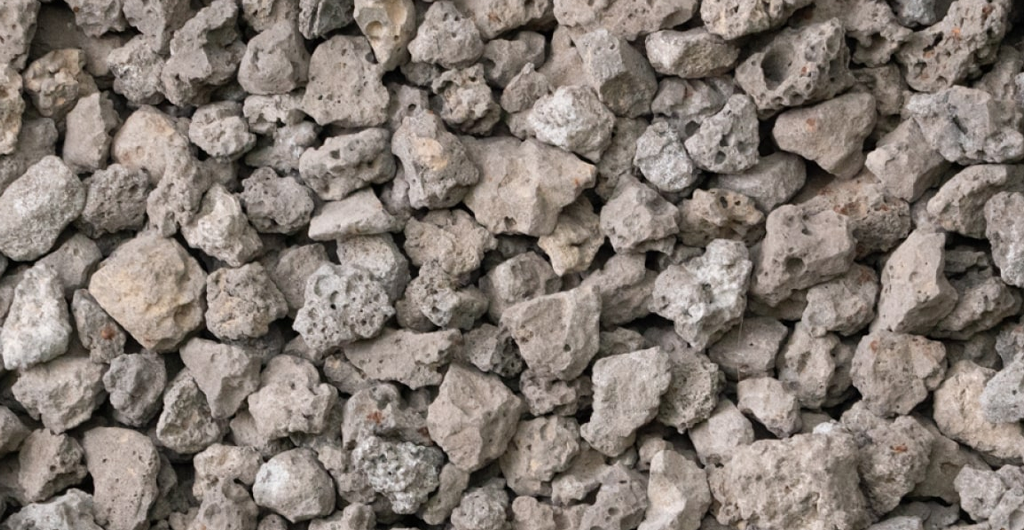
In 2025, global steel production remains high, and the volume of accumulated slag is a significant industrial challenge. However, modern technology no longer views slag as an “environmental liability.” Instead, the industry now refers to it as an “urban mine.” A ZONEDING Jaw Crusher is the first step in unlocking this value. By breaking down the large, solid slag blocks, the mineral-locked iron is liberated. Once free, this metal has a much higher market value than the raw slag. This transition from waste to resource is the foundation of high-profit recycling.
The composition of steel slag includes calcium, iron, silicon, magnesium, and aluminum oxides. It also contains small amounts of phosphorus and sulfur. These minerals make the slag highly alkaline, which is actually beneficial for neutralizing acidic soils in agricultural applications. In the construction industry, the high calcium content makes it a valuable additive for cement clinker production. Every element of the slag has a potential buyer if the processing line is designed correctly. ZONEDING focuses on these chemical characteristics to ensure the separation equipment matches the specific density of the material.
The price of recovered scrap iron from slag is closely tied to the global steel market. Because this iron is already refined, it is highly sought after by steel mills to reduce their raw material costs. Furthermore, the aggregate produced from steel slag often sells at a premium compared to river sand because of its superior interlocking properties in a roadbed. The market for “Green Construction Materials” is expanding rapidly in 2025, and steel slag aggregate fits this category perfectly. Using ZONEDING equipment ensures that the final products meet the sizing requirements of these high-value buyers.
| Recycled Material | Industrial Application | Potential Profit Level |
|---|---|---|
| Metallic Iron Scrap | Re-melting in furnaces | High – Tied to scrap steel prices |
| Fine Slag Powder | Cement and concrete additive | Moderate – High volume demand |
| Coarse Slag Aggregate | Road base and asphalt | Stable – Basic infrastructure need |
| Agricultural Slag | Soil pH neutralizer | Niche – Local farming demand |
The need for steel slag recycling is driven by both environmental regulations and economic scarcity. Landfilling slag is becoming prohibitively expensive in most countries. Recycling steel slag preserves natural resources by replacing the need for quarrying virgin stone and mining new iron ore. Furthermore, many governments now offer “carbon credits” or tax incentives for companies that utilize industrial waste. A ZONEDING Slag Processing Plant allows a company to meet these legal requirements while turning a mandatory waste-handling cost into a profit center. It is the definition of a circular economy.
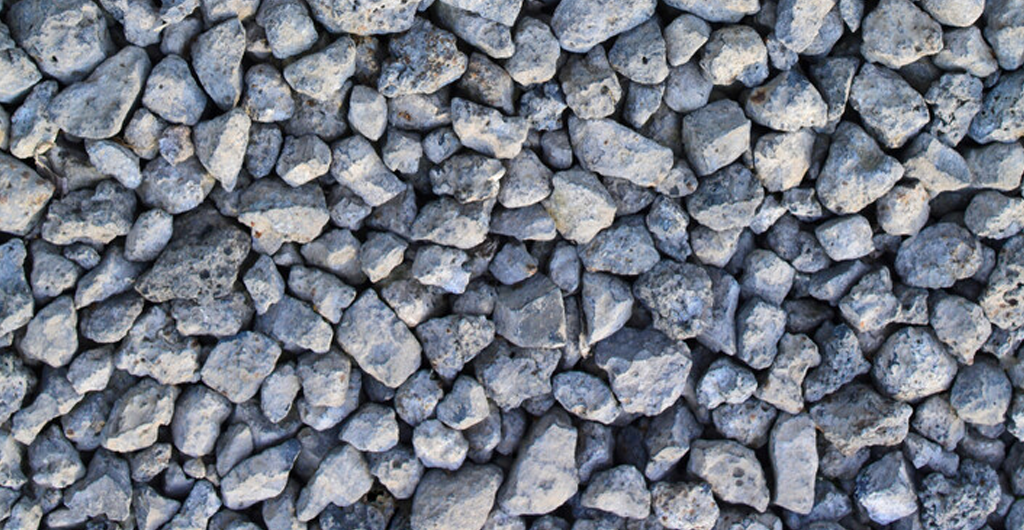
From a practical infrastructure perspective, steel slag is often superior to natural aggregate. Natural river sand is becoming scarce and environmentally protected in many regions. Steel slag aggregate is a perfect substitute. It has a high friction coefficient and excellent wear resistance. This is why it is frequently used on airport runways and heavy-duty highways. Processing this material is not just about cleaning up the environment. It is about providing the construction industry with the high-performance materials it needs for 2025. ZONEDING machinery makes this conversion efficient and scalable.
Recycling one ton of steel slag saves approximately 1.2 tons of original mineral resources. It also reduces the energy consumption and CO2 emissions associated with traditional mining. In the European Union and China, “Zero-Waste” mandates are forcing steel mills to find 100% recycling solutions. ZONEDING equipment helps these mills achieve these targets by providing high-recovery equipment. The environmental benefits of steel slag recycling enhance the corporate image and satisfy ESG (Environmental, Social, and Governance) investment criteria.
Steel mills often have limited space for waste storage. Mountains of slag can interfere with logistics and production flow. By installing a ZONEDING Mobile Crusher, a mill can process the slag on-site and move the finished products out immediately. This frees up valuable real estate for more production capacity. Turning a pile of waste into a moving stream of goods improves the overall operational efficiency of the entire steel plant. This logistical advantage is often as valuable as the recovered iron itself.
Steel slag is a unique material with physical properties that are very different from natural rock. It is exceptionally hard, dense, and abrasive, with a Mohs hardness of 6 to 7. This hardness makes it a great construction material but also makes it difficult to crush. Steel slag is also “vesicular,” meaning it has many small holes, which gives it a high surface area. Most importantly, it is highly magnetic due to the iron content. This magnetism is the property that allows a ZONEDING Slag Magnetic Separator to pull value out of the waste stream.
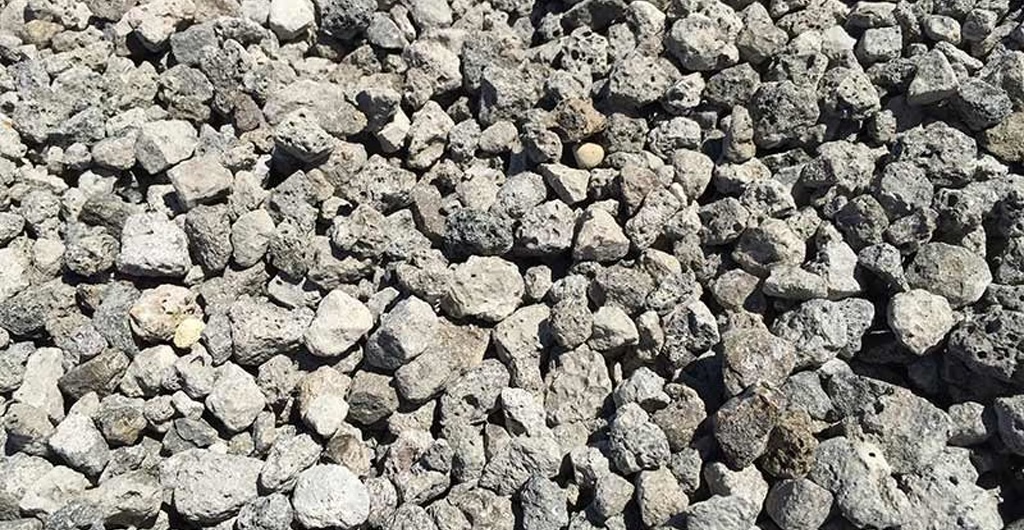
Understanding these properties is the only way to design a successful processing plant. Because slag is so abrasive, standard machinery will wear out very quickly. ZONEDING uses high-manganese and high-chrome alloys in its Steel Slag Crusher plates to resist this wear. If the properties are ignored, maintenance costs will consume all potential profits. A professional design accounts for the high density of the material, which is much heavier than limestone or granite. This allows for sturdier conveyors and more powerful motors in every ZONEDING design.
Unlike some brittle rocks, steel slag is very tough. It resists breaking and tends to “squish” rather than shatter if the crusher is not powerful enough. This requires high-torque motors and heavy flywheels. In a ZONEDING installation, the crushing force is calibrated specifically for these characteristics. This ensures that the slag breaks cleanly away from the metallic iron. This liberation is the most critical step for recovery. Without high-intensity crushing, the iron remains trapped in the aggregate and is lost.
The magnetism in the slag is not uniform. Some pieces are pure iron, while others have tiny iron “beads” trapped inside. A ZONEDING Slag Magnetic Separator uses variable magnetic fields to capture everything from large chunks to fine particles. The high density of the slag (typically 3.2 to 3.6 g/cm³) also means that the conveyors and structures must be built stronger than a standard gravel plant. Designing for these specific properties is what makes ZONEDING a preferred partner for international slag recycling projects.
Processing steel slag is significantly more difficult than processing natural stone or concrete. The primary difficulty is the “Metal-Mineral Bond,” where metallic iron is tightly fused to the stony slag. If the crushing stage is not intense enough, the iron stays “locked” in the waste. This lead to a low recovery rate. Additionally, the abrasive nature of the slag causes rapid wear on all contact parts. If a plant uses low-quality liners, the Steel Slag Crusher will require expensive repairs every few weeks.
Another major challenge is “Magnetic Interference.” Because the scrap iron is irregular in shape, it can sometimes get tangled with the non-magnetic aggregate. This results in “dirty” scrap or iron-contaminated aggregate. Both issues lower the selling price. ZONEDING solves this by using a multi-stage magnetic separation flowsheet. By using different magnetic strengths at different sizes, the plant achieves a cleaner separation. Technical expertise prevents the common failures seen in amateur slag recycling setups.
The primary enemy of a slag plant is wear. Every conveyor belt, chute, and crusher jaw is under constant attack. Many new operators underestimate this. They purchase a standard aggregate plant and find it destroyed in three months. ZONEDING addresses this by using “Sacrificial Wear Liners” in all critical impact zones. These liners are made of hardened steel and are designed to be replaced quickly. This protects the main machine body and ensures the equipment lasts for many years in high-production environments.
Fresh slag can still be hot when it arrives at the processing line. This heat can damage standard conveyor belts. ZONEDING provides heat-resistant belts and cooling sprays to manage this risk. Furthermore, fine slag dust is very sharp and can damage bearings. ZONEDING machinery uses specialized seals to keep the dust out of the moving parts. Managing these “invisible” difficulties is the key to running a 24/7 operation without constant emergency shutdowns.
An “Industrial slag processing flowsheet” follows a clear path from raw waste to sorted products. The steps include primary crushing to break large blocks, multi-stage magnetic separation to remove metal, screening to sort sizes, and secondary grinding for fine iron liberation. This systematic approach ensures that nothing of value is sent to the tailing pile. In 2025, modern ZONEDING plants are fully automated. This allows a single operator to manage the entire flow from a control room.
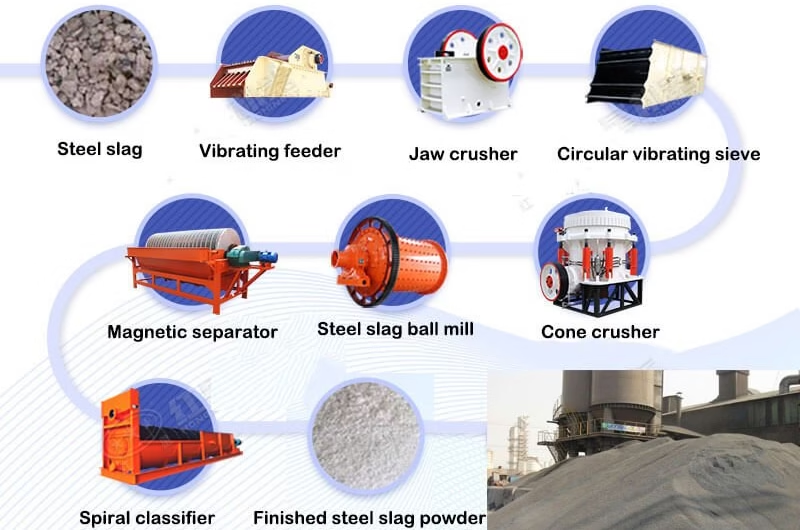
Liberation is the term for breaking the physical bond between the metal and the rock. If the slag is not ground or crushed finely enough, the magnetic separator only picks up “iron-rich rock” instead of “pure iron.” ZONEDING engineers emphasize the secondary crushing stage. This stage is where the high-value metallic iron is finally freed. By maximizing liberation, the Slag Magnetic Separator can achieve a 95% recovery rate of the total iron content.
A single screening deck is never enough for profitable recycling. A ZONEDING plant typically uses multiple decks to create precise products. The 0-5mm fraction is sold to cement plants. The 5-20mm fraction is sold for road sub-base. The sorted metallic iron is sold back to the steel mill. This “Product Diversity” is how a recycler survives market fluctuations. If the price of road aggregate drops, the revenue from scrap iron can still keep the plant highly profitable.
Recovery of metallic iron from steel slag is the most important profit metric. ZONEDING maximizes this rate through “High-Gradient Magnetic Field” technology. Unlike standard magnets, ZONEDING Slag Magnetic Separator units are designed with deep-reach magnetic circuits that grab iron even when it is buried under a layer of slag. This prevents valuable metal from “riding along” with the aggregate into the waste bin. By capturing just 2% more iron than a competitor, a plant can generate an extra $50,000 to $100,000 in yearly profit.
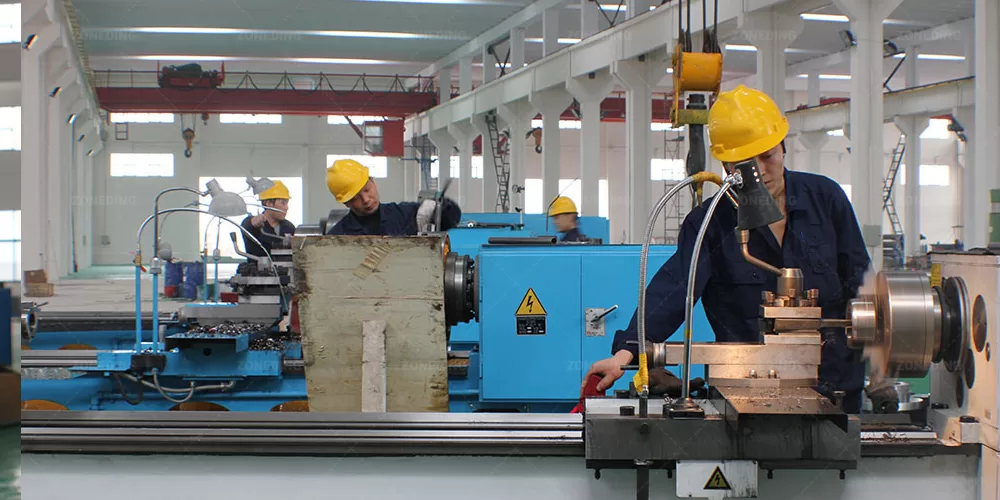
The design also includes specialized “Cleaning Belts.” These belts use a specific vibration to shake off non-magnetic dust from the recovered iron. This results in a much higher “Total Fe” grade in the scrap. Smelters will pay a significantly higher price for clean iron scrap compared to dirty slag-metal mixtures. ZONEDING doesn’t just recover the metal. It cleans it. This focus on “Concentrate Grade” is what makes ZONEDING the preferred partner for “Recovery of metallic iron from steel slag.”
Every ZONEDING flowsheet is customized to the specific slag type. For EAF slag, which has higher iron, multiple over-belt magnets are used. For BOF slag, which is more brittle, drum-style separators are prioritized. This custom placement ensures that the magnetic force is applied exactly where the material is most liberated. Precision engineering is the secret to these industry-leading recovery rates in 2025.
| Separation Stage | Machine Type | Target Material | Practical Benefit |
|---|---|---|---|
| Primary Mag | Over-belt Magnet | Large Furnace Scrap | Immediate high-value cash flow |
| Secondary Mag | Magnetic Drum | 5-10mm Iron Beads | Maximizes overall metal recovery |
| Fine Recovery | Rare Earth Plate | <2mm Metallic Fines | Increases total Fe grade of tailings |
For owners who want the absolute maximum profit, ZONEDING suggests a vertical mill or fine crusher. Fine grinding liberates even the microscopic iron particles. These particles are then recovered using a magnetic separator. This “Fine-Recovery” circuit is how high-tech plants are reaching 99% iron recovery. It turns the final residue into a clean, uniform mineral powder that is highly valued by the sustainable construction industry. This level of recovery is unmatched by basic crushing lines.
A steel slag plant is a high-impact environment. Constant maintenance is the price of high profit. Weekly maintenance should focus on three areas: Jaw Crusher liner wear, Magnetic Separator belt tension, and Bearing lubrication. Because slag is so heavy and abrasive, bolts can vibrate loose and lubricants can be contaminated by fine dust. A ZONEDING plant includes an “Easy-Access” design. This allows maintenance crews to inspect and replace parts quickly. This minimizes the downtime that can damage monthly revenue.
The Return on Investment (ROI) for a slag processing line is one of the fastest in the mining and recycling industry. Due to the high market value of recovered scrap iron, a ZONEDING Slag Processing Plant often reaches its break-even point in 12 to 18 months. In some high-volume steel mill environments, the recovered metal alone pays for the entire plant in less than a year. The “Recovery of metallic iron from steel slag” is effectively like finding money in the waste pile.
Unlike natural rock quarries, a slag recycler does not need to pay for drilling or blasting. The raw material is already piled up and waiting. The steel mill is often happy to give the slag away for free or even pay a “removal fee.” This means the raw material cost is zero or negative. With zero feedstock costs and high-value scrap outputs, the profit margins are much larger than a standard aggregate plant. Successful plant owners focus on maximizing throughput to speed up this timeline.
Profitability in steel slag waste comes from the dual-recovery of metal and mineral products.
Last Updated: May 2025
Explore silica sand processing flow, including crushing, washing, screening, magnetic separation, and flotation technique essential for industrial applications.
View details
A clear guide to the coal mining. Learn key stages: mining, preparation (cleaning), transportation, pulverization, and combustion for electricity generation.
View details
Know how mining tailings as a source for minerals, rare earths, and other valuable metals. Understand the economics and technologies to process tailings.
View details
Delve into dolomite:definition, properties,formation, and industrial processes for mining, crushing, grinding, and calcining it for various applications.
View details