 Zoneding Mining

Site Search
Search products, equipment and solution articles
整站搜索产品中心新闻中心
点击开始搜索
热门搜索
UltraForm-MXFlexiPoly-RNanoForm Z300EcoFab P200
Search products, equipment and solution articles
You want to produce high-purity titanium dioxide (TiO2) from raw ilmenite ore. To make this profitable, you need a processing plant that minimizes waste and maximizes recovery. An ilmenite processing plant uses a combination of gravity, magnetic, and electrostatic separation to isolate the valuable minerals from waste sand. We design and build these complete systems for mines across the globe. This guide explains the exact equipment you need and the most efficient process flow to ensure your plant runs at peak performance.
Last Updated: May 2026 | Estimated Reading Time: 18 Minutes
An ilmenite processing plant is an industrial facility designed to concentrate ilmenite (FeTiO3), a primary ore of titanium, from raw mineral sands or hard rock. The goal is to increase the percentage of TiO2 in the final product. Most ilmenite is found in “heavy mineral sands,” which are mixtures of various minerals with high specific gravities.
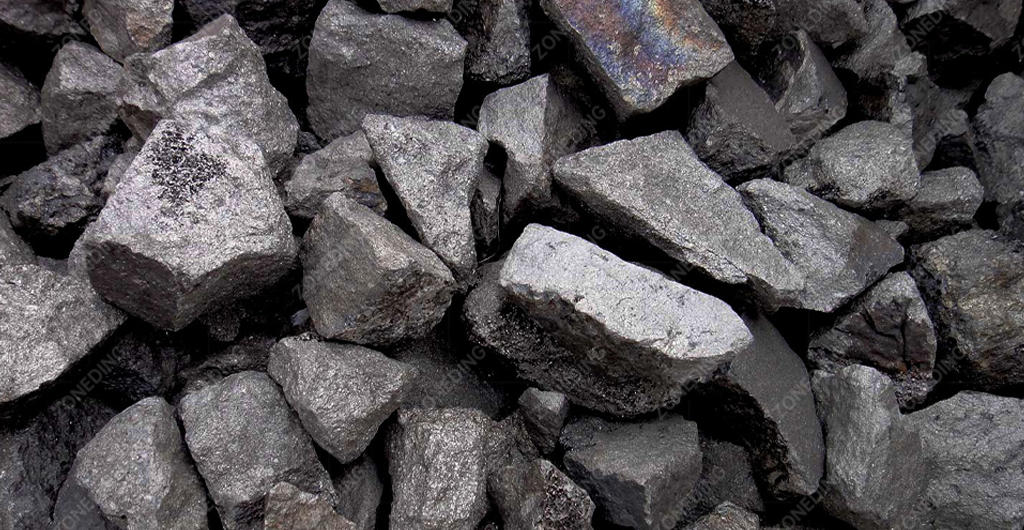
Processing this ore is a journey of elimination. You start with a huge volume of raw sand and remove the light waste first. Then, you remove non-magnetic minerals. Finally, you isolate the pure ilmenite. ZONEDING specializes in creating these “elimination” sequences. We build the heavy machinery that handles thousands of tons of sand per hour. Our plants are designed to handle both beach sand deposits and hard rock ilmenite. By using a precise sequence of machines, we help you turn low-grade raw ore into a high-value industrial concentrate that sells for a premium on the global market.
You need a specific set of machines that target the physical properties of ilmenite: its weight, its magnetism, and its electrical conductivity. Since ilmenite is much heavier than quartz sand and is naturally magnetic, you can separate it without using expensive chemicals.
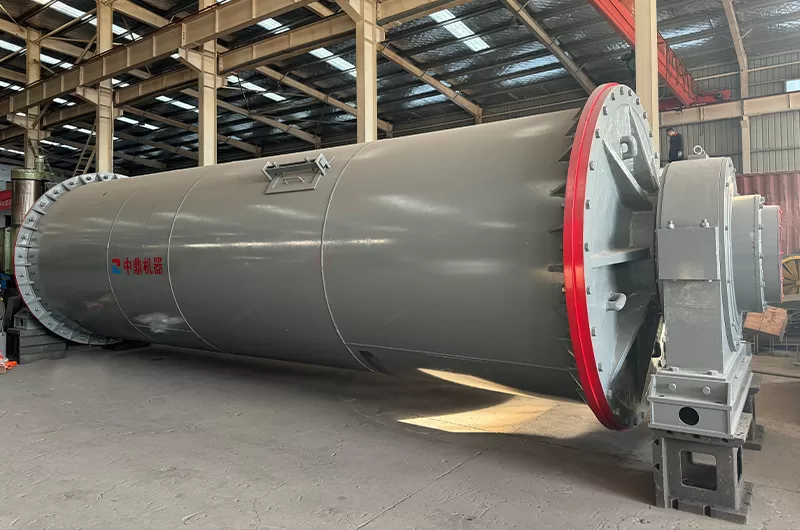
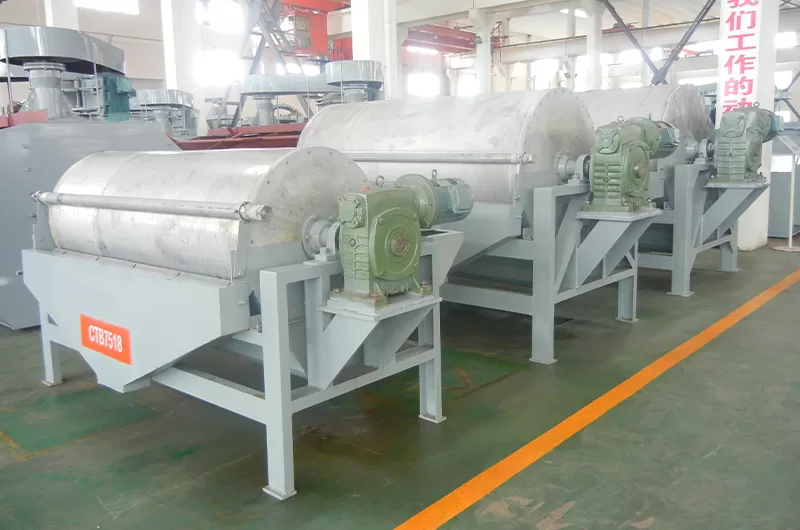
For hard rock deposits, you must start with crushing. We provide heavy-duty Jaw Crushers to break large boulders into manageable pieces. After crushing, the ore often needs grinding in a Ball Mill to liberate the ilmenite crystals from the waste rock. For beach sands, you can skip the crushing and go straight to gravity separation. ZONEDING manufactures the entire suite of equipment, from the first crusher to the final magnetic separator. This ensures every machine in your line fits perfectly and operates at the same capacity.
Different stages of the plant require different tools. You cannot rely on one machine to do everything. You must use a “roughing” machine for bulk removal and a “cleaning” machine for final purity.
| Equipment Type | Primary Function | Target Property | Your Practical Benefit |
|---|---|---|---|
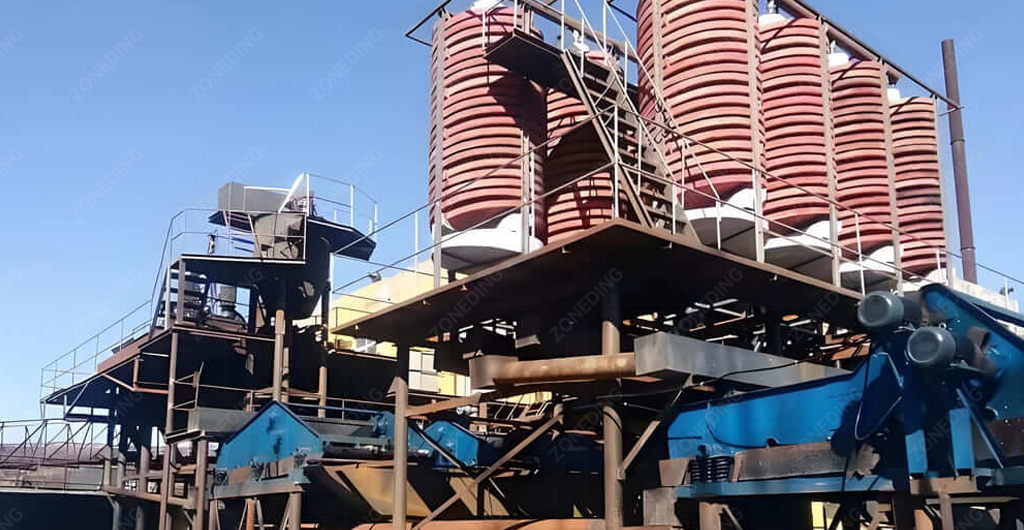
| Spiral Concentrator | Bulk Waste Removal | High Density | Removes 70% of waste sand cheaply |
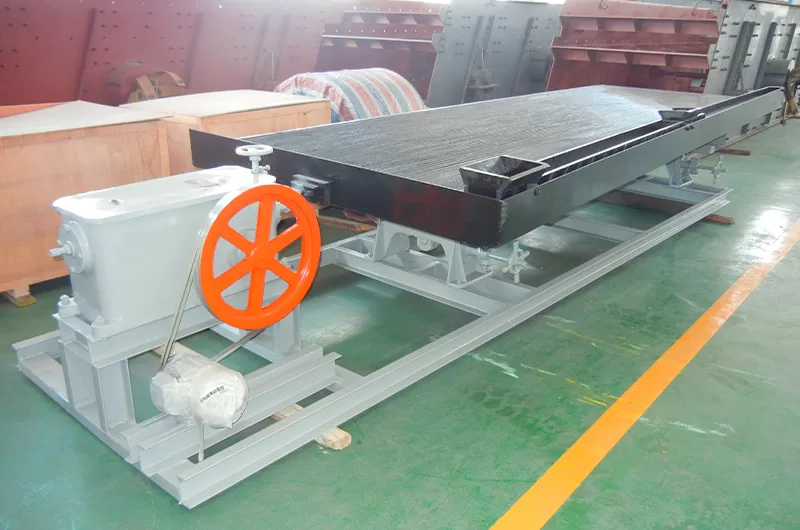
| Shaking Table | Precision Cleaning | Specific Gravity | Produces a very high-grade concentrate |
| Magnetic Separator | Mineral Isolation | Paramagnetism | Separates ilmenite from rutile and zircon |
| Vibrating Screen | Size Classification | Particle Size | Ensures uniform feed for the spirals |
The most efficient process flow for ilmenite follows a “Gravity → Magnetic → Electrostatic” sequence. This order is critical because it removes the largest volume of waste first using the cheapest method.
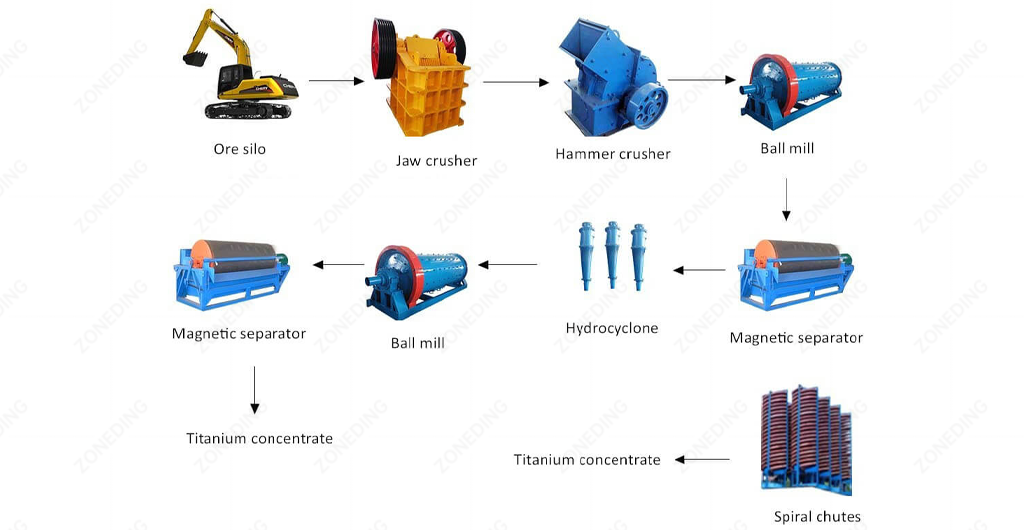
First, the raw ore enters the Feed Preparation Stage. Here, vibrating screens remove oversized rocks and trash. Next is the Gravity Separation Stage. The sand flows through spiral concentrators. The heavy ilmenite sinks to the inside of the spiral, while the light quartz sand washes to the outside. This “rougher” concentrate then goes to “cleaner” spirals or shaking tables to reach a higher grade.
Third is the Dry Separation Stage. The concentrate is dried and passed through magnetic separators. Since ilmenite is magnetic and minerals like rutile or zircon are not, the magnets pull the ilmenite away. Finally, electrostatic separators are used if you need to separate the remaining non-magnetic minerals. ZONEDING designs these flowsheets to be “closed-loop.” This means we recycle the water and the waste materials to ensure zero waste and lower operating costs.
To get the highest purity, you must control the particle size and the water velocity with extreme precision. If the water flows too fast, the small ilmenite particles wash away with the waste. If it is too slow, the waste sand contaminates your concentrate.
You should implement a multi-stage cleaning process. Never rely on a single pass through a spiral. We recommend a “Rougher-Cleaner-Scavenger” circuit. The rougher catches most of the metal. The cleaner polishes the product for purity. The scavenger recovers any remaining bits from the waste.
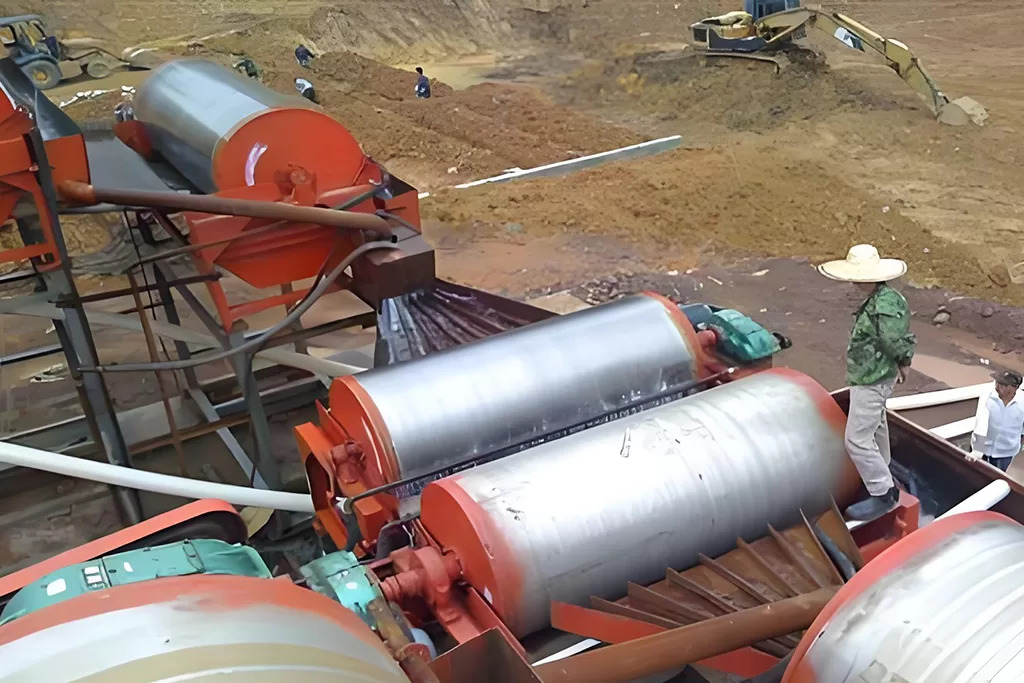
Another secret to high purity is the use of magnetic intensity. Ilmenite has varying levels of magnetism. By using ZONEDING’s adjustable high-intensity magnetic separators, you can fine-tune the magnetic field. This allows you to separate low-grade ilmenite from high-grade ilmenite. We also suggest using Mineral Processing Equipment that allows for real-time adjustments. This means your operator can change the settings instantly if the raw ore quality changes during the day.
The biggest challenges are “slimes” (ultra-fine particles) and the presence of competing minerals like rutile and zircon. Slimes increase the viscosity of the water. This makes the heavy minerals float instead of sink, which ruins your recovery rate.
To fight slimes, you must install a desliming cyclone before the gravity stage. This machine spins the mud at high speeds to throw the tiny clay particles out. ZONEDING cyclones are designed to remove everything below 45 microns. This cleans the water and allows the ilmenite to sink faster in the spirals.
Another challenge is “mineral locking.” This happens when ilmenite is trapped inside a piece of waste rock. You cannot separate it with gravity or magnets if it is still locked. In these cases, you need a more aggressive grinding stage. We provide high-efficiency ball mills to ensure the minerals are fully “liberated.” By solving these two problems—slimes and locking—you can increase your final product purity from 45% to over 60% TiO2.
A medium-sized mining company in Western Australia needed to process a complex mix of ilmenite and zircon. The site had a high clay content, which caused their existing spirals to clog.
We discovered the clay “slimes” were creating a thick mud that blocked the gravity separation. We redesigned their front-end. First, we installed a ZONEDING hydro-cyclone cluster to remove the clay. Second, we implemented a three-stage spiral circuit (Rougher, Cleaner, Scavenger). Finally, we added high-intensity magnetic separators to isolate the ilmenite from the zircon. The result was a clean, high-purity ilmenite concentrate and a separate, high-value zircon product. Their overall recovery jumped to 91%, and the plant now operates with 20% less water consumption.
You must choose a manufacturer that understands the chemistry of your specific ore and can provide a complete, integrated system. Many suppliers sell individual machines, but they cannot tell you how to connect them for maximum profit.
Look for a supplier that offers “Turnkey” solutions. This means they handle everything from the first design drawing to the final test run. Check if the factory has its own engineering team. ZONEDING employs 15 specialized mineral processing engineers who do the math for you. We calculate the exact slope of your spirals and the exact strength of your magnets.
Also, consider the cost of spare parts. Because ilmenite is abrasive, you will need new liners and screens every few months. Buying from a direct manufacturer like ZONEDING means you get parts faster and cheaper. We don’t use middlemen, so you don’t pay “trading fees.” We ensure that every part we ship fits your machine perfectly, reducing your downtime.
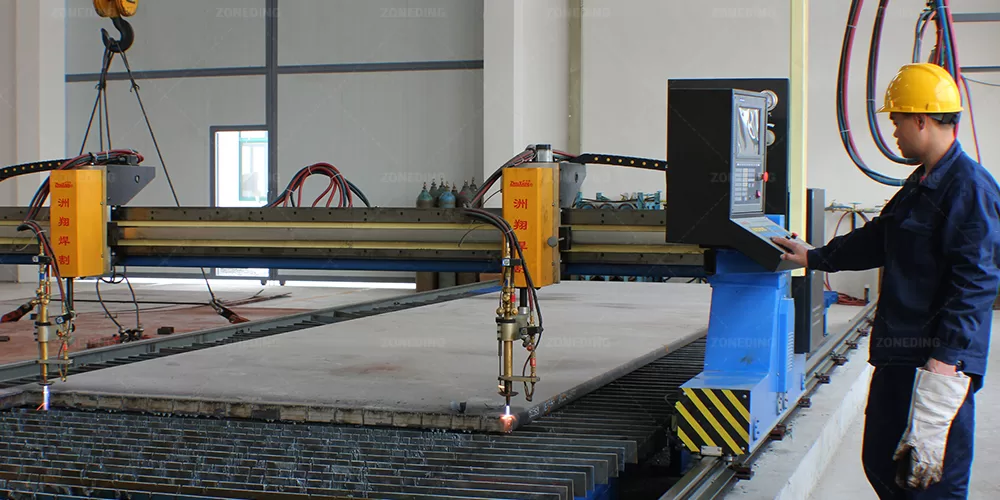
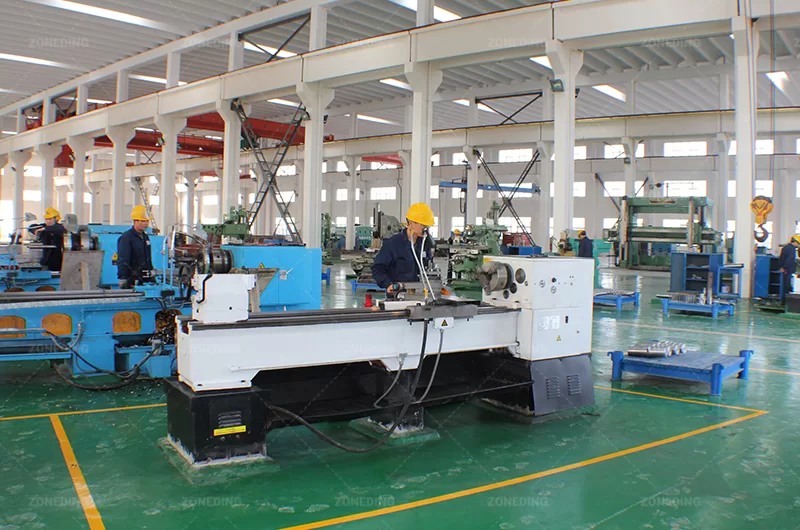
ZONEDING MACHINE is a world-leading manufacturer of mineral processing equipment, serving B2B clients in over 120 countries. We operate a massive 8000-square-meter factory equipped with the latest CNC machinery and robotic welding. This allows us to build heavy-duty equipment that survives the toughest mining conditions. Our team of 15 expert engineers ensures that every plant we design is optimized for the specific grade and type of ore our clients mine.
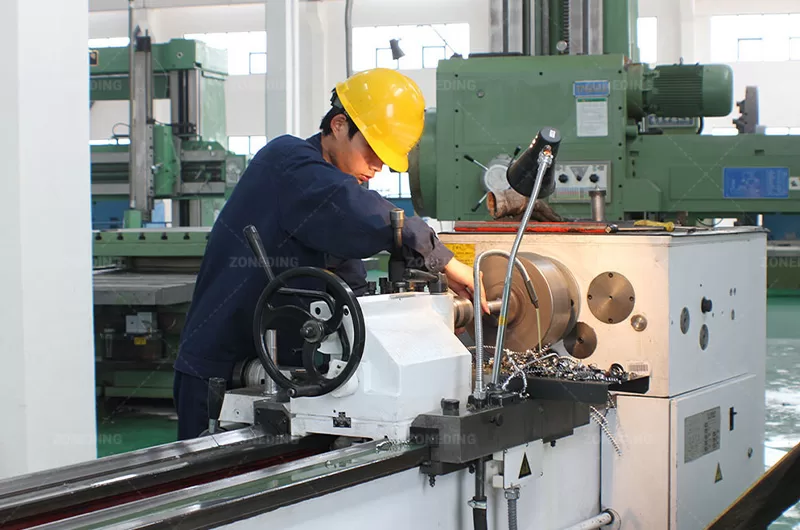
We provide a true one-stop solution. We don’t just sell you a machine; we design your entire production line, handle the shipping, and help you with the installation and staff training. By selling factory-direct, we provide the most competitive pricing in the industry without compromising on the quality of the steel or the precision of the engineering. Whether you are starting a small sand mine or a massive industrial plant, ZONEDING delivers the reliability and efficiency you need to maximize your profits.
The industry is moving toward “Smart Mining” and waterless separation to reduce the environmental footprint of titanium production. New sensors and AI are replacing manual adjustments.
ZONEDING is integrating these smart technologies into our latest plant designs. We are focusing on “Water-Lean” processing. In regions where water is scarce, we provide advanced thickeners and filter presses that recover 95% of the process water. This not only protects the environment but also lowers your utility bills. By adopting these 2026 trends, your plant will remain competitive and compliant with strict international environmental laws.
Building a profitable ilmenite processing plant requires a strategic approach to mineral separation. You must remove waste in stages: first by weight (gravity), then by magnetism (magnetic separators), and finally by electricity (electrostatic). The key to success is the “Flowsheet”—the order in which your machines are placed.
Next Step: Do not buy equipment based on a catalog. Send us a sample of your raw ore today. Our engineers will run a laboratory test and provide you with a custom flowsheet and a direct factory quote to maximize your TiO2 recovery.
Last Updated: May 2026
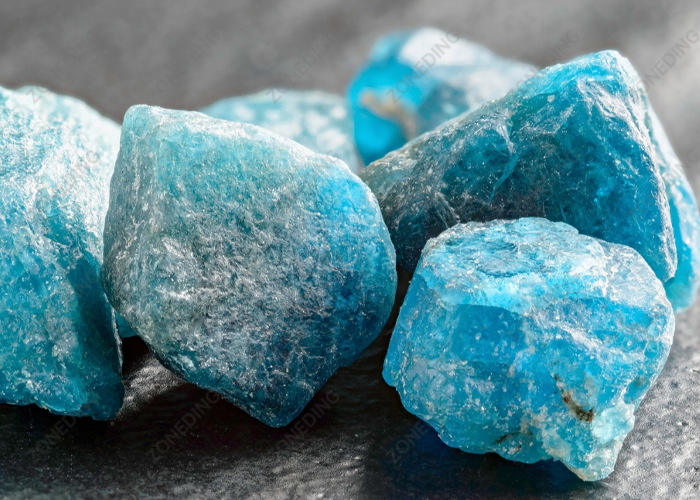
Searching for the 5 uses of apatite? From phosphoric acid manufacturing to its role as an ore of phosphorus, explore why this mineral is indispensable.
View details
Discover everything about iron ore.This guide covers its definition, main types, how it's mined, and its critical role in modern industry. Read Now!
View details
This guide tells advantages, disadvantages, applications, capabilities, and maintenance considerations of Closed-Circuit and Open-Circuit crushing plant.
View details
Improve sand plant's efficiency! This blog explains how hydrocyclones and separators work, and when to choose each for optimal sand processing and recovery.
View details