 Zoneding Mining

Site Search
Search products, equipment and solution articles
整站搜索产品中心新闻中心
点击开始搜索
热门搜索
UltraForm-MXFlexiPoly-RNanoForm Z300EcoFab P200
Search products, equipment and solution articles
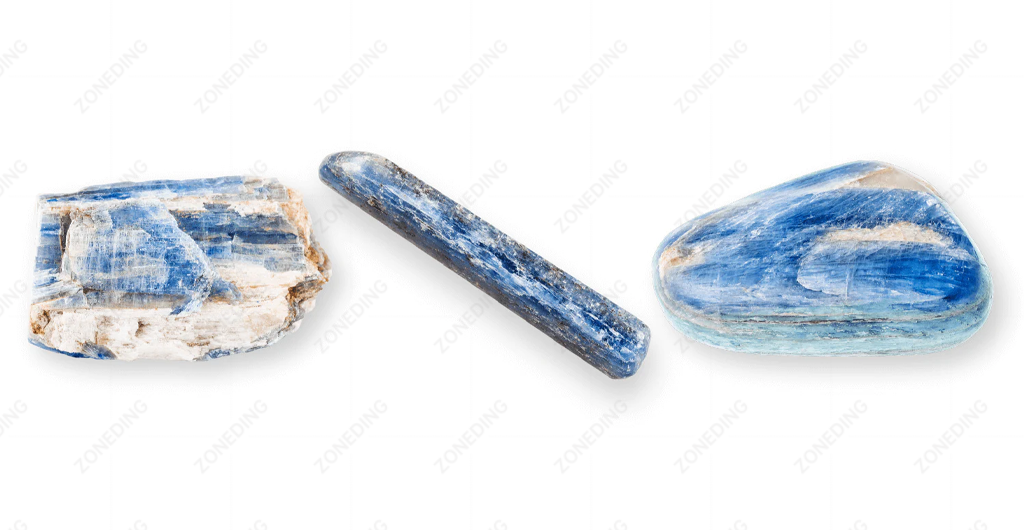
A kyanite processing plant is a sophisticated industrial facility designed to upgrade raw aluminosilicate ore into high-grade concentrate. Kyanite is a highly valued mineral in 2025 because it expands significantly when heated to form mullite. This property makes it essential for high-temperature refractories, ceramics, and foundries. Most raw kyanite deposits contain significant impurities like quartz, iron oxides, and mica. To achieve the 56% to 60% alumina (Al2O3) levels required for global trade, a professional Mineral Processing Plant design is mandatory. The process involves multiple stages of physical and chemical separation to isolate needle-like kyanite crystals from the host rock.
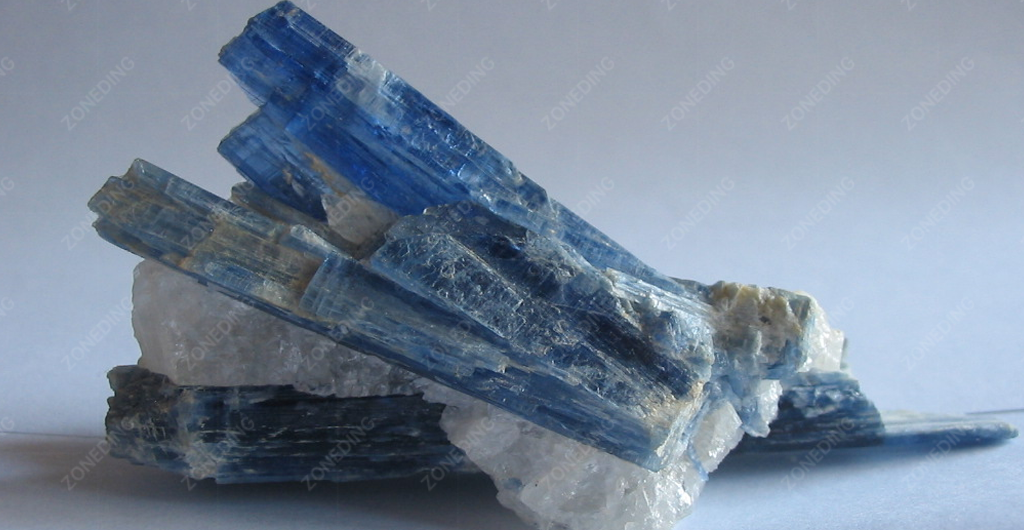
ZONEDING MACHINE provide the specialized heavy-duty infrastructure to make this production possible. Kyanite is notoriously abrasive and requires exceptionally durable crushing and grinding circuits to maintain a high throughput. Whether a mining group is building a new facility or upgrading an existing line, the flowsheet must be tailored to the specific mineralogy of the ore. From the primary Jaw Crusher to the final high-intensity magnetic separator, every piece of equipment plays a vital role in the final purity. This guide explores the modern beneficiation methods and the complete flowsheet used to achieve top-tier kyanite recovery in today’s industrial market.
Last Updated: March 2026 | Estimated Reading Time: 25 Minutes
The first stage of any kyanite processing operation is size reduction and mineral liberation. Raw kyanite ore usually arrives in large, hard blocks that must be broken down to expose the individual crystals. A multi-stage crushing circuit is the most efficient method because kyanite ore is typically very hard and abrasive. A primary jaw crusher followed by a secondary cone crusher ensured that the feed for the grinding mill is uniform. This systematic reduction is critical. If the feed particles stay too large, the grinding mill will consume excessive energy and suffer from accelerated liner wear. Consistent rock sizing at this stage is the foundation of a high-capacity plant.
After the ore is reduced to under 20mm, it enters the fine grinding circuit. A ZONEDING Ball Mill is used to grind the ore to a specific fineness, usually between 0.15mm and 0.45mm. This is a very sensitive process. If the grind is too fine, it creates “slimes” that are difficult to recover during flotation. If the grind is too coarse, the kyanite particles remain “locked” with quartz, leading to low purity. A ZONEDING Spiral Classifier is used in a closed loop with the ball mill. This machine assesses every particle and returns coarse pieces for more grinding. This ensures that only perfectly sized material moves forward to the flotation cells.
For the primary stage, the PE series Jaw Crusher is the standard industrial choice. It features high-manganese plates designed specifically to handle abrasive minerals. For the secondary stage, a high-efficiency cone crusher is preferred because it creates a “cubical” shape. This shape is much easier for the ball mill to process. In 2025, many plants utilize a Mobile Crusher to bring the primary crushing stage closer to the mine face. This reduction in truck transport distance leads to significant savings in fuel and labor costs.
Kyanite grinding is almost always performed as a wet process. Water helps transport the fine powder and prevents dust generation in the plant. Once the slurry leaves the ball mill, it often contains “slimes,” which are micro-fine clay and mica particles. These slimes coat the mineral surfaces and prevent flotation chemicals from working correctly. A desliming stage, using a ZONEDING classifier or hydrocyclones, is essential. Removing these fine particles early ensures that reagents can attach directly to the kyanite, which can increase overall recovery by as much as 8%.
| Crushing/Grinding Stage | Core Equipment | Target Size | Primary Benefit |
|---|---|---|---|
| Primary Crushing | PE Jaw Crusher | < 125mm | Initial rock reduction |
| Secondary Crushing | HP Cone Crusher | < 20mm | Consistent mill feed |
| Fine Grinding | MHG Ball Mill | 200 Mesh | Liberation of crystals |
| Classification | Spiral Classifier | Precise cut | Control of grind size |
Flotation is the core beneficiation method for high-grade kyanite production. It is a chemical-physical process that separates kyanite from common impurities like quartz and mica. In a ZONEDING Flotation Machine, the ground ore slurry is mixed with specialized collectors. These reagents make the kyanite crystals hydrophobic, allowing them to attach to air bubbles and float. The waste quartz remains at the bottom. This method allows the plant to “skim” high-grade kyanite off the top of the pulp. In 2025, multi-cell rows are used to ensure that even the smallest grains of kyanite are captured.
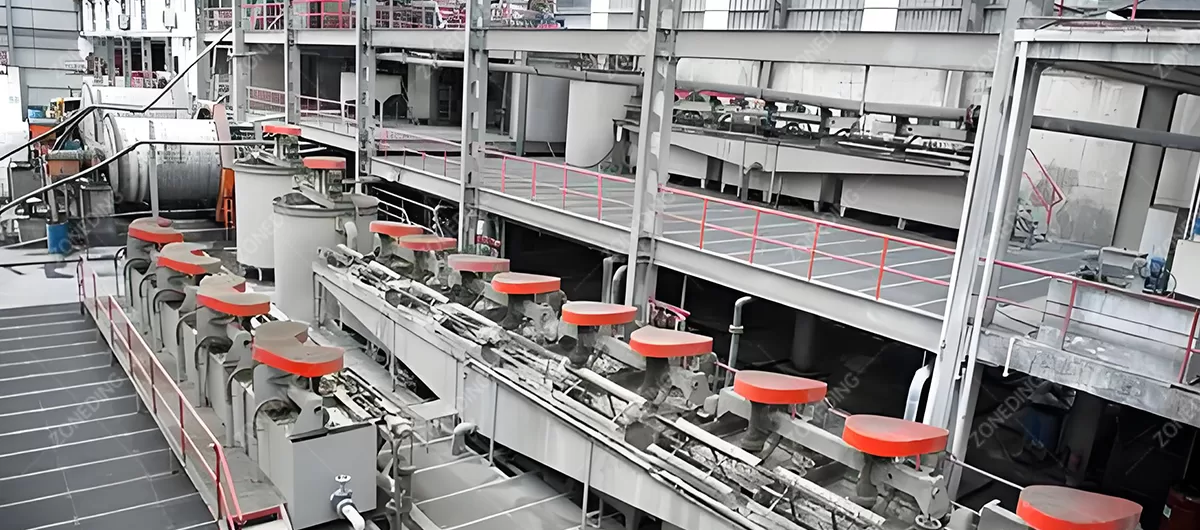
The sequence of the flotation cells is vital for success. The common industry practice is to remove mica first because it floats easily. After mica removal, the kyanite flotation stage begins. A “Roughing-Cleaning-Scavenging” circuit is the standard layout. The roughing stage captures the majority of the kyanite. The cleaning stage then re-washes that concentrate to reach the 58% or 60% alumina grade. Finally, the scavenging stage attempts to recover any remaining kyanite from the waste tailing. This multi-step process is the only reliable way to produce a concentrate clean enough for the global refractory market.
Kyanite flotation is highly sensitive to the chemistry of the water. Petroleum sulfonates are frequently used as the primary collectors. The pH of the slurry must be carefully controlled, typically held around 3 for acidic flotation or 9 for alkaline flotation. Most high-purity operations prefer the acidic route because it results in a cleaner final product. ZONEDING flotation cells are built with high-quality stainless steel or acid-resistant rubber linings. This protects the equipment from corrosive water and ensures a service life of many decades.
The mechanics of the flotation cell are as important as the chemicals used. Every ZONEDING Flotation Machine features a high-performance impeller that creates the ideal size of air bubbles. Bubbles that are too large cannot hold the weight of the kyanite. Bubbles that are too small lack sufficient lift. The ZONEDING design provides a very stable “froth zone.” This stability makes it easier for plant operators to adjust the grade and recovery in real-time. Consistent mechanical performance is the key reason why ZONEDING clients reach higher purity levels than their competitors.
Even after the flotation stage, many kyanite concentrates still contain small amounts of iron oxides. Iron is considered a “poison” in the refractory industry because it lowers the melting point of the bricks. High-intensity magnetic separation is the final purification step. A ZONEDING Magnetic Separator uses high-powered magnets to pull out fine grains of magnetite and hematite. By removing these iron-bearing minerals, the iron content (Fe2O3) can be reduced from 1.5% to below 0.5%. This shift in quality allows the kyanite to be sold to premium glass and high-end ceramic manufacturers at a much higher price.
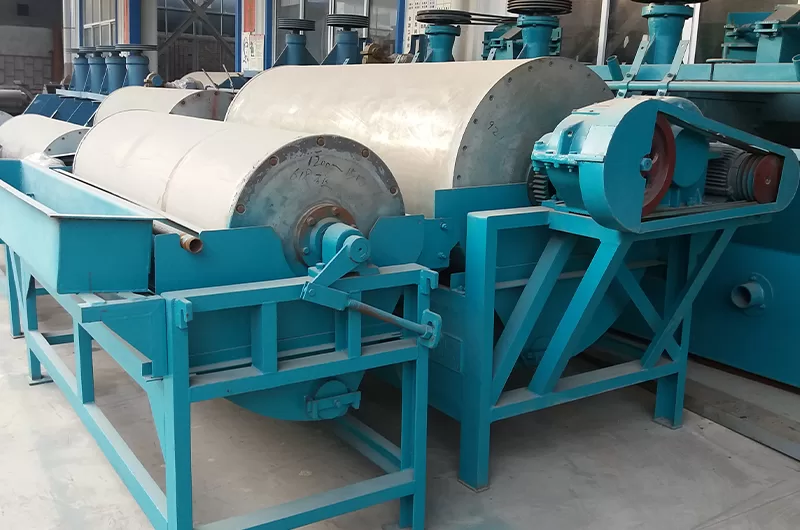
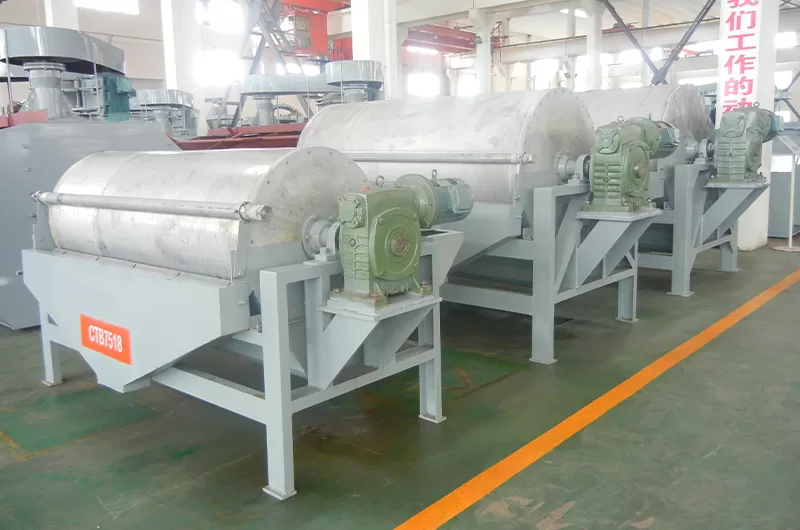
High-gradient magnetic separation is required because kyanite itself is non-magnetic. Iron minerals are often only weakly magnetic and require a massive picking force to be separated from the kyanite crystals. ZONEDING magnetic drums utilize rare-earth permanent magnets that provide a massive picking force. This process is highly cost-effective because it only requires electricity to turn the drum, not to create the magnetic field. It is the most profitable “finishing touch” a plant can add to its flowsheet.
Depending on the local environment and product requirements, magnetic separation can be performed as a wet or dry process. Wet separation is usually integrated immediately after flotation while the material is still in a slurry. It is highly efficient at removing fine iron dust. Dry separation is used if the final product is a “dry flour.” In such cases, the material must first pass through a ZONEDING Rotary Dryer. Most 2025 modern flowsheets prioritize the wet method because it fits seamlessly into the continuous flow of the processing line.
High-intensity separation is about more than just numbers; it is about brand protection. If a shipment of kyanite contains excessive iron, the final customer’s kiln bricks might fail prematurely. This leads to costly downtime and damage to the supplier’s reputation. Including a ZONEDING magnetic separator in the flowsheet provides a “quality guarantee” for every ton produced. This level of reliability makes a mineral brand the preferred choice for demanding industrial buyers in North America and Japan.
A standard flowsheet for a kyanite processing plant is a sophisticated roadmap designed for maximum mineral recovery. Modern designs prioritize a “closed-loop” system to recycle water and minimize waste. In 2025, operating efficiency is the primary goal. The logic of the flowsheet is to remove waste early through crushing and screening, followed by progressive refinement through grinding, desliming, flotation, and magnetic cleaning. This step-by-step approach ensures that high-value equipment is not overwhelmed by waste rock and that the final concentrate meets “super-high” grade standards.
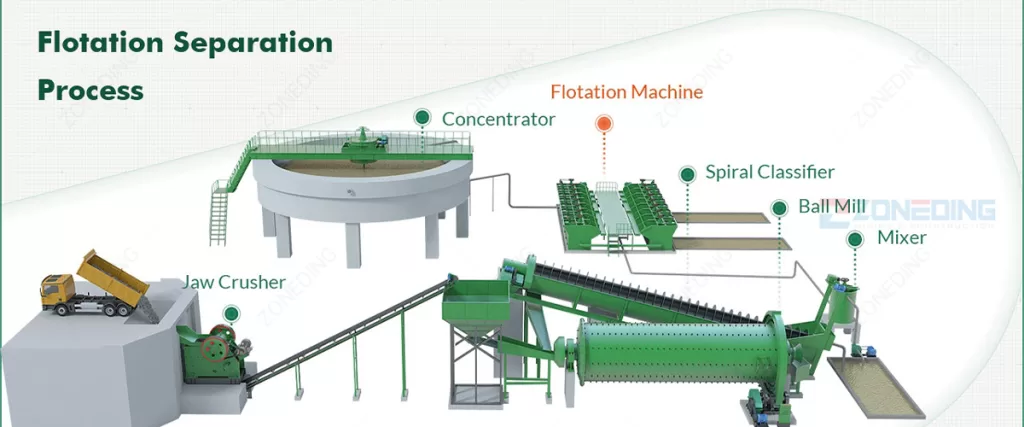
No two kyanite deposits are identical. Some mining sites have high mica content, while others contain significant garnet or sulfur. This is why custom flowsheet engineering is essential. ZONEDING engineers analyze various ore samples to determine the exact number of flotation cells and the precise magnetic field strength required. This customization ensures that a project does not over-spend on unnecessary equipment while ensuring that no valuable kyanite is lost in the tailings.
In 2025, flowsheet designs include advanced sensors and automated valves. These sensors monitor pulp density and water pH in real-time. If the ore characteristics change, the system can automatically adjust the chemical dosing. This “Smart Plant” approach reduces the need for constant manual labor and prevents human error. A ZONEDING automated plant operates with higher consistency and produces a more stable product for the final customer.
The primary use of processed kyanite is in the manufacturing of high-alumina refractory bricks and mortars. These products line the interiors of blast furnaces, glass kilns, and cement kilns. When kyanite is heated to approximately 1,300°C, it undergoes a phase transition to mullite. This transition causes the kyanite to expand, which offsets the shrinkage of other kiln materials. This unique expansion property is what makes kyanite an essential strategic mineral for the global heavy industry.
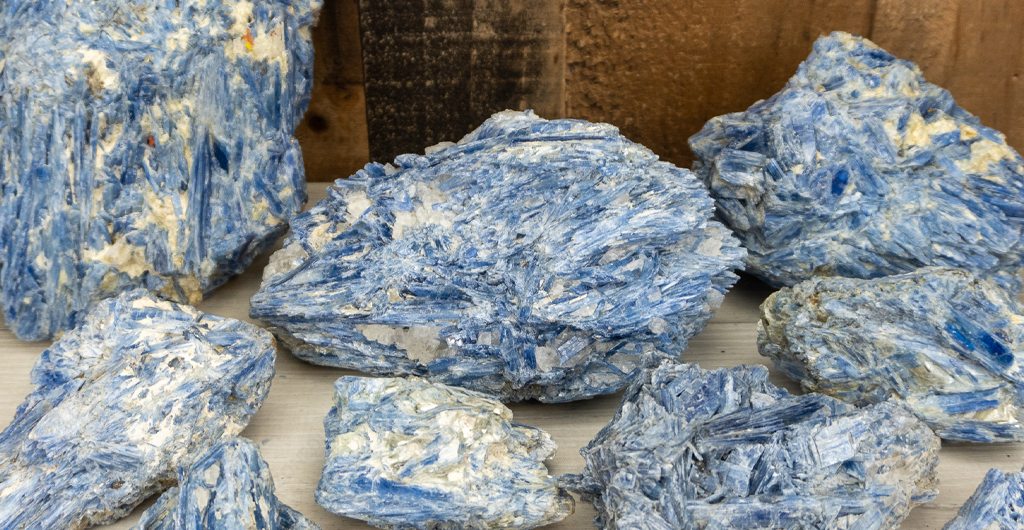
High-purity kyanite is also vital for the aerospace and automotive sectors. It is an additive in spark plug insulators and brake pads to improve heat resistance and dissipation. In the ceramics industry, it is used to make “sanitary ware” more durable and resistant to cracking. Because infrastructure demand is rising in 2025, the market for high-grade kyanite concentrate is exceptionally strong. Operating a ZONEDING processing plant allows a mining company to serve these diverse and growing markets.
| Industrial Application | Specific Use | Required Kyanite Quality |
|---|---|---|
| Steel Production | Furnace door linings | 56-58% Al2O3 |
| Glass Manufacturing | Kiln tank blocks | Low Iron (<0.5% Fe2O3) |
| Ceramics | Porcelain additives | High Whiteness / Low Impurities |
| Foundry Work | Precision mold wash | Ultra-fine Powder (325 Mesh) |
Kyanite is the “expansion engine” in modern refractory bricks. Most minerals shrink when exposed to high heat, which leads to structural cracks in a furnace. Kyanite expands, filling those gaps and keeping the furnace structure airtight. The higher the purity reached in the ZONEDING Flotation Machine, the better the expansion characteristics of the final brick. Processed kyanite is the gold standard for high-temperature durability.
In the high-tech foundry industry, fine kyanite powder is used to coat the molds for jet engine parts. This is known as “investment casting.” The kyanite creates a heat-resistant shell that will not melt when molten metal is poured inside. This requires “flour-grade” kyanite. ZONEDING plants often include specialized fine-grinding mills to produce 325-mesh or 400-mesh powders. This high-margin niche market can significantly increase the return on investment for a processing facility.
Building a kyanite processing plant is a significant long-term investment. Selecting the right supplier is the most important decision.
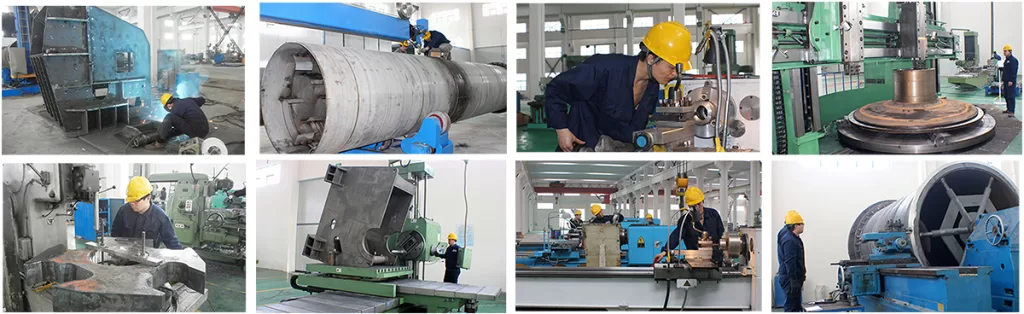
The kyanite market is evolving towards higher purity and environmental sustainability.
The global push for energy-efficient industrial furnaces is driving the demand for high-grade mullite. This means the world needs more high-purity kyanite concentrate. In 2025, kyanite is being treated as a “specialty engineered material” rather than a bulk mineral. Producers who can deliver 58%+ Al2O3 with low iron will dominate the premium refractory and aerospace markets.
A successful kyanite processing plant requires durable machinery and precise flowsheet logic.
Last Updated: May 2025
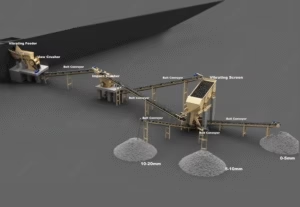
Don't select the wrong crusher for your circuit. Learn to avoid costly mistakes in secondary, tertiary, & quaternary crushing stages from this ZONEDING's Blog.
View details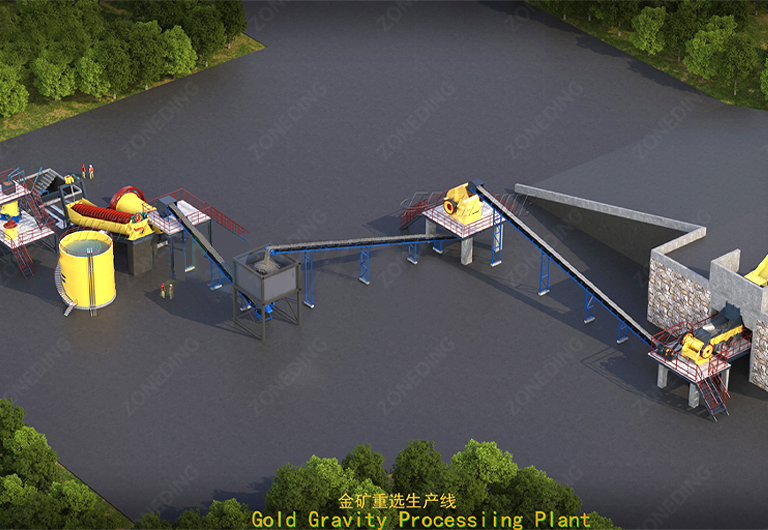
Want to know how to get gold by gold gravity beneficiation? Follow our step-by-step processing guide to recover gold from raw ore to final concentrate.
View details
Keep your plant running efficiently. This crusher maintenance checklist covers critical daily inspections, weekly lubrication, and monthly wear part checks.
View details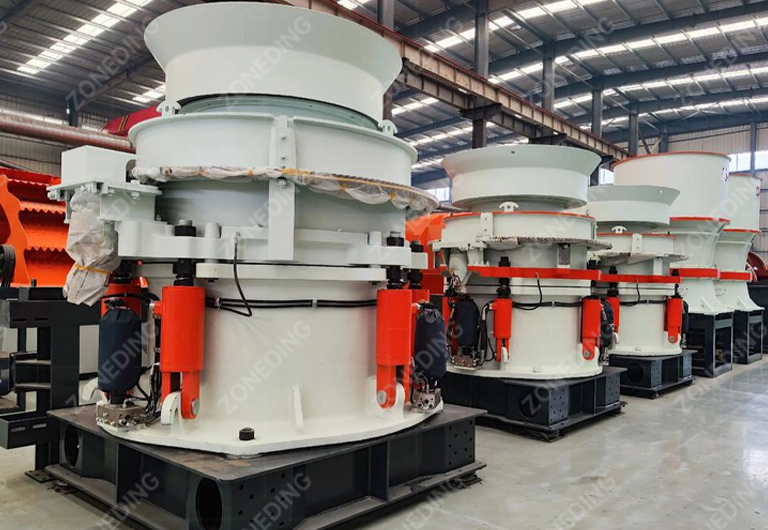
Learn everything you need to know about cone crushers. Discover how they work, their internal mechanisms, and what they can do to boost your quarry's output.
View details