In the evolving landscape of global mining and aggregate production, the static processing model is rapidly being supplemented—and in some cases replaced—by mobile crushing technology. For mining companies and construction contractors, the ability to process material directly at the blast face or demolition site is no longer a luxury; it is a critical strategy for controlling operational expenditures (OpEx). The selection of a mobile crushing plant, however, is a complex engineering decision that impacts profitability for a decade or more.
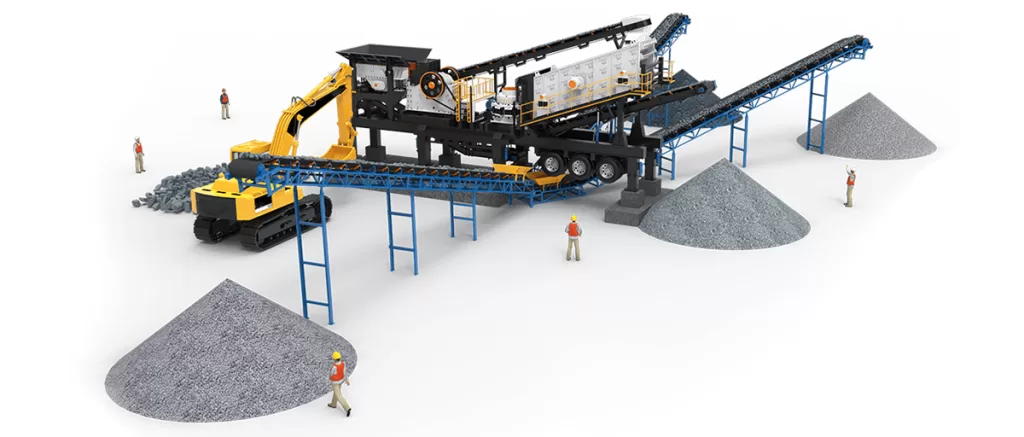
This guide provides a deep technical analysis of the factors critical to purchasing the correct mobile crushing equipment. It moves beyond basic specifications to analyze material geology, chassis physics (track vs. wheel), capacity planning, and the financial metrics of Return on Investment (ROI). By aligning equipment specifications with site realities, buyers can ensure their investment yields maximum productivity.
Last Updated: January 2025 | Estimated Reading Time: 15 Minutes
Analyzing Raw Material: The Geological Foundation of Equipment Selection
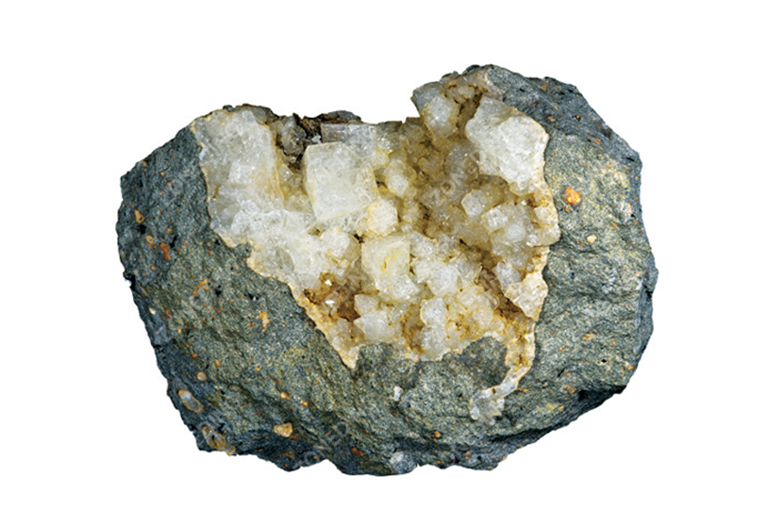
The primary determinant in any crushing plant configuration is the geological character of the raw material. The crusher is merely a tool; the rock dictates the rules. Ignoring compressive strength, abrasiveness, and moisture content leads to catastrophic wear rates and frequent mechanical failures.
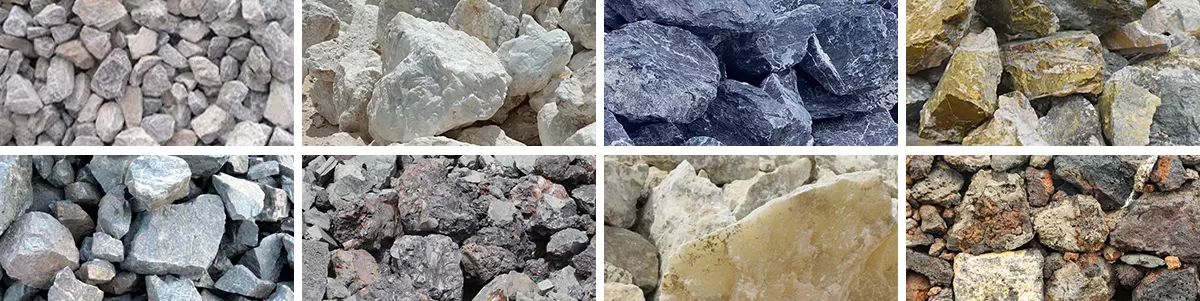
Hard and Abrasive Materials (Compressive Strength > 150 MPa)
For materials such as granite, basalt, river pebbles, iron ore, and quartzite, the processing challenge is two-fold: resistance to crushing and high wear potential. These materials typically have high silica content.
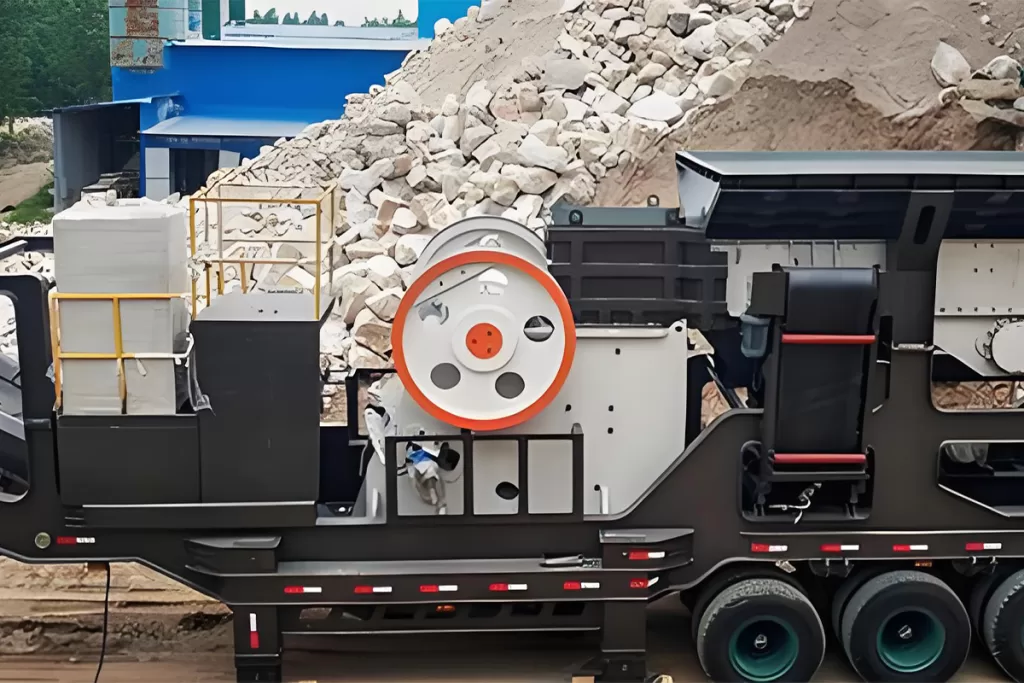
Equipment Solution: A mobile jaw crusher is mandatory for the primary stage. Jaw crushers use compressive force to break rock, which is far more energy-efficient for hard materials than impact force.
Secondary Stage: A cone crusher is the standard secondary unit. ZONEDING cone crushers utilize lamination crushing principles to handle hard rock with minimized liner wear.
Avoid: Using impact crushers as primary units for granite will result in blow bars requiring replacement every 24-48 hours, destroying the project’s profitability.
Soft and Medium-Hard Materials (Compressive Strength < 150 MPa)
For limestone, coal, gypsum, and soft sandstone, the material breaks easily but may produce excessive fines if over-crushed.
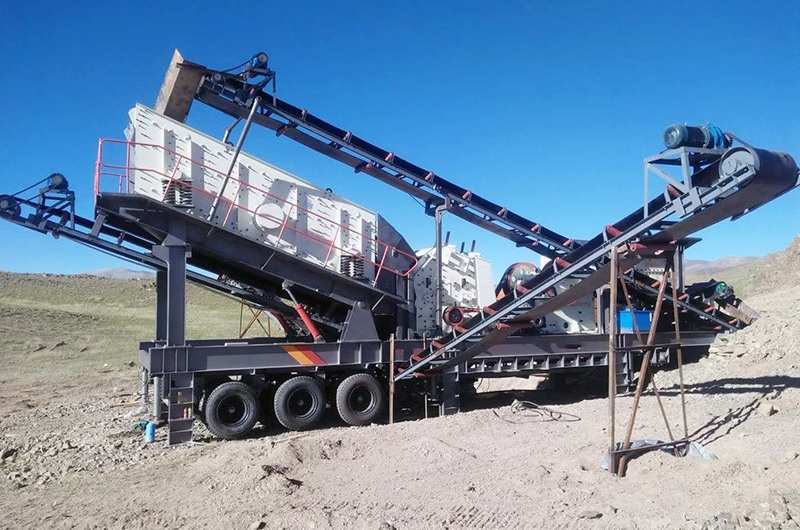
Equipment Solution: A mobile impact crusher is often the most efficient choice. Impactors offer a high reduction ratio (often 10:1 or higher), allowing for the production of finished aggregate in a single pass or a simple two-stage closed circuit.
Shape Benefit: Impact crushers produce a superior cubical product shape, which is highly valued in concrete and asphalt production.
Material Moisture and Clay Content
Sticky materials pose a significant risk to mobile plants. If the raw feed contains wet clay or soil, it can clog the crushing chamber (“packing”).
Mitigation: The mobile plant must be equipped with a vibrating feeder featuring a grizzly bar section. This allows fines and soil to be scalped off and discharged via a side conveyor before entering the crusher, protecting the main unit.
Mobility Systems Compared: Track-Mounted vs. Wheel-Mounted
Once the crushing unit is selected, the specific mobility platform must be chosen. The debate between track-mounted (crawler) and wheel-mounted (tire) plants centers on the trade-off between terrain capability and transport speed.
Track-Mounted Plants (The Crawler Series)
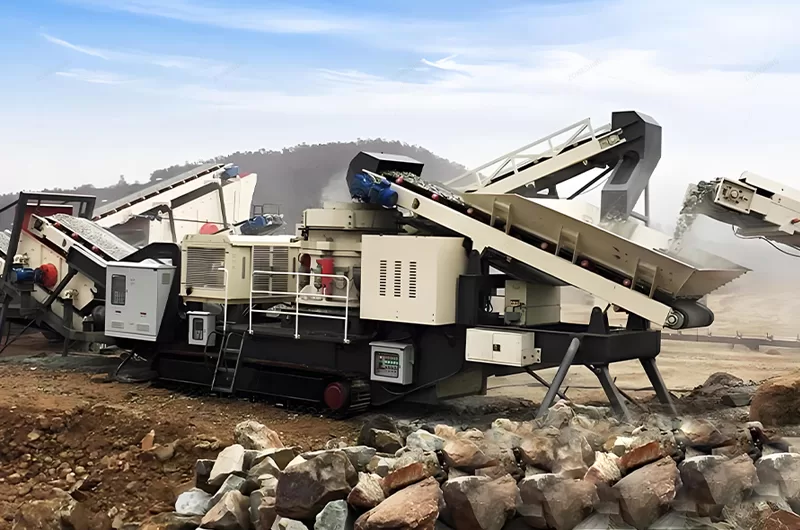
Track-mounted plants utilize a hydraulic undercarriage similar to an excavator. They are self-propelled and designed for rugged, unprepared environments.
Terrain Adaptability: Tracks distribute the machine’s weight over a larger surface area, resulting in lower ground pressure. This allows them to operate on soft soil, mud, and steep grades (often up to 20 degrees) found in open-pit mines.
On-Site Mobility: These units can be driven via remote control directly to the blast face. As the mining face recedes, the crusher follows, eliminating the need for haul trucks to transport raw ore over short distances.
Deployment: Setup is virtually instantaneous. Once unloaded from the low-bed trailer, the unit drives into position, unfolds conveyors hydraulically, and begins production within 30 minutes.
Wheel-Mounted Plants (The Tire Series)
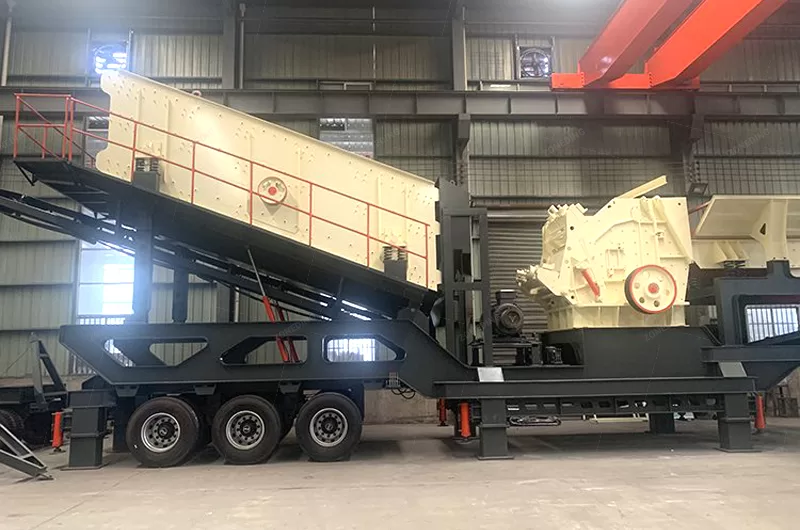
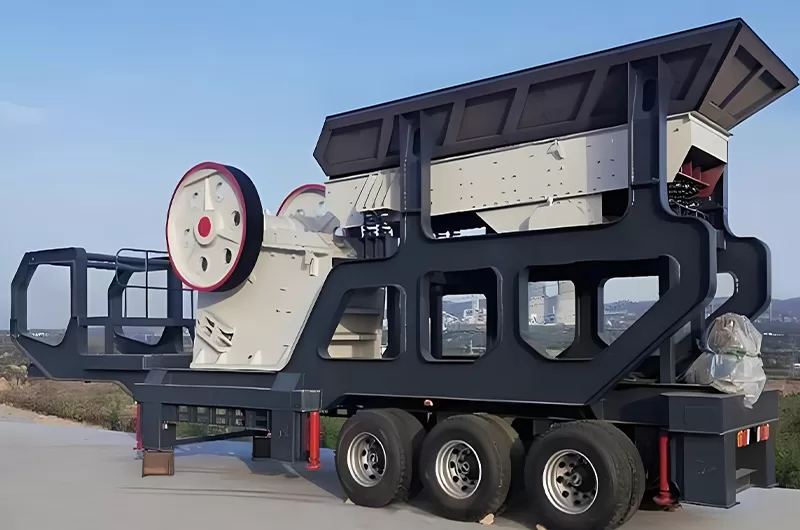
Wheel-mounted plants are built on a chassis with axles and rubber tires, designed to be towed by a semi-truck tractor.
Transport Efficiency: The primary advantage is inter-site mobility. For contractors who move between different quarries or construction sites (e.g., highway projects) every few weeks, wheel-mounted units are superior. They can often be towed on public highways (subject to local regulations) without the complex loading/unloading required for tracked units.
Maintenance Profile: The mechanical structure is simpler than hydraulic tracks. There are no hydraulic drive motors to maintain for movement, reducing long-term maintenance costs.
Cost Efficiency: Generally, wheel-mounted plants have a lower initial capital cost compared to their track-mounted counterparts.
Feature
Track-Mounted (Crawler)
Wheel-Mounted (Tire)
Ideal Application Scenario
Ground Pressure
Low (Suitable for soft ground)
High (Requires compacted pads)
Muddy mines vs. Concrete pads
Climbing Ability
High (Can climb slopes)
Low (Needs flat terrain)
Mountain mining vs. Flat quarries
Relocation Speed
Slow (Requires low-bed trailer)
Fast (Towed by truck head)
Permanent site vs. Mobile contracting
Setup Time
Fast (< 1 hour)
Moderate (1-2 days for leveling)
Frequent moves vs. Occasional moves
Power Source
Typically Diesel-Hydraulic
Typically Electric/Hybrid
Remote areas vs. Sites with Grid Power
Determining the Best Fit
ZONEDING advises that if a project requires the crusher to move more than once a month within the same site, Track-Mounted is the superior choice. If the project requires moving between different geographical sites every few months, Wheel-Mounted offers better logistical ROI.
Capacity Planning and Configuration Logic
Selecting the correct throughput capacity (Tonnes Per Hour or TPH) is critical to avoiding bottlenecks. Over-sizing equipment wastes capital; under-sizing creates production limits that cannot be overcome.
The “Step-Down” Selection Method
Buyers should not choose a mobile plant based on the theoretical maximum capacity of the crusher alone. The entire system must be balanced.
Loader/Excavator Capacity: The crusher cannot process more than the excavator can feed. If the site utilizes 30-ton excavators, a small mobile crusher will be overwhelmed, while a massive 500 TPH plant will starve for material.
Output Requirements: If the contract demands 200 TPH of final product, the primary crusher must be rated for at least 250-300 TPH to account for scalping (waste removal), maintenance downtime, and flow fluctuations.
Feed Size Geometry: The feed opening (Gape) determines the maximum particle size. A common rule of thumb is that the maximum feed size should not exceed 80% of the gape.
Open Circuit vs. Closed Circuit
Open Circuit: Material passes through the crusher once. Oversized material is stockpiled or sold as a different product. This offers higher throughput but less control over top size.
Closed Circuit: The mobile plant includes a return conveyor. Oversized material from the screen is recirculated back to the crusher for re-processing. This ensures 100% of the final product meets the specification (e.g., 0-20mm aggregate) but slightly reduces total hourly tonnage due to the recirculating load. ZONEDING offers mobile plants with integrated return conveyors to facilitate this efficient closed loop.
Power Systems: Diesel vs. Electric vs. Hybrid
As fuel prices fluctuate globally, the power source of the mobile crushing plant has become a major factor in the Total Cost of Ownership (TCO).
Diesel-Hydraulic Drive
The traditional standard. A diesel engine drives hydraulic pumps, which power the crusher, conveyors, and tracks.
Pros: Total independence. Essential for remote mining sites (“Greenfield projects”) where no electrical infrastructure exists.
Cons: Highest operational cost due to diesel consumption. Hydraulic systems achieve roughly 60-65% efficiency in energy transfer. High maintenance on hydraulic filters and pumps.
Electric Drive (E-Plant)
The crusher flows directly from electric motors. The unit may have a small onboard diesel generator for moving via tracks, but crushing requires a connection to the grid or a large external generator.
Pros: Lowest operational cost. Grid electricity is typically 30-50% cheaper per KW than diesel generation. Electric motors are simple to maintain.
Cons: The machine is tethered by a cable. Relocating requires disconnecting and managing high-voltage cables.
Hybrid Systems (The Modern Standard)
ZONEDING has observed a strong market shift toward hybrid units. These machines possess an onboard diesel generator sufficient to run the plant at full capacity but also feature a switchgear to accept external line power.
Strategic Advantage: Operators can run on diesel during the initial site setup (stripping overburden). Once grid power becomes available, they switch to electric mode for steady-state production, drastically cutting costs while retaining mobility.
Calculating ROI: The Financial Perspective
For B2B buyers, the purchase of a mobile crushing station is not an expense; it is an investment vehicle. The Return on Investment (ROI) is calculated by comparing the Total Cost of Ownership (TCO) against the Value Generated.
1. Transport Cost Savings ( The “Hidden” Profit)
The primary economic driver for mobile crushing is the elimination of haulage.
Scenario: A quarry is 3km from the stationary processing plant.
Legacy Model: 20 dump trucks cycle back and forth all day.
Mobile Model: The crusher sits at the blast face. Only finished product (which is compacted and value-dense) is transported, often via conveyor or fewer trucks.
Equation: ROI increases significantly when the cost per ton of transport is removed from the Raw Material phase.
2. Resale Value and Liquidity
Unlike stationary plants, which require expensive dismantling and civil work demolition to move, mobile plants retain high asset liquidity. A ZONEDING mobile plant can be sold on the international used equipment market after a 3-year project, often recovering 40-60% of the initial capital expenditure. This high residual value lowers the effective depreciation cost.
3. Civil Engineering Savings
Stationary plants require concrete foundations, steel structures, and extensive site preparation, often costing $100,000 to $500,000 before the machine even arrives. Mobile plants require only a leveled, compacted surface. This “Zero Installation” benefit improves cash flow by allowing production to start weeks or months earlier than a stationary alternative.
Selecting a mobile crushing plant also involves selecting a partner. The complexity of mobile hydraulic and electric systems requires robust manufacturer support.
Factory Direct vs. Assembly
Buyers should distinguish between “Assemblers” (who buy a crusher from Company A, a chassis from Company B, and paint them) and “Manufacturers” like ZONEDING. ZONEDING manufactures the core crushing units (Jaw, Cone, Impact), the vibrating screens, and the chassis in-house. This ensures that the engine power curve perfectly matches the crusher’s inertia.
Spare Parts: Dealing with a direct manufacturer creates a single source for all wear parts, from blow bars to track pads, simplifying inventory management.
Customization Capability
Standard models do not fit every mine. Effective suppliers must offer customization:
Extended Conveyors: For higher stockpiling capacity.
Dust Suppression: High-pressure water misting systems for urban compliance.
Magnetic Separation: Overband magnets for recycling applications to remove rebar.
Climate Kits: Heavy-duty cooling for tropical climates or pre-heaters for arctic mines.
Frequently Asked Questions (FAQ)
Q1: How does a buyer decide between a Mobile Cone Crusher and a Mobile Impact Crusher?
The decision rests entirely on silica content and abrasiveness. If the material is abrasive (Granite, River Stone, Silica > 5%), a Cone Crusher is mandatory to avoid excessive wear costs. If the material is soft to medium (Limestone, Concrete Recycle), a Mobile Impact Crusher represents a better value due to its high reduction ratio and superior particle shape.
Q2: What is the typical lead time for a customized mobile crushing plant?
For standard configurations, manufacturing generally requires 30-45 days. Customized units (e.g., adding specific generators or extended conveyors) may require 60 days. ZONEDING’s scalable production capacity of 500 units annually helps minimize these lead times.
Q3: Can mobile crushers be used for mining waste and tailings?
Yes. Mobile crushing is increasingly used for “re-mining” waste dumps. By bringing the crusher to the waste pile, valuable minerals can be extracted or the potential acid-generating rock can be processed for neutralization without the cost of transporting the waste to a fixed plant.
Q4: How does the maintenance of a mobile plant differ from a stationary one?
Mobile plants require maintenance of the “vehicle” systems (tracks/tires, hydraulics, diesel engine) in addition to the crusher itself. Operators must adhere to strict schedules for engine oil changes and hydraulic filter replacements to prevent downtime. However, access is often designed to be easier, with maintenance platforms integrated into the chassis.
Conclusion and Strategic Recommendations
The acquisition of a mobile crushing plant is a pivotal step toward operational autonomy and efficiency. Whether processing construction waste in a dense city center or extracting gold ore in a remote jungle, the technology allows producers to adapt to the market instantly.
Summary of Key Recommendations:
Know Your Rock: Never put abrasive rock in an impactor.
Choose Your Path: Select Tracks for difficult terrain and frequent on-site moves; select Wheels for road transport and flat sites.
Calculate TCO: Factor in the savings from eliminated trucking and civil works when analyzing the price tag.
Future-Proof: Consider Hybrid Power options to protect against fuel price volatility.
For mining companies and contractors seeking to optimize their production lines, ZONEDING offers a comprehensive range of mobile solutions designed for durability and performance.
Take the Next Step:
Do not rely on estimation. Contact the ZONEDING engineering team to request a Material Flow Simulation. By providing data on raw material size, hardness, and desired output, a customized mobile crushing solution can be engineered to maximize your specific project’s ROI.
This guide compares 8 common rock types, analyzing properties, pros, and cons to help you select durable and efficient aggregate for your construction project.
This article explains origins and unique properties of perlite, applications, industrial perlite processing chain from mining to final screening & grading.
This guide tells advantages, disadvantages, applications, capabilities, and maintenance considerations of Closed-Circuit and Open-Circuit crushing plant.
This essential guide clarifies the 7 most common types, their pros, cons, and ideal uses to help you make an informed decision for your processing operations.