 Zoneding Mining

Site Search
Search products, equipment and solution articles
整站搜索产品中心新闻中心
点击开始搜索
热门搜索
UltraForm-MXFlexiPoly-RNanoForm Z300EcoFab P200
Search products, equipment and solution articles
The siderite ore dressing process is a specialized operation designed to extract iron from siderite (FeCO3). Unlike magnetite or hematite, siderite is paramagnetic. This means it has a very weak magnetic response. Many mining operations fail to reach high recovery rates because they use standard low-intensity magnets. This mistake allows a large amount of iron to escape into the tailings.
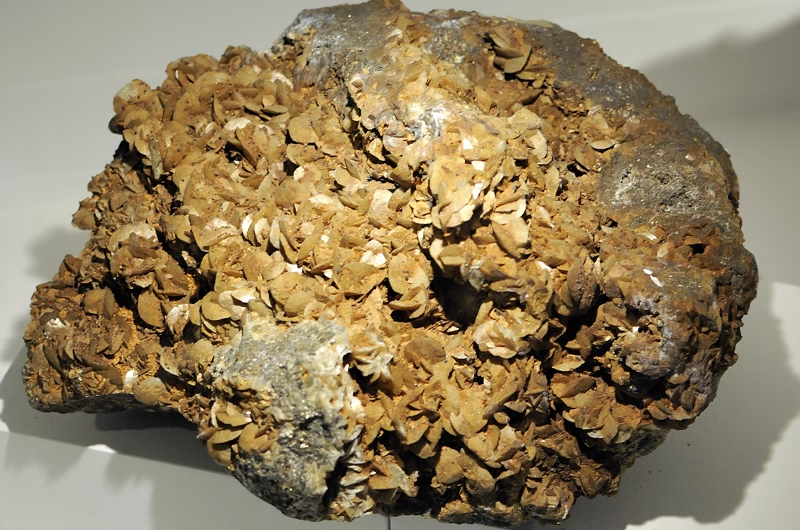

ZONEDING provides engineering solutions to solve these specific technical challenges. The main goal of a siderite plant is to separate the iron carbonate from gangue minerals like silica and calcite. This requires a perfectly timed production line. The line must integrate crushing, grinding, and high-intensity separation. This guide explains the professional framework needed to build a high-yield siderite processing plant.
Last Updated: May 2026 | Estimated Reading Time: 22 Minutes
The primary goal of the crushing stage is to reduce large siderite boulders into uniform pieces without creating too many fine particles. Siderite is generally softer than quartz. However, the consistency of the ore often varies. If the primary crushing stage is too aggressive, it creates excessive “fines.” These fines can clog vibrating screens. They also cause a “packing effect” in secondary crushers. This inefficiency raises energy costs and slows down the total plant throughput.
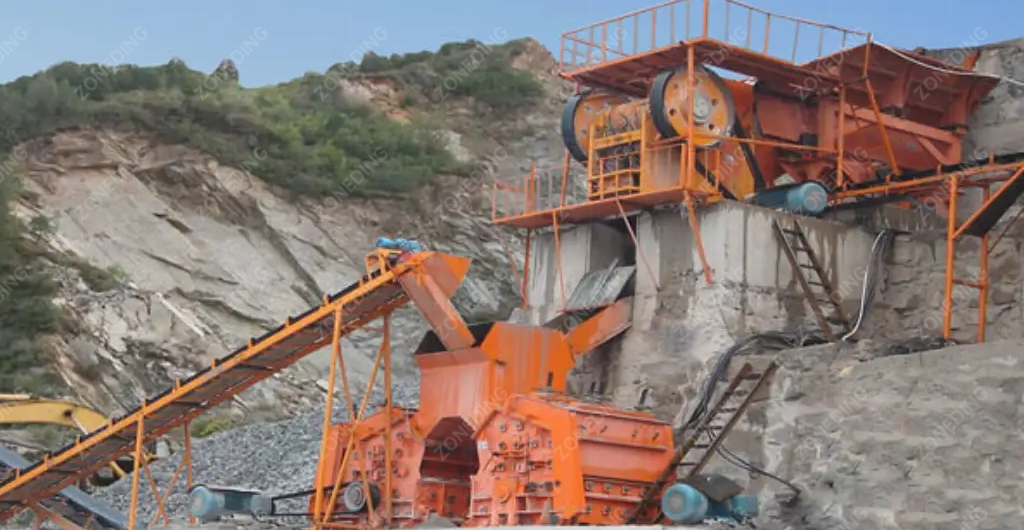
ZONEDING recommends a two-stage crushing strategy. The process starts with a heavy-duty Jaw Crusher for primary breaking. This machine is ideal for siderite. It provides high crushing force at low speeds. This approach minimizes the creation of unwanted fines. To further improve the circuit, a vibrating screen is placed before the jaw crusher. This “scalping” process removes material that is already small enough. The crusher only processes rocks that actually need breaking. This design reduces mechanical wear. It also lowers electricity costs by approximately 10-15%.
| Process Step | Equipment Used | Technical Objective | Business Impact |
|---|---|---|---|
| Primary Break | Jaw Crusher | Reduce boulders to <150mm | High capacity, low maintenance |
| Sizing | Vibrating Screen | Remove natural fines | Prevents clogging, saves energy |
| Secondary Break | Cone/Impact Crusher | Reduce to <20mm | Optimized feed for ball mill |
| Transport | Belt Conveyor | Constant material flow | Eliminates plant bottlenecks |
Grinding is the most important stage of the siderite ore dressing process because it “liberates” the iron from the waste rock. Siderite often appears as fine grains inside silica or calcite. If the grind is too coarse, the iron stays “locked” inside the waste. During magnetic separation, the magnet pulls the whole piece. This includes both the iron and the waste. This lowers the final concentrate grade. On the other hand, grinding too fine creates “slimes.” These are particles smaller than 20 microns. Slimes are too small for magnets to catch effectively.
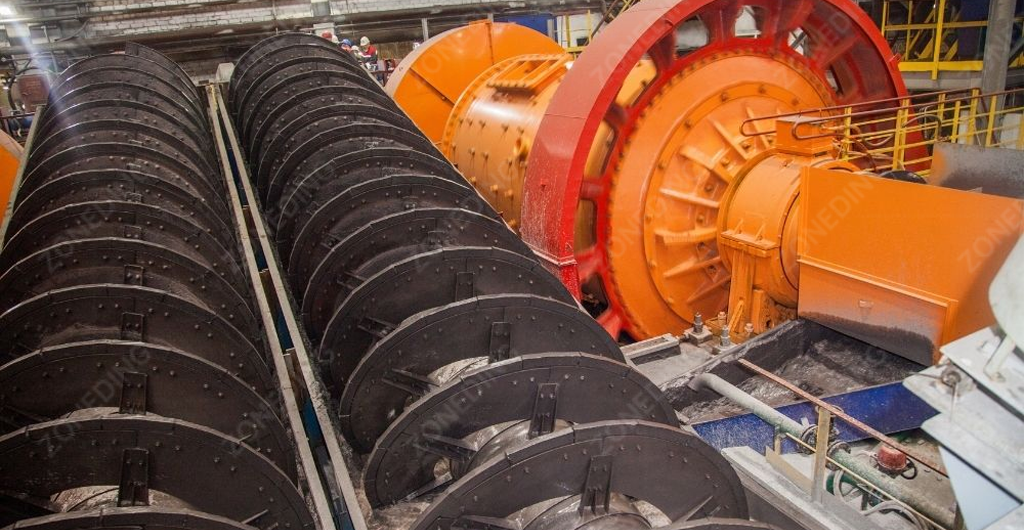
The industry standard for siderite is a closed-circuit grinding system. This system uses a Ball Mill and a hydrocyclone. The ball mill grinds the ore. The hydrocyclone acts as a size classifier. Large particles go back to the mill. Liberated particles, usually between 74 and 150 microns, move to the separation stage.
ZONEDING optimizes this process by calculating the Bond Work Index (BWI) of the ore. The company adjusts the ball charge and the rotation speed. This ensures the mill hits the “liberation sweet spot.” This precision stops the waste of electricity. It also ensures the maximum amount of iron is ready for the magnetic separators.
| Particle Size | Separation Result | Recovery Rate | Profit Impact |
|---|---|---|---|
| Too Coarse (>200μm) | Iron locked in gangue | Low (50-60%) | Low purity, rejected product |
| Ideal (74-150μm) | Full liberation | High (85-95%) | Premium grade concentrate |
| Too Fine (<20μm) | Slimes float away | Medium (70%) | Iron loss to tailings |
Standard low-intensity magnetic separators do not work for siderite because the mineral is only weakly magnetic. This is the most critical technical point in the siderite ore dressing process. A standard magnet only recovers magnetite. This leaves most of the siderite to be lost as waste. To capture siderite, the plant must use High-Intensity Magnetic Separation (HIMS).
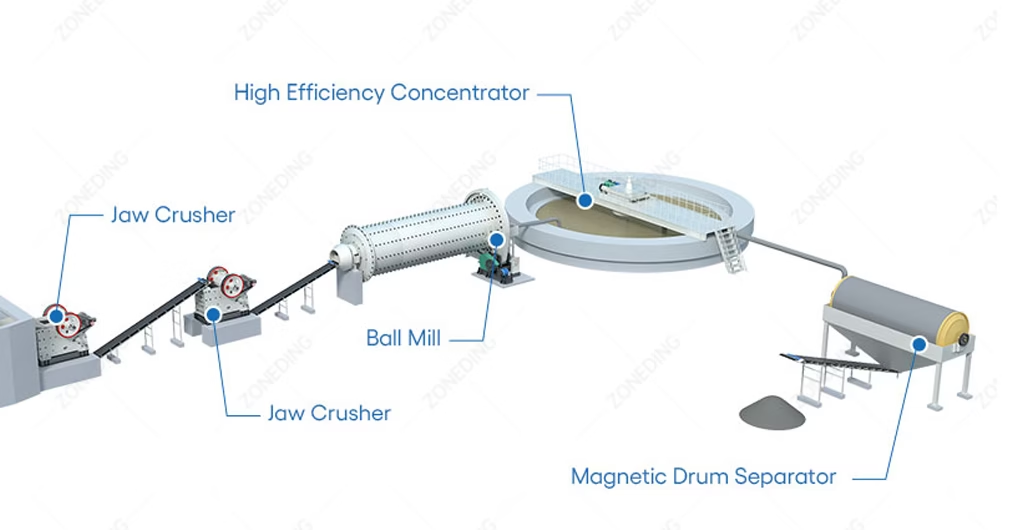
ZONEDING uses powerful Rare Earth magnets or electromagnetic systems. These create a high-gradient magnetic field. This field is strong enough to attract paramagnetic siderite. It allows non-magnetic silica and calcite to pass through. ZONEDING magnetic drums have a steep magnetic gradient. This concentrates the “pull” at the drum surface. This ensures the capture of even the smallest siderite grains.
For high-purity concentrate, a two-stage separation is best. The first stage is Roughing. This maximizes iron recovery. The second stage is Cleaning. This re-processes the concentrate to remove trapped impurities. This sequence ensures the final iron concentrate reaches a grade of 60% Fe or higher.
The final stage of the siderite ore dressing process is the removal of water to create a transportable product. After magnetic separation, the iron is a wet slurry. Shipping slurry is too expensive. The cost of moving water is too high.
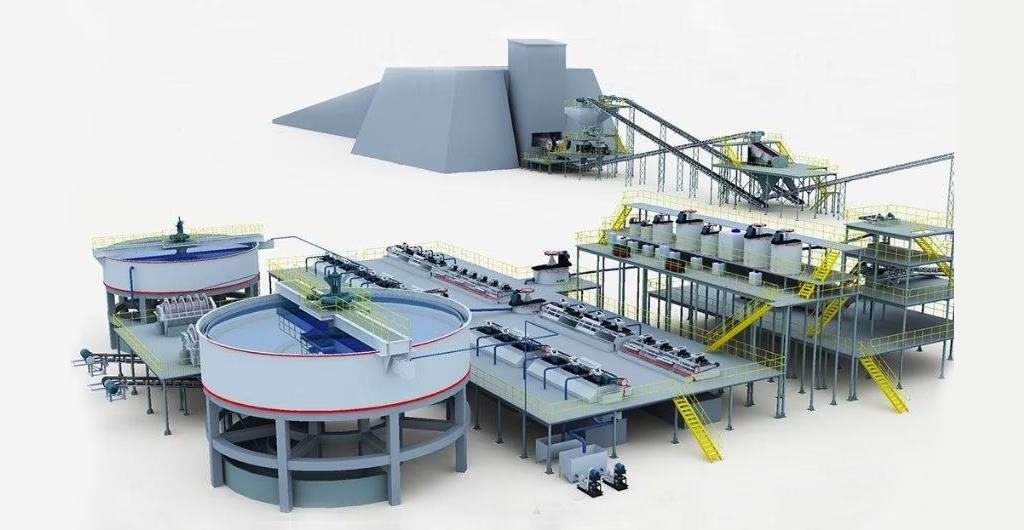
The process starts with a thickener. The thickener uses gravity and flocculants to settle iron particles at the bottom. Flocculants are chemicals that clump particles together. Clear water overflows from the top. This water goes back into the grinding circuit. This recovers about 80% of the process water. This reduces the environmental impact and lowers costs.
The thickener underflow then goes into a high-pressure filter press. The press squeezes out the remaining moisture. This creates “filter cakes.” These are solid blocks of iron concentrate. ZONEDING filter presses use high-pressure cycles. This ensures the final product is dry enough for stacking. It also prevents leaks during shipping.
| Equipment | Primary Goal | Final Result | Business Benefit |
|---|---|---|---|
| Thickener | Water Recovery | Thick Slurry | Lowers water costs, recycles water |
| Filter Press | Moisture Removal | Solid Cake | Reduces shipping weight and cost |
ZONEDING focuses on “closed-loop” water systems. Water use in siderite processing can be very high. By combining a thickener with a precision filter press, the company minimizes waste. This is vital for mines in dry regions. The ZONEDING filter press uses optimized pressure plates. This keeps the moisture of the iron cake below 10%. Lower weight means lower logistics costs.
Selecting equipment for siderite depends on the magnetic properties of the ore and the required purity. Buying a “standard” iron plant is a mistake. The system must be tuned for siderite.
A buyer should consider these factors:
The industry is moving toward “Zero-Waste” processing. The focus is now on maximum recovery and total water recycling.
Success in the siderite ore dressing process depends on Liberation and Magnetic Intensity.
Next Step: To avoid equipment mistakes, send a sample of the siderite ore to ZONEDING. ZONEDING will perform a magnetic susceptibility test and grind-size analysis. The company will then provide a custom processing flow sheet to maximize ROI.
Last Updated: May 2026
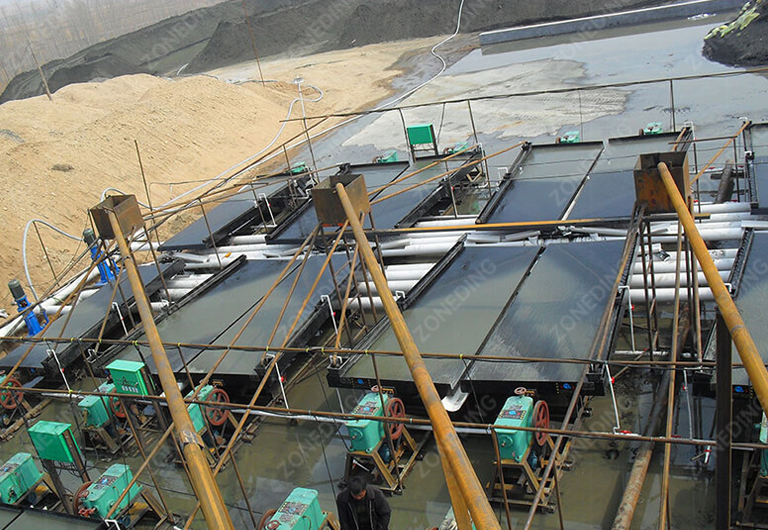
Comparing gold shaking table types? We analyze the best equipment based on capacity, recovery precision, and cost to help you make the right investment.
View details
Learn differences between single drum and three drum dryers. This detailed comparison tells thermal efficiency, footprint, initial cost, and ideal applications.
View details
You know silica sand is used for glass, but what about in electronics, paints, or golf courses? Discover applications of silica sand.
View details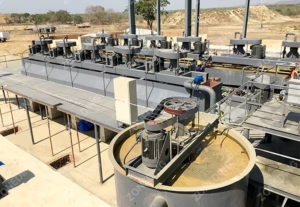
This guide tells the step-by-step processes from ore mining to final purification for Nickel Extraction, to Learn how nickel is brought to market.
View details