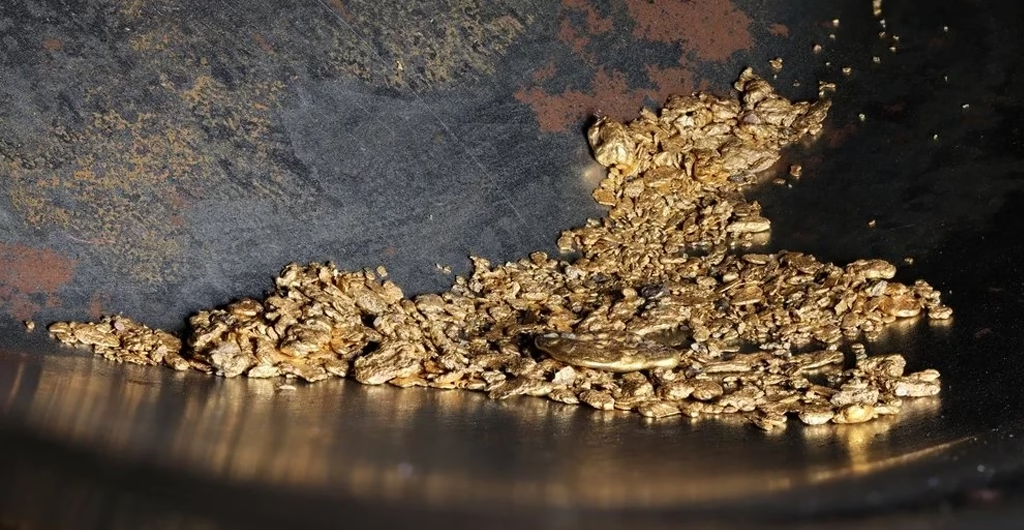
Alluvial gold processing extracts gold from placer deposits. These deposits feature gold particles weathered from rock and transported by water. Gravity separation techniques are central to this process. Efficient gold extraction maximizes recovery from these valuable loose sediments. This guide details various methods and specialized equipment. It explores high-recovery strategies for maximizing alluvial gold recovery.
Placer deposits vary widely. They range from riverbeds to ancient dry channels. Successful gold recovery depends on understanding the deposit characteristics. It also relies on selecting appropriate processing techniques. ZONEDING provides robust mineral processing equipment. This equipment supports efficient alluvial gold processing plants globally.
Alluvial gold deposits form from the weathering of primary hard rock gold deposits. Gold veins erode. Gold particles become free. Water carries these particles downstream. They settle in riverbeds, floodplains, or ancient channels. These concentrations of gold, along with other heavy minerals, are known as placer deposits. Understanding these deposits is crucial for effective alluvial gold processing.
Gold is dense. It concentrates in specific areas. These areas include bedrock crevices and behind obstacles. These deposits often contain gold in various sizes. These sizes range from fine dust to large nuggets. Effective gold extraction requires techniques tailored to these characteristics.
Formation and Characteristics of Placer Deposits
Placer deposits result from natural geological processes.
Weathering: Gold-bearing rocks break down due to physical and chemical weathering.
Erosion and Transport: Water carries liberated gold particles. Gold’s high specific gravity causes it to settle quickly. It deposits in areas where water velocity decreases.
Concentration: Gold accumulates in natural traps. These traps include river bends, potholes, and bedrock irregularities.
Characteristics of placer deposits vary. They include unconsolidated gravels, sands, silts, and clays. Gold purity can also vary. Other heavy minerals often associate with gold. These include magnetite, ilmenite, and garnet. These minerals influence the chosen alluvial gold processing method.
Types of Alluvial Gold Deposits
Different types of placer deposits exist. Each type presents unique challenges and opportunities for gold extraction.
Stream/River Placer Deposits: These form in active river channels and floodplains. They are often shallow. Easy access can be a benefit.
Bench Placer Deposits: These are ancient riverbeds. They reside on hillsides above current water levels. These deposits require different excavation methods.
Terrace Placer Deposits: These are elevated ancient river gravels. They formed when rivers cut deeper channels.
Beach Placer Deposits: Wave action concentrates gold and other heavy minerals on coastlines.
Deep Lead Deposits: These are buried old river channels. They lie beneath layers of barren material. These deposits often require extensive earthmoving.
ZONEDING offers mobile crushing plants and other mining equipment. This equipment is suitable for various deposit types. It enables efficient material handling at diverse alluvial gold processing sites.
Core Principles of Alluvial Gold Processing
Alluvial gold processing primarily relies on gravity separation. Gold’s high specific gravity (around 19.3) makes it much heavier than most gangue minerals (around 2.5-3.0). This density difference allows for efficient separation. Water plays a crucial role in the process. It helps to liberate gold particles. It also transports lighter gangue materials away.
The primary goal is effective gold liberation. This involves separating gold particles from surrounding gravels and silts. Subsequent concentration stages then reduce the volume of material. This maximizes the grade of the gold concentrate. Optimized alluvial gold processing circuits focus on achieving high gold recovery.
The Role of Density in Gold Extraction
Gold’s density is its defining characteristic in alluvial gold processing.
Settling Velocity: Gold particles settle faster in water than lighter gangue particles. Even fine gold particles demonstrate this behavior.
Differential Movement: Gravity separation equipment exploits this difference. Heavy gold particles are retained. Lighter particles are washed over.
Concentration: Repeated gravity separation steps remove more gangue. This increases the gold content in the concentrate.
Understanding this fundamental principle helps design effective gold extraction circuits. Equipment selection focuses on maximizing this density-based separation.
Water Usage and Management
Water is indispensable for washing and separating alluvial material.
Particle Liberation: Water helps break up clay and disperse gravels. This liberates gold particles.
Material Transport: Water carries the feed material through processing equipment. This ensures continuous flow.
Density Separation: Water acts as the separation medium. It allows differential settling of particles.
Recycling: Water must be managed efficiently. This minimizes consumption and environmental impact. Most modern alluvial gold processing plants incorporate water recycling systems.
ZONEDING designs and supplies washing equipment such as wheel and screw sand washers. These are integrated into gold washing plants. These ensure efficient water use. They also maximize gold liberation.
Alluvial Gold Processing Flow
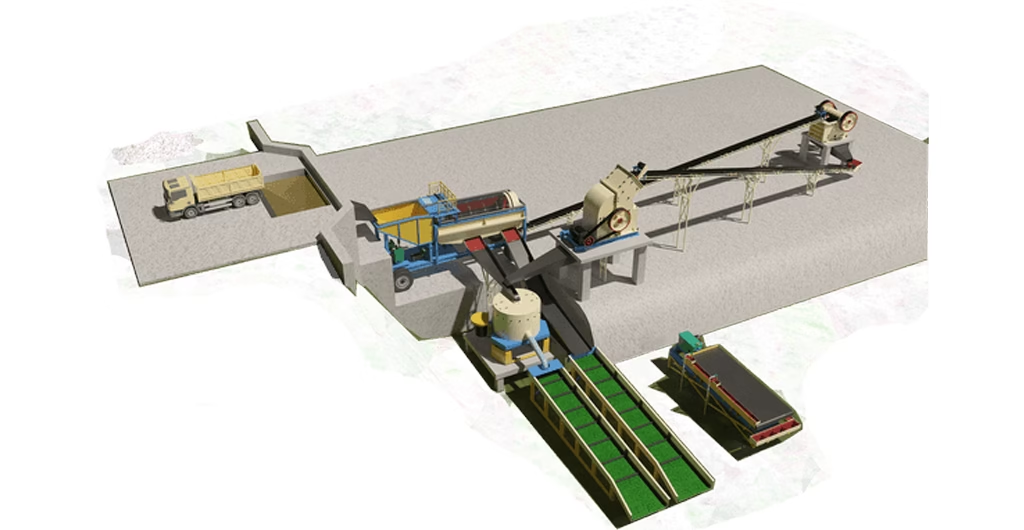
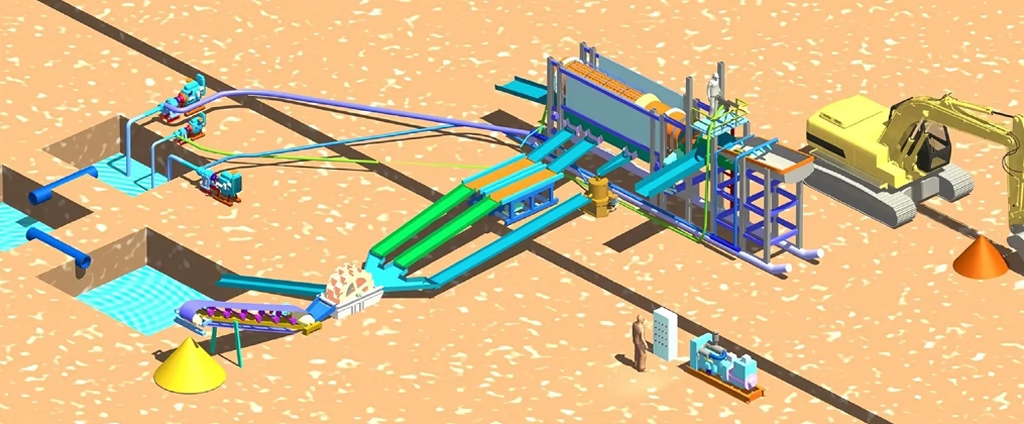
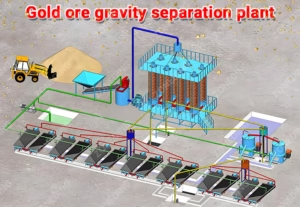
The typical alluvial gold processing flow starts with raw material excavation. It then moves through several stages of screening, washing, and concentration. The goal is to progressively remove lighter gangue material. This concentrates the heavier gold particles. Each step aims to maximize gold extraction while minimizing losses.
Gold washing plants are designed to handle large volumes of loose material. This ensures efficiency and high throughput. The entire alluvial gold processing circuit focuses on exploiting the density difference between gold and waste. ZONEDING designs and supplies complete processing lines. These lines incorporate robust equipment for every stage of alluvial gold recovery.
Typical Processing Stages for Gold Extraction
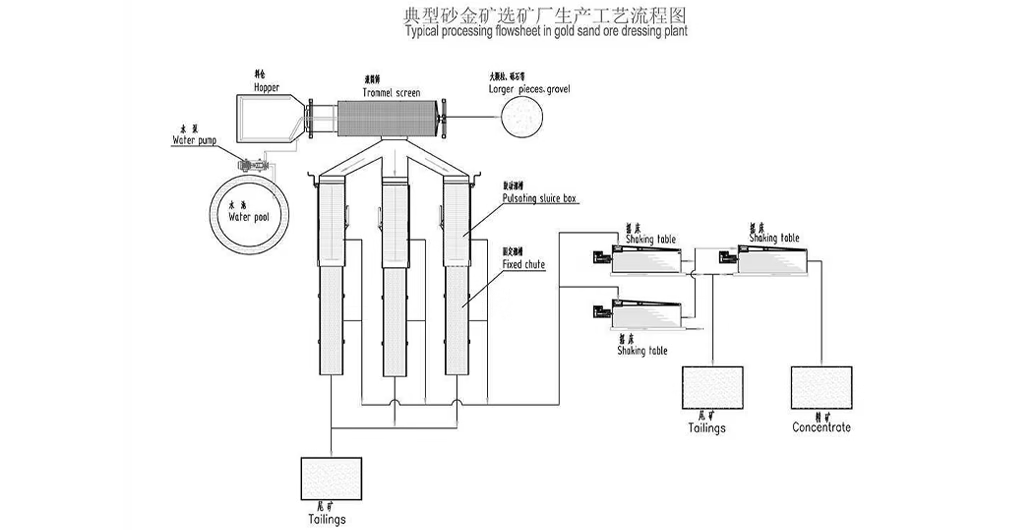
Alluvial gold extraction follows a general sequence of operations. It begins with raw material input and ends with a gold concentrate.
Excavation and Feed: Raw placer material is excavated from the deposit. It is then fed into the processing plant. This often involves excavators or dredges. A hopper with a grizzly typically receives the material. The grizzly removes oversized rocks and debris. This protects downstream equipment from damage.
Washing and Screening (Sizing): The raw material undergoes thorough washing. Water breaks up clay and liberates gold from gravels. Trommel screens or vibrating screens classify the material by size.This sizing is crucial. It ensures optimal feed for subsequent gravity separation equipment. ZONEDING’s trommel screens are highly effective for this stage.
Primary Concentration: The sized material enters the primary concentration circuit. Equipment like jigs or sluice boxes often perform this step. These units capture a significant portion of the gold. They also produce a rough gold concentrate. The material that flows over these devices contains less gold. It may go to a scavenger stage or be discarded as tailings.
Secondary Concentration (Cleaning): The rough concentrate from primary concentration undergoes further upgrading. This stage increases the gold grade. Gold centrifugal concentrators are commonly used here. Shaking tables also clean the concentrate effectively. This step ensures high purity. It prepares the gold concentrate for smelting.
Tailings Management and Water Recycling: All discarded material and process water are managed. Tailings are disposed of responsibly. Water is recycled to minimize consumption. Thickeners play a critical role in recovering process water. ZONEDING’s thickeners enable efficient water reuse.
Each step in the alluvial gold processing flow presents opportunities for optimization. Maximizing gold extraction requires careful attention.
Feed Rate Control: Consistent feed to trommels and concentrators prevents overloading. Overloading reduces efficiency. It leads to gold losses.
Water Pressure and Volume: Optimized water use ensures proper washing. It also provides effective separation within gravity devices. Too little water, and clay remains. Too much, and fine gold washes away.
Equipment Settings: Adjustments to jig stroke, screen angles, and concentrator speeds are crucial. These settings must match the specific gold characteristics. Particle size distribution for the alluvial gold processing stream is important.
Regular Sampling and Analysis: Sampling at various points in the circuit identifies gold losses. It allows for timely adjustments. This ensures the gold washing plant operates at peak efficiency. ZONEDING’s engineers assist clients in optimizing these parameters. They design complete gold extraction solutions tailored to specific project needs. For instance, mobile gold wash plants offer flexible configurations. They adapt to varying deposit conditions.
Key Equipment for Alluvial Gold Recovery
Effective alluvial gold processing relies on specialized gravity separation equipment. This equipment handles large volumes of raw material. It liberates gold. It then concentrates it. ZONEDING offers a range of robust and efficient machines. These machines are crucial for high gold extraction rates.
Choosing the right combination of gold mining equipment depends on material characteristics. It also depends on the desired throughput and gold size. ZONEDING’s expertise ensures optimized equipment selection for every project.
Trommel Screens and Grizzles: Initial Sizing and Washing
Initial sizing and washing are critical first steps.
Grizzles: These static bar screens remove very large boulders. They protect downstream equipment from damage.
Trommel Screens: These rotating cylindrical screens separate material by size. They include internal lifters and spray bars. These assist in washing and breaking down clay. ZONEDING’s trommel screens are robust. They offer efficient sizing and washing for alluvial gold processing. They liberate gold from gravels and clays. Oversize material is discarded. Undersize material proceeds to further concentration.
Vibrating Screens: These also perform sizing. They use vibrational force to separate particles. ZONEDING’s vibrating screens are durable. They handle high tonnage in gold washing plants.
Jigs: Pulsating Water for Concentration
Jigs utilize a pulsating water column. This separates particles based on density.
Working Principle: A bed of heavy particles forms. Water pulsations cause the bed to open and close. Dense gold particles penetrate deeper into the bed. Lighter gangue particles are washed over.
Applications: Jigs are highly effective for recovering coarse and medium-sized gold. They are a staple in many alluvial gold processing circuits. ZONEDING’s jig concentrators offer high recovery rates. They are suitable for various feed materials.
Gold Centrifugal Concentrators: Modern High-Recovery Techniques
Centrifugal concentrators employ centrifugal force. This force enhances gravity separation.
Working Principle: A rotating bowl creates a strong centrifugal field. This field significantly increases the effective gravity. It allows for recovery of very fine gold.
Advantages: Centrifugal concentrators achieve very high alluvial gold recovery rates. They are effective even for micron-sized gold. They are used as primary concentrators or for cleaning jig concentrates.
Applications: These modern machines are essential for maximizing total gold extraction. They excel at recovering fine gold often lost by traditional methods.
Sluices and Gold Pans: Traditional and Small-Scale Methods
Sluices and gold pans are traditional methods. They are important for small-scale operations.
Sluice Boxes: These long, inclined channels contain riffles. Riffles create eddy currents. These currents trap heavy gold particles. Lighter materials wash away.
Gold Pans: Manual panning separates small quantities of gold. This is typically used for sampling or cleaning small concentrates.
Applications: These methods are low-cost. They are simple to operate. They are suitable for preliminary testing or small-scale operations. However, professional alluvial gold processing plants use mechanized gold washing plants for high throughput.
High-Recovery Strategies for Alluvial Gold Processing
Maximizing alluvial gold recovery is crucial for profitability. This involves implementing strategic processing decisions. It also involves optimizing equipment use. High-recovery strategies focus on minimizing gold losses at every stage. They ensure efficient gold extraction.
These strategies often include multi-stage concentration. They also use modern gravity separation equipment. Regular monitoring and process adjustments are also part of this. ZONEDING provides expertise and equipment for implementing these advanced strategies.
Multi-Stage Concentration and Tailings Re-processing
Effective alluvial gold processing often involves multiple concentration stages.
Roughing: Initial concentration removes a large portion of gangue. This produces a rough concentrate.
Scavenging: Tailings from the roughing stage are re-processed. This recovers any gold that might have been lost. ZONEDING’s shaking tables are excellent for this. They capture fine particles effectively.
Cleaning: The rougher concentrate undergoes further processing. This increases gold purity. This stage significantly upgrades the gold grade. High-efficiency concentrators or shaking tables perform this task.
Tailings Analysis: Regular sampling and analysis of final tailings are essential. This identifies gold losses. It allows for process optimization.
Optimizing Particle Liberation and Classification
Proper liberation and classification prevent gold loss.
Effective Washing: Thorough washing in trommels or scrubbers liberates gold from clays. It prevents gold encapsulation.
Size Classification: Accurate sizing with screens or classifiers ensures optimal feed to each piece of gravity separation equipment. Finer gold needs finer screens. This prevents larger particles from hindering fine gold recovery.
Grinding for Concentrates: Sometimes, coarse gold concentrates require light grinding. This liberates any remaining locked gold from gangue particles.
Water Management and Fines Recovery
Efficient water management and recovery of fine gold particles are vital.
Water Recycling: Closed-loop water systems reduce consumption. They also minimize environmental impact. ZONEDING’s thickeners are key components in water recovery systems.
Fines Recovery: Fine gold is susceptible to loss. Centrifugal concentrators are highly effective. They capture even micron-sized gold. Shaking tables also contribute to fine gold recovery.
Slime Management: Excessive slimes can hinder separation efficiency. Proper desliming may be necessary.
ZONEDING’s Solutions for Alluvial Gold Processing
ZONEDING specializes in providing comprehensive solutions for alluvial gold processing. The company offers a wide range of gravity separation equipment. It also provides expertise in designing high-recovery gold washing plants. ZONEDING’s focus on customization ensures optimal performance for diverse placer deposits.
ZONEDING integrates crushing, screening, and washing equipment. This creates complete gold extraction circuits. These systems maximize gold recovery. They minimize operational costs. ZONEDING supports clients globally. They provide robust, efficient gold mining equipment.
Tailored Equipment for Specific Deposits
ZONEDING understands the variability of placer deposits.
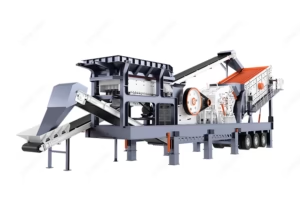
Mobile Gold Washing Plants: ZONEDING offers custom-built mobile trommel wash plants. These integrate trommel screens, sluices, and water pumps. They provide flexible on-site processing. This reduces transportation costs.
Comprehensive Screening: ZONEDING supplies various screens. These include trommel screens and vibrating screens. They ensure efficient sizing and washing for alluvial material.
High-Efficiency Concentrators: ZONEDING offers advanced jig concentrators and shaking tables. These are known for high alluvial gold recovery. They capture gold of varying sizes.
Full-Service Support and Engineering Expertise
ZONEDING provides more than just equipment. It offers a full spectrum of services.
Flowsheet Design: Experienced engineers design customized alluvial gold processing flowsheets. They optimize gold extraction based on specific ore characteristics.
Installation and Commissioning: ZONEDING’s team assists with installation. They ensure correct setup and optimal functioning of the gold washing plant.
Operational Training and After-Sales Support: Training programs equip client personnel. Long-term technical support ensures continuous, efficient operation.
2025 Latest Trends in Alluvial Gold Processing
The alluvial gold processing industry constantly evolves. New technologies and strategies emerge. These aim to improve efficiency and sustainability. Increased environmental awareness and the pursuit of higher recovery rates drive these trends.
Staying current with these advancements is important. It ensures continued success in gold extraction. ZONEDING monitors these trends. It integrates innovations into its gold mining equipment designs.
Technological Advancements in Gold Extraction
Advanced Sensor-Based Sorting: Pre-concentration techniques using X-ray fluorescence (XRF) or near-infrared (NIR) sensors gain traction. They remove barren waste before processing. This reduces operational costs. It increases plant efficiency.
Modular and Portable Plants: Demand for highly mobile and easily deployable gold washing plants increases. These plants suit remote or shifting placer deposits. ZONEDING’s mobile trommel wash plants embody this trend.
Enhanced Fine Gold Recovery: Innovations in centrifugal concentrators and fluid bed concentrators continue. These improve the capture of extremely fine gold particles. They represent a key focus in alluvial gold recovery.
Sustainable Water Management: Development of more efficient water recycling systems progresses. This includes advanced flocculant technologies and high-rate thickeners for closed-loop operations.
Market and Environmental Drivers
Environmental Regulations: Stricter environmental rules promote responsible alluvial gold processing. This includes demands for reduced water use and minimal disturbance. This drives the adoption of eco-friendly gold extraction methods.
Automation and Remote Monitoring: Automated controls and remote monitoring systems enhance operational efficiency. They reduce labor costs. They also improve safety in gold washing plants. These technologies allow for real-time optimization.
Increasing Depth of Deposits: Easily accessible shallow deposits are depleting. Deeper, more complex placer deposits require advanced excavation and processing techniques. This drives demand for robust and efficient gold mining equipment.
Common Questions About Alluvial Gold Processing
Question 1: What is the main principle behind alluvial gold processing?
The main principle is gravity separation. It leverages gold’s high specific gravity. This density difference allows separation from lighter gangue materials.
Question 2: What is a trommel screen used for in gold processing?
A trommel screen is a rotating cylindrical screen. It is used for efficient sizing and washing of alluvial material. It separates gravels and clays. This liberates gold particles for further concentration.
Question 3: Can very fine gold be recovered effectively?
Yes, very fine gold is recovered effectively. Centrifugal concentrators excel at capturing micron-sized gold particles. Shaking tables also contribute to fine gold recovery in alluvial gold processing.
Question 4: Do ZONEDING’s gold processing plants conserve water?
Yes, ZONEDING designs its gold washing plants with water recycling in mind. Thickeners are integrated into the circuit. This significantly reduces fresh water consumption. It makes the gold extraction process more sustainable.
Question 5: What primary benefits do mobile gold washing plants offer?
Mobile gold washing plants offer flexibility. They allow on-site processing directly at the deposit. This reduces transportation costs. They are quickly deployable. This makes them ideal for varied or remote placer deposits.
Conclusion and Recommendations
Alluvial gold processing is a specialized field. It demands a deep understanding of geology, methods, and gold mining equipment. Effective gold extraction from placer deposits relies on robust gravity separation equipment. It also depends on high-recovery strategies. ZONEDING provides comprehensive solutions. These solutions support efficient and sustainable alluvial gold recovery operations globally.
Choosing the right combination of gold washing plants and processing steps is critical. It maximizes profitability. It also minimizes environmental impact. ZONEDING’s expertise ensures optimized flowsheets. This includes customized equipment for specific deposit characteristics. Partner with ZONEDING. Leverage advanced technology. Achieve superior alluvial gold processing results. Contact ZONEDING today to discuss specific gold extraction needs.
A complete diagnostic chart for hammer crusher. We break down 9 common fault symptoms, explain the root causes, and provide effective, field-tested solutions.
Learn 5 common methods, processes & work principles of mineral ore dressing. From crushing to separating, discover key tips for efficient mineral separation.
Discover the gravity separation in mineral processing. Learn how density differences can separate valuable minerals,its basic principles, methods,machines etc..
 Zoneding Mining