Understanding what a grinding mill is, its purpose, and its core functions is key for anyone involved in mining or material processing. This article will provide a detailed explanation of these aspects. It will also cover the main types of grinding mills and their industrial applications. ZONEDING specializes in manufacturing a wide range of grinding equipment, including efficient ball mills and rod mills, designed to optimize your material comminution needs.
A grinding mill is a powerful piece of mineral processing equipment. It is designed to reduce solid materials into a finer state. This machine takes larger crushed particles and grinds them down. It transforms them into a powder or a slurry. This process is crucial for many industries. It is especially vital in mining.
The primary function of a grinding mill is comminution. Comminution means breaking down materials into smaller particles. It uses mechanical forces. These forces include impact, attrition, and compression. The goal is to achieve specific particle sizes. This size prepares the material for further processing. ZONEDING manufactures a wide range of grinding equipment. Our machines ensure efficient size reduction for your specific ore types.
What Exactly is a Grinding Mill Used For?
A grinding mill serves a primary purpose in various industries: to reduce material size. But its specific utility goes beyond simple comminution. It is a critical component for achieving specific material properties. These properties are essential for downstream processes. In mineral processing, its main use centers on mineral liberation and preparing material for maximum recovery.
The core functions of a grinding mill include:
Liberation of Minerals: Raw ore contains valuable minerals trapped within gangue (waste rock). The mill breaks down the rock matrix. This frees the mineral particles. Without effective liberation, valuable minerals remain hidden. They cannot be separated using methods like flotation or gravity separation.
Increasing Surface Area: Grinding increases the total surface area of the mineral particles. This augmented surface area is vital. It speeds up chemical reactions in processes like leaching (e.g., gold cyanidation). It also enhances the effectiveness of physical separation techniques. Flotation reagents, for example, need sufficient surface area to attach to the mineral particles.
Achieving Specific Particle Size: Many industrial processes require materials of a precise particle size. Cement production needs finely ground clinker. Pigment manufacturing demands ultrafine powders. Grinding mills allow for controlled size reduction. This meets these stringent specifications.
Preparation for Downstream Processes: Grinding mills prepare the material for other mineral processing equipment. This includes flotation cells, magnetic separators, or classifiers. These machines work most efficiently with finely ground material. This ensures optimal separation and recovery rates.
ZONEDING understands these critical requirements. Our grinding equipment is engineered for high efficiency. This addresses the specific needs of various industries. We ensure that our grinding solutions provide the optimal product for your next processing stage.
How Does a Grinding Mill Work?
The fundamental operation of a grinding mill relies on the principle of comminution. Comminution is simply particle size reduction. This process occurs through specific mechanical forces applied to the material. A grinding mill applies these forces systematically, leading to the breaking down of the ore or other materials.
The primary forces involved in a grinding mill’s operation include:
Impact: This occurs when particles or grinding media (like balls or rods) forcefully collide with each other or with the mill’s liners. Imagine hitting a rock with a hammer. The sudden, high-energy impact shatters the material into smaller pieces. This force is particularly effective for breaking down coarser particles.
Attrition (or Abrasion): This involves the rubbing and scrubbing of particles against each other or against the grinding media and mill surfaces. Think of sandpaper rubbing against wood. This force gradually wears down the particle surfaces. It is very effective for producing fine powders and shaping particles.
Compression: This force involves squeezing the material between two surfaces. In some mills, this can be between grinding media, or between the media and the mill shell. This pressure fractures the material.
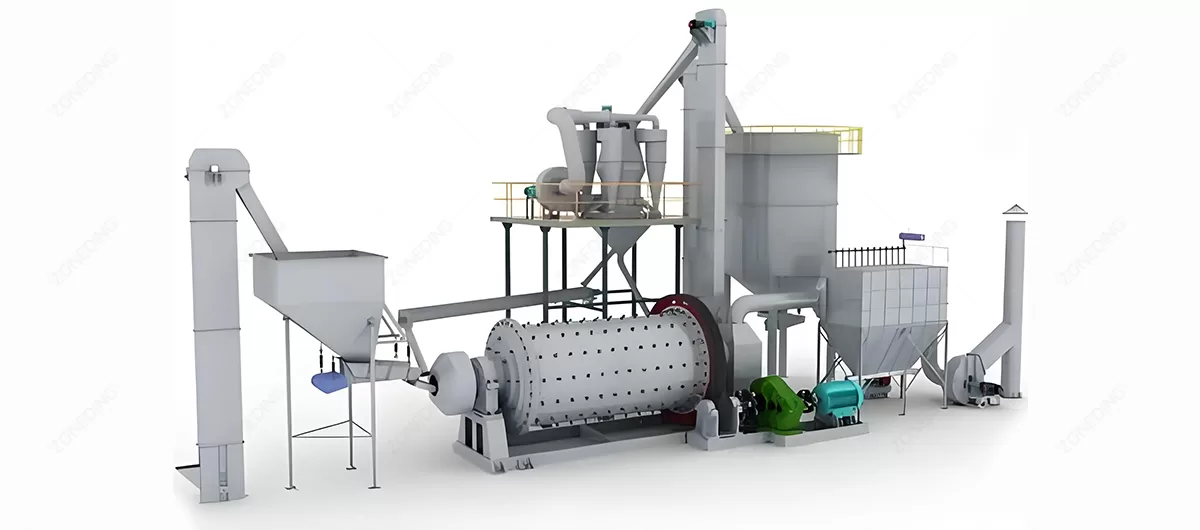
A typical grinding mill, such as a ball mill, features a rotating cylindrical shell. This shell contains grinding media. As the mill rotates, these media are lifted and then fall. This action creates powerful impacts. They also roll and slide against each other, generating attrition. The ore particles fed into the mill are caught between these forces. They are progressively reduced in size until they reach the desired fineness.
ZONEDING designs its grinding equipment to optimize these comminution principles. This leads to maximum efficiency and reduced energy consumption. Our engineers focus on balancing impact and attrition. This ensures optimal liberation for your specific material.
What Are the Key Types of Industrial Grinding Mills?
The industrial landscape utilizes several main types of grinding mills. Each type is designed for specific applications. They handle different material characteristics and desired product fineness. Understanding these types is crucial for selecting the right grinding equipment for an operation. ZONEDING offers a variety of mills to meet these diverse needs.
Ball Mills: The Workhorse of Grinding
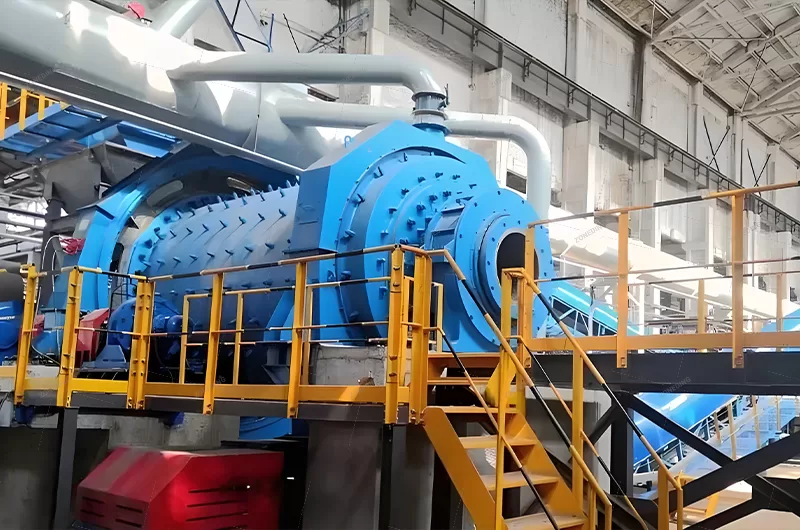
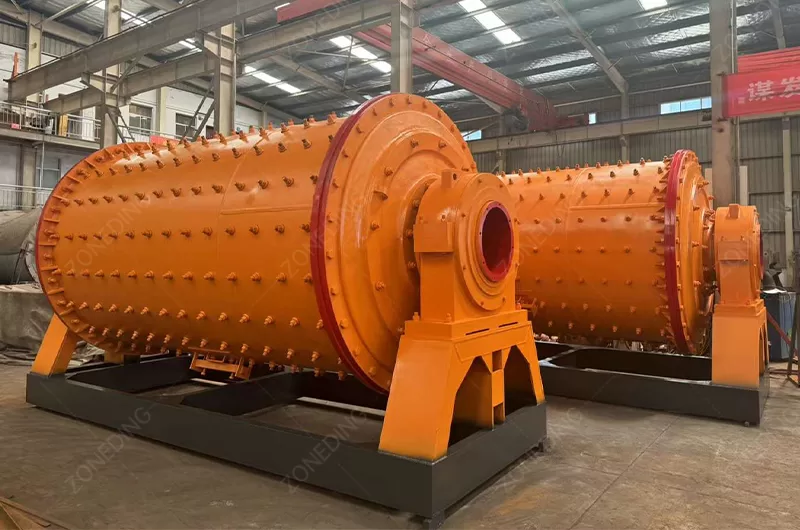
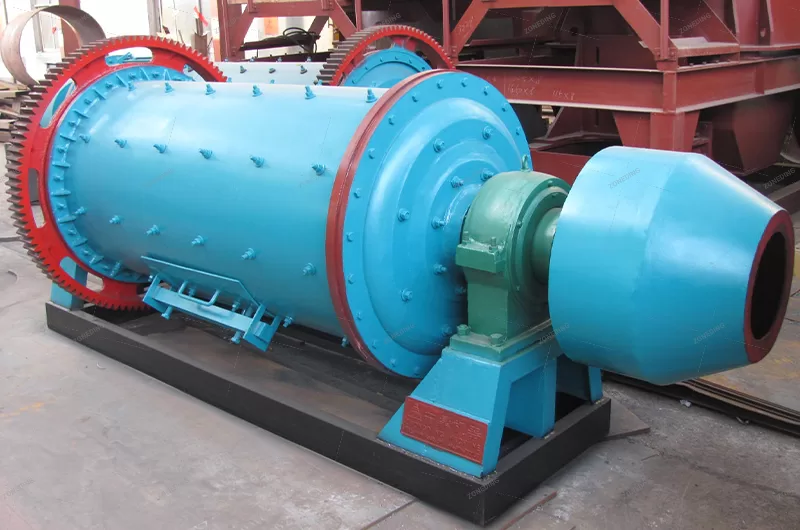
Ball mills are perhaps the most common and versatile type of grinding mill. They are found in nearly every mineral processing plant globally.
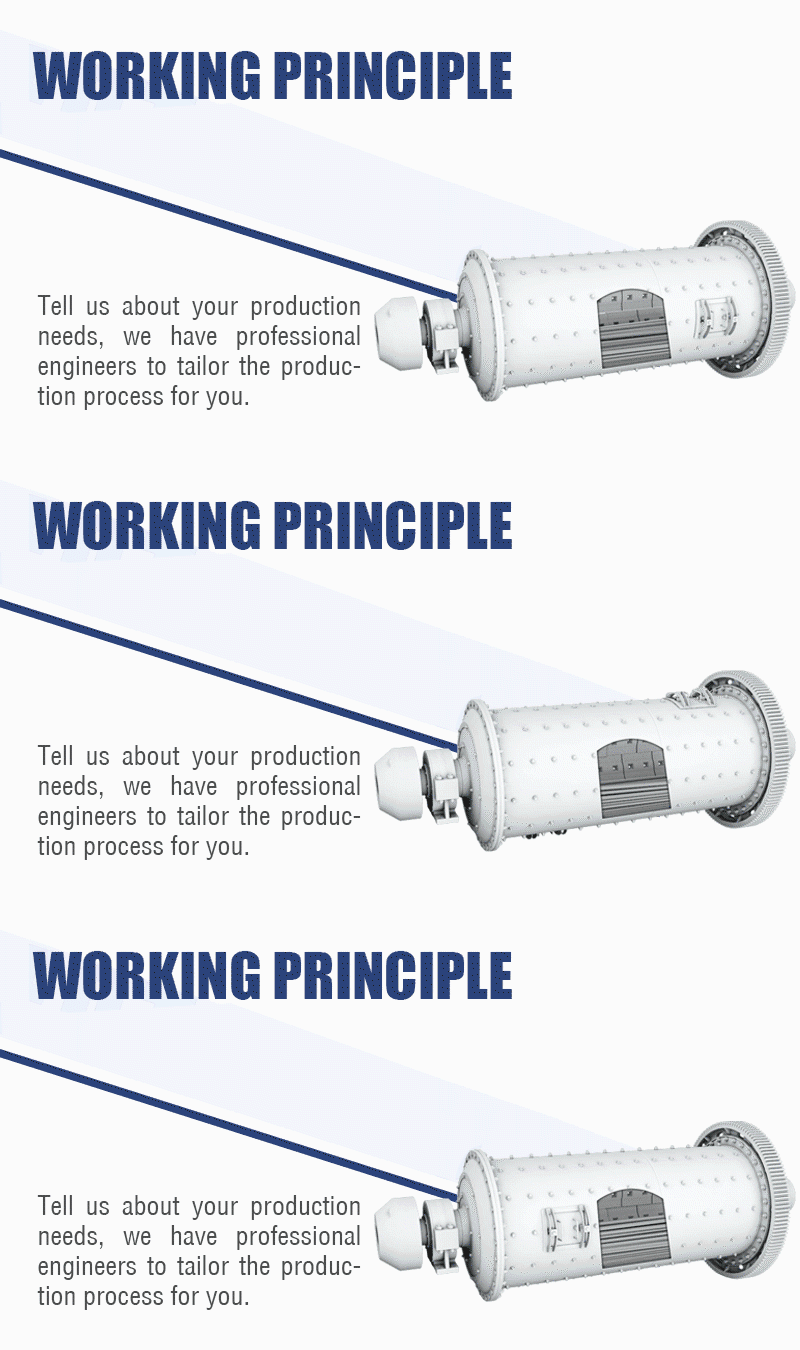
Working Principle: A ball mill consists of a large, hollow cylinder rotating around its horizontal axis. Inside, it contains grinding media, typically steel balls (but sometimes ceramic or rubber). As the cylinder rotates, it lifts the balls and ore with specialized liners. The balls then tumble down, creating impact and attrition. This action grinds the ore into a fine powder.
Applications: Ball mills are highly effective for grinding a wide range of materials. These include various ores (gold, copper, iron), cement clinker, ceramics, and even certain chemicals. They can operate in both wet and dry conditions and are capable of producing very fine products.
Features: ZONEDING’s ball mills are known for their robust design and durability. We build them from high-quality materials. This ensures long operational life, even under harsh conditions. They are also optimized for high grinding efficiency. This helps reduce energy consumption and operational costs.
Rod Mills: For Granular and Coarser Products
Rod mills are similar in design to ball mills but utilize long steel rods as their grinding media.
Working Principle: Like ball mills, rod mills rotate. The steel rods inside tumble and roll. However, because of their length, the rods tend to maintain a more parallel alignment. This creates a line contact rather than point contact for grinding. This action results in a more uniform product. It also minimizes the production of excessively fine particles, known as “slimes.”
Applications: Rod mills excel in producing granular products. They are often used for coarser grinding. This is typically between the crushing stage and a final fine grinding stage (often in a ball mill). They are suitable for materials that are prone to packing or sliming in ball mills.
Features: ZONEDING designs its rod mills for reliability and consistent performance. They are particularly effective for preparing material. This is material that requires a narrow particle size distribution for subsequent processing. Our rod mills are robust, handling tough ores efficiently.
Other Specialized Grinding Mills
While ball and rod mills are dominant, other types of grinding equipment cater to specific needs:
Vertical Roller Mills (VRM): These mills use large rollers that grind material against a rotating table. They are highly energy-efficient. They also offer advantages in drying and grinding simultaneously. They are commonly employed in cement plants for grinding raw materials and coal.
High Pressure Grinding Rolls (HPGR): HPGRs consist of two counter-rotating rollers. They crush material by applying extremely high pressure through a bed of particles. This inter-particle comminution is very energy-efficient. It creates a high proportion of micro-cracks in the particles. This benefits downstream liberation. This technology is increasingly popular for harder ores.
Choosing the ideal grinding mill depends on factors like the ore’s characteristics, the required product fineness, and overall energy efficiency goals. ZONEDING’s team of experts can analyze your specific project. This helps you select the optimal grinding equipment and circuit configuration for your operation.
Where Are Grinding Mills Primarily Used in Industry?
Grinding mills are indispensable across a broad spectrum of industries. Their core function of size reduction makes them vital for material preparation. ZONEDING’s grinding equipment finds extensive use in several key sectors.
Mineral Processing: This is the most significant application. Grinding mills are central to liberating valuable minerals from mined ore.
Gold Mining: Mills grind gold-bearing quartz to a fine powder. This exposes gold particles for cyanide leaching or flotation.
Copper and Iron Ore: Large-scale operations rely on mills to prepare ore for flotation (copper) or magnetic separation (iron).
Other Ores: Mills are essential for processing tin, lead, zinc, and various industrial minerals.
Aggregate Production and Artificial Sand: While crushers handle most aggregate sizing, grinding mills play a role in producing high-quality artificial sand. This is crucial for concrete and construction.
Sand Making: Mills can further process crushed rock. This creates fine aggregates with specific shape requirements.
Cement Production: Grinding mills are fundamental to every cement plant. They process vast quantities of raw materials (limestone, clay, sand, iron ore) into a fine blend. This is then fed into kilns. They also grind the resulting clinker into the final cement powder.
Raw Mill Grinding: Ball mills or vertical roller mills prepare raw feed.
Cement Mill Grinding: Mills reduce clinker to the final cement product.
Construction Waste Recycling: Mobile crushing and grinding units are used to process concrete, asphalt, and brick waste. This reduces landfill burden. It also generates reusable aggregates.
Fine Material Production: Grinding helps create finer recycled materials. These are suitable for various construction applications.
ZONEDING provides robust and efficient grinding equipment for all these applications. Our machines are designed to handle demanding industrial environments. We ensure that your material processing needs are met with precision and reliability.
Optimizing Your Grinding Mill Operations: Key Considerations?
Optimizing the performance of your grinding mill is crucial for efficiency and profitability. Even the best grinding equipment can underperform without proper considerations and adjustments. Here’s what you need to focus on:
Feed Material Characteristics: Understand your ore’s hardness, abrasiveness, and moisture content. This affects mill selection, media consumption, and liner wear. ZONEDING can help conduct ore analysis to inform equipment choices.
Grinding Media Selection: The type (balls, rods), size, and quality of grinding media directly impact efficiency. Larger media are good for impact on coarser feed. Smaller media are better for producing fine particles through attrition. Maintaining the correct media charge level is also critical.
Mill Operating Parameters:
Mill Speed: An optimal rotational speed ensures efficient cascading and cataracting of media. Too slow, and grinding is weak; too fast, and media centrifuge against the shell.
Feed Rate: A consistent and appropriate feed rate prevents overloading (which reduces grinding efficiency) or underloading (which wastes energy).
Pulp Density (for wet grinding): The ratio of solids to water in the mill’s slurry affects viscosity. This influences how effectively particles and media interact.
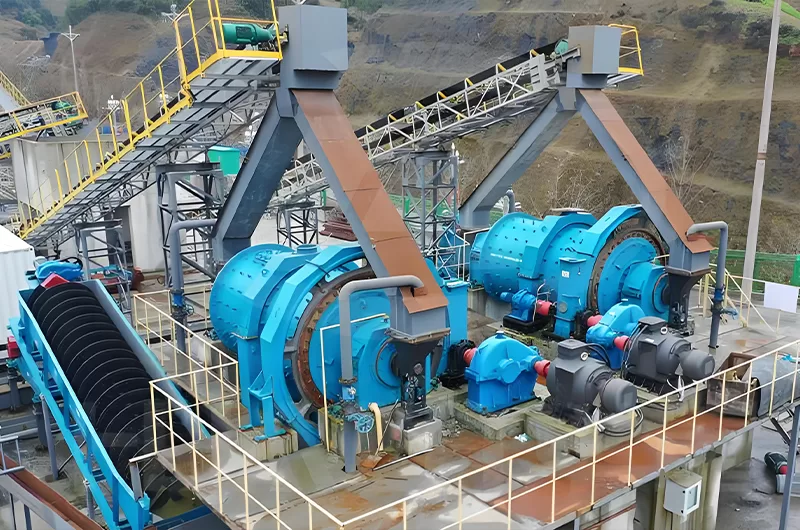
Circuit Configuration: Most modern operations use a closed-circuit grinding system. This involves returning coarser particles (oversize) from a classifier (like a hydrocyclone) back to the grinding mill. This prevents over-grinding of already fine material. It saves energy and ensures consistent product size. ZONEDING specializes in designing complete mineral ore dressing processes that integrate optimized grinding circuits.
Liner Design and Maintenance: The lifter bars and liners inside the mill protect the shell and influence grinding action. Regularly inspecting and replacing worn liners helps maintain efficiency and prevents damage.
Grinding Mill Factor
Impact on Efficiency
ZONEDING Solution/Benefit
Hardness of Ore
Determines energy usage and media wear.
Offers various mill types (ball, rod) suitable for different ore hardnesses.
Media Size
Affects impact vs. attrition balance.
Provides guidance on optimal media charge and sizing.
Mill Speed
Critical for proper media action (cascading/cataracting).
Mills designed for precise speed control and adjustment.
Designs integrated complete production line solutions with efficient classifiers.
ZONEDING’s team of engineers provides personalized consultations. We help you fine-tune your grinding mill operations. This ensures you achieve maximum output with minimum energy consumption and wear.
Why Choose ZONEDING for Your Grinding Mill Needs?
Choosing the right partner for your grinding mill needs is vital. ZONEDING offers significant advantages as a mineral processing equipment manufacturer. Our commitment to quality and service stands out. ZONEDING boasts deep industry experience. The company was founded in 2004. This long history ensures refined designs and optimized production practices. A team of 15 professional engineers guarantees strict quality control. They also ensure innovative design in every piece of grinding equipment.
ZONEDING provides a comprehensive product range. This includes reliable ball mills and rod mills. These are essential for efficient mineral liberation. As a direct manufacturer, ZONEDING offers competitive pricing. It eliminates intermediary markups. Full-service support covers scheme design, manufacturing, installation guidance, and operator training. Reliable after-sales service includes part supply. ZONEDING exports to over 120 countries. This demonstrates extensive international logistics expertise. Choosing ZONEDING means investing in proven efficiency, durability, and a dedicated partner for successful material comminution processes.
Common Questions About Grinding Mills
Q1: What is the main difference between a crusher and a grinding mill?
A crusher handles larger rocks to reduce their size to a few centimeters. A grinding mill takes this crushed material and reduces it further to a fine powder or slurry. Crushers use mostly compression, while mills use impact and attrition for finer reduction.
Q2: How do you choose the right grinding mill for my operation?
To choose the right mill, consider your ore’s hardness, desired product fineness, throughput capacity, and energy costs. Consulting experts like ZONEDING who can analyze your specific material and project requirements is highly recommended.
Q3: What are the benefits of using a closed-circuit grinding system?
A closed-circuit system prevents over-grinding. It sends already fine material to the next step. It returns coarser material to the grinding mill. This saves energy, ensures a more uniform product size, and significantly improves overall grinding efficiency.
Q4: How does a grinding mill contribute to gold recovery?
By producing a very fine powder, a grinding mill liberates tiny gold particles from the surrounding rock. This exposure makes the gold accessible. It can then be effectively recovered through processes like flotation or chemical leaching, maximizing the gold yield.
Q5: What common issues affect grinding mill efficiency?
Common issues include incorrect grinding media size/level, suboptimal mill speed, inconsistent feed rates, worn-out liners, and blockages. Addressing these through regular maintenance and operational adjustments can significantly improve efficiency.
Conclusion: Powering Mineral Liberation for Enhanced Value
Grinding mills are the fundamental machines at the heart of many industrial processes. They are essential for transforming raw materials into more useful forms. Understanding their definition, purpose, and core functions is vital for efficient operations. These powerful machines liberate minerals. They prepare them for efficient separation. This directly impacts the profitability and sustainability of mining and material processing.
Selecting the right grinding equipment and designing an optimized grinding circuit is paramount. ZONEDING offers a comprehensive range of high-quality grinding mills. Our expertise spans design, manufacturing, and full-service support. Whether you need robust ball mills or specialized rod mills, ZONEDING ensures optimal performance. This commitment helps clients achieve their production goals. It also promotes sustainable resource utilization. Partner with ZONEDING to unlock the full potential of your materials.
Seeking impact crusher prices? Learn 7 factors affecting its cost, including model, capacity, brand, configuration, and accessories. Get an accurate quote now!
This guide explains how to improve your limestone sand making process with modern technologies to reduce wear costs and increase your overall profit margins.
Learn what makes copper most useful metals. We learn its properties—conductivity, malleability, corrosion resistance—and the essential applications they enable.
 Zoneding Mining