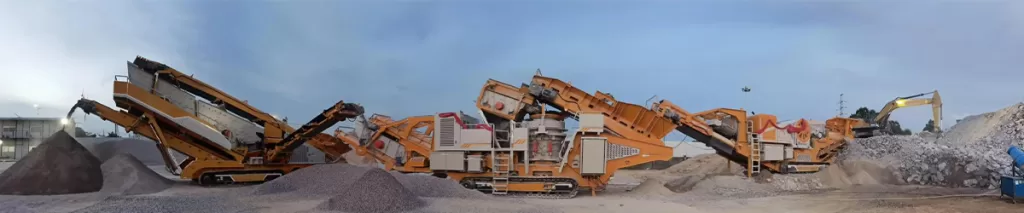
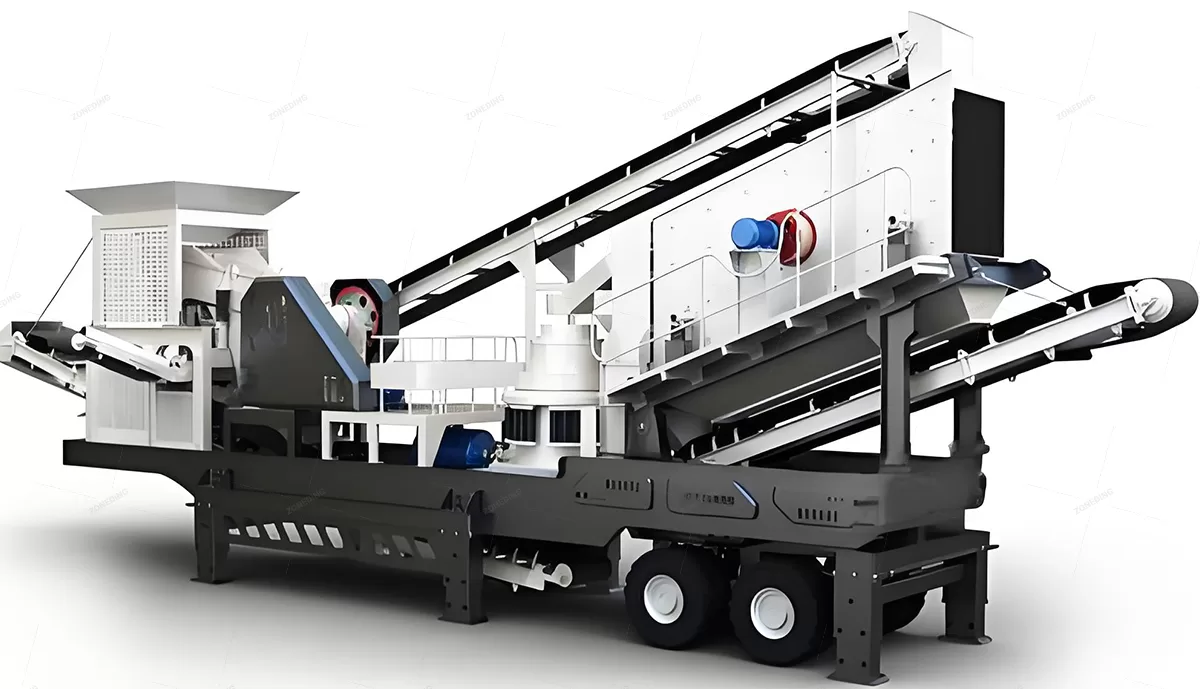
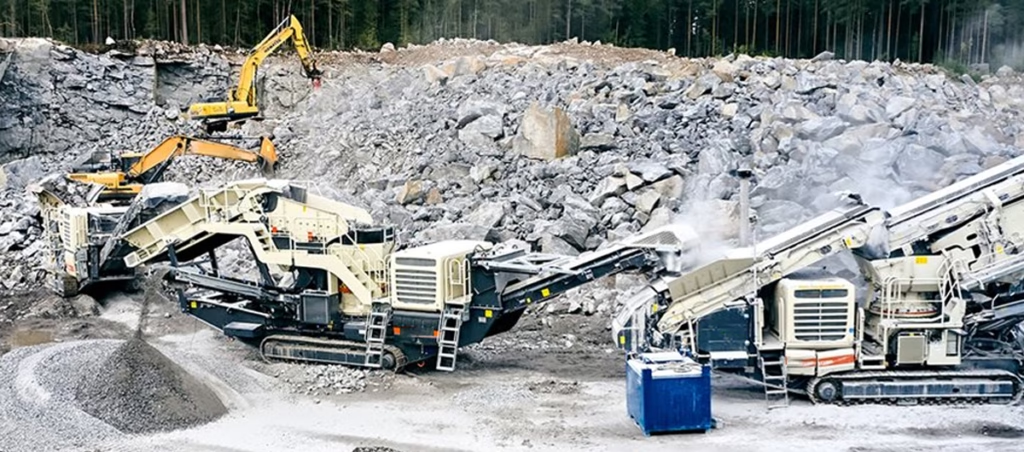
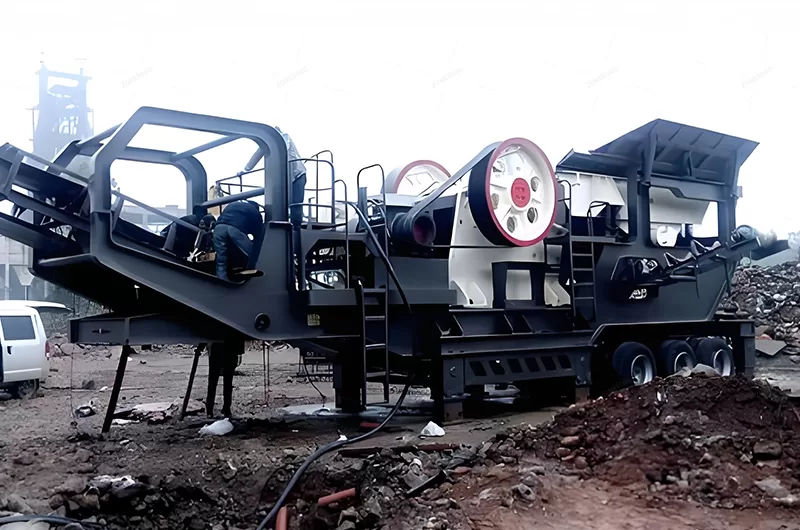
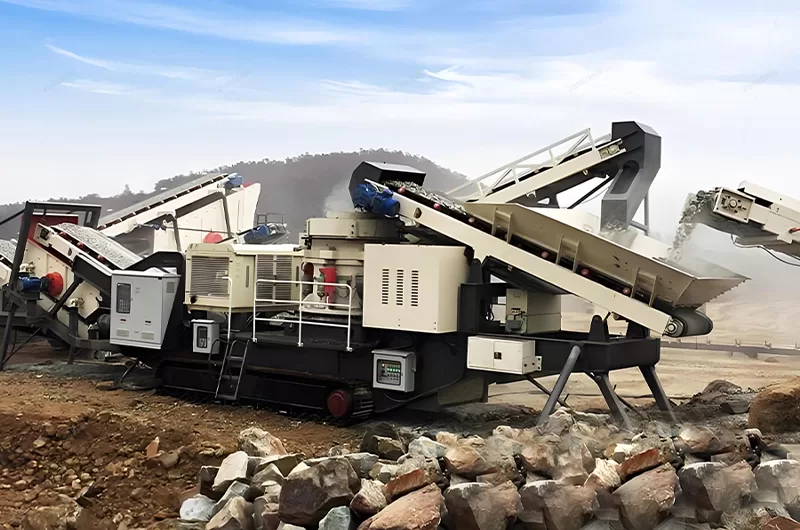
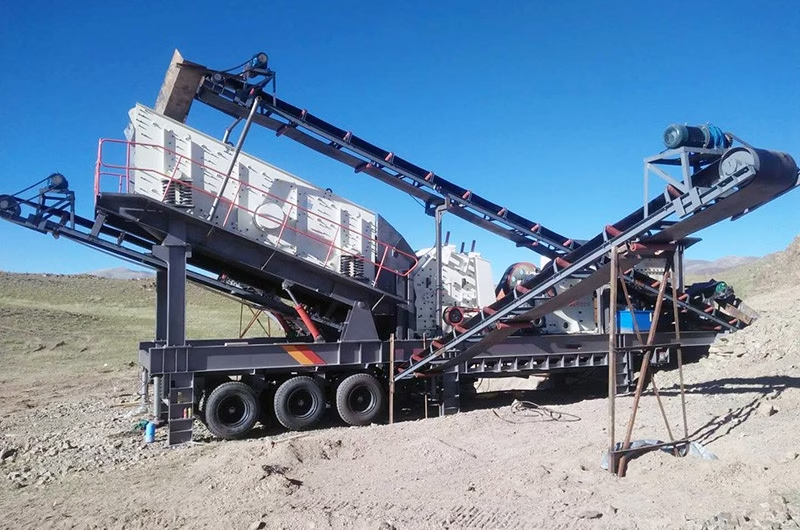
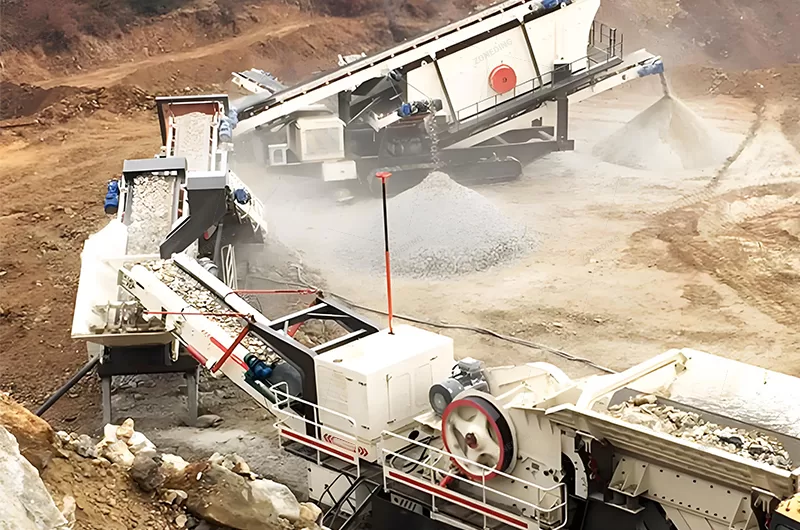
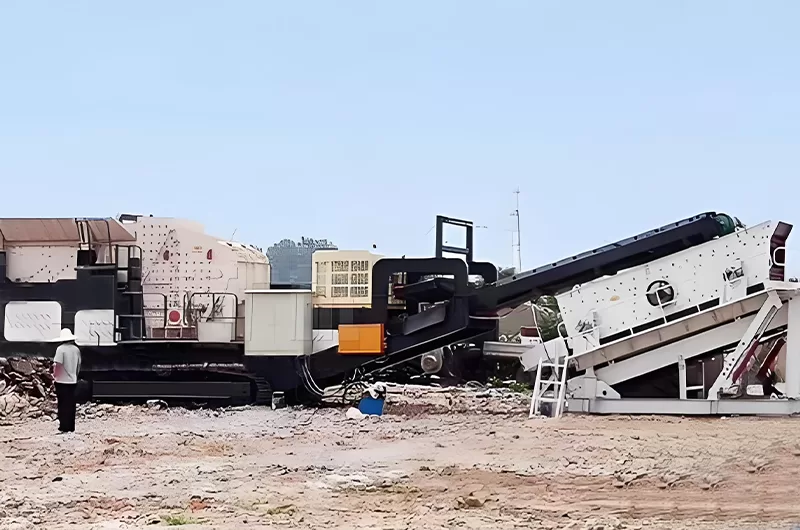
A mobile crusher represents a vital advancement in the field of mineral processing and aggregate production. This versatile machine integrates crushing, screening, and feeding equipment onto a portable chassis. Its mobility offers significant operational flexibility. It is capable of moving across various project sites. Understanding a mobile crusher plant and its capabilities is crucial for optimizing excavation, construction, and recycling operations.
This guide explores the concept of a mobile crusher, its key features, types, and widespread applications. The benefits of using such equipment will also be discussed. This information helps operations managers and project planners make informed decisions for their equipment needs.
What is Concept of a Mobile Crusher?
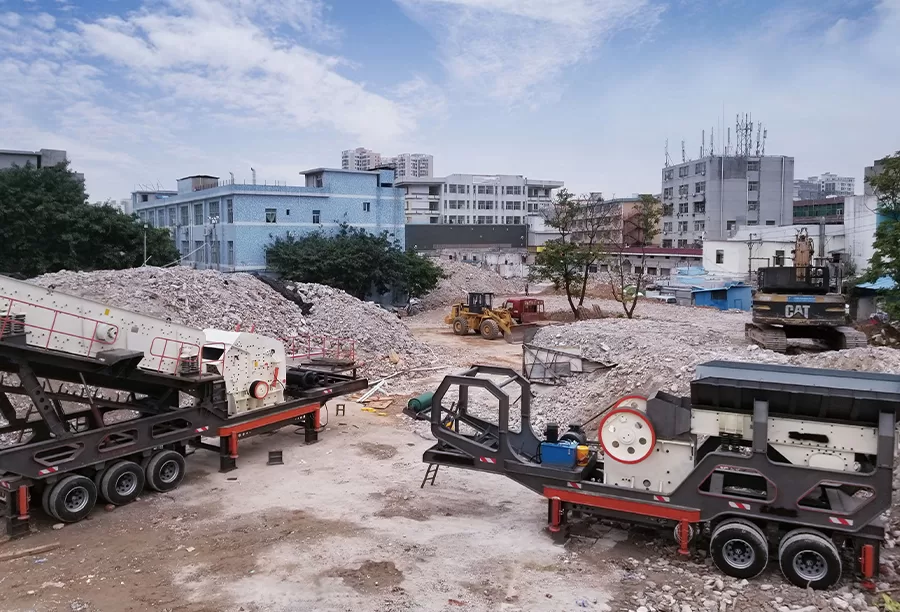
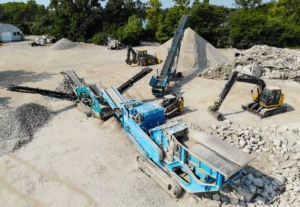
A mobile crusher is a complete, self-contained crushing and screening unit. It is mounted on wheels or tracks. Unlike stationary crushing plants, it can move easily within a work site or transport between different locations. This equipment performs initial size reduction of various materials. These materials include rock, concrete, and asphalt.
The primary function of a mobile crusher plant is to process raw materials directly at the source. This eliminates the need for extensive hauling. Such units integrate feeding, crushing, screening, and conveying systems. They are designed for quick setup and relocation. ZONEDING’s mobile crushing plants offer robust construction and advanced technology for diverse applications. The flexibility of a mobile crushing station improves overall project efficiency.
Why are Mobile Crushers a Smart Investment for Businesses?
Investing in a mobile crusher offers significant advantages. These benefits contribute to increased efficiency, cost savings, and operational flexibility. Businesses across mining, construction, and recycling sectors recognize the value of this portable technology.
Key benefits of using a mobile crusher plant include:
- Flexibility and Mobility: Easily relocated within a site or transported to different job sites. This reduces material handling and hauling costs. It also eliminates the need for permanent infrastructure. This mobility makes a mobile crushing station highly adaptable.
- Cost Efficiency: Reduces fuel consumption and labor costs associated with material transport. Initial setup costs are also lower compared to stationary plants.
- Faster Setup: Quick assembly and disassembly times minimize project delays. This allows for rapid deployment to new sites.
- On-Site Processing: Enables crushing at the point of extraction or demolition. This maximizes resource utilization. It also reduces environmental impact.
- Versatility: Adaptable to various materials. These include hard rock, soft minerals, and recycled concrete. A mobile crusher for sale can handle diverse crushing tasks.
- Enhanced Safety: Reduces vehicle traffic on site. This lowers the risk of accidents.
- Environmental Benefits: Minimizes dust and noise pollution. Reduces carbon footprint due to less transport.
ZONEDING’s mobile crushing plants maximize these benefits. They provide reliable and efficient crushing solutions. This makes a small mobile rock crusher a highly versatile tool.
What Classification of Mobile Crushers Are Available for Specific Needs?
Mobile crushers come in various configurations. Each is designed to address specific crushing requirements. The choice of mobile crushing plant depends on the feed material, desired output size, and production capacity. Understanding these types guides optimal equipment selection.
Major types of mobile crusher units include:
- Mobile Jaw Crusher: These units are typically used for primary crushing. They handle large, hard, and abrasive materials. Their robust design reduces large rocks into smaller, manageable sizes. ZONEDING’s mobile jaw crusher plant offers high throughput and exceptional durability.
- Mobile Cone Crusher: Ideal for secondary or tertiary crushing. These units produce fine or medium-sized aggregates. They feature higher reduction ratios and better product shape compared to jaw crushers. They are suitable for various stone types. A mobile cone crushing plant is often used downstream from a jaw crusher.
- Mobile Impact Crusher: These crushers utilize high-speed impact to break down materials. They are effective for softer to medium-hard rock. They produce a well-shaped, cubical product. Mobile impact crusher plants are excellent for asphalt and concrete recycling.
- Mobile VSI Crusher: Vertical Shaft Impact (VSI) crushers are utilized for producing high-quality manufactured sand. They are also used for fine crushing applications. The VSI process creates a very cubical product. This is highly desired in concrete and asphalt mixes.
- Mobile Combination Crusher: These plants combine multiple crushing stages onto a single mobile chassis. They offer a complete crushing solution in a highly portable format. ZONEDING designs integrated mobile crushing station solutions.
ZONEDING provides a wide array of mobile crushing plants. These cater to exact project specifications. They offer a small mobile rock crusher for niche applications.
What Key Features Define a High-Quality Mobile Crusher?
A high-quality mobile crusher incorporates several key features. These attributes contribute to its efficiency, reliability, and ease of operation. Understanding these characteristics helps in making a judicious purchasing decision.
Important features of a robust mobile crusher plant include:
- Robust Chassis: A strong, durable frame supports all components. This ensures stability and reliability during operation and transport.
- Efficient Feeding System: Integrated vibratory feeders ensure a continuous, controlled flow of material into the crusher. This maximizes throughput.
- Powerful Crusher Unit: Equipped with a high-performance jaw, cone, or impact crusher. This matches the application’s specific crushing requirements.
- Integrated Screening: Many mobile crushing plants include vibrating screens for immediate product classification. This ensures desired aggregate sizes.
- User-Friendly Control System: Intuitive controls allow for easy operation. They offer real-time monitoring of crushing parameters.
- Hydraulic Adjustment: Hydraulic systems allow for quick and easy adjustment of gap settings. This adapts to changing feed material or product specifications.
- Remote Control Options: Enhanced safety and operational flexibility are provided.
- Energy-Efficient Power Unit: Modern mobile crushers use efficient diesel engines or hybrid power systems. These reduce fuel consumption and emissions.
- Easy Maintenance Access: Designed for straightforward access to wear parts and service points. This minimizes downtime.
- Dust Suppression Systems: Integrated water sprays or dust collectors control airborne particles. This ensures environmental compliance.
ZONEDING integrates these features into its mobile crushing plants. This ensures high performance and reliability across varied operating conditions.
Where are Mobile Crushers Most Effectively Used?
Mobile crushers offer unparalleled versatility. This makes them suitable for a wide range of applications. Their ability to operate directly at the site of material extraction or processing provides significant operational advantages. This efficiency makes a mobile crusher for sale attractive for diverse projects.
Key application areas for a mobile crusher plant include:
- Quarrying and Mining: Used to crush various types of rock and ore. Examples include granite, basalt, limestone, and copper ore. A mobile jaw crusher plant often serves as primary crushing.
- Construction Waste Recycling: Crucial for processing demolished concrete, asphalt, and bricks into reusable aggregates. This promotes sustainable construction practices. A mobile impact crusher plant is often preferred here.
- Aggregate Production: Produces different aggregate sizes for roads, railways, and concrete. The mobility allows producers to follow raw material deposits. This reduces transport costs.
- Road and Infrastructure Projects: Deployment directly at the construction site processes raw materials like gravel and asphalt. This provides on-demand aggregate.
- River Stone Processing: Efficiently crushes river stones and pebbles for construction sand and aggregate. This is a common use for a small mobile rock crusher.
- Cement Production: Processes raw materials like limestone and clay for a cement plant.
ZONEDING provides specialized mobile crushing plants. These are tailored for performance in each of these complex applications. Its mobile crushing station offers adaptable solutions.
What Factors Should You Consider When Choosing Mobile Crushers?
Selecting the optimal mobile crusher for a project involves careful consideration of several factors. A well-chosen mobile crushing plant maximizes efficiency and profitability. It also ensures the successful completion of the project. This is a crucial step for anyone seeking a mobile crusher for sale.
Consider these key factors:
- Material Type and Hardness: Identify the type of material to be crushed (e.g., granite, concrete, limestone). Choose a crusher type suited for its hardness and abrasiveness. A mobile jaw crusher plant excels with hard rock.
- Required Production Capacity: Determine the desired output in tons per hour (tph). Match this with the crusher’s rated capacity to avoid bottlenecks.
- Desired Product Size and Shape: Specify the final aggregate size and required shape. Cone crushers and VSI crushers produce more cubical products.
- Site Conditions and Mobility Needs: Assess terrain, space availability, and the frequency of relocation. Track-mounted units offer superior maneuverability on rough terrain.
- Budget and Operating Costs: Evaluate the initial investment against long-term operating expenses. Consider fuel consumption, maintenance, and wear part costs. ZONEDING offers cost-effective solutions.
- Environmental Regulations: Check local regulations regarding noise, dust, and emissions. Select equipment with appropriate suppression systems.
- Maintenance and Support: Ensure access to spare parts and reliable after-sales service. ZONEDING provides comprehensive support.
ZONEDING’s experts offer consultation. This helps clients make informed decisions. It ensures optimal mobile crushing station selection for each unique project.
What is the Price of Mobile Crushers and Influencing Factors?
The price of mobile crushers varies widely. Many factors impact the final cost of a mobile crushing plant. Understanding these elements helps in budgeting. It also ensures selection of the most suitable equipment for specific project needs. A mobile crusher for sale is a significant investment.
Key factors influencing the mobile crusher price include:
- Type of Crusher: Different crushing technologies have different costs. A mobile jaw crusher plant is often more affordable than a mobile cone crushing plant or a mobile impact crusher plant. This is due to their primary function and complexity.
- Production Capacity: Higher tonnage per hour (TPH) capacity typically translates to a higher price. Larger machines require more materials and more powerful engines. A small mobile rock crusher will naturally have a lower price point.
- Features and Configuration: Integrated screening units, advanced automation controls, dust suppression systems, and hybrid power options increase the cost. A mobile crushing station with a full range of features costs more.
- Brand and Manufacturer: Renowned manufacturers often charge more due to their reputation for quality, reliability, and after-sales support. ZONEDING offers competitive pricing. This is due to its factory-direct sales model.
- Customization: Tailored solutions for specific materials or challenging environments add to the overall price.
- Engine Type: Diesel engine or electric motor choice affects both initial cost and long-term operating expenses. Fuel-efficient engines might have a higher upfront cost.
Consideration of these factors leads to a well-informed decision. This balances investment with operational needs.
What are the Main Advantages ZONEDING Mobile Crushing Plants Offer?
ZONEDING is a leading manufacturer of mobile crushing plants. It offers significant advantages over conventional crushing solutions. These advantages stem from advanced design, robust construction, and a strong focus on client needs. A ZONEDING mobile crusher for sale represents a strategic investment.
Key advantages of ZONEDING’s mobile crushing station include:
- High Mobility and Flexibility: Engineered for rapid relocation. ZONEDING’s track-mounted mobile jaw crusher plant can move easily within complex job sites. It also transports efficiently between project locations.
- Integrated Design for High Efficiency: These plants combine feeding, crushing, screening, and conveying units into a single mobile platform. This streamlines the crushing process and boosts overall efficiency.
- Customization Capabilities: ZONEDING provides tailor-made mobile crushing plants. They are designed to meet specific material types, output requirements, and site conditions. This adaptability ensures optimal performance.
- Robust Construction and Durability: Built with high-quality, wear-resistant materials. These crushers withstand harsh operating environments. This ensures long service life and minimal downtime.
- Advanced Control Systems: Equipped with intelligent control panels. These allow for precise adjustment of crushing parameters. They also enable real-time monitoring for optimized production.
- Comprehensive After-Sales Support: ZONEDING offers installation guidance, operator training, and readily available spare parts. This ensures continuous and reliable operation.
- Cost-Effectiveness: Reduced transportation overheads and efficient operations contribute to lower overall project costs. This makes ZONEDING’s small mobile rock crusher options economically viable.
Choosing a ZONEDING mobile crusher plant means investing in proven technology. It also means investing in comprehensive support for your crushing operations.
Summary: Harnessing the Power of Mobile Crushing
Mobile crushers represent a significant shift in how raw materials are processed. Their inherent flexibility, cost-effectiveness, and ability to operate on-site offer substantial advantages. These units are indispensable across mining, quarrying, construction, and recycling industries. Understanding the different types, key features, and effective applications ensures optimal equipment selection.
Investing in a mobile crusher plant is a strategic decision. It leads to increased operational efficiency and project profitability. Continuous innovation in mobile crusher technology further cements their role as essential equipment for modern material processing.
FAQs about Mobile Crushers
- Question 1: What is the main benefit of a mobile crusher over a stationary plant?
- The main benefit is mobility. A mobile crusher plant can operate directly at the excavation site. This significantly reduces material transport costs and setup time.
- Question 2: Can a small mobile rock crusher handle hard granite?
- Yes, a small mobile rock crusher, especially a mobile jaw crusher plant, can efficiently handle hard granite. The key lies in selecting the appropriate crusher unit and ensuring its robust design.
- Question 3: Are mobile crushers suitable for recycling construction waste?
- Absolutely. Mobile impact crusher plants are particularly effective here. They process concrete, asphalt, and bricks into reusable aggregates. This supports sustainable building practices.
- Question 4: How often do mobile crushers need to be serviced or maintained?
- Service intervals depend on operating hours, material abrasiveness, and manufacturer guidelines. Regular daily checks and preventive maintenance, like lubrication and wear part inspection, are crucial for ensuring high uptime.
- Question 5: What is the power source for a mobile crushing plant?
- Most mobile crushing plants are powered by efficient diesel engines. Some models may offer hybrid electric-diesel options. This provides greater flexibility and reduced emissions.
 Zoneding Mining