 Zoneding Mining

Site Search
Search products, equipment and solution articles
整站搜索产品中心新闻中心
点击开始搜索
热门搜索
UltraForm-MXFlexiPoly-RNanoForm Z300EcoFab P200
Search products, equipment and solution articles
Vanadium is a critical silver-gray transition metal that powers modern infrastructure and green energy. It is not found as a free element in nature but exists in over 65 different minerals. Most industrial vanadium comes from vanadium-bearing titaniferous magnetite (VTM) and stone coal. In 2025, the global focus on carbon neutrality has turned vanadium into a “metal of the future.” This is because of its role in high-strength steel and long-duration energy storage. Extracting this metal involves a complex Mineral Processing Plant design that moves from heavy rock crushing to high-purity chemical refining.
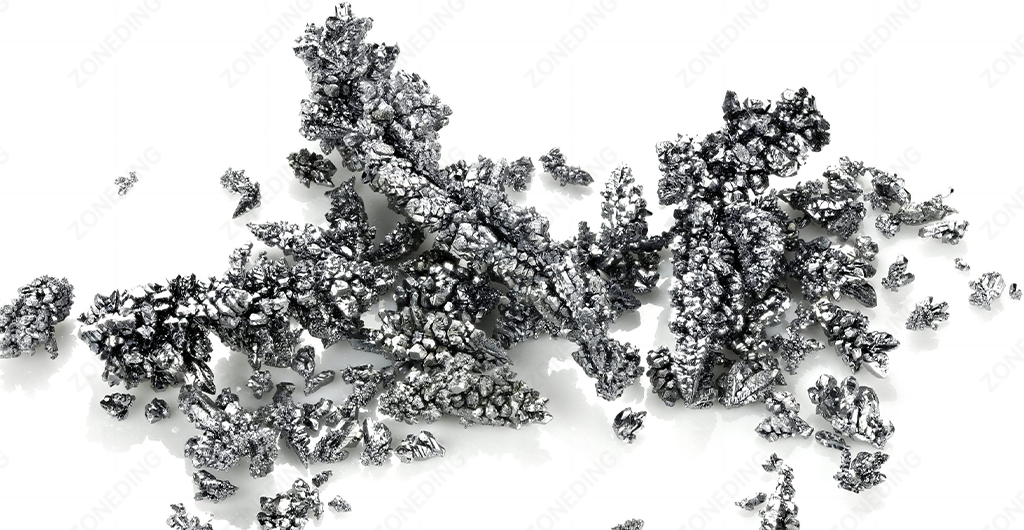
The processing of vanadium depends on the efficiency of mineral liberation. If the ore is not crushed and ground correctly, the chemical recovery rates drop significantly. ZONEDING MACHINE provides the heavy-duty crushers and mills needed to handle these abrasive ores. With the rise of the Vanadium Redox Flow Battery (VRFB) market, the purity standards for vanadium pentoxide (V2O5) have reached new heights. This guide provides a detailed look at the nature of vanadium, its primary industrial uses, and the latest extraction technologies used by leading mining companies today.
Last Updated: March 2026 | Estimated Reading Time: 25 Minutes
Vanadium is a silver-gray, soft, and ductile transition metal known for its incredible resistance to corrosion and high-temperature stability. On the Mohs scale, it has a hardness of about 7.0, making it quite durable. It is primarily recovered as a byproduct of iron ore processing or from specialized deposits like stone coal and shale. The metal is highly reactive. It usually bonds with oxygen, forming various oxides that are used in industrial chemistry. Because it rarely forms large concentrated deposits, advanced mining equipment is necessary to extract it economically from low-grade rock.
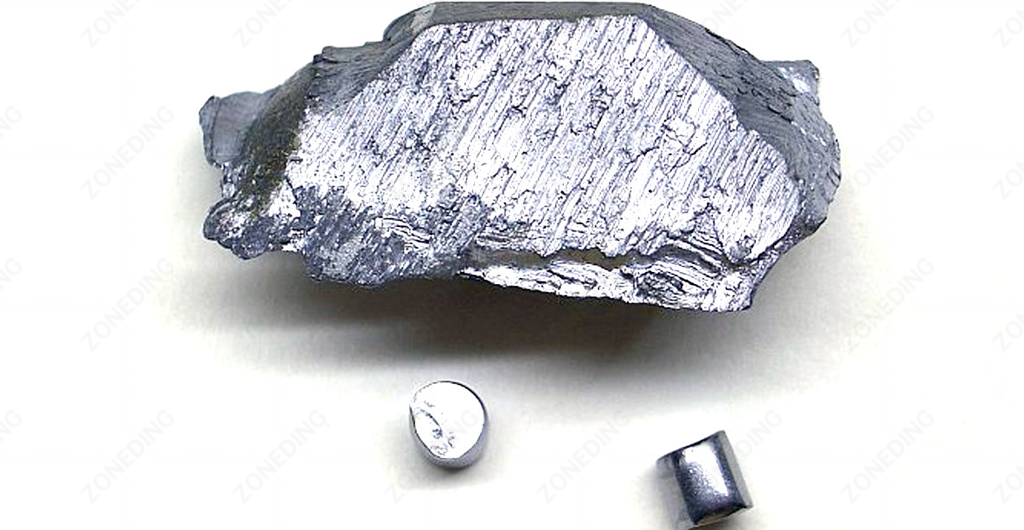
Most of the world’s vanadium comes from VTM ore. In these deposits, vanadium replaces some of the iron in the magnetite crystal structure. Preparing this ore for extraction requires massive force. A ZONEDING Jaw Crusher is typically the first machine on the site. It breaks down large blocks of VTM into manageable pieces. The mineralogy of vanadium is complex. This means that a single mine might need several stages of concentration to separate the valuable vanadium from waste silica and titanium. Understanding the specific mineral form is the first step in designing an efficient extraction flow.
Beyond VTM, vanadium is also found in “stone coal,” which is a type of carbonaceous shale. This source is unique to certain regions and requires specialized leaching. Vanadium is also recovered from oil residues and spent catalysts from the petroleum industry. Each source requires a custom Mineral Processing Plant layout. ZONEDING engineers analyze the ore type to provide the best combination of crushing and grinding. This ensures that the vanadium is fully exposed for the next chemical recovery step.
Major vanadium producers include China, Russia, South Africa, and Brazil. These countries have invested heavily in large-scale processing infrastructure. Since vanadium is often a byproduct, its supply is linked to the iron and steel market. However, in 2025, more primary vanadium mines are opening. These mines focus exclusively on the metal to meet the demands of the battery sector. This shift requires more precise screening and classification equipment to maintain high-grade output.
| Property | Description | Benefit for Industry |
|---|---|---|
| Hardness | 7.0 Mohs | High wear resistance |
| Melting Point | 1910°C | High-temperature stability |
| Corrosion Resistance | Excellent | Long-life infrastructure |
| Oxidation States | +2, +3, +4, +5 | Versatile chemical uses |
The application of vanadium has expanded from traditional construction to high-tech energy solutions. Over 85% of global vanadium is used to produce ferrovanadium for the steel industry. Adding just a small amount of vanadium (0.1% to 0.2%) doubles the strength of the steel while reducing its weight. This makes it indispensable for building skyscrapers, bridges, and car frames. In 2025, the second most important use is in Vanadium Redox Flow Batteries (VRFBs). These batteries provide large-scale energy storage for wind and solar power grids.
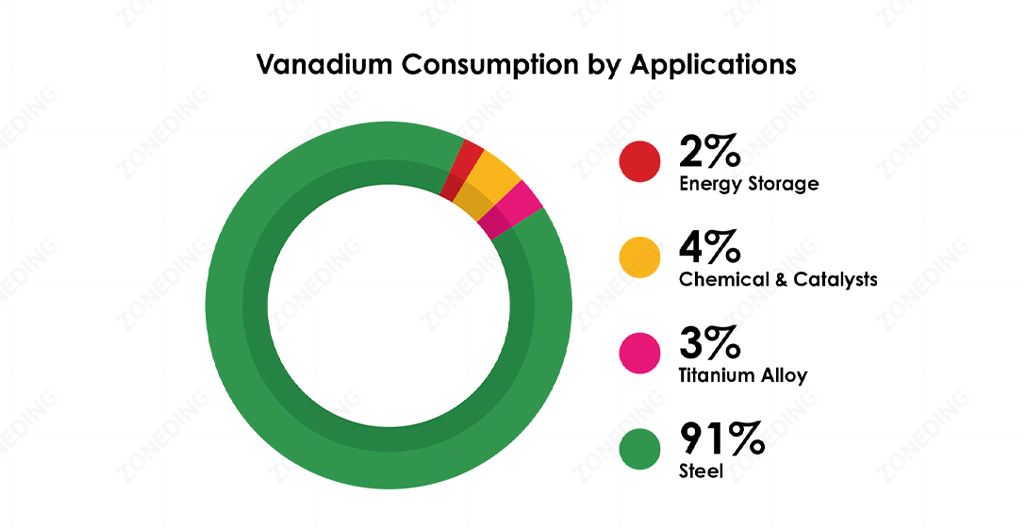
Processing vanadium for these two markets requires different equipment. For the steel industry, a ZONEDING Ball Mill is used to grind the concentrate for roasting. For the battery industry, a Magnetic Separator is vital to remove iron contaminants that would ruin the battery’s performance. The ability of a mine to switch between these grades depends on the flexibility of its processing line. This flexibility allows mining companies to capture the highest profit regardless of market shifts.
HSLA steel is the backbone of modern building codes. Vanadium allows for “micro-alloying.” It creates fine carbides and nitrides within the steel. These particles stop the internal structure from shifting under pressure. This is why vanadium steel is used in high-pressure oil pipelines and earthquake-proof rebar. To produce the ferrovanadium needed for this, the vanadium ore must be ground to a sub-74 micron level. ZONEDING ball mills are the industry standard for achieving this consistent fineness.
VRFBs are the “holy grail” of long-duration energy storage. Unlike lithium-ion, they do not degrade over time and cannot catch fire. They use high-purity vanadium electrolyte to store electricity. The demand for this electrolyte is growing by nearly 20% every year. Producers must create V2O5 with 99.9% purity. This requires ultra-clean processing. ZONEDING provides ceramic-lined mills and high-gradient separators. These prevent even micro-grams of iron from entering the chemical stream.
In the aerospace sector, vanadium is alloyed with titanium to create jet engine parts and airframes. This alloy remains strong at the extreme temperatures found in a jet turbine. In the chemical industry, vanadium pentoxide is a vital catalyst for producing sulfuric acid. Each of these high-value uses requires specific mineral grades. Miners use ZONEDING Rotary Dryer systems to achieve the exact moisture levels required for these chemical-grade products.
Conventional vanadium extraction focuses on the roasting-leaching method. This is the most reliable way to handle Titaniferous Magnetite. In this process, the vanadium-bearing concentrate is mixed with sodium salts. It is then heated in a rotary kiln to transform the vanadium into a water-soluble salt. This chemical change is the most important step in the entire factory. In 2025, new technologies are also incorporating direct acid leaching for stone coal and shale deposits.
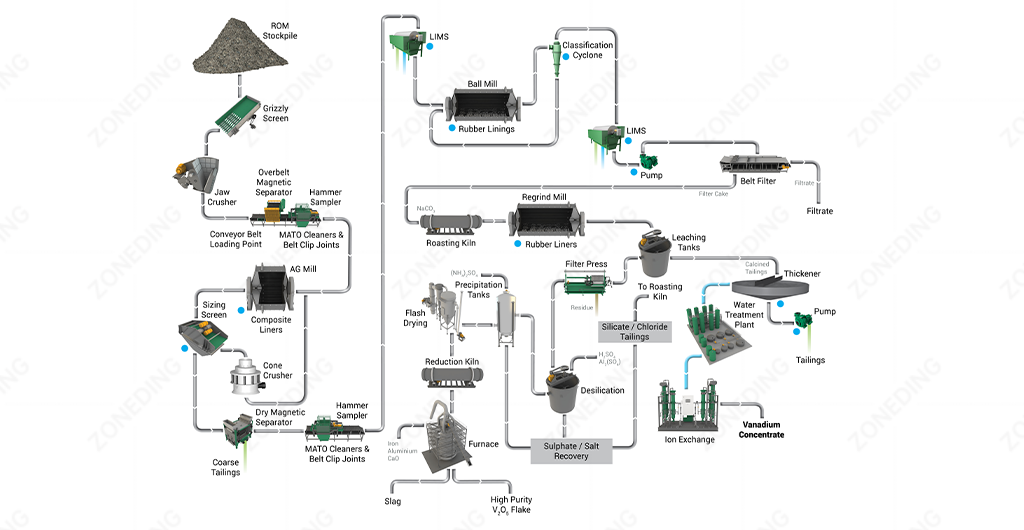
The roasting stage requires a massive ZONEDING Rotary Kiln. These kilns are designed to keep the heat perfectly even. If the temperature fluctuates, the vanadium will not convert, and it will be lost in the waste pile. After roasting, the material is cooled and leached in water or acid. The resulting liquid contains the dissolved vanadium. This “pregnant solution” then moves to the purification stage. Efficiency here depends on the quality of the initial grind. A ZONEDING ball mill ensuring 90% liberation can improve the roasting speed by up to 15%.
Before the kiln, the ore must be concentrated. Vanadium magnetite is magnetic, so a Magnetic Separator is the primary tool. ZONEDING magnetic drums use high-strength permanent magnets. They pull the vanadium-rich ore away from the non-magnetic rock. This reduces the amount of material that needs to be heated in the kiln. This step alone can save a mine thousands of dollars per day in fuel costs. It is the most cost-effective way to improve a vanadium mine’s profit margin.
Ultra-fine particles can often interfere with the leaching process. A Spiral Classifier is used to remove these “slimes.” ZONEDING classifiers are built for 24-hour operation in harsh chemical environments. By removing the waste mud early, the chemical reagents can work more effectively on the vanadium crystals. This leads to a cleaner final product and less environmental waste in the tailings dam.
Producing 99.9% pure vanadium requires more than just roasting. It involves solvent extraction (SX) and ion exchange (IX). Solvent extraction uses organic chemicals to selectively pull vanadium ions out of the leach solution. This leaves all other metal impurities behind. This technology is the gold standard for battery producers. It allows for a continuous, high-volume production of the ultra-pure vanadium pentoxide needed for flow batteries.
This modern approach requires a high level of automation. The SX circuit must be perfectly balanced to maintain purity. Before the liquid enters the SX tanks, it must be perfectly clear. Any suspended solids will ruin the organic chemicals. ZONEDING Thickeners are used to clarify the solution. They use gravity to settle fine particles, providing a crystal-clear liquid for the solvent extraction stage. This infrastructure is the key to producing the “green” vanadium needed for the 2025 energy transition.
Ion exchange is a secondary technology used when the vanadium levels in the liquid are very low. It uses resin beads to “catch” vanadium molecules. This is very popular for stone coal mines and vanadium recovery from fly ash. Once the beads are full, the vanadium is washed off into a concentrated solution for further processing. This method has very low operating costs compared to other chemical methods.
The final step is turning the liquid vanadium into a solid powder or flake. This is done through precipitation. The resulting solid is then dried and heated in a final furnace. A ZONEDING Rotary Dryer ensures that the final product is completely dry and free of lumps. This makes the vanadium easy to transport and use in the manufacturing of battery electrolytes or vanadium-titanium alloys.
| Extraction Phase | Goal | Equipment Used | 2025 Trend |
|---|---|---|---|
| Concentration | Upgrade Purity | Magnetic Separator | High-gradient drums |
| Grinding | Expose Minerals | Ball Mill | Ceramic liners for purity |
| Roasting | Conversion | Rotary Kiln | Low-emission fuel |
| Purification | Battery Grade | Thickener / SX | Automated control |
Selecting a manufacturer for vanadium processing equipment is a long-term strategic decision.
The vanadium market is currently entering the “Battery Age.” This is changing how mines are built and operated.
The price of vanadium is becoming less dependent on the steel industry. As the number of large-scale battery projects increases, the demand for high-purity V2O5 will remain high. Mining companies that optimize their Magnetic Separators today will be the most profitable players in the 2025 green economy.
Vanadium is a vital metal for both the traditional construction industry and the future of green energy. To succeed as a producer in 2025, you must:
Last Updated: May 2025
This article explains origins and unique properties of perlite, applications, industrial perlite processing chain from mining to final screening & grading.
View details
A step-by-step guide covers everything from crushing and grinding to advanced magnetic separation and dewatering, ensuring efficient magnetite processing.
View details
New to mobile crushers? This guide clearly introduces their concept, key features, types, and widespread applications across various industries.
View details
You know silica sand is used for glass, but what about in electronics, paints, or golf courses? Discover applications of silica sand.
View details