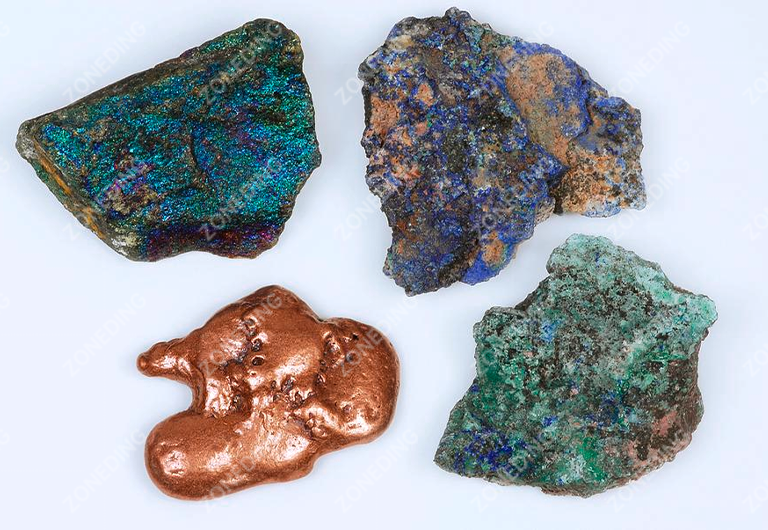
In the pursuit of gold, the first and most critical step after extraction is crushing. The precious metal is rarely found as loose nuggets; instead, it is locked within hard rock, often in microscopic veins within materials like quartz. The primary challenge for any gold mining operation is to “liberate” this gold—to break the host rock down to a size where the gold can be effectively separated. The choice of the best rock crusher for gold mining is therefore not just a matter of logistics; it is a decision that directly impacts the profitability and efficiency of the entire operation.
Choosing the wrong crusher can lead to poor gold liberation, excessive fines (slimes) that hinder recovery, and high operational costs due to rapid wear. For mine operators and project managers, understanding the strengths and weaknesses of different crusher types is essential for maximizing gold yield.
This comprehensive 2026 buyer’s guide compares the three primary types of crushers used in gold mining: the Jaw Crusher, the Cone Crusher, and the Hammer Mill (or Hammer Crusher). We will explore how each machine works, its ideal application in a gold processing circuit, and the key factors to consider when making your selection.
Last Updated: February 2026 | Estimated Reading Time: 18 Minutes
The Science of Gold Liberation: Why Crushing is Critical
Before comparing crushers, it is important to understand the goal: liberation. Gold particles are trapped within a matrix of gangue (waste rock). The crushing process has two main objectives:
Size Reduction: To reduce large run-of-mine (ROM) ore boulders into smaller, manageable fragments that can be fed into a grinding mill (like a Ball Mill).
Exposing Gold: To fracture the rock along its natural weak points, which often include the boundaries between the gold-bearing minerals and the host rock. Effective crushing exposes the gold surfaces, making them accessible to chemical leaching (cyanide) or physical separation methods (gravity concentration, flotation).
The efficiency of this liberation process is the single most important factor determining the overall recovery rate of your plant.
The Workhorse: The Jaw Crusher
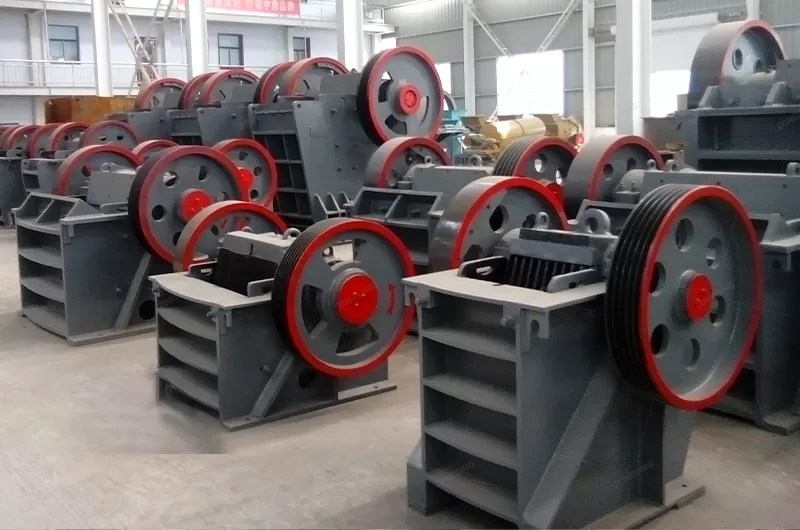
The Jaw Crusher is the undisputed champion of primary crushing in nearly every hard rock mining operation, including gold mining. It is designed to take large, blocky ore directly from the mine and break it down to a more manageable size.
How it Works
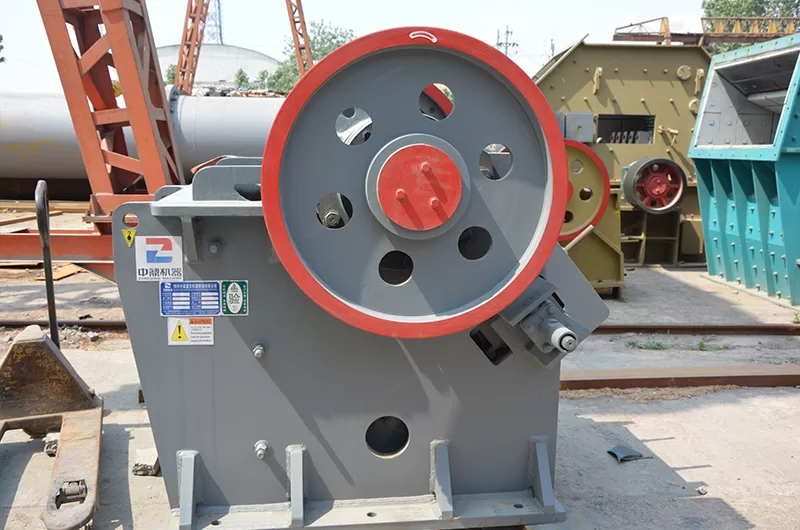
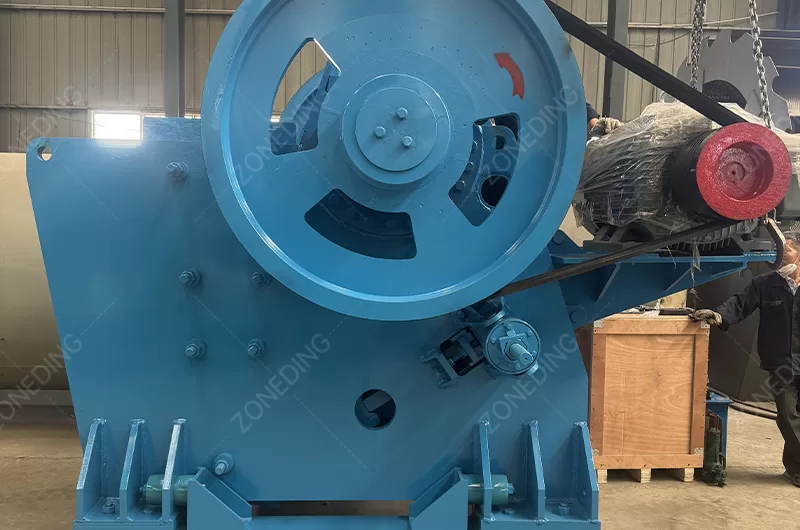
A jaw crusher operates using compression. It has two “jaws”: one fixed and one that swings back and forth. Ore enters the V-shaped chamber from the top. As the swinging jaw moves toward the fixed jaw, it compresses and breaks the rock. The crushed material then falls through the opening at the bottom.
Best Applications for Gold Mining
Primary Crushing: The jaw crusher is almost always the first machine in the crushing circuit. It can handle feed sizes up to 1,200mm and reduce them to a size suitable for a secondary crusher (typically around 150mm).
Hard and Abrasive Ores: Gold is often found in extremely hard and abrasive materials like quartz and granite. The robust manganese steel jaw plates are specifically designed to withstand this type of wear. ZONEDING’s PE series jaw crushers are engineered with heavy-duty frames and components for maximum reliability in harsh gold mining environments.
Advantages:
Handles Large Feed: Can accept very large boulders directly from the mine.
High Durability: Simple, robust design with few moving parts, leading to high reliability and lower maintenance costs.
Effective on Hard Rock: Excellent for breaking down hard, abrasive ores like quartz.
Disadvantages:
Coarse Output: Produces a relatively coarse and slabby product. It is not designed for fine crushing.
Not a Standalone Solution: It is only the first step and must be followed by secondary and tertiary crushing stages.
The Precision Tool: The Cone Crusher
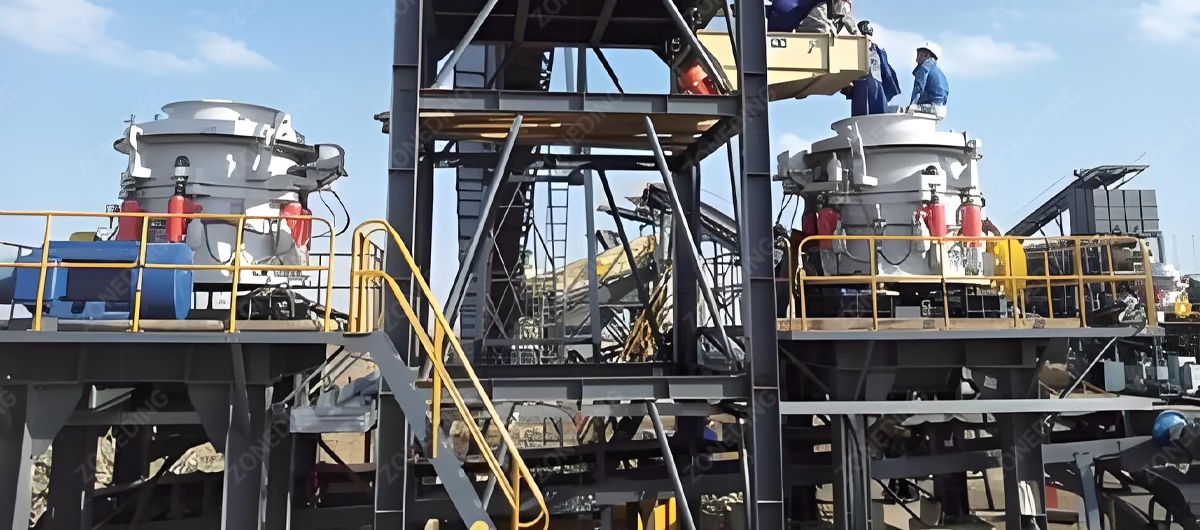
Once the ore has been processed by a jaw crusher, the Cone Crusher takes over for secondary and tertiary crushing. It is the preferred machine for producing finely crushed ore from hard materials.
How it Works
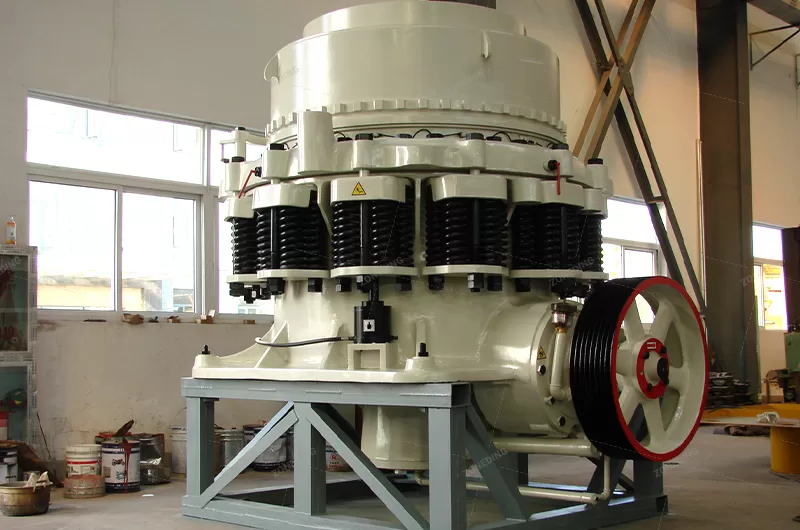
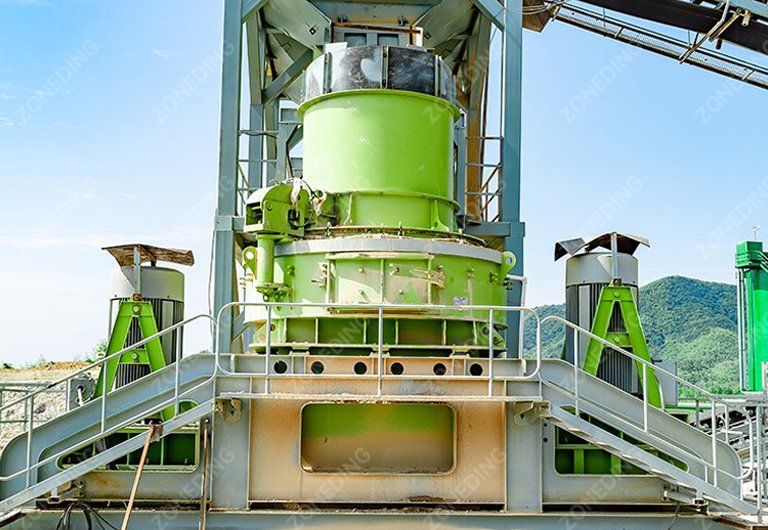
A cone crusher also uses compression. Ore is fed into the top of the crusher and is squeezed between a moving cone-shaped mantle and a fixed outer concave liner. As the mantle rotates eccentrically, it crushes the rock. The material gets progressively smaller as it moves down the chamber until it exits at the bottom.
Best Applications for Gold Mining
Secondary and Tertiary Crushing of Hard Rock: The cone crusher is exceptionally good at further reducing the 150mm ore from a jaw crusher down to the 10-25mm size needed for the grinding circuit.
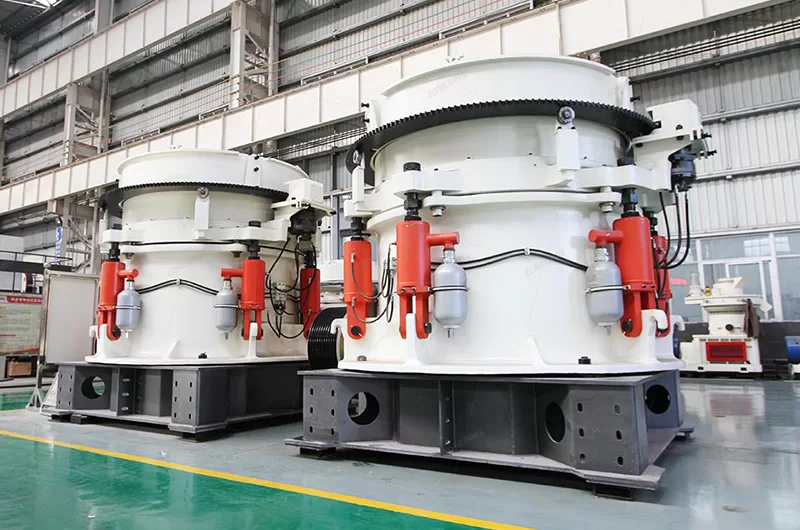
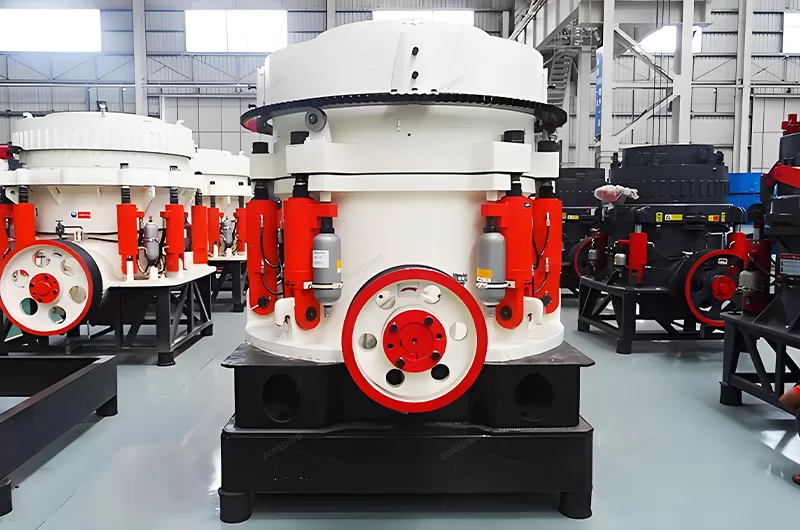
High-Abrasive Ores like Quartz: Cone crushers are specifically designed to handle the abrasive nature of gold-bearing quartz veins. The design minimizes wear and produces a consistently sized product. ZONEDING’s HPC multi-cylinder hydraulic cone crushers offer an optimized crushing cavity and high speeds, resulting in higher throughput and an excellent cubical product shape, which is ideal for liberation.
Advantages:
High Efficiency: Offers a high reduction ratio and is very energy-efficient for hard rock applications.
Superior Product Shape: Produces a cubical, well-shaped product, which improves liberation and grinding efficiency.
Handles Tramp Iron: Modern hydraulic cone crushers have systems that allow uncrushable tramp metal to pass through, protecting the machine from damage.
Disadvantages:
Requires Controlled Feed: Cannot handle the large, irregular feed that a jaw crusher can. It requires a pre-crushed and screened feed.
Higher Complexity: More complex than a jaw crusher, requiring more sophisticated operational control and maintenance.
The High-Impact Specialist: The Hammer Mill
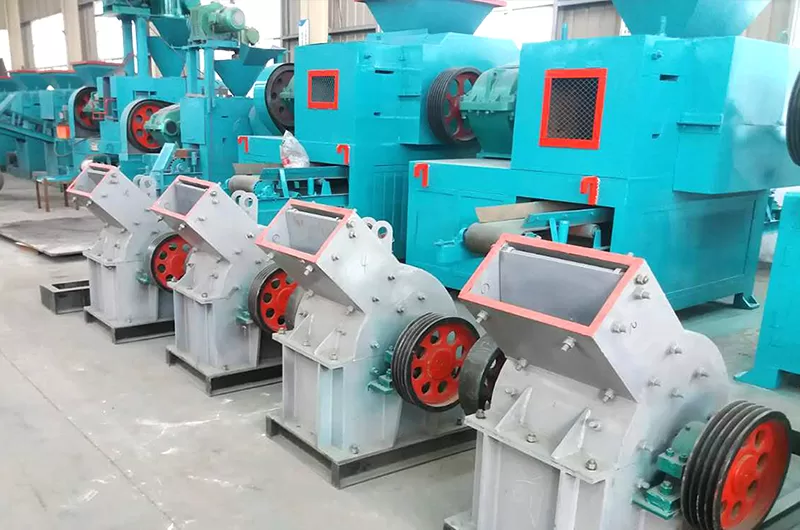
The Hammer Mill (or Hammer Crusher) operates on a completely different principle: impact. It is often considered for smaller-scale operations or for specific ore types.
How it Works
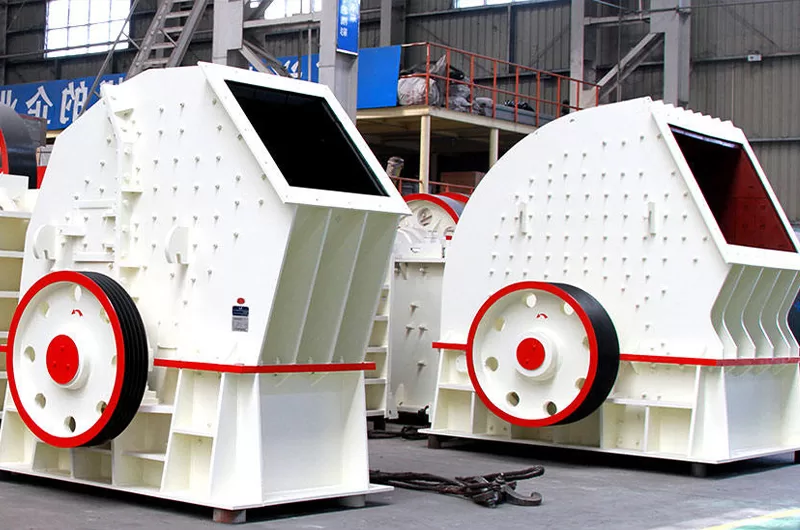
Inside a hammer mill, a series of hammers are mounted on a central rotor that spins at high speed. Ore is fed into the chamber and is shattered by the impact of the hammers. A screen or grate at the bottom of the mill controls the final output size.
Best Applications for Gold Mining
Small-Scale or Artisanal Mining: For miners on a budget, a hammer mill can sometimes act as both a primary and secondary crusher for smaller feed sizes, offering a high reduction ratio in a single pass.
Less Abrasive Ores: It performs best with softer or more friable gold ores that are not embedded in hard quartz.
Sample Crushing: Often used in labs for crushing samples for assaying.
Advantages:
High Reduction Ratio: Can take a medium-sized feed and reduce it to a fine powder in one step.
Lower Initial Cost: Generally less expensive than a cone crusher.
Simple Design: Easy to operate and maintain.
Disadvantages:
High Wear on Abrasive Ore: This is its critical weakness for most hard rock gold mining. The hammers wear out extremely quickly when crushing abrasive quartz, leading to high maintenance costs and significant downtime.
Produces Excessive Fines (Slimes): The high-impact action can over-grind the ore and associated sulfide minerals, creating ultra-fine particles (slimes). These slimes can be very problematic in leaching and flotation circuits, often leading to lower gold recovery.
Which Crusher is Best for YOUR Gold Mine? A Comparison
The “best” rock crusher is the one that fits your specific ore type, scale, and operational goals.
Feature
Jaw Crusher
Cone Crusher
Hammer Mill / Crusher
Crushing Stage
Primary
Secondary / Tertiary
Primary / Secondary (Small Scale)
Mechanism
Compression
Compression
Impact
Best for Hard Quartz
Excellent
Excellent
Poor (High Wear)
Product Size
Coarse (50-250mm)
Medium to Fine (10-50mm)
Fine (can be <5mm)
Product Shape
Slabby / Irregular
Cubical / Consistent
Fine, potential for high fines
Wear Costs
Low-Medium
Medium
Very High on abrasive ore
Ideal for…
Large ROM feed
High-volume hard rock
Small-scale, non-abrasive ore
Scenario-Based Recommendations
For a Large-Scale Hard Rock Gold Mine (e.g., >100 TPH):
The industry-standard and most efficient circuit is a Jaw Crusher for primary crushing, followed by one or two stages of Cone Crushers for secondary and tertiary crushing. A Vibrating Screen is used between stages to ensure only oversized material is fed to the next crusher. This is the most reliable and cost-effective setup for processing hard, abrasive gold ore.
For a Medium to Small-Scale Hard Rock Operation (e.g., 10-50 TPH):
A smaller Jaw Crusher followed by a single Cone Crusher is the ideal choice. This provides the durability needed for hard rock while maintaining efficiency. Attempting to use a large hammer mill in this scenario will likely result in unsustainable maintenance costs.
For Artisanal or Very Small-Scale Prospecting with Friable Ore:
If the gold ore is not highly abrasive and feed sizes are small, a combination of a small Jaw Crusher and a Hammer Mill can be a viable, lower-cost option. However, careful testing of the ore’s abrasiveness is critical before committing to this setup.
ZONEDING Customer Case Study: Gold Mine in Tanzania
Challenge: A gold mining company in Tanzania was processing hard quartz vein ore with an output of 80 tons per hour (TPH). Their existing circuit, which used an old, inefficient secondary crusher, was failing to achieve the desired liberation size of -15mm. This resulted in poor performance in their downstream ball mill and leaching tanks, with gold recovery rates stuck below 75%.
Solution: ZONEDING’s engineers analyzed the ore characteristics and designed an optimized crushing circuit.
Primary Stage: The existing Jaw Crusher was retained.
Secondary Stage: ZONEDING supplied a HPC220 Hydraulic Cone Crusher. Its specialized crushing chamber was perfectly suited for the hard quartz, and its hydraulic system provided overload protection.
Screening: A high-efficiency vibrating screen was installed after the cone crusher to close the circuit, ensuring all product was below 15mm before moving to the grinding stage.
Result:
Improved Liberation: The new circuit consistently produced a product of 95% passing 15mm.
Increased Recovery: The finer, more consistent feed to the ball mill led to better grinding and superior leaching performance. The overall gold recovery rate increased from 75% to 88%.
Reduced Operational Costs: The HPC Cone Crusher’s wear-resistant parts and efficient operation significantly lowered the cost-per-ton compared to their previous setup. The investment was paid back in under 12 months through increased gold production.
Frequently Asked Questions (FAQ)
Q1: Can I use just one crusher for my gold ore?
For hard rock gold mining, using a single crusher is generally not feasible. A jaw crusher produces material that is too coarse for efficient grinding, while a cone or hammer mill cannot handle the large run-of-mine ore. A multi-stage crushing circuit (typically 2 or 3 stages) is necessary for effective and efficient size reduction.
Q2: What is the difference between an Impact Crusher and a Hammer Mill?
They are very similar as both use impact to break rock. An Impact Crusher typically uses horizontal blow bars and is better suited for larger feed sizes in softer rock like limestone. A Hammer Mill uses swinging hammers and is often used for finer grinding of more friable materials. For hard rock gold mining, both suffer from high wear rates.
Q3: How important is the “cubical shape” from a cone crusher?
Very important. Cubical particles flow better on conveyors, have a higher packing density, and, most importantly, are ground more efficiently in a ball mill. Slabby or elongated particles from a jaw crusher are less efficient to grind and can lead to poor liberation.
Q4: My gold ore has a lot of clay. What should I do?
Sticky clay can clog crushers. If the ore has a high clay content, it may be necessary to install a pre-screening stage with a grizzly feeder or a washing plant (like a Rotary Scrubber or Log Washer) before the primary crusher to remove the clay fines.
Conclusion: The Right Choice for Maximum Recovery
Choosing the best rock crusher for gold mining is a strategic decision that hinges on a clear understanding of your ore.
For large-scale, hard rock and quartz-based gold mining, the undisputed best practice is a circuit built around a Jaw Crusher for primary duty and Cone Crushers for secondary and tertiary reduction. This combination delivers durability, efficiency, and the ideal product for maximizing gold liberation.
Hammer Mills have their place in niche applications, such as small-scale mining of non-abrasive ores, but they are not a cost-effective solution for the vast majority of hard rock gold deposits due to extreme wear costs.
At ZONEDING, we don’t just sell equipment; we provide complete, customized crushing and processing solutions. Our team of engineers can help you analyze your ore, design the optimal circuit, and select the right crushers to ensure you get the highest possible gold recovery from your deposit.
Ready to build an efficient gold crushing circuit?
Contact our experts today for a free consultation and a quote tailored to your specific project needs.
We clearly explain what andalusite is, its thermal properties, and the essential steps used to process it for applications in steel, ceramics, and foundries.
Want to maximize your ROI? Learn professional strategies to prolong your cone crusher's lifespan, from proper lubrication to preventing "tramp iron" damage.
Explore placer gold processing methods, from traditional gravity concentration to separation technologies. Learn to optimize mineral processing machines setup.
Wondering what are challenges when processing copper ore? Discover the main hurdles like declining ore grades and complex mineralogy, plus expert solutions.
 Zoneding Mining