In the mineral processing industry, size reduction is the primary driver of operational costs. Whether producing construction aggregates or extracting fine minerals, selecting the right equipment determines the profitability of the entire plant. At the heart of this decision often lies the choice between two industrial staples: the high-speed Hammer Mill and the slow-turning Ball Mill.
While both machines reduce rock, they operate on opposing physical principles—impact versus attrition. Mistaking one for the other is a costly error. Using a Hammer Mill on abrasive granite leads to catastrophic wear rates, while deploying a Ball Mill for soft limestone results in unnecessary energy waste.
This guide breaks down the technical differences, output capabilities, and economic efficiencies of both machines, helping you leverage ZONEDING’s manufacturing expertise to select the optimal solution for your production line.
To truly differentiate the equipment, one must analyze the physical forces applied to the material. The method of destruction dictates the outcome.
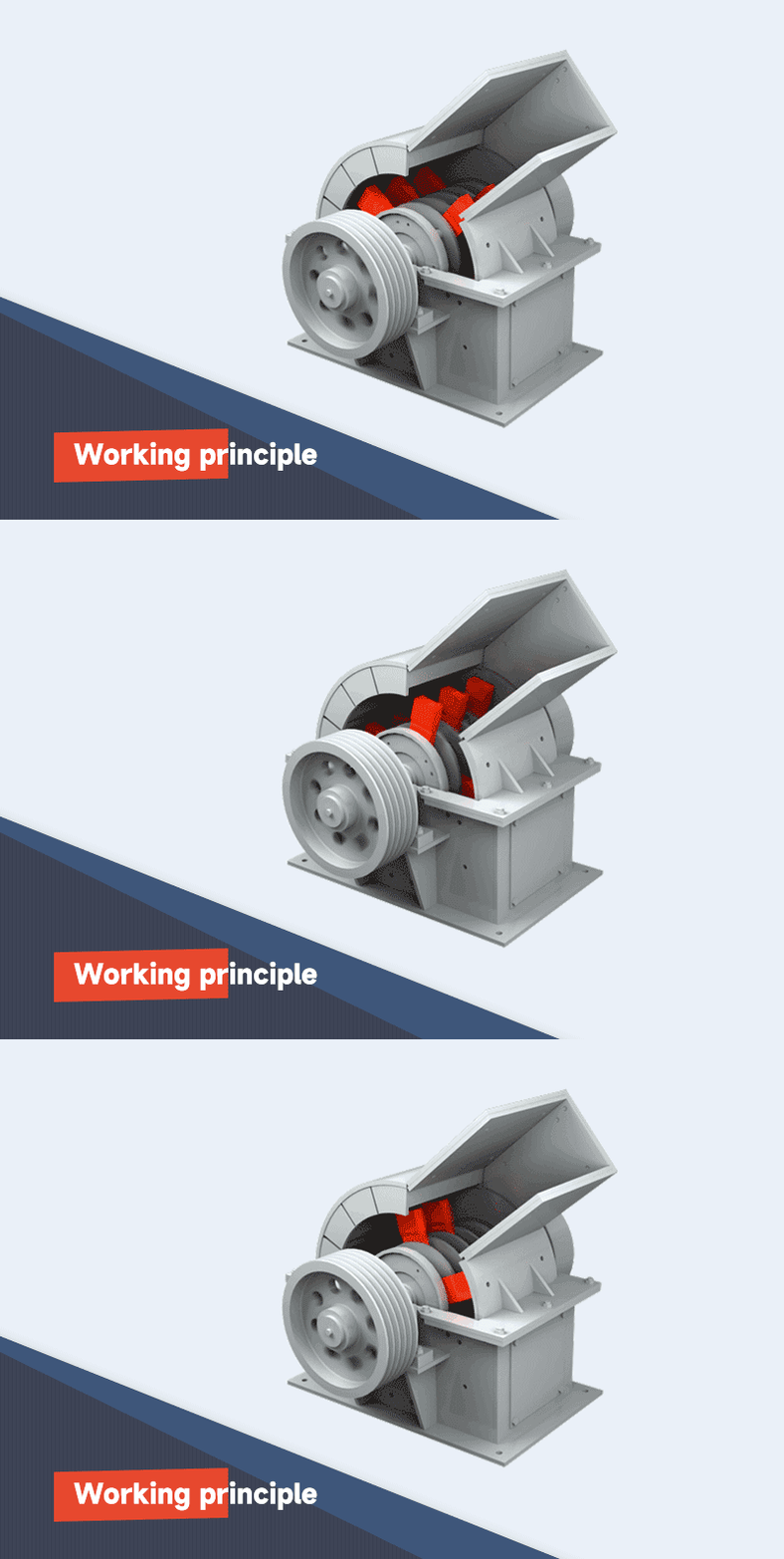
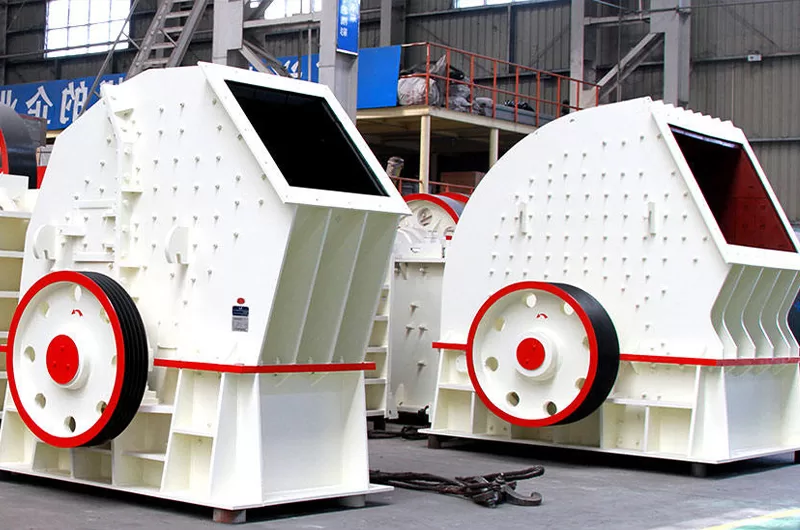
The Hammer Mill: The Principle of Impact
The Hammer Mill operates on the formula of kinetic energy. It relies on high velocity.
The Mechanism: A high-speed rotor spins inside a steel chamber at speeds often exceeding 1000 RPM. Attached to this rotor are heavy, swinging hammers made of high-manganese steel or chrome alloys.
The Action: Material enters the feed chute and is immediately struck by the hammers in mid-air. The rock is not “squeezed”; it is shattered by the sheer speed of the blow. The material is then thrown violently against “breaker plates” (hardened liners) on the walls, causing secondary breakage.
The Sizing Gate: The defining feature of a Hammer Mill is the discharge screen located at the bottom. Material cannot leave the chamber until it is small enough to pass through the screen openings (typically 3mm to 10mm). Oversized particles are swept back up by the hammers for another round of impact.
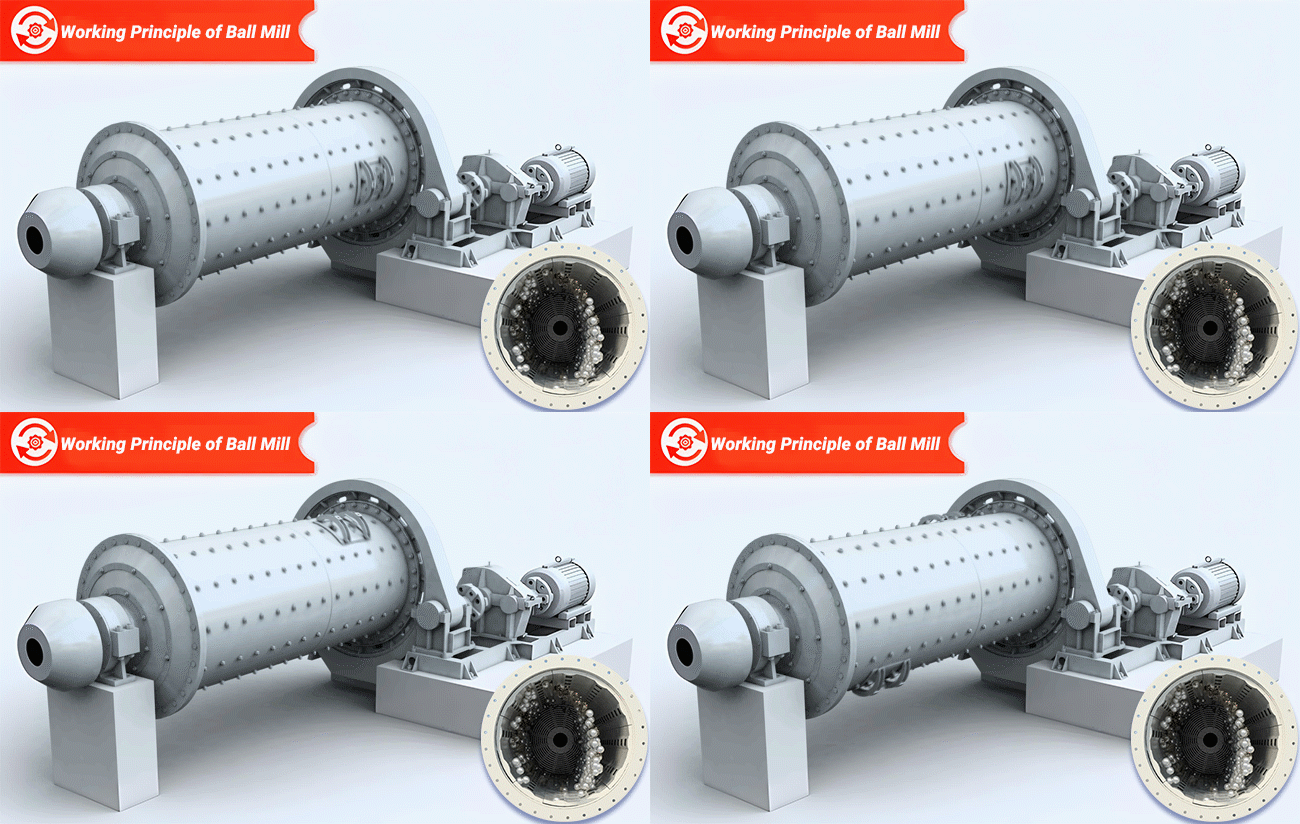
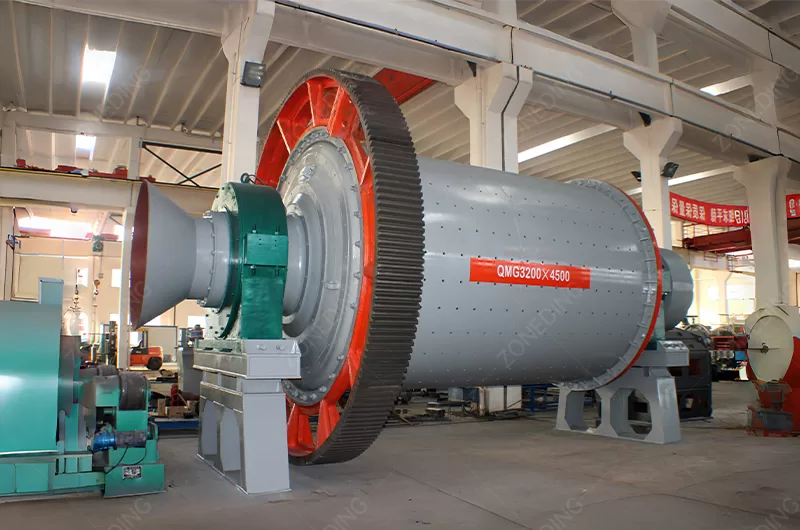
The Ball Mill: The Principle of Attrition and Tumbling
The Ball Mill operates on mass and friction. It relies on volume and time.
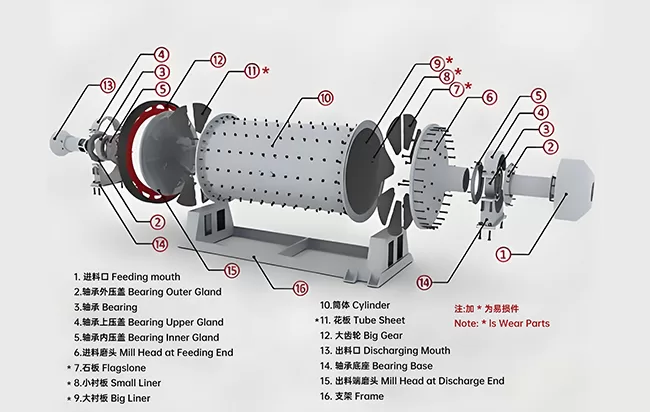
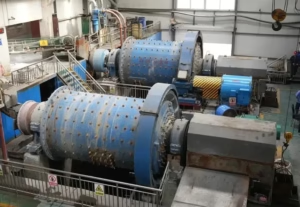
The Mechanism: A massive horizontal cylinder rotates slowly (usually 15 to 25 RPM). Inside, the cylinder is filled 30-40% with “grinding media”—heavy steel balls or ceramic spheres ranging from 20mm to 120mm in diameter.
The Action: As the shell turns, friction lifts the ball charge up the side of the shell. When gravity overcomes friction, the balls fall.
Cascade Motion: Balls rolling over each other create attrition (grinding), rubbing the rock into fine powder.
Cataract Motion: Balls falling from the top of the arc create impact, crushing larger rocks.
The Result: There are no screens in a standard ball mill. The material exits via an overflow trunnion once the fluid level rises high enough, or it is swept out by air. The “sizing” is controlled by how long the material stays in the mill (retention time).
The Four Critical Decision Factors
When ZONEDING engineers design a plant, they evaluate four primary variables to determine which mill is appropriate.
1. Output Granularity: Mesh vs. Millimeter
This is the most visible difference and the primary selector.
Hammer Mill (The Crusher): This machine produces Granules. It is designed to bridge the gap between primary crushing and coarse grinding. It typically takes feed up to 600mm-1000mm and creates a product in the range of 0-3mm (sand) or 0-10mm (aggregate).
Ball Mill (The Grinder): This machine produces Powder. It takes relatively small feed (usually <25mm) and reduces it to 200 mesh (0.074mm), 325 mesh (0.044mm), or even finer.
2. Material Hardness and Wear Costs
The geology of the rock determines the Operational Expenditure (OPEX).
Hammer Mill Sensitivity: Hammers operate by high-speed collision. If the material is hard and abrasive (high silica content), the hammers act like soft butter against a hot knife.
The Rule: Hammer mills are excellent for Soft to Medium Hardness materials (Mohs Hardness < 5). This includes Limestone, Coal, Gypsum, Phosphate, and Salt.
The Risk:Using a hammer mill on Granite or River Pebbles (Mohs 7) will wear out a set of expensive hammers in less than 24 hours. The maintenance cost becomes unsustainable.
Ball Mill Durability:The Ball Mill is built for abuse. Since the grinding action relies on rolling friction and hardened steel balls, it excels with Hard, Abrasive Materials.
The Advantage: It processes Iron Ore, Gold Ore, Copper, Quartz, and Slag effortlessly. While the steel balls do wear down, they maintain their spherical shape and grinding ability. Maintenance involves simply throwing a few new balls into the hatch once a week (“makeup charge”) rather than shutting down the machine to unbolt hammers.
3. Moisture Tolerance: Wet vs. Dry Processing
Water changes the physics of particle separation.
Hammer Mill (Dry Dominance):Because it relies on a physical screen to size the material, the Hammer Mill struggles with moisture.
The Clog: If the material has >15% moisture or clay content, it becomes sticky. It pastes over the screen holes. The mill cannot discharge, pressure builds, and the rotor stalls. Hammer Mills generally require dry feed or expensive heated drying systems ahead of the crusher.
Ball Mill (The Wet Process King):The Ball Mill is versatile but famous for Wet Grinding.
The Slurry: In mining, water is added to the barrel to create a slurry (usually 60-70% solids for grinding). This slurry flows easily out of the mill, eliminates dust issues entirely, and is the mandatory feed state for subsequent chemical processes like Flotation cells or Cyanide Leaching tanks.
Dry Grinding: Ball mills can also grind dry, often used in cement production with air classifiers to separate the fines.
4. Energy Consumption and Reduction Ratio
Reduction Ratio: The Hammer Mill wins here. A large heavy-duty ZONEDING Hammer Crusher can define a ratio of 50:1 (taking a 1-meter rock down to 20mm in a single pass). A Ball Mill has a low reduction ratio and requires pre-crushed feed (usually from a cone crusher) to work efficiently.
Energy Efficiency: For producing coarse aggregate (3mm+), the Hammer Mill is far more energy-efficient. For producing fine powder (<100 microns), the Ball Mill is less efficient per ton but is the only technology capable of doing the job reliably. The Ball Mill consumes massive power to lift the heavy steel charge, often requiring motors ranging from 500kW to 2000kW.
Comparison Table of Hammer Mill and Ball Mill
Feature
Hammer Mill
Ball Mill
Primary Action
High-Speed Impact (E=1/2mv2)
Tumbling Attrition & Gravity Impact
Ideal Material
Soft / Brittle (Limestone, Coal)
Hard / Abrasive (Quartz, Granite, Ores)
Max Hardness
Mohs < 5 (Avoid Silica)
Mohs > 7 (Handles very hard rock)
Output Size
Coarse / Granular (3mm – 10mm)
Fine Powder (200 mesh / 75 microns)
Moisture Limit
< 15% (Clogs easily)
No Limit (Works best Wet)
Reduction Ratio
High (50:1) – Single Stage capable
Low – Requires pre-crushed feed
Maintenance
Frequent Hammer replacement
Periodic Ball top-up; Infrequent liner change
Noise Profile
High Pitch (Sharp Impact)
Low Frequency Rumble (Continuous)
Detailed Application Scenarios of Ball Mill and Hammer Mill
To help visualize the application, here are specific industrial scenarios where ZONEDING deploys these units.
Scenario A: The Gold Beneficiation Plant
The Goal: Extracting microscopic gold particles locked inside Quartz veins. The Requirement: The rock must be ground to 200 mesh (74 microns) to “liberate” the gold for chemical flotation. The Solution:Grid Type Ball Mill. A hammer mill is useless here. The quartz is too hard and would destroy the machine. Furthermore, the downstream process (flotation) requires a liquid slurry. The Ball Mill grinds the quartz wet, creating a perfect pulp for the flotation cells.
Scenario B: The Cement Manufacturing Plant
The Goal: Grinding Clinker (burnt limestone nodules) into final Grey Cement powder. The Requirement: Specific Surface Area (Blaine) of 3500 cm²/g. Extremely fine, dry powder. The Solution:Dry Ball Mill (often 2 or 3 chambers). Cement clinker is hard and abrasive. The Ball Mill, operating in a closed circuit with an air separator, ensures that every particle is ground to the exact specification required for concrete curing strength.
Scenario C: Aggregate and Agricultural Lime
The Goal: Producing “Ag-Lime” to treat acidic soil, or producing sand for road paving. The Requirement: 0-3mm particles. The raw material is medium-soft Limestone. The Solution:Heavy Hammer Crusher. Using a ball mill here would be overkill and too slow. The Hammer Mill can process hundreds of tons per hour, smashing the limestone to the correct size instantly. The impact fractures the stone, often creating a desirable cubic shape for construction sand.
Scenario D: Power Plant Fuel Preparation
The Goal: Crushing coal to blow into a boiler. The Requirement: Pulverized coal. The Solution:Hammer Mill (Coal Pulverizer). Coal is brittle. The Hammer Mill not only shatters the coal easily but the spinning rotor acts as a fan, creating airflow that helps transport the coal dust directly into the burner.
Operational Considerations: The Hidden Costs
Beyond the purchase price, the long-term reality of owning these machines differs uniquely.
Noise and Vibration
Ball Mill: Produces a constant, earth-shaking rumble. The noise level is significant (90-95 dB) but consistent. It requires heavy, massive concrete foundations to absorb the dynamic load of the tumbling steel mass. It cannot be placed on a flimsy steel structure.
Hammer Mill: Produces a sharp, high-pitched screaming noise caused by air turbulence and metal-on-rock impact. It vibrates at a higher frequency. While lighter, it still requires vibration isolation to prevent cracking the surrounding infrastructure.
Maintenance Down-Time
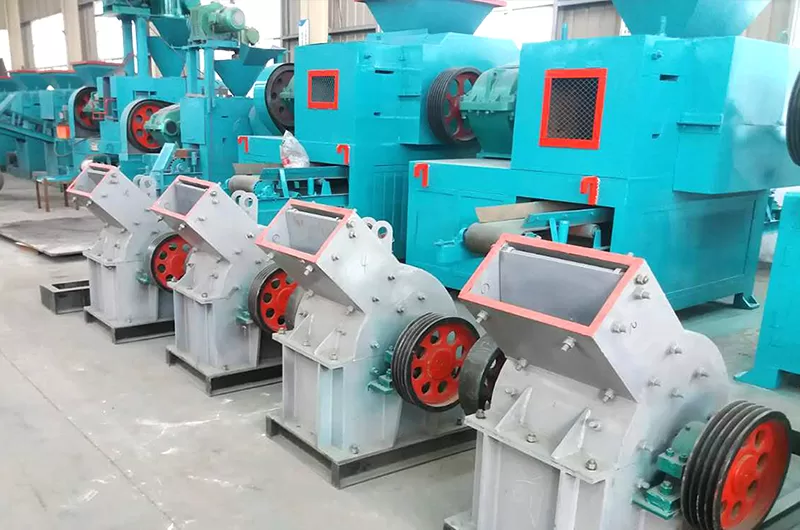
Hammer Mill: “Fast but Frequent.” Changing hammers is a routine task. In aggressive environments, it might happen weekly. Modern ZONEDING Hammer Mills feature hydraulic opening covers, allowing a maintenance crew to rotate or swap hammers in under an hour.
Ball Mill: “Rare but Major.” A Ball Mill runs for months or years without major repair. However, when the internal shell liners eventually wear out, the “Relining” process is a major event, requiring the mill to be stopped, emptied, and men to enter the drum to bolt in new steel plates. This can take days.
Why Choose ZONEDING?
ZONEDING MACHINE has established itself as a premier manufacturer of both grinding and crushing technologies.
Integrated Circuits: We don’t just sell mills; we sell the entire line. We understand how to pair a ZONEDING Jaw Crusher with a Hammer Mill, or a Cone Crusher with a Ball Mill, to balance the load perfectly.
Material Lab: We offer material testing to determine the “Bond Work Index” of your ore, allowing us to scientifically calculate exactly which size Ball Mill you need, rather than guessing.
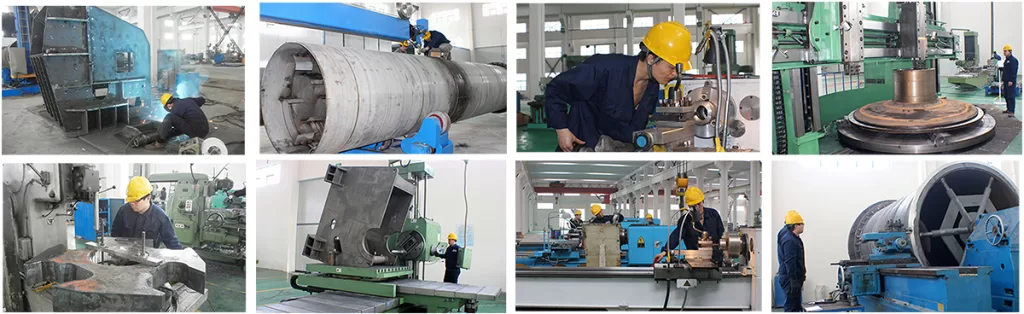
Factory Direct Value: By manufacturing our own Cast Steel ball mill ends and High-Manganese hammers in-house, we control quality from the foundry to the final assembly, passing the cost savings directly to the client.
2025 Technological Innovations
The line between these machines is being blurred by advanced control systems.
Variable Frequency Drives (VFD)
Modern ZONEDING installations increasingly use VFDs.
For Hammer Mills: VFDs allow operators to tune the output size. By slowing the rotor speed, fewer fines and more coarse aggregate are produced. By speeding it up, the impact force increases, creating finer dust.
For Ball Mills: VFDs are used for “Soft Starts” to protect the electrical grid from the massive inrush current needed to turn the drum. They also allow for precise adjustment of the critical speed to ensure the balls are cascading efficiently rather than centrifuging against the wall.
Ceramic Grinding Media
In the Ball Mill sector, there is a shift toward High-Alumina Ceramic balls instead of steel. This prevents iron contamination (crucial for Quartz/Glass sand production) and extends the life of the media, though it changes the density calculations for grinding.
FAQ: Common Questions on Mill Selection
Q1: Can I use a Hammer Mill as a pre-crusher for a Ball Mill?
Yes, and this is an excellent strategy for softer ores. By using a Hammer Mill to reduce 500mm limestone down to 10mm, and then feeding that 10mm into a Ball Mill, you increase the Ball Mill’s efficiency significantly. This is much cheaper than feeding the Ball Mill with large rocks.
Q2: Which machine generates more dust?
The Hammer Mill generates significant dust due to the fan-effect of the high-speed rotor. It almost always requires a dedicated Baghouse Dust Collector. A Wet Ball Mill produces zero dust. A Dry Ball Mill produces dust but is a sealed system, negative pressure usually contains it.
Q3: What happens if I put unbreakable metal (tramp iron) in them?
Hammer Mill: Disaster. An unbreakable drill bit or shovel tooth entering a Hammer Mill can break the grate, snap hammers, or crack the rotor shaft.
Ball Mill: Tolerance. A piece of tramp metal will likely just tumble around inside the ball mill for a while, acting like another grinding ball, until it eventually wears down or is removed during a maintenance stop. It is much more forgiving.
Conclusion
The debate of “Ball Mill vs. Hammer Mill” is not about which machine is superior; it is about matching the mechanics of the machine to the strength of the mineral.
If your material is Soft, you need Coarse output (Sand/Aggregates), and you want High Capacity with a compact footprint: Choose the Hammer Mill.
If your material is Hard, you need Fine Powder (200 Mesh+), you require Wet Processing, or you need 24/7 continuous operation: Choose the Ball Mill.
Efficiency in mining is found in the specific design of the crushing circuit. ZONEDING engineers specialize in analyzing raw mineral samples—testing hardness, moisture, and abrasiveness—to design the most logical reduction flow. Understanding these fundamental differences safeguards your capital investment and ensures predictable production targets.
Contact ZONEDING today to discuss your material characteristics and throughput requirements.
This guide covers the essential stages: crushing, grinding, and various beneficiation methods like gravity separation, magnetic separation, and flotation.
This guide tells steps for tungsten ore processing like crushing, grinding, gravity separation, flotation, magnetic separation to produce tungsten concentrate.
Learn differences between single drum and three drum dryers. This detailed comparison tells thermal efficiency, footprint, initial cost, and ideal applications.
Learn essential machines and solutions for talc beneficiation. Know about crushers, mills, flotation cells & dryers that form an efficient talc processing plant.
 Zoneding Mining