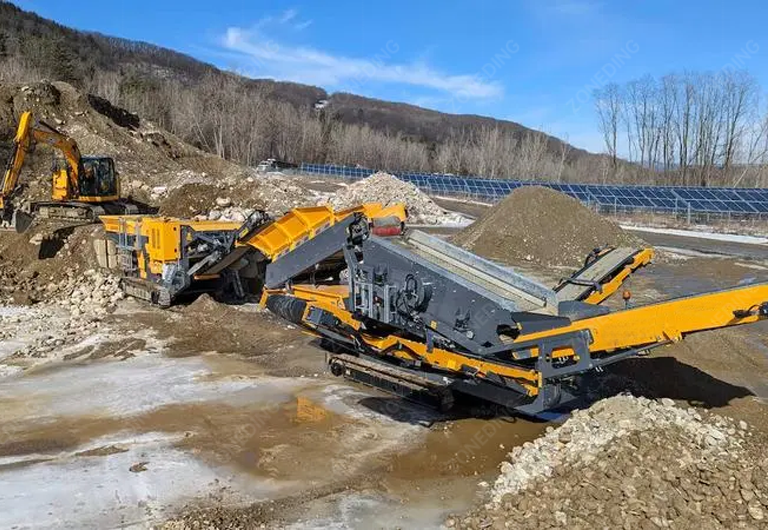
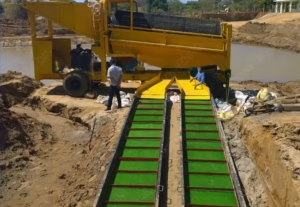
Silica sand processing defines a crucial industry. It transforms raw sand into a high-purity product. This high-purity sand finds use in glass, ceramics, and electronics. This guide explores the entire flow. It starts from raw material and progresses to the final product. The article covers methods, equipment, and steps essential for effective silica sand beneficiation. This information helps understand how ZONEDING optimizes silica sand production lines.
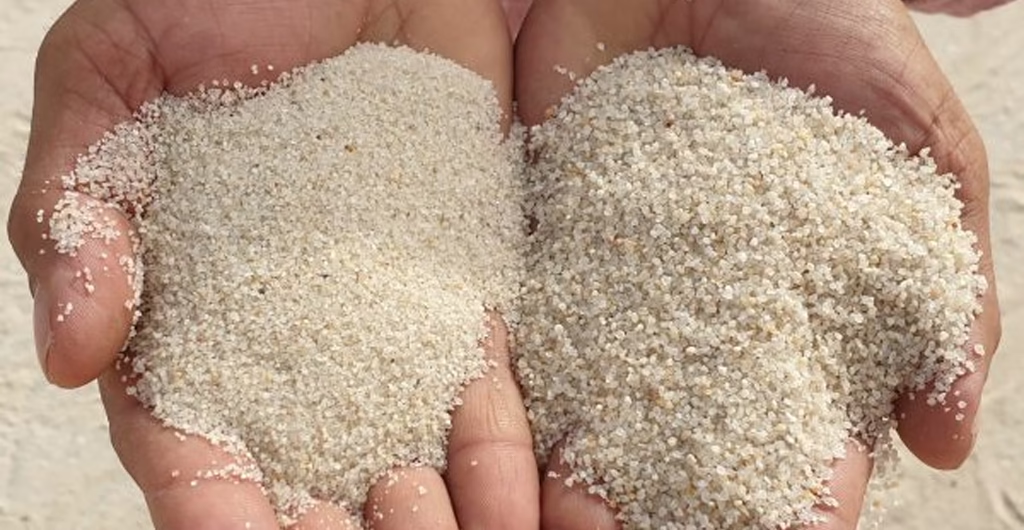
Silica sand forms as a natural granular material. It contains mostly silicon dioxide (SiO2). This substance is commonly known as quartz. It shows distinct properties from other sands. Its pure form and specific characteristics make it valuable for industrial use. Industrial silica sand typically contains at least 95% SiO2. Sometimes, it exceeds 99%. This purity makes it a critical raw material.
Why Is the Silica Sand Important?
The importance of silica sand in modern life cannot be overstated. It represents the main component of glass. This includes flat glass, container glass, and specialty glass. Without high-quality silica sand, these products would not exist. It also plays a vital role for the foundry industry. Here, it creates molds for metal casting. In construction, it functions as a proppant in hydraulic fracturing. It forms a key ingredient in filters for water purification. The electronics industry uses it in microchips and solar panels. ZONEDING provides essential equipment to achieve these high standards.
Major Applications of High-Purity Silica Sand
Glass Manufacturing: Used for windows, bottles, fiberglass, and specialized optical glass.
Foundry Industry: Acts as mold sand for casting iron, steel, and non-ferrous metals due to its high melting point.
Construction: Constitutes an ingredient in concrete, mortar, and specialty cements.
Oil and Gas: Functions as a proppant in hydraulic fracturing (fracking) to keep rock fractures open.
Water Filtration: Key component in filtration systems for municipal and industrial water treatment.
Ceramics and Refractories: Enhances strength and heat resistance in ceramic products and furnace linings.
Chemicals: Provides a source of silicon for silicon chemicals and silicon metals.
Physical and chemical characteristics of raw silica sand profoundly affect its processing. Understanding these properties is essential. It helps determine the most effective silica sand processing methods. It ensures the sand meets specific industrial requirements.
Physical Characterictics
Physically, important characteristics include grain size distribution, shape, hardness, and friability.
Grain size matters for different applications. For example, glass manufacturing requires specific size ranges. Foundry sand also needs uniform sizing.
Grain shape (angular versus rounded) affects packing density and flow properties.
Hardness influences the crushing and grinding necessary.
Friability affects how easily the sand breaks down during processing. The presence of impurities mixed within the sand body also proves important. These impurities often adhere to the sand grains.
Knowing these physical traits aids in selecting the correct silica sand crushing and silica sand washing plant equipment. This ensures optimal liberation and sizing.
Chemical Characterictics
Chemically, silica content (SiO2 percentage) represents the most critical factor. Most industrial applications require very high SiO2 content. Impurities like iron oxides, alumina, titanium dioxide, and heavy minerals cause major concerns. Iron oxides (Fe2O3) prove especially problematic for glass manufacturing. Even small amounts discolor glass. Alumina (Al2O3) and titanium dioxide (TiO2) also affect glass quality. The goal of silica sand beneficiation involves removing these impurities. Various techniques reduce impurity levels. This ensures the sand meets strict chemical specifications.
Impurity Type
Specific Example
Impact on Usage
Processing Method to Remove
Iron Oxides
Fe2O3, FeOOH
Discoloration in glass, reduction in purity
Magnetic separation, flotation, acid leaching
Clay Minerals
Kaolinite, Montmorillonite
Forms fines, increases turbidity in washing, reduces permeability
Washing, scrubbing, desliming
Heavy Minerals
Zircon, Rutile, Ilmenite, Tourmaline
Contaminants for purity, can be valuable byproducts
Gravity separation, magnetic separation
Alumina
Al2O3
Affects glass viscosity and melting temperature
Flotation, attrition scrubbing
ZONEDING engineers analyze raw silica sand in detail. This analysis allows the design of a silica sand production line that achieves specific purity targets.
Practical Considerations for Sand
Particle Size Analysis: Conduct sieve analysis to understand grain distribution.
Mineralogical Study: Identify specific impurity minerals present.
Chemical Assay: Determine exact percentages of SiO2 and key impurities.
Bench-Scale Testing: Perform laboratory tests on the specific sand. This confirms the effectiveness of different silica sand upgrading methods.
Main Steps of Silica Sand Processing
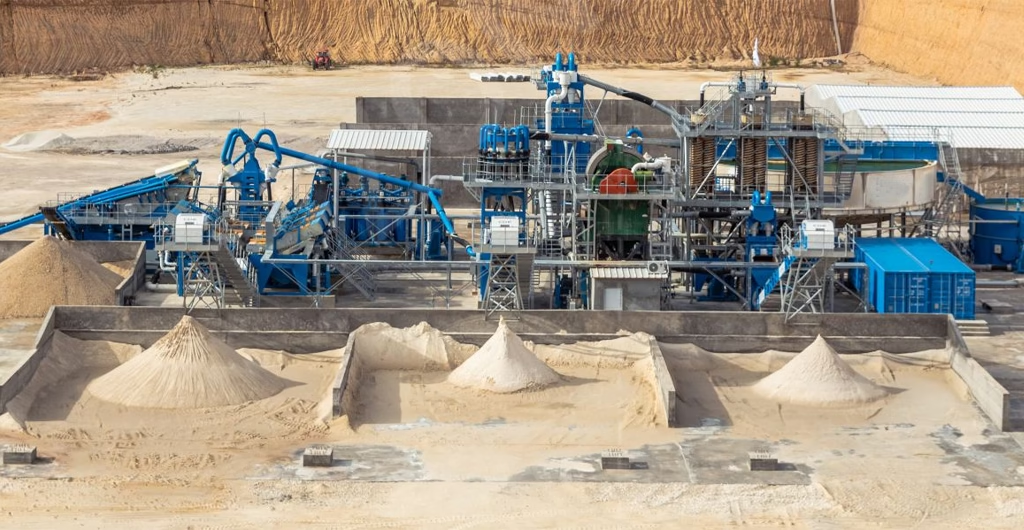
Silica sand processing involves a sequence of steps. Each step aims to purify the sand and meet specific quality standards. This transforms raw, impure sand into a valuable industrial product. A typical silica sand production line includes several key stages.
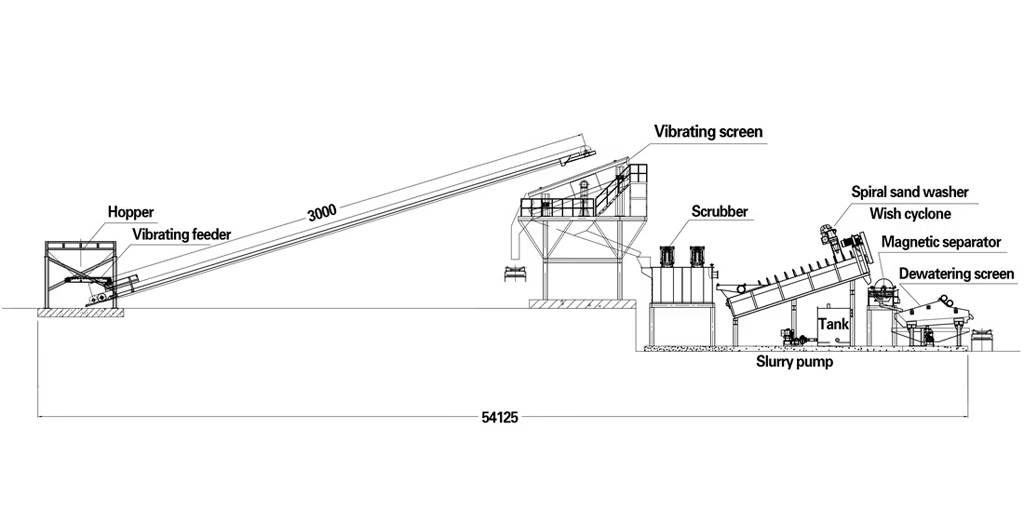
Crushing: The process often begins with silica sand crushing. If the raw material contains large lumps of sandstone, crushers reduce them to a manageable size.
Washing: Then, silica sand washing removes clays and silts. Spiral washers or log washers usually accomplish this.
Screening: After washing, screening separates the sand into different size fractions. Vibrating screens achieve this efficiently. These initial steps prove crucial for preparing the sand for further purification. They remove many coarse and fine impurities.
Scrubbing: The next stages focus on more detailed impurity removal. Attrition scrubbing grinds the sand grain surface. This removes surface-adhered impurities.
Separation:
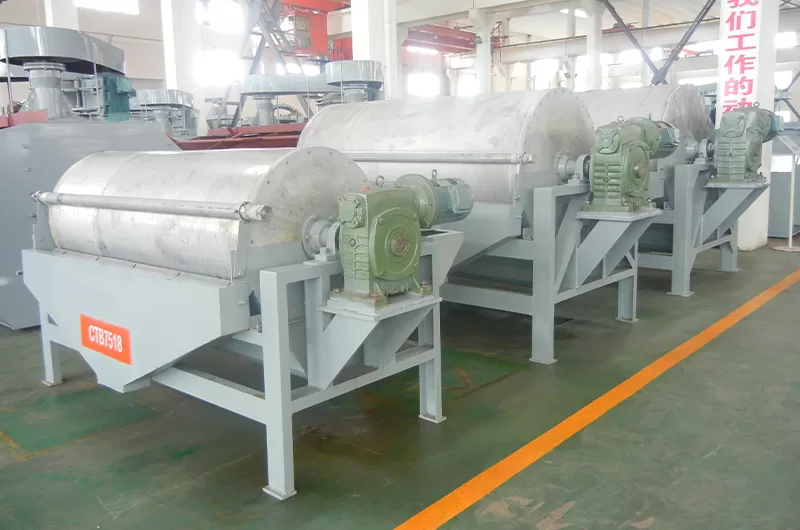
After scrubbing, magnetic separation removes iron-bearing minerals. Both wet and dry magnetic separators can be used depending on the sand’s moisture content.
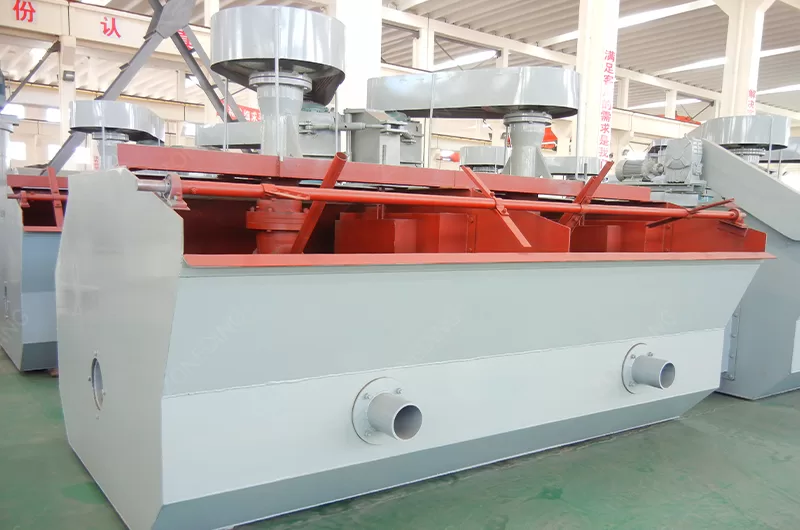
For very fine or specific impurities, flotation might be employed. Flotation selectively separates minerals based on their surface properties.
Dewatering: Finally, the high-purity sand undergoes dewatering using thickeners and filters. It then dries in rotary dryers. This ensures the sand meets the dryness requirements for its intended use.
ZONEDING designs and supplies every piece of equipment for a complete silica sand beneficiation plant. The company aims to achieve desired purity and output.
Essential Equipment for Silica Sand Processing
Building an effective silica sand production line requires specialized equipment. Each machine performs a specific function. These functions contribute to the overall purity and quality of the final product. ZONEDING offers a comprehensive range of silica sand equipment designed for efficiency and reliability.
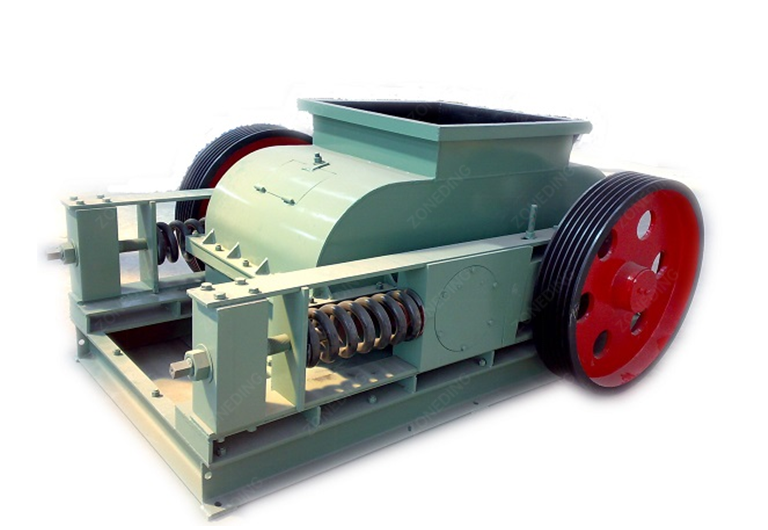
For initial size reduction, jaw crushers typically serve primary crushing. If the raw material includes larger silica rocks, cone crushers or impact crushers find use for secondary or tertiary crushing.
After crushing, washing equipment proves critical. Spiral washers effectively remove clay and silt. Sand washing machines, often wheel-type, further clean the sand.
Vibrating screens then classify the sand by size. Different screen mesh sizes separate various fractions.
For advanced purification, attrition scrubbers are key. They vigorously agitate sand grains to scour off surface impurities. Magnetic separators are essential for removing iron minerals. High-intensity magnetic separators effectively remove even weakly magnetic impurities. Where necessary, flotation machines selectively recover or remove minerals.
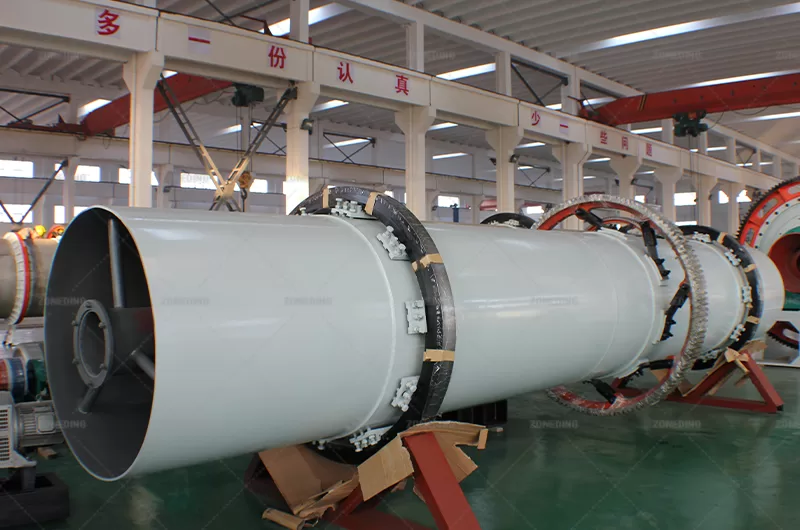
Finally, thickeners and filter presses dewater the sand. Rotary dryers then dry it to the required moisture content.
ZONEDING provides all this silica sand processing equipment as part of a complete production line. The company ensures seamless integration and optimal performance for operations.
Separators: Magnetic Separator (dry/wet), Flotation Machine
Dewatering: Thickener, Filter Press
Dryers: Rotary Dryer
Advanced Techniques for High-Purity Silica Sand
Achieving high-purity silica sand often demands more than basic washing and screening. Advanced techniques are vital for removing stubborn impurities. These methods ensure the sand meets the stringent requirements of specialty applications.
One crucial advanced technique involves attrition scrubbing. This process includes intense agitation of sand particles in a dense pulp. Sand grains rub against each other. This action effectively scours off hydrated iron oxides, clay films, and other surface-adhered impurities. It cleans the grain surfaces. This prepares them for subsequent separation steps. Following scrubbing, magnetic separation often intensifies. High-gradient magnetic separators remove even weakly magnetic minerals like chromite or ilmenite. These minerals prove difficult to separate by conventional methods. This step is critical for reducing iron content.
Another powerful technique is flotation. This process selectively separates mineral particles based on their surface chemistry. Specific reagents are added. These reagents attach to certain impurity minerals, making them hydrophobic. Air bubbles are then introduced. These bubbles attach to the hydrophobic impurity particles and lift them to the surface. This creates a froth for skimming. Flotation proves particularly effective for removing feldspar, mica, and certain heavy minerals. For ultimate purity, acid leaching can be used. This involves treating the sand with specific acids. These acids dissolve remaining iron oxides and other acid-soluble impurities. This method is costly but yields extremely high-purity silica sand (e.g., for solar panels).
ZONEDING’s experts understand these advanced methods. They assist in choosing the right combination for silica sand purification needs. They also provide the specialized silica sand equipment required for these processes.
High-Intensity Magnetic Separation: Removes weakly magnetic iron-bearing minerals and heavy minerals.
Flotation: Selectively separates minerals (e.g., feldspar, mica, heavy minerals) using chemical reagents.
Acid Leaching: Dissolves residual iron oxides and other acid-soluble impurities for ultra-high purity.
Designing an Efficient Silica Sand Production Line
Designing an efficient silica sand production line requires careful planning. It involves considering various factors to maximize yield and minimize costs. An optimized design ensures smooth operation and high-quality product.
First, raw material analysis is paramount. Thorough analysis of feeder silica sand forms the start. This includes its mineralogy, particle size distribution, and impurity levels. This detailed characterization forms the foundation of plant design. Without this, choosing incorrect silica sand processing methods becomes a risk. This data determines the optimal liberation size. It also figures out the best sequence of beneficiation steps. This initial analysis prevents costly errors.
Next, focus shifts to flowsheet development. A custom-designed flowsheet emerges based on the raw material and desired product specifications. This includes selecting the most suitable ZONEDING silica sand equipment for each stage. Factors like capacity requirements, energy efficiency, and water consumption receive consideration. For example, if sand has high clay content, a robust silica sand washing plant with multiple stages might be needed. If iron presents a major problem, high-intensity magnetic separation becomes central. The goal involves creating a balanced system. This system maximizes silica sand beneficiation while minimizing operational expenses.
Considerations for maintenance access and future expansion also integrate. ZONEDING’s complete production line service ensures every component works together. This creates an efficient and sustainable silica sand production line.
Key Design Considerations
Ore Body Characteristics: Detailed analysis of raw sand composition and properties.
Capacity Planning: Determine desired throughput and operational hours.
Water and Energy Optimization: Design for efficient water recycling and minimal power consumption.
Environmental Compliance: Plan for effective tailings management and dust control.
Site Layout and Logistics: Optimize equipment placement for material flow and accessibility.
Critical Factors for Choosing a Silica Sand Processing Supplier
Choosing the right supplier for a silica sand processing project represents a major decision. It greatly influences project success and long-term profitability. Beyond just equipment itself, consider the comprehensive support and expertise the supplier offers.
First, evaluate the supplier’s expertise in silica sand beneficiation. Does the supplier have a proven track record specifically in silica sand production line projects? Does the supplier understand challenges like achieving low iron content for high-purity silica sand? ZONEDING specializes in mineral processing. It employs 15 professional engineers who ensure strict quality control and technical guidance for silica sand projects.
Second, consider the supplier’s ability to provide customized solutions and a one-stop service. Raw silica sand is unique. Does the supplier offer tailor-made designs, not just off-the-shelf products? Can the supplier provide a complete production line from initial analysis to installation and after-sales support? ZONEDING offers custom solutions. It covers every stage of the silica sand purification process. This includes all necessary silica sand equipment.
Third, assess the quality and efficiency of supplied equipment. Is the equipment durable, energy-efficient, and easy to maintain? Does it incorporate modern intelligence for optimal performance? ZONEDING’s silica sand processing equipment is designed for high efficiency and long service life. It helps achieve cost-effective silica sand extraction.
Finally, always consider global reach and support. Can the supplier provide efficient installation, operator training, and timely spare parts, no matter the plant’s location? ZONEDING has a global presence. Its products export to over 120 countries. This ensures reliable full-process service and support for operations.
Why Choose ZONEDING?
ZONEDING functions as more than just an equipment manufacturer. It stands as a strategic partner in mineral processing.
Deep Expertise in Silica Sand Beneficiation: ZONEDING brings extensive knowledge to every silica sand processing project. It understands the specific nuances of different silica sand deposits. This enables optimal silica sand beneficiation.
Custom-Engineered Solutions: ZONEDING does not believe in one-size-fits-all. Its team specializes in designing bespoke silica sand production line solutions. These solutions perfectly match raw material characteristics and desired product specifications. They ensure attainment of high-purity silica sand.
Comprehensive Range of High-Quality Equipment: ZONEDING offers a full spectrum of robust and energy-efficient silica sand equipment. This includes crushing equipment, washing machines, magnetic separators, and flotation machines. All are critical for efficient silica sand purification.
Full-Service Support, Globally: From initial feasibility studies and laboratory tests to equipment manufacturing, installation, commissioning, and comprehensive after-sales support, ZONEDING provides a complete production line service worldwide. Its products reach over 120 countries.
Commitment to Innovation and Sustainability: ZONEDING continuously integrates the latest technologies. This includes smart automation and water-saving measures. This ensures silica sand processing operations are both highly efficient and environmentally responsible. It leads to cost-effective silica sand extraction.
2025 Latest Developments and Trends in Silica Sand Processing
The field of silica sand processing continues to evolve. It responds to increasing demands for higher purity. It also addresses environmental concerns and new technological advancements. As 2025 progresses, several key trends shape the future of silica sand beneficiation. These developments prioritize efficiency, sustainability, and product quality.
Latest Trends in Processing
Smart Sensor-Based Sorting: New optical and x-ray sorting technologies gain traction. They find use for pre-concentration of raw silica sand. These systems identify and reject impurities even before crushing. This significantly reduces overall processing load. This makes subsequent silica sand washing plant operations more efficient.
Advanced Water Recovery Systems: Water scarcity represents a growing global concern. Modern silica sand production line designs incorporate sophisticated water recycling and recovery systems. These include advanced thickeners and filter presses. They minimize fresh water consumption. This makes operations more sustainable.
Dry Processing Technologies: In regions with extreme water scarcity, dry silica sand processing methods are explored and developed. These methods include dry screening, air classification, and specialized pneumatic separation. While still evolving, they offer a water-free alternative for certain sand types.
Automation and Digitalization: The integration of advanced automation systems and artificial intelligence increases. These systems monitor and control every stage of the silica sand beneficiation process. They optimize equipment performance in real-time. This leads to higher yields and reduced operational costs.
FAQ
Question 1: What is the main goal of silica sand processing?
The main goal involves purifying raw silica sand. This removes impurities like iron oxides, clay, and heavy minerals. It increases the SiO2 content to meet industrial specifications for products like glass or foundry sand.
Question 2: Why is iron removal so important for silica sand?
Iron removal is very important because iron oxides can cause discoloration in glass. Even tiny amounts impart a green or brown hue to glass. For many applications, low iron content is critical for clarity.
Question 3: Can ZONEDING help design a custom silica sand washing plant?
Yes, ZONEDING specializes in designing custom silica sand washing plant solutions. It analyzes raw sand and tailors a silica sand production line to meet specific purity and capacity needs.
Question 4: What is the role of magnetic separators in silica sand processing?
Magnetic separators are crucial for removing iron-bearing minerals. These minerals occur as either strongly or weakly magnetic. This step significantly reduces the iron content in the final silica sand product.
Question 5: How does ZONEDING ensure the quality of its silica sand processing equipment?
At ZONEDING, advanced production facilities are utilized. CNC machines and rigorous quality control are employed. ZONEDING’s 15 professional engineers oversee design and manufacturing. This ensures high standards for all its silica sand equipment.
Summary and Recommendations
Silica sand processing represents an intricate but vital process. It transforms raw geological deposits into essential industrial materials. This guide has detailed the critical steps. It covers everything from initial silica sand crushing to advanced silica sand purification techniques. Each stage plays a crucial role in achieving desired purity and quality.
To successfully implement a silica sand production line, a few key actions are recommended. First, conduct a thorough analysis of raw silica sand. Second, collaborate with an experienced supplier to design a custom flowsheet. Third, invest in high-quality, efficient silica sand equipment. This ensures maximum yield and minimal operational costs. Ready to enhance silica sand processing operations? ZONEDING offers assistance! Contact the company today for a personalized consultation. ZONEDING can design and supply the perfect silica sand processing solution!
What is silver ore? Where is it found? How is it mined? This guide will answer with details on types, applications, deposits, and how to process it. Read Now!
Looking for a reliable routine? Read our expert maintenance guidelines for roll crushers, including a daily checklist to ensure safe and stable operations.
Optimize your waste management with our integrated crushing processing line. Efficiently process diverse solid waste into usable materials with high throughput.
Explore placer gold processing methods, from traditional gravity concentration to separation technologies. Learn to optimize mineral processing machines setup.
 Zoneding Mining